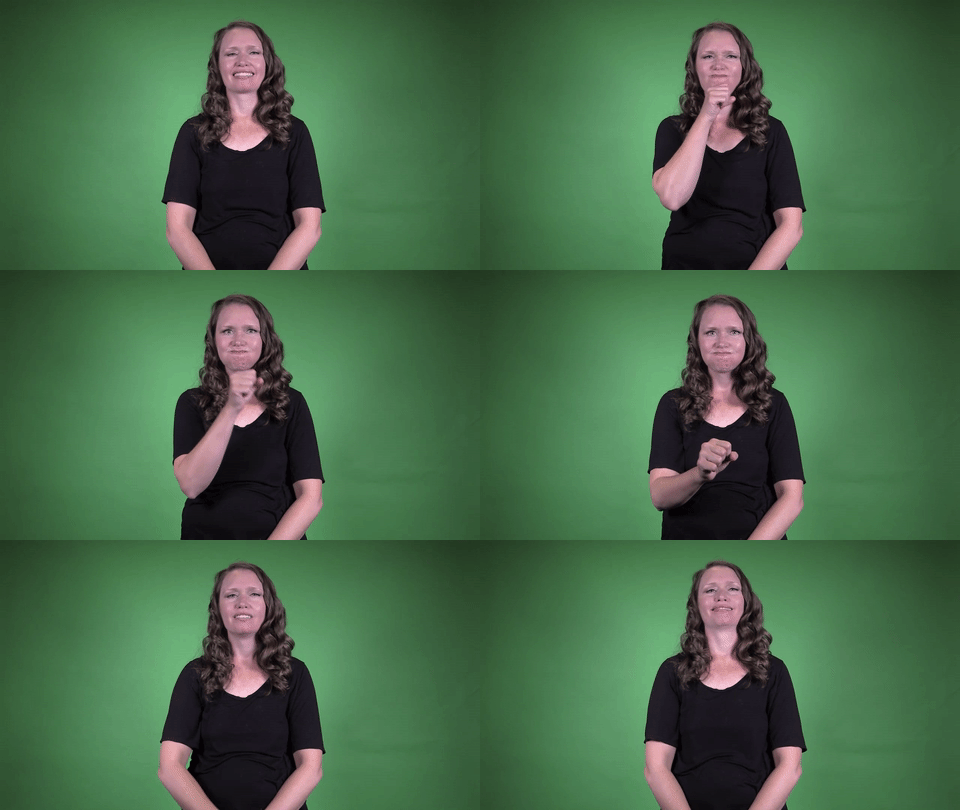
Definition: Having lived for a long time; no longer young.
Sign for OLD in ASL
Practice Activities
To master the sign for OLD in ASL, daily practice is essential. Start by using a mirror to watch yourself sign and check for accuracy in handshape, movement, and facial expression. This self-reflection helps build muscle memory and ensures you’re not developing incorrect habits.
Record yourself signing the word in various sentences. Playback allows you to compare your form to fluent signers and identify subtle areas for improvement. Try signing full sentences like “My grandfather is OLD” or “That book is OLD” to build contextual fluency.
Practice the sign for OLD in ASL during live or virtual conversations with other ASL learners or members of the Deaf community. Contextual practice helps solidify the meaning and usage of the sign. You can also join ASL study groups or attend Deaf events to interact in real-world scenarios.
For advanced practice, incorporate the sign for OLD in ASL into storytelling or structured drills. Try describing people, places, or objects that fit the concept of “old” and link it with other time-related signs. Use repetition and speed drills to increase signing fluidity without sacrificing clarity.
SEO Cultural Context
Understanding the cultural context of the sign for OLD in ASL is crucial. In Deaf culture, directness is valued, and signs are often descriptive and literal. The sign for OLD in ASL reflects this by mimicking the gesture of a beard being stroked from the chin downward, symbolizing age or something aged.
This sign is commonly used in everyday interactions to describe age, historical reference, or the condition of an item. In the Deaf community, age is not considered taboo or offensive to discuss. Therefore, the sign for OLD in ASL is used freely and respectfully when referring to people’s ages or the age of objects.
Some regional variations may exist, especially in older generations or among Deaf individuals who attended different residential schools. However, the core motion and meaning remain consistent across most ASL dialects in the United States. It’s important to observe local usage and adapt accordingly.
In a cultural sense, knowing how and when to use the sign for OLD in ASL appropriately shows respect and fluency. It also demonstrates an awareness of Deaf norms, such as the value placed on clarity, respect for elders, and community history.
Extended Definition
The sign for OLD in ASL starts with a fist under the chin, palm facing down. From there, the fist moves downward slightly, mimicking the motion of stroking a beard. This sign typically uses the dominant hand and is performed with a neutral facial expression unless additional emotional context is needed.
This sign is often used to describe people who are elderly, objects that are worn or aged, or concepts like old-fashioned or traditional. It’s important not to confuse the sign for OLD in ASL with similar signs like “grow” or “long,” which also involve movement from the chin but differ in handshape or trajectory.
Learners sometimes mistakenly use an open hand or fail to keep the motion fluid, which changes the meaning or makes the sign unclear. Another common error is over-exaggerating the movement, which can appear unnatural. Keeping the motion smooth and concise ensures clarity and cultural appropriateness.
The sign for OLD in ASL is a foundational vocabulary term that also connects to age-related terms like “grandfather,” “ancient,” or “history.” Understanding its visual metaphor helps deepen comprehension and memory retention.
Tips for Beginners
If you’re just starting out with the sign for OLD in ASL, don’t worry if it feels awkward at first. Focus on mastering the handshape—a fist—and the gentle downward motion from under your chin. Practicing slowly and watching fluent signers can help you internalize the correct movement.
A common mistake beginners make is placing the fist too far away from the chin or moving it too quickly. Keep your fist close to the chin and let the movement be natural and smooth. Watch your hand in a mirror to ensure your form is consistent.
Start by signing the word alone, then build up to full sentences. Use daily repetition to reinforce your memory. Don’t be afraid to ask for feedback from more experienced signers or instructors.
Remember, learning the sign for OLD in ASL is not just about hand movement—it’s about cultural literacy and visual expression. Stay patient and positive. Progress comes with consistent practice and curiosity.
Connections to Other Topics
The sign for OLD in ASL is closely connected to several other key vocabulary terms. One related sign is “age,” which often uses similar concepts and appears in questions like “How OLD are you?” Understanding both signs helps with natural conversation flow.
Another connected sign is “young,” which is often used as a contrast in descriptions. Knowing how to sign both OLD and young allows for richer, more dynamic communication.
The sign for “history” also connects with the sign for OLD in ASL. Both deal with the passage of time and are often used together in educational or storytelling contexts, such as discussing historical figures or past events.
“Grandfather” and “grandmother” also link conceptually and visually. These signs often incorporate age-related gestures, so practicing them alongside OLD can help reinforce memory and usage.
Finally, the sign for “traditional” may sometimes overlap with OLD in meaning, especially when describing customs, lifestyles, or technologies from the past. Understanding these associations enhances your overall vocabulary and cultural understanding.
Lengthy Summary
The sign for OLD in ASL is a vital part of any learner’s vocabulary. It is used to describe people, objects, and ideas that are aged, historic, or longstanding. Executed with a closed fist moving downward from the chin, this sign is visually iconic and deeply rooted in the descriptive nature of American Sign Language.
Practicing the sign for OLD in ASL through mirror work, video recording, and contextual drills helps build confidence and accuracy. Engaging with Deaf communities and observing how the sign is used in natural conversation provides invaluable cultural insight and fluency. It’s important to remember that in Deaf culture, discussing age is not considered rude, and this sign plays a central role in such discussions.
From a linguistic perspective, the sign for OLD in ASL reveals the visual and metaphorical richness of the language. It connects with other signs like young, age, history, and traditional, forming a network of meaning that supports deeper expression. Learners should be careful to avoid common mistakes like incorrect handshapes or exaggerated movements, both of which can hinder understanding.
For beginners, staying consistent with practice and seeking feedback are key strategies. Start with simple usage and gradually move into more advanced expressions. Don’t just memorize the sign—connect it to real-life situations and cultural references to make your learning meaningful.
By understanding and using the sign for OLD in ASL, you’re not just learning a word—you’re participating in a cultural tradition that values clarity, visual storytelling, and community history. Keep practicing, stay curious, and immerse yourself in the language. The more you use it, the more natural it becomes.
Synonyms: ancient, aged, elderly, timeworn, antique
Educational resources: Find related learning materials in our course bank!
Want more? Check out some of our popular learning activities on the homepage!
Need to look up a sign? Use our highly rated dictionary: https://aslinteractive.com/best-asl-dictionary/
Follow us on tiktok: https://www.tiktok.com/@aslinteractive. More social media links at the bottom of this page!
Long-tail Keywords: what is the sign for old in ASL, how do you sign old in ASL, ASL sign for old
Categories:
tags: age signs, time-related signs, descriptive adjectives, personal traits, life milestones
Want more? Check out some of our popular learning activities!
ASL Interactive Resources
ASLInteractive YouTube Channel
Follow us on tiktok: @aslinteractive.com
Follow us on Instagram: aslinteractive
Facebook page: aslinteractive
Facebook group: aslinteractive
LInkedIn: ASL Interactive LLC
Twitter: @ASL_interactive
*Some information on this page is AI-generated. AI can make mistakes. Please check the information.


Responses