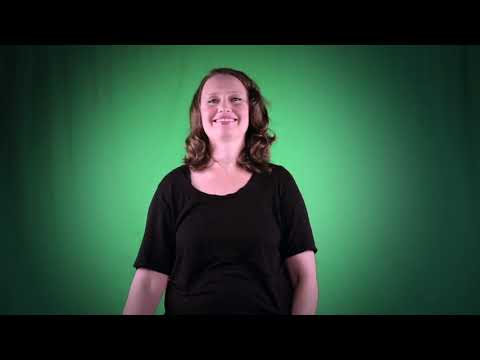
Definition: An expression of surprise or understanding.
Sign for OO in ASL
Practice Activities
One of the most effective ways to master the sign for OO in ASL is through mirror work. Stand in front of a mirror and focus on your facial expressions while forming the sign. Since OO is primarily a non-manual marker, it’s important to practice how your mouth and facial muscles move to convey the correct meaning.
Recording yourself while signing can help you catch subtle errors in your mouth morpheme or facial grammar. Play back your videos to evaluate whether your OO expression is consistent with how it should look in fluent ASL. This self-assessment builds confidence and accuracy.
Signing in context is another powerful technique. Try incorporating the sign for OO in ASL into full sentences or short dialogues. For example, use it when describing something small, thin, or precise. Practice with a partner or in a study group so you can give and receive feedback.
Advanced drills could include flashcard exercises where you respond to visual cues with the appropriate OO facial expression. You can also try interpreting short videos or stories that include the OO marker, identifying its usage and reproducing it in your own signing.
SEO Cultural Context
The sign for OO in ASL is a non-manual signal (NMS) that plays a critical role in the language’s grammar and expression. In Deaf culture, facial expressions are not just emotional cues—they’re integral to communication. The OO mouth morpheme is often used to describe something that is small, thin, or narrow. It can also express precision or delicateness.
This mouth morpheme is deeply embedded in the structure of ASL and reflects how visual-spatial languages convey information differently from spoken languages. In terms of cultural relevance, using the correct facial expression, like OO, shows fluency and respect for the language. Neglecting it can lead to miscommunication and might come off as unnatural or incorrect.
Regional variation does exist. Some signers might exaggerate or understate the OO expression based on their local signing community. However, the core meaning remains consistent, and understanding these subtle differences can deepen your cultural fluency.
In real-life situations, the sign for OO in ASL may appear when describing something like a thin wire, a small crack, or a narrow path. It conveys an additional layer of meaning that would be lost without the correct non-manual marker. Knowing when and how to use it is a sign of growing proficiency in ASL.
Extended Definition
The sign for OO in ASL is not a handshape or gesture, but rather a mouth morpheme. This means it’s part of the facial grammar that accompanies signs. The OO expression typically involves rounded lips, a slight pursing of the mouth, and narrowed eyes. It’s used to modify adjectives or classifiers to indicate smallness, thinness, or precision.
For example, when describing a thin piece of string or a tiny object, adding the OO facial expression to the sign enhances the meaning. It functions similarly to an adverb in English, altering how the action or characteristic is perceived. Some common signs that use the OO morpheme include “thin,” “small,” “narrow,” and “tight.”
A common error is confusing the OO mouth morpheme with other similar non-manual signals like “mm” or “cha.” Each has its own specific usage—”mm” generally indicates normalcy or smoothness, while “cha” suggests largeness or exaggeration. Using the wrong NMS can lead to misunderstandings.
Another mistake is not using the facial expression at all, which can flatten the meaning and make the ASL appear robotic or incomplete. The sign for OO in ASL is subtle but powerful, and mastering it opens the door to more nuanced and expressive signing.
Tips for Beginners
When first learning the sign for OO in ASL, many beginners focus so much on hand movements that they forget the importance of facial expressions. Start by learning to isolate your facial muscles. Practice pursing your lips into a small, rounded shape while maintaining relaxed cheeks and slightly narrowed eyes.
One helpful tip is to practice in front of a mirror daily. Watch how your face moves and try to replicate the OO expression taught in instructional videos. Over time, it’ll become second nature.
Don’t get discouraged if it feels awkward at first. Many learners struggle with non-manual markers in the beginning. The key is consistency. Practice short phrases that use the OO morpheme and slowly build up your fluency.
Avoid over-exaggerating the mouth shape. While it’s important to be clear, overly dramatic expressions can look unnatural and may confuse native signers. Aim for authenticity and try to model your expression after fluent signers you observe.
Connections to Other Topics
The sign for OO in ASL is closely related to other mouth morphemes like “cha” and “mm.” All of these are part of ASL’s rich system of non-manual markers, which function as grammatical tools much like verb tense or adjectives in spoken language.
Another related concept is classifiers. Classifiers often use handshapes combined with facial expressions like OO to provide detailed descriptions of objects or actions. For instance, describing a small, thin object might involve a specific handshape and the OO mouth morpheme together.
Size and shape specifiers are also connected to the sign for OO in ASL. These signs rely heavily on visual-spatial elements and are enhanced by the appropriate facial expression to convey dimensions accurately.
Descriptive signing in general benefits from mastering OO. When telling stories or giving directions, adding the OO mouth morpheme can make your signing more vivid and precise.
Lastly, ASL grammar is inseparable from non-manual signals. Learning how OO fits into sentence structure and meaning helps reinforce broader grammatical concepts in ASL, such as adverbial modification and intensity.
Lengthy Summary
The sign for OO in ASL is a vital non-manual signal that adds depth and precision to descriptions. While it may not involve the hands directly, its impact on communication is significant. This facial expression, characterized by rounded lips and focused facial tension, is primarily used to indicate smallness, thinness, or narrowness in the objects or actions being described.
Practicing the sign for OO in ASL involves a range of activities, from mirror work and video recording to using it in context and performing advanced drills. Each method reinforces your muscle memory and enhances your ability to use the sign naturally and correctly.
Culturally, the OO marker is an essential part of ASL fluency. It reflects the visual-spatial nature of the language and shows respect for Deaf norms and communication styles. Understanding regional variations and the cultural weight of facial expressions can elevate your signing from basic to nuanced.
As a mouth morpheme, the sign for OO in ASL modifies other signs like “small,” “thin,” or “tight.” It’s easy to confuse it with similar markers like “cha” or “mm,” but careful study and practice can help you distinguish them. Beginners should focus on daily facial practice, avoid over-exaggeration, and use real-life scenarios to solidify their understanding.
This sign connects deeply with other topics in ASL, including classifiers, descriptive signing, and grammatical structuring through non-manual signals. It enhances storytelling, instructions, and everyday communication by adding clarity and expressiveness.
Mastering the sign for OO in ASL is more than just learning a new facial expression—it’s about embracing the visual richness of the language. Commit to daily practice, stay curious about related signs, and immerse yourself in authentic ASL interactions. Each step you take brings you closer to fluency and a deeper connection with the Deaf community. Keep signing and keep growing! ✨
Synonyms: Sorry, it appears I need more information regarding “Oo.” Could you clarify what “Oo” refers to so I can generate the appropriate synonyms?
Educational resources: Find related learning materials in our course bank!
Want more? Check out some of our popular learning activities on the homepage!
Need to look up a sign? Use our highly rated dictionary: https://aslinteractive.com/best-asl-dictionary/
Follow us on tiktok: https://www.tiktok.com/@aslinteractive. More social media links at the bottom of this page!
Long-tail Keywords: what is the sign for Oo in ASL, how do you sign Oo in ASL, ASL sign for Oo
Categories:
tags: ASL vocabulary, ASL signs for letters, ASL words starting with Oo, American Sign Language dictionary, ASL educational resources
Want more? Check out some of our popular learning activities!
ASL Interactive Resources
ASLInteractive YouTube Channel
Follow us on tiktok: @aslinteractive.com
Follow us on Instagram: aslinteractive
Facebook page: aslinteractive
Facebook group: aslinteractive
LInkedIn: ASL Interactive LLC
Twitter: @ASL_interactive
*Some information on this page is AI-generated. AI can make mistakes. Please check the information.


Responses