
Definition: To lift or collect something or someone.
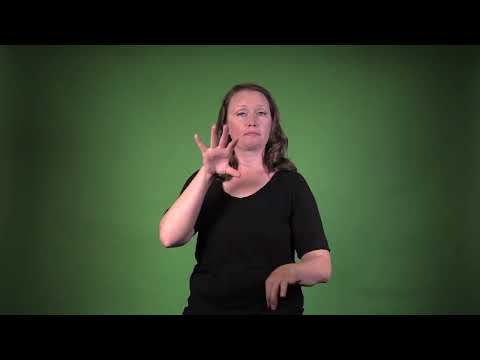
Sign for PICK-UP in ASL
Practice Activities
One of the most effective ways to master the sign for PICK-UP in ASL is through mirror work. Stand in front of a mirror and watch your handshape, movement, and facial expressions as you produce the sign. This allows you to self-correct and build muscle memory.
Another helpful method is recording yourself. Use a phone or webcam to capture your signing, then review the footage to identify areas for improvement. Pay close attention to the fluidity and clarity of your movements when using the sign for PICK-UP in ASL.
Contextual practice is key. Try using the sign during everyday interactions, such as when signing phrases like “pick up the phone” or “can you pick me up?” Practicing in real-life scenarios helps solidify meaning and usage.
For more advanced learners, structured drills can deepen understanding. Create flashcards with different objects or verbs, and combine them with the sign for PICK-UP in ASL to practice complex sentences. This reinforces grammar and increases signing speed.
Group practice is also valuable. Join an ASL learning group or attend Deaf events where you can use the sign in conversation. Engaging with others helps you see natural variations and gain confidence.
SEO Cultural Context
The sign for PICK-UP in ASL carries both literal and idiomatic meanings within the Deaf community. It can refer to physically picking up an object, as well as abstract uses like picking someone up from a location or even flirting, depending on context and expression.
Deaf culture values clarity and efficiency in communication. When using the sign for PICK-UP in ASL, facial expressions and contextual clues play a big role in conveying the correct meaning. For example, a raised eyebrow or questioning look might indicate a request rather than a statement.
There may be slight regional differences in how the sign is performed. In some areas, the motion may be more exaggerated or involve a different handshape. Exposure to various Deaf communities helps learners become familiar with these variations.
The sign is commonly used in daily life. Whether arranging a ride, talking about chores, or describing events, the sign for PICK-UP in ASL appears frequently in conversation. Understanding its nuances is essential for effective and culturally appropriate communication.
Extended Definition
The sign for PICK-UP in ASL is typically formed by mimicking the action of lifting or grabbing something. Start with an open dominant hand near the object’s location, then close it into a fist as you move upward, suggesting the motion of picking something up. The non-dominant hand may be used to represent the object.
This sign can also be directional. Pointing toward a person or location before signing it can change the meaning to include “pick him up” or “pick her up.” Modifying the direction of the movement allows for more complex sentence structures.
It’s important to distinguish this sign from similar ones, such as GRAB, HOLD, or LIFT. While they may look similar, each has a unique motion and purpose. For example, GRAB often involves a more forceful motion and different palm orientation.
Common mistakes include using an incorrect handshape, moving in the wrong direction, or failing to include appropriate facial expressions. Beginners may also confuse the sign for PICK-UP in ASL with signs like TAKE or COLLECT, which are used in different contexts.
Some learners overuse the sign for PICK-UP in ASL when other signs would be more appropriate. Understanding the context in which this sign is used helps avoid miscommunication.
Tips for Beginners
For those just starting, learning the sign for PICK-UP in ASL can feel challenging at first. Start slow and focus on the basic motion. Watch native signers and imitate their movements as accurately as possible.
Use repetition to your advantage. Practice the sign daily, both alone and with others. Repeating the sign for PICK-UP in ASL in different sentences helps you internalize its meaning and structure.
Be mindful of facial expressions. In ASL, non-manual markers like raised eyebrows or head tilts are an essential part of the grammar. They help clarify whether you’re making a statement, asking a question, or expressing emotion.
Avoid rushing through the sign. Many beginners try to sign too quickly, which can lead to sloppy form. Take your time to ensure each movement is clear and deliberate.
Don’t be afraid to make mistakes. The learning process involves trial and error. Each time you practice the sign for PICK-UP in ASL, you gain more confidence and precision.
Connections to Other Topics
The sign for PICK-UP in ASL connects closely with the sign for TAKE. While both involve similar grabbing motions, PICK-UP usually includes an upward movement and often implies lifting something from a surface.
Another related sign is DROP. This is essentially the inverse of PICK-UP and can be practiced in contrast to reinforce understanding of directional motion in ASL.
The sign for CARRY often follows or complements PICK-UP in sentences. For example, you might sign “pick up the bag and carry it.” Learning to link these actions helps build complex sentence structures.
The concept of classifiers also ties into the sign for PICK-UP in ASL. When describing picking up specific objects like a cup or a book, learners can use classifier handshapes to show the size and shape of what’s being picked up.
You’ll also find connections with spatial referencing. Using space effectively allows you to show where someone or something is being picked up from or moved to. This reinforces core ASL grammar principles and helps with overall fluency.
Lengthy Summary
Mastering the sign for PICK-UP in ASL involves more than just memorizing a handshape or motion. It requires an understanding of context, grammar, facial expressions, and cultural relevance. This sign is used in many everyday situations, from literal actions like picking up a pencil to abstract scenarios like offering someone a ride.
Through consistent practice, learners can gain confidence using the sign for PICK-UP in ASL. Mirror work, video recording, and contextual usage all help refine your skills. Advanced drills and group interactions provide further opportunities to apply what you’ve learned in real conversations.
The cultural context of the sign adds depth to your understanding. Recognizing how Deaf individuals use the sign for PICK-UP in ASL in casual and formal settings helps you become a more respectful and effective communicator. Awareness of regional variations and proper facial expressions can further elevate your signing.
By connecting this sign with related concepts like TAKE, DROP, CARRY, classifiers, and spatial referencing, you build a stronger foundation in ASL. These connections highlight the language’s visual and spatial nature, encouraging learners to think beyond isolated vocabulary.
Beginners should approach the sign for PICK-UP in ASL with patience and curiosity. Mistakes are part of the journey, and every repetition brings you closer to fluency. Focus on clarity, expression, and context to avoid common pitfalls.
The sign for PICK-UP in ASL is a powerful tool for expressing a wide range of ideas. Whether you’re describing daily tasks or complex scenarios, this sign is a key part of your ASL toolkit. Keep practicing, stay engaged with the Deaf community, and embrace every opportunity to use ASL in authentic ways. Your dedication will open doors to richer, more meaningful communication .
Synonyms: collect, retrieve, lift up, gather, scoop up
Educational resources: Find related learning materials in our course bank!
Want more? Check out some of our popular learning activities on the homepage!
Need to look up a sign? Use our highly rated dictionary: https://aslinteractive.com/best-asl-dictionary/
Follow us on tiktok: https://www.tiktok.com/@aslinteractive. More social media links at the bottom of this page!
Long-tail Keywords: what is the sign for pick-up in ASL, how do you sign pick-up in ASL, ASL sign for pick-up
Categories:
tags: ASL verbs, transportation signs in ASL, daily action signs in ASL, ASL travel vocabulary, American Sign Language daily activities
Want more? Check out some of our popular learning activities!
ASL Interactive Resources
ASLInteractive YouTube Channel
Follow us on tiktok: @aslinteractive.com
Follow us on Instagram: aslinteractive
Facebook page: aslinteractive
Facebook group: aslinteractive
LInkedIn: ASL Interactive LLC
Twitter: @ASL_interactive
*Some information on this page is AI-generated. AI can make mistakes. Please check the information.
Responses