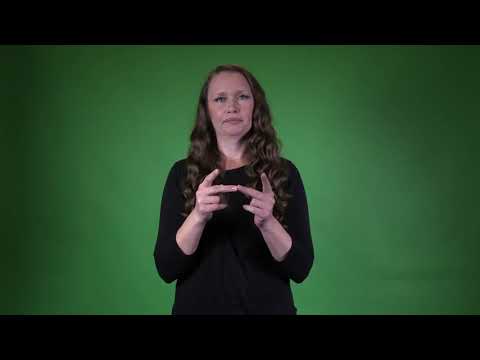
Definition: A particular position or point in space.
Sign for PLACE in ASL
Practice Activities
To build confidence and fluency with the sign for PLACE in ASL, mirror work is a helpful first step. Stand in front of a mirror and practice the handshape, movement, and facial expression while signing. This allows you to self-correct and understand how your sign appears to others.
Recording yourself signing is another effective method. Record short videos where you use the sign for PLACE in ASL in complete sentences. Later, review your videos to check for accuracy in handshape, movement, and clarity.
Signing in context is crucial for retention. Use the sign for PLACE in ASL while describing your home, school, or favorite hangout spots. Practice explaining locations or giving directions in ASL to friends or in a classroom setting.
For more advanced learners, try drills that combine the sign for PLACE in ASL with related signs like CITY, BUILDING, and LOCATION. Create short stories or dialogues that incorporate these signs, and rehearse them with a partner or tutor. This will help reinforce meaning and natural flow.
You can also use flashcard apps or ASL games that include the sign for PLACE in ASL to build speed and recall. Incorporating fingerspelling exercises for proper nouns, like place names, can help solidify your location-based vocabulary.
SEO Cultural Context
In Deaf culture, visually describing space and location is essential. The sign for PLACE in ASL reflects the importance of spatial awareness and environmental context in communication. Rather than just pointing or using spoken names, ASL users rely on accurate spatial descriptions to convey meaning.
The sign for PLACE in ASL is used frequently in everyday conversations—whether you’re describing where something is, planning a meeting point, or giving directions. Because ASL is a visual-spatial language, signs related to location carry cultural weight and require specific attention to clarity and positioning.
Regional variation in how the sign for PLACE in ASL is performed does exist. While the general movement and handshape remain consistent, some signers may vary the direction or space used based on local norms or personal signing style. Always watch and learn from native signers in your community to adapt to regional preferences.
Culturally, it’s considered respectful to be specific and clear when using the sign for PLACE in ASL. Vague pointing or unclear use of classifiers can cause confusion. Deaf signers often use this sign in combination with classifiers and directional verbs to build a more complete image of a location in the mind of the viewer.
Extended Definition
The sign for PLACE in ASL typically uses the “P” handshape on both hands. The hands move in a small circular motion and meet at the fingertips, forming a shape that visually represents a designated area or point. This motion represents the concept of a specific location or spot.
Some common errors include using the wrong handshape, such as a “K” or “B” instead of “P”, or performing the movement incorrectly. Another mistake is placing the sign too close to the body or too far away, which can distort its meaning. Proper placement in your signing space is key.
It’s important to distinguish the sign for PLACE in ASL from similar signs like AREA or LOCATION. While these signs may seem similar or interchangeable in English, ASL has distinct visual boundaries for each concept. The sign for PLACE in ASL refers to a specific, often concrete location, while AREA might refer to a broader region.
This sign is often used in combination with directionals, locatives, and classifiers. For example, when describing a restaurant, a signer might use the sign for PLACE in ASL followed by a classifier indicating the size or layout of the building. This pairing adds clarity and depth to the conversation.
Tips for Beginners
If you’re new to learning the sign for PLACE in ASL, don’t worry—this is a foundational concept that you’ll use often. Begin by focusing on the correct “P” handshape. Make sure your palm orientation and hand movement are consistent with standard usage.
One common beginner mistake is confusing the sign for PLACE in ASL with signs like POINT or AREA. Pay attention to handshape and movement—watch native signers and mirror their technique. It’s also easy to forget about facial expressions, but they add essential meaning to your sign.
Practice slowly and deliberately at first. Use repetition to build muscle memory. Try practicing in front of a mirror or with an ASL learning app that shows a native signer demonstrating the sign for PLACE in ASL.
If you’re struggling with fluidity, break down the sign into smaller parts. Master the handshape, then the motion, then the positioning. Eventually, put it all together as one smooth, natural sign.
Don’t be afraid to ask for feedback. Deaf culture values respectful learning, and many Deaf signers are happy to help you improve your use of signs like the sign for PLACE in ASL. Keep practicing, and your confidence will grow.
Connections to Other Topics
The sign for PLACE in ASL is closely connected to the sign for WHERE. Both are used in spatial and locational contexts, and combining them allows you to ask questions like “Where is the place?”
Another related sign is LOCATION. While similar in meaning, LOCATION may refer to a broader or more conceptual space, whereas the sign for PLACE in ASL usually implies a more specific or concrete point.
The sign for CITY is another relevant concept. When describing places within a city or referencing urban environments, you’ll often use the sign for PLACE in ASL to introduce or describe specific locations.
You can also connect this sign with classifiers, particularly CL:3 (vehicle classifiers) or CL:1 (person classifiers), to describe who or what is located at a certain place. This builds narrative richness and helps express complex ideas in ASL.
Finally, directionality in ASL plays a big role when using the sign for PLACE in ASL. You can indicate a location’s orientation in space by the direction you sign in, combining the PLACE sign with pointing or movement to show where something is in relation to other objects.
Lengthy Summary
Mastering the sign for PLACE in ASL is a key step in becoming fluent in spatial and locational expressions. This sign uses the “P” handshape on both hands and a circular motion that symbolizes a spot or area. It’s a highly visual representation that helps convey specific locations in ASL conversations.
The sign for PLACE in ASL is deeply rooted in Deaf cultural norms, where visual clarity and spatial accuracy are essential for effective communication. It’s used in daily life to describe everything from meeting spots to favorite hangouts, and is often paired with classifiers and directional verbs for more detail.
Beginners should focus on mastering the correct handshape and movement. Avoid common errors like incorrect palm orientation or confusing similar signs. Practicing in front of a mirror, recording yourself, and using the sign in full sentences are all excellent strategies for improving your skill.
Understanding related concepts such as LOCATION, CITY, and WHERE can deepen your grasp of how the sign for PLACE in ASL fits into the broader structure of the language. These connections reveal the rich interplay between vocabulary and grammar in ASL.
As you continue your ASL journey, keep incorporating the sign for PLACE in ASL into your practice routines. Try signing about your favorite places, give directions in ASL, or describe a map. The more you use the sign in real conversations, the more natural it will become.
Keep going—your progress in ASL grows with every sign you learn. With consistent effort and cultural respect, your ability to use the sign for PLACE in ASL will become second nature. Practice daily, stay curious, and continue exploring the beautiful visual language of ASL.
Synonyms: location, spot, area, site, position
Educational resources: Find related learning materials in our course bank!
Want more? Check out some of our popular learning activities on the homepage!
Need to look up a sign? Use our highly rated dictionary: https://aslinteractive.com/best-asl-dictionary/
Follow us on tiktok: https://www.tiktok.com/@aslinteractive. More social media links at the bottom of this page!
Long-tail Keywords: what is the sign for place in ASL, how do you sign place in ASL, place in American Sign Language
Categories:
tags: location vocabulary, ASL travel signs, ASL categories and places, places and locations in ASL, ASL signs for destinations
Want more? Check out some of our popular learning activities!
ASL Interactive Resources
ASLInteractive YouTube Channel
Follow us on tiktok: @aslinteractive.com
Follow us on Instagram: aslinteractive
Facebook page: aslinteractive
Facebook group: aslinteractive
LInkedIn: ASL Interactive LLC
Twitter: @ASL_interactive
*Some information on this page is AI-generated. AI can make mistakes. Please check the information.


Responses