Sign for PRACTICE in ASL | ️ ASL Dictionary

Definition: Repeated exercise in or performance of an activity.

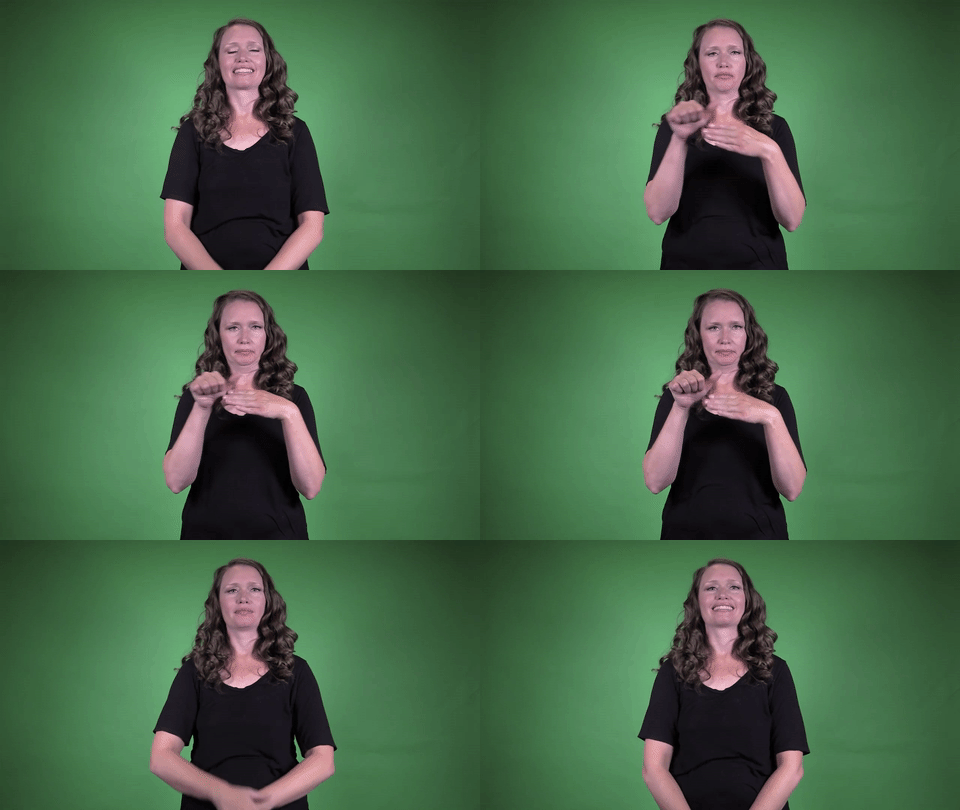
Sign for PRACTICE in ASL

YouTube player

Practice Activities

To master the sign for PRACTICE in ASL, learners should engage in a variety of consistent and focused activities. One effective method is mirror work. Stand in front of a mirror and slowly form the sign while watching your handshape and movement. This helps reinforce accuracy and builds muscle memory.

Another highly useful technique is recorded signing. Use a smartphone or webcam to film yourself signing. Afterward, watch the video and compare your sign for PRACTICE in ASL to authentic examples from native signers. This helps you identify errors and make adjustments.

Signing in context is one of the best ways to internalize the sign. Use the sign for PRACTICE in ASL within full sentences. For example, sign phrases like “I need to practice more” or “They are practicing every day.” This helps build fluency and reinforces grammar.

Advanced drills can also improve speed and fluidity. Set a timer and try to sign full sentences using the sign for PRACTICE in ASL repeatedly. You can also pair the sign with related vocabulary like LEARN or STUDY. This combination strengthens your recall and prepares you for real-life conversations.

Pair practice with feedback by joining an ASL study group or working with a Deaf mentor. Receiving corrections and encouragement from others accelerates learning and improves your confidence in using the sign for PRACTICE in ASL.

SEO Cultural Context

The sign for PRACTICE in ASL carries both linguistic and cultural significance. In the Deaf community, consistent practice is not just encouraged—it’s expected. Signing fluently is a key part of respectful communication, especially when interacting with Deaf individuals. The sign is a cornerstone of learning vocabulary and is often introduced early in ASL education.

The sign for PRACTICE in ASL typically involves a non-dominant index finger being rubbed by the dominant hand in an “A” handshape. This motion symbolizes repetition and refinement, which ties directly into the cultural value of hard work and perseverance in the Deaf community.

Regional variations may exist, especially in different parts of the United States. Some signers may use slight differences in hand orientation or movement. However, the core meaning remains the same. Understanding these variations is important and reflects the rich diversity within ASL itself.

The sign is frequently used in academic, professional, and social contexts. Whether preparing for a performance, studying for a class, or refining everyday conversation skills, the sign for PRACTICE in ASL appears often. It’s also a common sign in Deaf education, where students are encouraged to practice both receptive and expressive skills regularly.

Extended Definition

The sign for PRACTICE in ASL is made by holding your non-dominant hand in a 1-handshape (index finger pointing out horizontally), while your dominant hand forms an “A” handshape. The dominant “A” hand is rubbed repeatedly across the index finger of the non-dominant hand. The rubbing motion represents repetition and effort, which aligns with the concept of practicing something consistently.

This sign is often confused with similar signs such as TRAIN or REVIEW. While these signs can overlap in meaning depending on context, they each have distinct movements and handshapes. It’s important not to confuse the sign for PRACTICE in ASL with signs like TEACH or LEARN, which convey different aspects of the educational process.

One common error is using the wrong handshape. Beginners sometimes mistakenly use a flat hand or a different orientation. Another mistake is moving the dominant hand in the wrong direction or not making contact with the index finger, which can obscure meaning. Focusing on deliberate, controlled movement helps avoid these issues.

The sign can also be modified slightly for emphasis using facial expressions and body language. For example, furrowing your brows or intensifying the speed of the rubbing motion can show frustration or determination. These non-manual markers are essential in conveying tone and emotion in ASL.

Tips for Beginners

For those new to ASL, learning the sign for PRACTICE in ASL can feel both exciting and challenging. The key is to take it slow and be consistent. Start by watching video models multiple times. Focus on the shape of the hands and the direction of the movement.

Be patient with yourself and don’t rush. It’s easy to want to sign quickly, but clarity is more important than speed. Practice in front of a mirror and ask yourself: “Does this look like the model I studied?” If not, pause and adjust your handshape or movement.

A common mistake is using a loose or incorrect “A” handshape. Make sure your dominant hand is closed tightly into a proper “A” position. Also, ensure that you’re rubbing the side of the index finger—not the top or palm of the hand.

Another tip is to engage with real-life examples. Watch ASL videos, attend Deaf events, or participate in virtual meetups. The more you immerse yourself in the language, the more naturally the sign for PRACTICE in ASL will come to you.

Finally, don’t be afraid to ask for feedback. Many Deaf individuals appreciate the effort learners make and are happy to offer corrections and encouragement. Honest communication and a willingness to learn go a long way in the ASL community.

Connections to Other Topics

The sign for PRACTICE in ASL connects to several other key vocabulary signs. One related sign is LEARN, which involves taking information from the palm and bringing it to the forehead. Both signs are used often in educational settings and encourage the idea of active engagement.

Another connected concept is STUDY. This sign involves fluttering fingers near the palm and is often paired with PRACTICE during discussions about schoolwork or preparation. Using these signs together helps build coherent sentences and deepens vocabulary.

The sign for WORK is also closely related. It involves tapping both wrists in fists and often appears in professional or structured environments. PRACTICE and WORK are conceptually linked, especially when talking about job training or preparing for an audition or performance.

You might also explore the sign for IMPROVE. This sign climbs up the non-dominant arm with a flat dominant hand, symbolizing progress. When combined with PRACTICE, it can express ideas like “Practice to improve” or “They practiced and got better.”

Another thematic connection is with the sign for TIME. Since practice often involves scheduling and repetition, TIME is a useful sign to include when talking about how often and when practice should occur. These connections help round out your understanding of how the sign for PRACTICE in ASL fits into broader conversations.

Lengthy Summary

The sign for PRACTICE in ASL is a fundamental part of any signer’s vocabulary. It represents not just the concept of repetition and skill-building, but also reflects important cultural values within the Deaf community. Using this sign correctly and confidently shows your dedication to learning and your respect for ASL as a visual language.

Through various practice methods—mirror work, video recording, contextual usage, and advanced drills—learners can deepen their understanding and fluency. Each method supports different aspects of language acquisition, from muscle memory to expressive fluency. These strategies are especially helpful in mastering the sign for PRACTICE in ASL and ensuring that your signing is clear and accurate.

Cultural awareness enhances your use of the sign. Understanding that practice is a valued behavior in the Deaf community helps learners approach their studies with the right mindset. Respectful engagement, openness to feedback, and consistent effort are all key to building authentic language skills.

The extended definition of the sign helps learners distinguish it from similar signs like TRAIN or STUDY. Knowing how to form the sign correctly and avoid common errors ensures that you communicate clearly. Using appropriate non-manual markers and understanding regional variation further supports your growth as an ASL user.

Beginners should approach the sign for PRACTICE in ASL with patience and positivity. Mistakes are part of the journey, and every signer improves with time. Strategic guidance, such as focusing on handshape and movement, can make a big difference in early success.

This sign also connects to other important vocabulary like LEARN, STUDY, WORK, IMPROVE, and TIME. These links help create more fluent, expressive sentences and reflect the interconnected nature of ASL vocabulary.

To truly internalize the sign for PRACTICE in ASL, it’s important to engage with the language daily. Seek out opportunities to sign with others, watch native signers, and keep practicing in meaningful contexts. Learning ASL is a rewarding journey, and each sign you master brings you closer to fluency and deeper cultural understanding. Keep signing, keep learning, and remember—practice makes progress!

Synonyms: exercise, rehearsal, training, drill, preparation

Educational resources: Find related learning materials in our course bank!

Want more? Check out some of our popular learning activities on the homepage!

Need to look up a sign? Use our highly rated dictionary: https://aslinteractive.com/best-asl-dictionary/

Follow us on tiktok: https://www.tiktok.com/@aslinteractive. More social media links at the bottom of this page!

Long-tail Keywords: what is the sign for practice in ASL, how do you sign practice in ASL, learn the ASL sign for practice

Categories:

tags: ASL practice activities, learn ASL vocabulary, practice signing categories, ASL practice by topic, American Sign Language exercises

Want more? Check out some of our popular learning activities!

ASL Interactive Resources

ASLInteractive YouTube Channel

Follow us on tiktok: @aslinteractive.com

Follow us on Instagram: aslinteractive

Facebook page: aslinteractive

Facebook group: aslinteractive

LInkedIn: ASL Interactive LLC

Twitter: @ASL_interactive

*Some information on this page is AI-generated. AI can make mistakes. Please check the information.


Responses