Practice Activities
One of the most effective ways to master the sign for RIDE BIKE in ASL is to practice regularly in front of a mirror. This allows learners to see their handshape, movement, and facial expressions all at once. Checking your form in the mirror helps align your body language with accurate signing. Another great method is to record yourself signing. Watch the recording to compare your performance with native signers. Pay attention to your non-manual markers, such as facial expressions that show excitement or casual tone when using the sign for RIDE BIKE in ASL. Use the sign in context by incorporating it into everyday signed conversations. Talk about weekend plans, favorite outdoor activities, or methods of transportation, and include the sign for RIDE BIKE in ASL to make your conversations more fluid and natural. Advanced learners can challenge themselves with speed drills, alternating between signs like RIDE BIKE, DRIVE, and WALK to build fluency. Practicing transitions between similar signs builds muscle memory and helps reinforce the meaning and usage of the sign for RIDE BIKE in ASL.
SEO Cultural Context
In Deaf culture, physical activities like biking are a common topic of conversation, especially within the context of daily routines or weekend adventures. The sign for RIDE BIKE in ASL is frequently used among friends, family, and within educational settings when discussing hobbies or health. The sign incorporates classifiers to represent the act of riding and the concept of a bicycle, which reflects ASL’s visual-spatial nature. In some regions, slight variations might exist in how the sign is produced, especially in terms of the movement pattern or the use of classifiers, but the meaning remains consistent. Understanding the cultural context behind the sign for RIDE BIKE in ASL also means recognizing when and how it’s appropriate to use. For example, Deaf children often learn to sign their daily activities, and biking is a key part of childhood independence. Adults might use the sign to discuss commuting, exercise, or leisure, showing how the sign ties closely to personal lifestyle.
Extended Definition
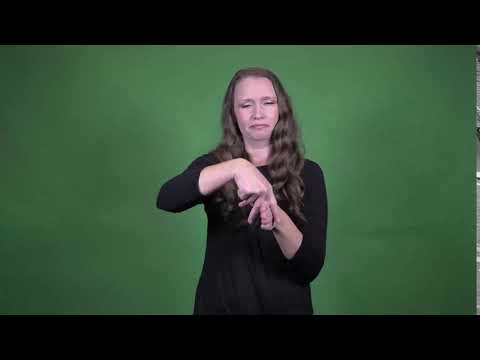
The sign for RIDE BIKE in ASL is typically a compound sign that combines two concepts: RIDE and BIKE. For the RIDE portion, a classifier handshape is used to indicate the act of straddling or riding something. The dominant hand, shaped like a ‘V’ to represent legs, is placed on top of the non-dominant hand, which represents the object being ridden, such as a bike. The BIKE portion is signed by mimicking the pedaling motion of a bicycle. Both fists are closed and held in front of the body, moving in a small alternating circular motion, just like turning bicycle pedals. When combined, these two signs form the sign for RIDE BIKE in ASL. It’s important to maintain the correct sequence and use clear movements to avoid confusion with similar signs like MOTORCYCLE or HORSE. Common errors include mixing up the handshapes or reversing the order of the components. Another mistake is over-exaggerating the pedaling motion, which can lead to misinterpretation or look unnatural. Always keep your movements smooth and appropriately sized.
Tips for Beginners
Learning the sign for RIDE BIKE in ASL can be fun and satisfying, especially since it connects to real-life experiences. Beginners should take their time to master each part of the sign separately before combining them. Start with the RIDE component and make sure your handshape is accurate. Practice in front of a mirror or with a partner who can give feedback. Once you’re comfortable, move on to the BIKE part and focus on the rhythm and direction of the pedaling motion. Avoid the common mistake of signing too quickly or sloppily. Clear, controlled movements are more important than speed when you’re just starting out. Repetition is key—practice the sign for RIDE BIKE in ASL several times a day in different contexts to reinforce your memory. Don’t be discouraged by small errors. ASL is a visual language, and improvement comes with time and exposure. Watching native signers and asking for feedback will help you grow more confident and accurate.
Connections to Other Topics
The sign for DRIVE is closely related to the sign for RIDE BIKE in ASL, especially in terms of classifiers. Both involve representing a mode of transportation and benefit from understanding how body position and hand movement convey the action. The sign for WALK is another useful connection. Like RIDE BIKE, it’s often used when discussing how someone gets from one place to another. Learning WALK alongside RIDE BIKE helps expand your vocabulary around movement and transportation. The sign for EXERCISE is also relevant. Since biking is a popular way to stay fit, you’ll often see the sign for RIDE BIKE in ASL used in conversations about health and wellness. This link helps learners use the sign in more diverse contexts. SPORT and OUTSIDE are two more signs that complement the usage of RIDE BIKE. Since biking is frequently done outdoors and is sometimes considered a sport, these signs enhance your ability to discuss activities and preferences in ASL. Lastly, understanding classifiers is essential when learning the sign for RIDE BIKE in ASL. Classifiers allow signers to visually represent objects and actions, and mastering them opens the door to more expressive and accurate signing overall.
Lengthy Summary
The sign for RIDE BIKE in ASL is a dynamic and visually rich expression that combines two key ideas: the act of riding and the concept of a bicycle. By breaking down the sign into its components—RIDE and BIKE—learners can better understand how ASL builds meaning through movement and shape. Culturally, the sign for RIDE BIKE in ASL connects to many aspects of Deaf life, from childhood play to adult commuting and exercise. It’s a practical sign that appears in daily conversations, storytelling, and educational contexts. Recognizing its place within Deaf culture helps learners appreciate the sign beyond just its physical form. For beginners, taking a step-by-step approach, using mirrors, video recordings, and contextual practice will ensure long-term retention and accuracy. Avoiding common mistakes such as incorrect handshapes or exaggerated movements will help keep your signing clear and effective. Connections to related signs like DRIVE, WALK, and EXERCISE provide more depth to your vocabulary and help create a well-rounded understanding of transportation and activity-related signs. These links also support more natural conversations and storytelling in ASL. Ultimately, learning the sign for RIDE BIKE in ASL is more than memorizing a gesture—it’s about joining a rich linguistic and cultural tradition. Keep practicing, stay curious, and explore how this sign fits into broader themes in ASL. Your journey in learning ASL will continue to grow stronger with each sign you master ♂️ Synonyms: cycle, bike, pedal, go biking, ride a bicycle Educational resources: Find related learning materials in our course bank! Want more? Check out some of our popular learning activities on the homepage! Need to look up a sign? Use our highly rated dictionary: https://aslinteractive.com/best-asl-dictionary/ Follow us on tiktok: https://www.tiktok.com/@aslinteractive. More social media links at the bottom of this page! Long-tail Keywords: what is the sign for ride bike in ASL, how do you sign ride bike in ASL, ASL sign for ride bike Categories: tags: travel signs, transportation in ASL, sports and outdoor activities in ASL, verbs in ASL, ASL for daily activities
Want more? Check out some of our popular learning activities!
ASL Interactive Resources
ASLInteractive YouTube Channel
Follow us on tiktok: @aslinteractive.com
Follow us on Instagram: aslinteractive
Facebook page: aslinteractive
Facebook group: aslinteractive
LInkedIn: ASL Interactive LLC
Twitter: @ASL_interactive
*Some information on this page is AI-generated. AI can make mistakes. Please check the information.
Responses