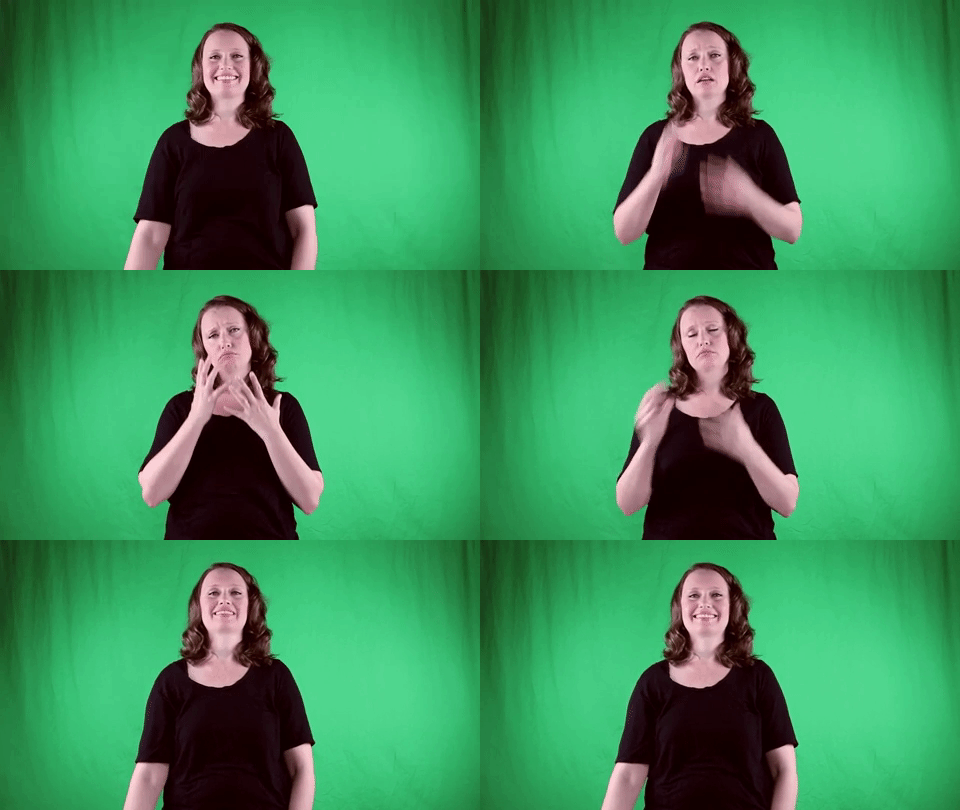
Sign for SAD in ASL | ASL Dictionary

Definition: Feeling or showing sorrow. Sign for SAD in ASL
YouTube player

Practice Activities

To master the sign for SAD in ASL, start with mirror work. This foundational practice helps learners see their facial expressions and handshape clearly. Since emotion is a key part of the sign for SAD in ASL, facial expressions should reflect the feeling of sadness—downcast eyes, a slight frown, and subdued energy. Record yourself signing to evaluate accuracy and emotion. Watching your signing from a third-person perspective helps identify areas for improvement. Try signing simple phrases like “I feel sad” or “She is sad” while focusing on the emotional tone. Use the sign for SAD in ASL in real-life context. Integrate it into daily conversations or storytelling. For example, tell a brief story about a sad moment and include the sign naturally. This reinforces both vocabulary and expressive skills. Advanced learners can do expressive drills. Practice transitioning from neutral emotion to sadness fluidly. Use the sign in different grammatical structures, such as rhetorical questions (“Why are you sad?”) or narrative sequences (“First he was happy, then he was sad”). These drills increase fluency and deepen your understanding of how the sign is used in context.

SEO Cultural Context

The sign for SAD in ASL is deeply connected to emotional expression, a key component of Deaf communication. Unlike spoken language, American Sign Language relies heavily on facial expression to convey emotional tone. When using the sign for SAD in ASL, a flat or incorrect facial expression can completely change the meaning or reduce clarity. Culturally, Deaf communities value authentic emotional expression. It’s not just about signing the correct handshape—it’s about embodying the emotion. Inappropriate or exaggerated sadness may appear insincere, while underplaying the emotion may seem confusing. There may be slight regional variations in how the sign is produced. However, the sign for SAD in ASL is generally consistent across most Deaf communities in the United States. Some signers may add slight modifications based on context or personal style, but the core movement and expression remain the same. This sign is commonly used in everyday conversations. Whether expressing empathy, sharing personal feelings, or narrating emotional events, the sign for SAD in ASL is essential. Understanding its cultural and emotional context helps learners use it appropriately and respectfully.

Extended Definition

The sign for SAD in ASL typically involves a downward movement of the dominant hand in front of the face, starting near the eyes. The hand is often in a flat or slightly curved shape, and the movement mimics tears falling down. The facial expression is crucial—eyes slightly downcast, eyebrows drawn together, and lips in a slight frown. This sign is closely related to other emotion-based signs like DEPRESSED, CRY, and UPSET. DEPRESSED tends to use a broader downward motion along the chest, while CRY includes finger movement suggesting tears. UPSET involves a twisting motion near the stomach area. It’s essential not to confuse these signs, especially since they share similar emotional themes but convey different intensities and contexts. One common error is using a neutral or happy facial expression when signing SAD. This contradicts the meaning and can confuse your conversation partner. Another mistake is incorrect hand placement or movement—moving the hand too far from the face or using the wrong handshape. The sign for SAD in ASL is expressive and should be performed with appropriate emotion. Though it’s a relatively simple sign structurally, it carries emotional weight. Beginners often underestimate the importance of expression, but mastering this sign builds a strong foundation for other emotional vocabulary in ASL.

Tips for Beginners

For those new to ASL, learning emotional vocabulary like the sign for SAD in ASL can feel intimidating. But don’t worry—this sign is a great starting point for understanding how emotion and grammar work together in ASL. Start slowly, practicing the handshape and motion in front of a mirror. Focus on your facial expression. Watch videos of fluent signers or ASL teachers and mimic their expressions. Practice looking sad—not overly dramatic, but sincere. This will make your signing more understandable and authentic. Avoid the pitfall of rushing through the sign. Take your time to perform each part of the sign clearly. Slowing down helps with muscle memory and improves overall accuracy. If you confuse the sign for SAD in ASL with similar signs like DEPRESSED, review each sign separately. Use flashcards, video dictionaries, or apps to compare them side by side. Repetition and contrast will help you distinguish them more easily over time. Most importantly, be kind to yourself. Everyone makes mistakes when learning a new language. The key is consistent practice and a willingness to learn from errors. Remember, every time you use the sign for SAD in ASL correctly, you’re building meaningful communication skills.

Connections to Other Topics

The sign for SAD in ASL connects naturally with other emotion signs, making it a gateway into broader emotional vocabulary. For example, the sign for CRY is often used in conjunction with SAD when describing intense emotions. CRY uses a motion that mimics tears using index fingers, and it pairs well in storytelling or expressive signing. DEPRESSED is another related sign, used when describing a long-lasting or deeper sadness. It involves both hands moving downward along the chest, suggesting a heavy emotional weight. Understanding the difference between SAD and DEPRESSED helps learners describe emotions with greater precision. HAPPY is a useful contrasting sign. Learning both SAD and HAPPY together builds emotional range and allows for more dynamic conversations. You can describe changes in mood or compare how different people feel in a situation. The sign for FEEL is often used as an introductory sign to describe emotions. For example, “I feel sad” begins with the sign FEEL followed by SAD. This grammatical structure is common and helps learners form complete sentences in ASL. Another important connection is with ASL classifiers. While not directly used in the basic sign for SAD in ASL, classifiers can help describe the behavior or posture of a sad person in storytelling. For example, using a hunched-over classifier can visually supplement the emotion being described.

Lengthy Summary

The sign for SAD in ASL is more than a hand movement—it’s a fusion of precise physical motion and heartfelt facial expression. As one of the core emotional vocabulary signs in American Sign Language, it plays a vital role in day-to-day communication. Learners must not only memorize the handshape and movement but also practice conveying genuine emotion through facial cues. This sign is typically made with a downward hand movement in front of the face, suggesting the imagery of tears. Accompanied by a subdued facial expression, this sign communicates sadness clearly and effectively. It is essential to distinguish this sign from related ones like DEPRESSED, CRY, and UPSET, which may appear similar but carry different meanings and emotional intensities. Practicing the sign for SAD in ASL through mirror work, video recording, and real-life usage deepens retention and improves expressive fluency. Beginners should focus on mastering facial expressions and avoid common mistakes like incorrect hand placement or mismatched expressions. With practice, learners will gain confidence not only in this sign but in their overall ASL communication abilities. Culturally, emotional expression in ASL is authentic and nuanced. The sign for SAD in ASL reflects this richness and is used frequently in personal storytelling, emotional exchanges, and social interactions. Understanding its context within Deaf culture enhances respectful and accurate use. This sign also opens the door to broader emotional vocabulary and grammar in ASL. Learning related signs like HAPPY, DEPRESSED, and FEEL allows for more complete and emotionally resonant conversations. Whether you’re just starting your ASL journey or refining advanced skills, integrating this sign into your practice is a meaningful step forward. Keep practicing the sign for SAD in ASL regularly. Use it in sentences, stories, and conversations. The more you use it, the more natural it will become. Let your hands and face work together to express emotion clearly and respectfully. Keep going—you’re building real, human connections through language . Synonyms: unhappy, sorrowful, dejected, melancholy, mournful Educational resources: Find related learning materials in our course bank! Want more? Check out some of our popular learning activities on the homepage! Need to look up a sign? Use our highly rated dictionary: https://aslinteractive.com/best-asl-dictionary/ Follow us on tiktok: https://www.tiktok.com/@aslinteractive. More social media links at the bottom of this page! Long-tail Keywords: what is the sign for sad in ASL, how do you sign sad in ASL, ASL sign for feeling sad Categories: tags: emotions in ASL, feelings in American Sign Language, sad sign ASL, how to express sadness in ASL, emotional signs dictionary

Want more? Check out some of our popular learning activities!

ASL Interactive Resources

ASLInteractive YouTube Channel

Follow us on tiktok: @aslinteractive.com

Follow us on Instagram: aslinteractive

Facebook page: aslinteractive

Facebook group: aslinteractive

LInkedIn: ASL Interactive LLC

Twitter: @ASL_interactive

*Some information on this page is AI-generated. AI can make mistakes. Please check the information.  

Responses