
Practice Activities
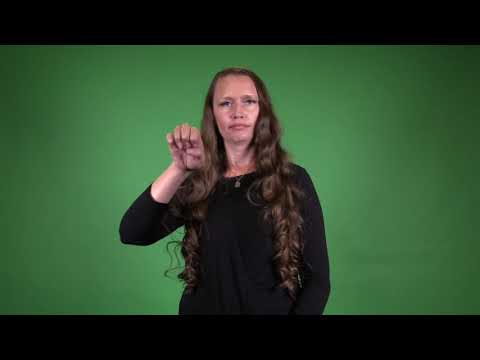
Learning the sign for SLOPE in ASL requires repeated exposure and active engagement. One effective way to practice is by using a mirror. Stand in front of a mirror and watch your handshape, orientation, and movement as you produce the sign for SLOPE in ASL. This helps you align your sign with proper visual-spatial grammar and self-correct in real time. Another helpful strategy is to record yourself signing. Use your smartphone or webcam to capture short clips where you use the sign for SLOPE in ASL in different sentences. Then, review the footage and compare it to fluent signers in ASL videos or dictionaries. This method sharpens your visual awareness and builds confidence. Contextual practice is also essential. Integrate the sign for SLOPE in ASL into narratives or storytelling. For instance, describe a hill, a wheelchair ramp, or a street with a steep incline. These real-life examples make the sign meaningful and easier to remember. Advanced learners can benefit from drills that involve switching between related signs like FLAT, MOUNTAIN, and DOWNHILL. These drills build fluidity and ensure that the sign for SLOPE in ASL is not only memorized but also internalized within a broader conceptual framework. Lastly, pair up with a study partner for live practice sessions. Engage in dialogues or role-plays that include the sign for SLOPE in ASL, such as giving directions or discussing terrain. Peer feedback adds another layer of improvement and keeps learning interactive.
SEO Cultural Context
The sign for SLOPE in ASL carries both literal and metaphorical meanings, making it a culturally rich term in Deaf communication. In everyday conversations, it is often used to describe physical inclines, such as hills, ramps, or sloped surfaces. This is especially important in accessibility discussions, where describing terrain accurately is crucial. In Deaf culture, visual clarity is a key norm. The sign for SLOPE in ASL must be executed with precise spatial awareness to convey the angle and direction of the slope. This respect for visual detail reflects the broader value Deaf culture places on visual information and shared understanding. There may be slight regional variations in the execution of the sign. Some signers may use a more exaggerated motion, while others keep the movement subtle. These differences are typically influenced by geography or personal signing style, but the core concept remains the same. The sign for SLOPE in ASL is also used in educational settings, particularly in science or geography lessons. Teachers in Deaf schools use it to explain gradients, angles, and even mathematical slopes. Its presence in academic and everyday discourse reflects its functional versatility. Using the correct sign for SLOPE in ASL also demonstrates respect for Deaf culture by promoting clear and accurate communication. Misusing or omitting the sign could lead to misunderstanding, especially when discussing directions, physical spaces, or design features.
Extended Definition
The sign for SLOPE in ASL generally involves a downward or upward movement of the dominant hand across the non-dominant hand, which remains stationary. The non-dominant hand often represents the level ground, while the dominant hand shows the incline or decline, mimicking the contour of a slope. This sign is classified as an iconic sign because its form visually represents the meaning. The visual metaphor is strong, making it easier for learners to remember and understand. The movement and spatial orientation are crucial to differentiate it from similar signs like HILL or RAMP. A common error among beginners is confusing the sign for SLOPE in ASL with the sign for DOWN or FALL. While these signs may share directional movement, the handshape and interaction between the hands are different. In the sign for SLOPE in ASL, the dominant hand slides or moves over the non-dominant hand to show a gradual or steep angle. There’s also a tendency to over-exaggerate or under-express the slope’s angle. This can lead to ambiguity in meaning. For instance, a steep versus gentle slope can be clearly shown with slight variations in the movement arc. Practicing these nuances helps distinguish between different types of slopes accurately. When discussing metaphorical slopes, such as a “slippery slope” in decision-making, the sign for SLOPE in ASL may be paired with facial expressions and additional signs to convey abstract meaning. Understanding these layers adds depth to your signing and aligns with natural ASL discourse.
Tips for Beginners
If you’re just starting to learn the sign for SLOPE in ASL, remember to be patient with yourself. Signing is a skill that grows with time and consistent practice. Focus on mastering the handshape and the fluid motion between the hands. One useful tip is to isolate the movement first. Practice just the slope motion with your dominant hand before adding the non-dominant base. Then, combine both parts while keeping your movements smooth and intentional. This breakdown builds muscle memory. Pay close attention to your hand orientation. A flipped hand or awkward angle can change the meaning or make the sign unclear. Use video references or ask a fluent signer to observe you and give feedback. Facial expressions are often overlooked by beginners, but they’re vital in ASL. When signing the sign for SLOPE in ASL, use your face to show the steepness or difficulty of the slope. This adds emotional depth and helps convey context. Avoid rushing through the sign. Speed can compromise clarity. Instead, aim for deliberate and expressive motion. With frequent practice and a focus on detail, you’ll find the sign becoming more natural in your everyday signing vocabulary.
Connections to Other Topics
The sign for SLOPE in ASL connects naturally to the concept of RAMP, especially in discussions about accessibility and wheelchair-friendly environments. Both signs involve spatial representation and often appear together when describing physical spaces. Another related sign is HILL. While SLOPE shows the angle or gradient, HILL typically emphasizes the elevation or overall shape of the terrain. Understanding the difference helps paint more complete visual narratives in ASL. The sign for MOUNTAIN also shares conceptual space with the sign for SLOPE in ASL. MOUNTAIN includes a steeper, more dramatic elevation, and may use both hands moving upward in a peak shape. Learning these related signs expands your vocabulary in nature and geography topics. In mathematics or science contexts, the sign for SLOPE in ASL may be used alongside signs like ANGLE, GRAPH, and LINE. These academic terms often appear together when explaining equations or physical properties, so mastering them as a set can be especially useful for students. Lastly, the sign for ROAD or PATH is conceptually linked. These signs often require spatial mapping and can incorporate the idea of an uphill or downhill journey. Using the sign for SLOPE in ASL in these contexts enriches storytelling and descriptive narratives.
Lengthy Summary
Mastering the sign for SLOPE in ASL offers more than just a new vocabulary word—it opens the door to richer visual storytelling, precise description, and deeper cultural understanding. Whether you’re describing a steep driveway, navigating an accessible ramp, or explaining a math problem, the sign for SLOPE in ASL is versatile and essential. Through consistent practice—like mirror work, video recording, and contextual usage—you can build fluency and confidence. These exercises help you fine-tune not just the mechanics of the sign, but also its expressive nuances. Pay attention to spatial orientation, facial expressions, and movement flow to ensure clarity and accuracy. Culturally, the sign for SLOPE in ASL reflects Deaf values of visual clarity and shared comprehension. Whether used in casual conversation or academic settings, it plays a vital role in effective communication. Regional variations and metaphorical uses add extra layers of richness, making it a rewarding sign to explore. For beginners, the journey starts with understanding the foundation—correct handshapes, orientation, and movement. Avoid common pitfalls by focusing on detail and slowing down your execution. As you grow, connect this sign with related concepts like RAMP, HILL, and MOUNTAIN to build a robust and interconnected ASL vocabulary. In summary, the sign for SLOPE in ASL is both practical and expressive, deeply rooted in visual-spatial logic and cultural relevance. By investing time in practice and engaging with the sign in various contexts, you enhance your overall signing skills and cultural fluency. Keep practicing, stay curious, and let your ASL journey continue to climb. Synonyms: sluggish, unhurried, leisurely, gradual, delayed Educational resources: Find related learning materials in our course bank! Want more? Check out some of our popular learning activities on the homepage! Need to look up a sign? Use our highly rated dictionary: https://aslinteractive.com/best-asl-dictionary/ Follow us on tiktok: https://www.tiktok.com/@aslinteractive. More social media links at the bottom of this page! Long-tail Keywords: What is the sign for slope in ASL, How do you sign slope in ASL, ASL sign for slope Categories: tags: math terminology, geography terms, educational signs, ASL math vocabulary, slope-related signs
Want more? Check out some of our popular learning activities!
ASL Interactive Resources
ASLInteractive YouTube Channel
Follow us on tiktok: @aslinteractive.com
Follow us on Instagram: aslinteractive
Facebook page: aslinteractive
Facebook group: aslinteractive
LInkedIn: ASL Interactive LLC
Twitter: @ASL_interactive
*Some information on this page is AI-generated. AI can make mistakes. Please check the information.
Responses