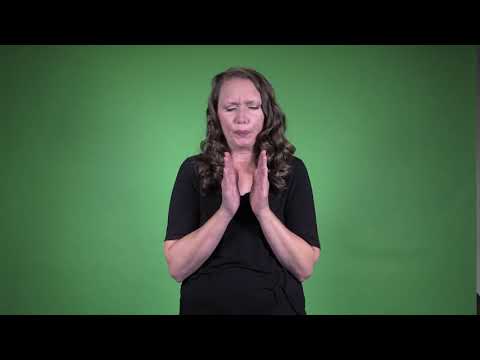
Sign for SMALL in ASL | ASL Dictionary

Definition: Of a size that is less than normal or usual. Sign for SMALL in ASL
YouTube player

Practice Activities

Practicing the sign for small in ASL is essential to mastering both clarity and fluency. Start by working in front of a mirror to observe your handshape and facial expressions. The sign uses both hands in a flat “B” shape, with palms facing each other and fingers pointing forward. Move your hands closer together to indicate something is small, while maintaining a neutral facial expression or slightly pursed lips to show size accurately. Record yourself signing full sentences that include the sign for small in ASL. This helps you evaluate your non-manual signals, hand positioning, and overall fluidity. Try saying sentences like “The dog is small” or “I have a small book” using proper ASL grammar. Use the sign in context during everyday conversations. Describe objects around you with size-based vocabulary, mixing in the sign for small in ASL regularly. Pair it with contrasting signs like large or medium to strengthen your ability to compare. Advanced learners can incorporate the sign for small in ASL into storytelling exercises. Try narrating short stories or describing scenes using a variety of size descriptors. Use classifiers to compare the size of items, such as a small ball versus a large one, keeping your use of space consistent. Practicing with a peer or tutor can also reinforce proper usage. Engage in role-play activities where you describe objects, people, or animals. Include variations in tone and context to explore how the sign for small in ASL can adapt depending on the sentence.

SEO Cultural Context

In Deaf culture, the sign for small in ASL is more than just a vocabulary word—it reflects how concepts of size and space are communicated visually. ASL is a spatial language, and size descriptors like small are deeply connected to how Deaf individuals describe the world around them. The sign is widely used across regions, but the intensity and non-manual markers may vary slightly. For example, some signers may purse their lips or slightly raise their eyebrows to emphasize the smallness of an object. These subtle facial cues are an important part of ASL grammar and cultural expression. The sign for small in ASL is used in a variety of real-life situations—from describing a tiny apartment to talking about a small child. It’s especially useful in educational settings, storytelling, and everyday conversations. It connects with many other descriptive signs, making it a foundational concept for expressing physical dimensions. Deaf cultural norms encourage clear and expressive signing. When using the sign for small in ASL, it’s important to be mindful of your signing space and facial expressions. Over-exaggeration might be seen as comedic or inaccurate, while under-signing can lead to confusion.

Extended Definition

The sign for small in ASL uses two flat “B” hands held parallel to each other in front of the chest. The hands start a few inches apart and move slightly closer together to represent something small in size. Facial expressions enhance the meaning, often including slightly pursed lips or squinting eyes to indicate smallness. It’s important not to confuse the sign for small in ASL with similar signs like little or few. While these may appear related, they have distinct meanings and uses. Little often refers to age or status (like a little brother), while few refers to quantity. The sign for small in ASL specifically represents physical size. Common errors include having the palms face the wrong direction or moving the hands too quickly, which can distort the meaning. Beginners might also forget to include the facial expression, which is crucial to convey the correct degree of smallness. Another thing to watch out for is confusing small with thin. While both signs involve a narrowing motion, thin usually involves a different handshape and path of movement. The sign for small in ASL focuses on width and overall size rather than thickness.

Tips for Beginners

For those just starting to learn the sign for small in ASL, don’t worry if it doesn’t feel natural right away. Like all signs, it takes repetition and observation to develop fluency. Begin by practicing in front of a mirror to ensure your handshapes are flat and your movement is smooth. Pay close attention to your facial expressions. A neutral or slightly pursed expression helps convey the concept of small more clearly. Without this element, your sign may look ambiguous or incomplete. One common beginner mistake is moving the hands too dramatically or too quickly. Keep your motion controlled and deliberate. The distance between your hands should clearly suggest a small object, such as a coin or a phone. Another helpful tip is to pair the sign for small in ASL with real-life objects. Hold up a small object and describe it using the sign. This helps your brain associate the sign with concrete examples, reinforcing memory and comprehension. Lastly, watch fluent Deaf signers use the sign in context. Observe how they use facial expressions and space to modify meaning. Mimicking these patterns will help you internalize the sign more naturally.

Connections to Other Topics

The sign for small in ASL connects closely with the sign for big. Both are size descriptors and often used together for comparison. Practicing both signs in contrasting sentences helps reinforce their meanings and usage. Another related concept is the use of classifiers. Classifiers allow signers to describe the shape, size, and movement of objects. The classifier “CL:CC” can be used to show small round objects, offering a more nuanced way to express smallness. The sign for little also overlaps conceptually with the sign for small in ASL. However, little often refers to status or affection, like when describing a little sister. Distinguishing between these two signs is key to accurate communication. Quantity signs like few and some are also connected. Though not directly about size, they often appear in similar contexts. Understanding how to differentiate between physical size and numerical quantity is essential in ASL. Finally, emotional descriptions sometimes include the sign for small. For example, describing a small feeling or a minor issue may use this sign metaphorically. This shows how abstract concepts can also be conveyed through spatial language.

Lengthy Summary

Mastering the sign for small in ASL is a crucial step toward becoming a fluent signer. This sign goes beyond a simple hand movement—it includes handshapes, palm orientation, movement, and facial expressions. Understanding these elements helps you use the sign accurately and expressively in a wide range of contexts. Practicing regularly through mirror work, video recordings, and real-life scenarios helps solidify your understanding. Incorporating advanced drills and storytelling exercises can deepen your fluency and make your signing more natural. Whether you’re describing a small cup, a tiny dog, or a minor detail, the sign for small in ASL allows you to clearly convey size and scale. Culturally, this sign fits into the broader visual nature of ASL and the Deaf community’s emphasis on clarity and expression. It’s used frequently in both everyday communication and formal contexts, making it a core part of your ASL vocabulary. Regional variations and facial expressions add layers of meaning, so stay open to learning from different signers. Beginners should focus on correct handshape, smooth movement, and appropriate facial expressions. Avoid common mistakes like confusing it with similar signs or rushing the motion. By connecting this sign with related concepts like big, little, and classifiers, you build a more comprehensive understanding of how ASL expresses physical characteristics. Continue exploring how the sign for small in ASL fits into broader conversations. Practice often, stay observant, and don’t be afraid to ask fluent signers for feedback. Your progress will grow with consistent effort, and each new sign you learn brings you closer to full ASL fluency. Keep signing, keep learning, and keep celebrating every small success along the way . Synonyms: smallest, tiniest, least, minutest, most miniature Educational resources: Find related learning materials in our course bank! Want more? Check out some of our popular learning activities on the homepage! Need to look up a sign? Use our highly rated dictionary: https://aslinteractive.com/best-asl-dictionary/ Follow us on tiktok: https://www.tiktok.com/@aslinteractive. More social media links at the bottom of this page! Long-tail Keywords: what is the sign for small in ASL, how do you sign small in ASL, ASL sign for small Categories: tags: size signs, descriptive signs, ASL adjectives, ASL for beginners, basic ASL vocabulary

Want more? Check out some of our popular learning activities!

ASL Interactive Resources

ASLInteractive YouTube Channel

Follow us on tiktok: @aslinteractive.com

Follow us on Instagram: aslinteractive

Facebook page: aslinteractive

Facebook group: aslinteractive

LInkedIn: ASL Interactive LLC

Twitter: @ASL_interactive

*Some information on this page is AI-generated. AI can make mistakes. Please check the information.  

Responses