Practice Activities
To effectively learn and retain the sign for STACK UP in ASL, it’s important to implement a variety of
Practice Activities
. Start by practicing in front of a mirror to ensure your handshape, palm orientation, and facial expressions are accurate. Mirror work allows you to self-correct and develop confidence in your signing. Record yourself signing the sign for STACK UP in ASL from different angles. Watching your own videos can reveal subtle mistakes and help you see your progress over time. It also helps reinforce muscle memory as you become more comfortable with the movement patterns. Use the sign in context by incorporating it into short signed sentences or dialogues. For example, you can sign phrases like “The boxes stack up” or “Papers stack up on my desk.” This helps reinforce not only the vocabulary but also grammar and sentence flow. Challenge yourself with advanced drills. Sign the word repeatedly while varying speed, emotion, and context. Use flashcards with related concepts and alternate between them quickly to improve reaction time and fluency with the sign for STACK UP in ASL. Practice in pairs or small groups if possible. Interactive activities such as role-play or storytelling can deepen your understanding of the sign’s meaning and appropriate usage. Group practice also gives valuable feedback from peers and helps simulate real-life communication.
SEO Cultural Context
The sign for STACK UP in ASL is rooted in visual-spatial representation, a key characteristic of American Sign Language. In Deaf culture, signs that depict physical arrangement or accumulation often use classifiers or iconic gestures to show how items are positioned or interact with one another. STACK UP is no exception, as it typically involves showing layers or items being placed one atop the other. In real-life Deaf community settings, the sign for STACK UP in ASL is commonly used in conversations about work, school, or daily routines. For example, students may use it to describe homework piling up, while employees might use it to talk about tasks or emails accumulating. The sign is practical and often carries a sense of urgency or being overwhelmed, depending on the context and accompanying facial expressions. There may be slight regional variations in the sign for STACK UP in ASL, particularly in how people show the size or number of items stacking. Some signers may use classifiers for boxes, papers, or books, while others may rely on a more general stacking motion. Regardless of variation, the meaning is understood across the broader Deaf community. Facial expressions and non-manual markers play an essential role in conveying the intensity or scale of the stack. For example, a raised eyebrow or puffed cheeks may indicate a large or stressful accumulation. These expressive elements are deeply embedded in Deaf storytelling and conversation norms.
Extended Definition
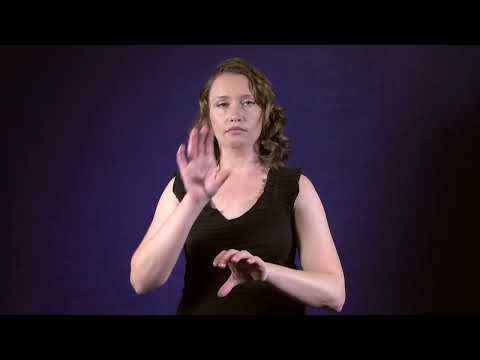
The sign for STACK UP in ASL generally uses both hands to show items being layered or piled on top of each other. A common approach is to use flat B-handshapes, one stacking over the other in a repeated upward motion. This movement visually represents the concept of stacking objects vertically. Depending on the context, you might also use classifiers to indicate the type of objects being stacked. For instance, CL: B (flat object) can represent paper, while CL: C may be used for boxes. The classifier method is particularly useful for clarifying what is being stacked and how it is arranged. Another common variation of the sign for STACK UP in ASL involves a single repeated motion of one flat hand over the other, symbolizing layers. This version is more generalized and can be used when the specific items don’t need to be identified. A frequent error when learning the sign for STACK UP in ASL is incorrect palm orientation. Many beginners accidentally turn their palms inward or downward, which can confuse the meaning. It’s also important to keep the motion consistent and not overexaggerated, as that can distract from clarity. Pronoun usage in ASL is spatial. When referring back to things that stack up, you may need to designate a location in your signing space to refer to them again later. Understanding this spatial grammar enhances the clarity and flow of your conversation.
Tips for Beginners3>
If you’re just beginning to learn the sign for STACK UP in ASL, don’t be discouraged by the visual complexity of the motion. Start slow and focus on getting the handshape and movement correct before adding speed or extra gestures. Accuracy is more important than speed in the early stages. A common beginner mistake is forgetting to use facial expressions. These are crucial in ASL and can completely change the meaning of the sign. For the sign for STACK UP in ASL, using appropriate facial grammar can show whether the stack is small, large, welcome, or stressful. Another tip is to break the sign into small parts. First, practice the handshape. Then, get comfortable with the motion. Finally, incorporate both together with facial expressions. Layering your practice in this way mirrors the concept of the sign itself—building piece by piece. Use visual references from everyday life to strengthen your understanding. Watch how objects stack in real life—whether it’s dishes, books, or mail—and try to mimic that same visual logic in your sign. This helps connect the sign’s meaning with physical reality. Be patient with yourself. Fluency takes time and repetition. The sign for STACK UP in ASL will become second nature with consistent practice and exposure to native signers. Watching ASL videos or interacting with the Deaf community can boost comprehension and confidence.
Connections to Other Topics
The sign for STACK UP in ASL is closely connected to the concept of accumulation. Related signs include PILE UP, which may use a similar upward layering motion but often has a more chaotic feel. STACK UP is more orderly and deliberate. Another related sign is CL: B (classifiers for flat objects), which is commonly used to show papers, plates, or other flat items being stacked. Understanding classifiers is essential to mastering signs like STACK UP, as they add nuance and specificity. The sign COLLECT or GATHER is conceptually linked to STACK UP. Both signs describe the process of accumulating items, but COLLECT involves gathering things from different locations, while STACK UP emphasizes organized layering. You can also explore the sign for BUILD, which sometimes uses upward motion similar to STACK UP. BUILD focuses more on creating something over time, while STACK UP is about accumulation rather than creation. Lastly, the sign for INCREASE is relevant. While not identical in meaning, INCREASE and STACK UP both deal with the idea of growing quantity. Combining these signs in context can help you express complex ideas like “Tasks increase and stack up.”
Lengthy Summary
The sign for STACK UP in ASL is a visually rich and contextually versatile expression that captures the idea of accumulation through upward, repeated motion. Whether you’re discussing a growing pile of work, a stack of books, or a buildup of responsibilities, this sign effectively conveys the concept of layering one item on top of another. Its visual nature makes it intuitive to learn, but mastering it still requires attention to detail in handshape, palm orientation, and movement. Understanding the cultural context in which the sign for STACK UP in ASL is used deepens your ASL fluency. Within the Deaf community, this sign is common in both casual and formal conversations and is often paired with expressive facial grammar to show the size or emotional impact of the stack. Regional differences may exist, but the core visual logic remains consistent, ensuring mutual understanding across communities. Beginners should take care to avoid common pitfalls such as incorrect hand orientation and lack of facial expression. Start slow, use mirrors and recordings for self-assessment, and build up to using the sign in full sentences and real-life contexts. The more you use the sign for STACK UP in ASL, the more natural it will become, especially when combined with related signs like COLLECT, BUILD, and PILE UP.
Practice Activities
such as mirror drills, video logging, contextual exercises, and group role-play can help reinforce correct usage. These techniques not only improve your signing but also connect the vocabulary to everyday life, making it more memorable and useful. As you continue your ASL journey, remember that learning each new sign opens a window into Deaf culture, community, and communication. The sign for STACK UP in ASL is more than a vocabulary word—it’s a tool for expressing real-life scenarios with clarity and emotion. Keep practicing, stay curious, and don’t be afraid to stack up your ASL skills one sign at a time! Synonyms: accumulate, pile up, gather, build up, amass Educational resources: Find related learning materials in our course bank! Want more? Check out some of our popular learning activities on the homepage! Need to look up a sign? Use our highly rated dictionary: https://aslinteractive.com/best-asl-dictionary/ Follow us on tiktok: https://www.tiktok.com/@aslinteractive. More social media links at the bottom of this page! Long-tail Keywords: what is the sign for stack up in ASL, how do you sign stack up in ASL, ASL sign for stack up Categories: tags: stack signs in ASL, ASL organization signs, ASL verbs, ASL phrases about arrangement, everyday actions in ASL
Want more? Check out some of our popular learning activities!
ASL Interactive Resources
ASLInteractive YouTube Channel
Follow us on tiktok: @aslinteractive.com
Follow us on Instagram: aslinteractive
Facebook page: aslinteractive
Facebook group: aslinteractive
LInkedIn: ASL Interactive LLC
Twitter: @ASL_interactive
*Some information on this page is AI-generated. AI can make mistakes. Please check the information.
Responses