Practice Activities
Practicing the sign for STOP in ASL requires consistent repetition and context-based learning. One great way to get started is by using a mirror. Stand in front of the mirror and practice forming the sign for STOP in ASL while observing your handshape and movement. This helps you become more aware of your signing accuracy and facial expressions. Recording yourself signing is another effective activity. Use your phone or webcam to film yourself doing the sign for STOP in ASL in short sentences or isolated form. Watch the video back to check for clarity and compare it with native signers or instructional videos. Signing in context is crucial for retention. Incorporate the sign for STOP in ASL into daily interactions, such as telling someone to stop walking or stop talking. Practicing in real-life scenarios reinforces memory and builds fluency. For more advanced learners, engage in rapid-fire drills. Have a partner give you various commands, and respond quickly with the appropriate sign, including the sign for STOP in ASL. This trains your reaction time and deepens your muscle memory. Group activities can also be useful. Practice dialogues or roleplays where you must use the sign for STOP in ASL naturally and appropriately. This makes learning more dynamic and social, which is important in the visual and community-driven nature of American Sign Language.
SEO Cultural Context
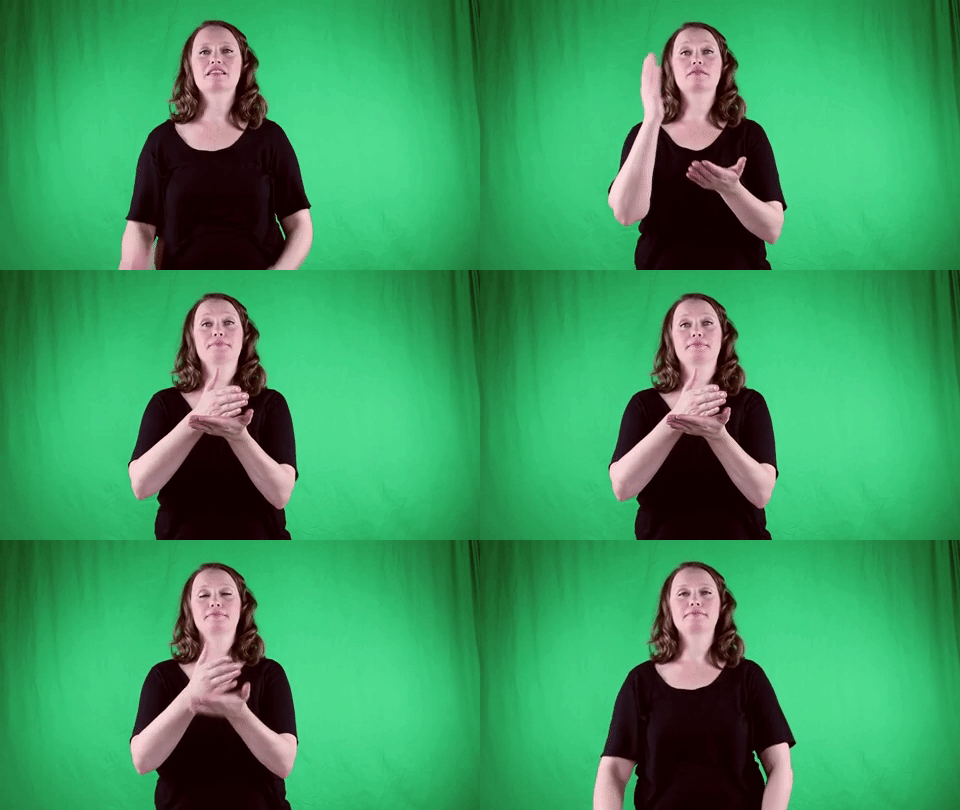
The sign for STOP in ASL carries both linguistic and cultural significance. In Deaf culture, direct communication is highly valued, and using signs like STOP is often more immediate and expressive than verbal equivalents. It’s a common sign used in classrooms, conversations, and public spaces to indicate an urgent action or request. There is a standard version of the sign for STOP in ASL, but some regional variations may exist. In most parts of the United States, the sign involves one flat palm facing upward while the dominant hand comes down perpendicularly to strike the palm. However, some variations may alter the angle or intensity depending on context or local norms. Understanding the cultural context is essential. The sign for STOP in ASL is often used by Deaf adults to manage behavior in children or to interject during storytelling. It’s also used in contexts of safety, such as stopping someone from entering a dangerous area. These uses reflect the community’s emphasis on visual attention and spatial awareness. In the classroom, teachers may use the sign for STOP in ASL to regain control or direct attention. It’s a powerful sign that, when used respectfully, helps maintain clear communication and safety. Knowing when and how to use this sign appropriately respects Deaf cultural norms and fosters better interactions.
Extended Definition
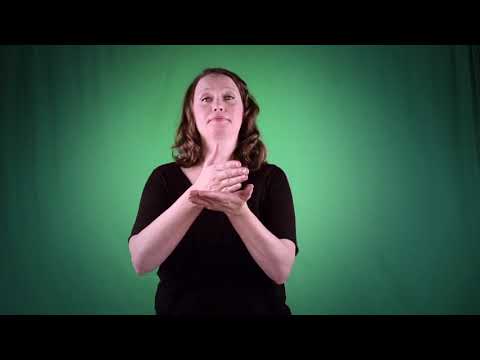
The sign for STOP in ASL is made by holding your non-dominant hand flat, palm up, and bringing the side of your dominant hand down sharply onto the palm. The dominant hand is also flat, and the motion resembles a chopping movement. The contact should be firm but not aggressive. This sign falls under the category of directional and action-based signs. It visually represents the idea of halting or intercepting motion, which makes it intuitive for visual learners. It’s widely understood in both formal and informal ASL settings. There are related signs that learners sometimes confuse with the sign for STOP in ASL. For example, signs for WAIT or PAUSE may look similar but involve different handshapes or movements. STOP is more abrupt and has a distinct downward strike, while WAIT uses wiggling fingers and a gentler motion. A common error among beginners is making the sign too softly or missing the palm contact altogether. This can make the sign unclear or reduce its effectiveness in communication. Another mistake is using the sign in contexts where a softer or more nuanced sign would be culturally appropriate. It’s important to match the intensity of the sign for STOP in ASL with the situation. For example, during a game, a playful version may be fine, but in emergencies or serious discussions, a more deliberate and firm motion is expected. This nuance is part of learning ASL as a living, expressive language.
Tips for Beginners3>
If you’re just starting out with the sign for STOP in ASL, don’t worry—this is one of the more straightforward and useful signs to learn early. Start by mastering the shape and movement. Use slow, deliberate motions at first to ensure you’re hitting the right palm position and angle. One of the most common beginner mistakes is forgetting which hand should be dominant. Always use your dominant hand to make the striking motion. Switching hands mid-practice can lead to confusion and inconsistency. Another tip is to practice the sign in front of a mirror or with a partner who can give feedback. This helps you refine your movement and get comfortable using the sign in real-time interactions. Also, watch videos of native signers using the sign for STOP in ASL in full conversations to see how it flows naturally. Keep in mind the facial expression. A stern or serious expression can add clarity, especially in situations that require urgency. In ASL, facial grammar is as important as hand movements, and it adds meaning to your signs. Finally, be patient with yourself. Consistency is key. Practicing the sign for STOP in ASL daily, even just for a few minutes, will help you build confidence and fluency over time.
Connections to Other Topics
The sign for STOP in ASL connects with several other essential signs and concepts in American Sign Language. One closely related sign is GO. While STOP halts an action, GO initiates movement. Practicing them together can help you understand contrasting verbs in ASL. Another related sign is WAIT. Both signs are used to control or manage action, but WAIT is softer and implies a delay rather than a full stop. Learning the difference enhances your vocabulary and situational awareness. The sign for NO is also thematically linked. Like STOP, it’s used to reject or prohibit something. These signs often appear in commands or expressions of disapproval, especially in parenting or teaching contexts. Facial expressions used with the sign for STOP in ASL are part of a broader category of non-manual signals in ASL. Learning how facial grammar affects meaning across different signs helps you become a more fluent signer. Lastly, the sign for DANGER often appears in the same scenarios as STOP, especially in safety-related situations. Knowing how to use these signs together strengthens your ability to convey urgency or caution clearly and effectively.
Lengthy Summary
Mastering the sign for STOP in ASL is a foundational step in learning American Sign Language. It is an action-oriented sign that plays a crucial role in everyday communication, from managing conversations to ensuring safety in public spaces. Practicing this sign regularly through mirror work, video recordings, and contextual drills will help you embed it into your signing repertoire. Understanding the cultural context of the sign for STOP in ASL deepens your appreciation of its usage. Whether used in classrooms, homes, or public settings, the sign reflects core Deaf cultural values such as directness, clarity, and visual attentiveness. Being culturally sensitive to how and when to use this sign is just as important as learning the physical motion. The
Extended Definition
highlights the importance of precision in handshape, movement, and facial expression. Related signs like WAIT, NO, and DANGER help round out your understanding of how STOP fits within a broader network of vocabulary. Recognizing common errors and correcting them early will make your learning journey smoother and more effective. For beginners, confidence comes with practice. Use tools like mirrors, video feedback, and peer interaction to reinforce accuracy. Don’t be discouraged by initial mistakes—each one is part of the learning process. The sign for STOP in ASL is not just a word; it’s a powerful tool for communication that can be adjusted in tone depending on context and facial grammar. Connecting the sign for STOP in ASL to other vocabulary such as GO, WAIT, and NO helps expand your expressive range. This interconnected learning approach builds a strong linguistic foundation and prepares you for more complex conversations in ASL. Now that you’ve explored the structure, meaning, and cultural context of the sign for STOP in ASL, it’s time to take action. Practice it in different settings, incorporate it into your daily signing, and continue expanding your ASL skills. Every sign you learn brings you closer to fluency and deeper connection with the Deaf community. Keep signing, stay motivated, and don’t STOP! Synonyms: halt, pause, cease, terminate, end Educational resources: Find related learning materials in our course bank! Want more? Check out some of our popular learning activities on the homepage! Need to look up a sign? Use our highly rated dictionary: https://aslinteractive.com/best-asl-dictionary/ Follow us on tiktok: https://www.tiktok.com/@aslinteractive. More social media links at the bottom of this page! Long-tail Keywords: what is the sign for stop in ASL, how do you sign stop in ASL, stop in American Sign Language Categories: tags: stop sign ASL, common ASL verbs, ASL travel vocabulary, everyday ASL actions, beginner ASL vocabulary
Want more? Check out some of our popular learning activities!
ASL Interactive Resources
ASLInteractive YouTube Channel
Follow us on tiktok: @aslinteractive.com
Follow us on Instagram: aslinteractive
Facebook page: aslinteractive
Facebook group: aslinteractive
LInkedIn: ASL Interactive LLC
Twitter: @ASL_interactive
*Some information on this page is AI-generated. AI can make mistakes. Please check the information.
Responses