
Practice Activities
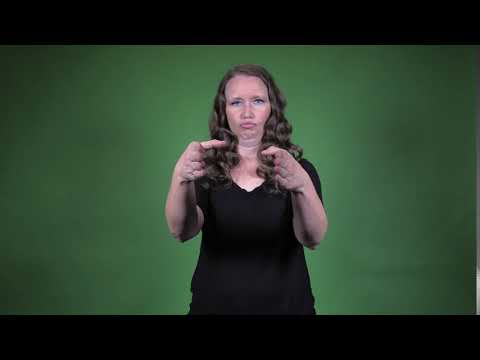
Learning the sign for STREET in ASL is most effective when practiced in a variety of engaging and interactive ways. Start with mirror work to fine-tune your handshape and movement. Watch yourself as you sign to ensure both hands are symmetrical and moving forward in unison, just like two cars driving down a road. Practicing in front of a mirror helps develop muscle memory and visual clarity. Record yourself signing the sign for STREET in ASL from different angles. Play the recordings back to evaluate your precision, fluidity, and non-manual markers such as facial expressions. This method allows you to catch subtle mistakes and track your progress over time. Incorporate the sign for STREET in ASL into real-world context. Sign while describing your neighborhood, giving directions, or narrating a story involving streets or travel. Use practice sentences like “My house is on a quiet street” or “Turn right at the next street.” Contextual practice solidifies retention and prepares you for real-life usage. For more advanced learners, try receptive drills with a signing partner or video clips. Watch someone else sign street-related phrases and identify the use of the sign for STREET in ASL. Challenge yourself with speed drills, alternating between similar signs like ROAD, AVENUE, and STREET to build fluency and accuracy.
SEO Cultural Context
Understanding the cultural background of the sign for STREET in ASL enhances both accuracy and respect for the Deaf community. This sign is commonly used in conversations about navigation, addresses, and urban environments. It plays a role in storytelling, giving directions, and describing places, which are all central to Deaf cultural expression. The sign for STREET in ASL usually involves both hands in flat B handshapes, palms facing each other and moving forward in parallel. This visual metaphor represents a physical street and aligns with ASL’s spatial and iconic nature. The sign is widely accepted across the United States, though minor regional variations may exist in speed or subtle movement differences. In Deaf culture, giving directions often involves rich spatial descriptions and classifiers. The sign for STREET in ASL fits naturally into this storytelling tradition. Accurate use of space and movement is expected, and clear signing is a valued communication skill. Using the correct sign in the appropriate context shows cultural awareness and linguistic competence.
Extended Definition
The sign for STREET in ASL is iconic and easy to visualize. It uses two flat B handshapes, palms facing each other, held at about chest level. Both hands move forward in tandem, mimicking the shape of a street or road stretching outward. The movement is smooth and steady, expressing the idea of a continuous path. This sign is closely related to signs like ROAD, AVENUE, and HIGHWAY. While all these signs share similar handshapes and movements, they differ slightly in orientation or context. For instance, ROAD may use a more narrow space between the hands, while HIGHWAY might involve a classifier to indicate multiple lanes or traffic. A common error is making the hands too close or too far apart, which can confuse the meaning. Beginners sometimes use a single hand or forget the forward motion, turning the sign into something unclear. Consistency in handshape, distance between hands, and movement is essential when signing the sign for STREET in ASL. This sign can also be incorporated with classifiers for more detailed descriptions. For example, when describing a car driving down the street, you might combine the STREET sign with a classifier for the vehicle. This layering of signs builds a richer narrative and showcases the visual-spatial grammar of ASL.
Tips for Beginners
If you’re new to learning the sign for STREET in ASL, take it slow and focus on accuracy before speed. Start by watching native signers and mimic their handshapes and motion. It’s helpful to record yourself and compare your form to reliable video sources to ensure you’re on the right track. One common mistake is using uneven hand movements. Both hands should move forward at the same pace and height. Practice in front of a mirror to ensure symmetry and clean execution. If your hands drift apart or collide, pause and reset your position. Another tip is to visualize an actual street when signing. Think about two lanes of traffic moving forward. This mental image can help you embody the motion and intention behind the sign for STREET in ASL. Repetition in short practice bursts is more effective than long, infrequent sessions. Don’t be discouraged by early mistakes. ASL is a visual language, and muscle memory takes time to develop. Stay patient, and celebrate small wins as you grow more confident using the sign for STREET in ASL.
Connections to Other Topics
The sign for STREET in ASL connects naturally with several other signs that expand your vocabulary around travel and directions. One closely related sign is ROAD. Like STREET, it uses two parallel handshapes, but ROAD may be narrower and used in more rural contexts or metaphorically for life paths. Another useful connection is the sign for AVENUE. It shares structural similarities with the sign for STREET in ASL but might incorporate different facial expressions or slight hand shape adjustments depending on the signer’s region or context. The concept of LOCATION in ASL also ties in. This includes signs like ADDRESS, CITY, and PLACE. These signs are often used together when describing where something is located. Understanding how the sign for STREET in ASL fits within this vocabulary cluster helps reinforce grammar and spatial logic in ASL. Classifiers are another essential topic. For example, the sign for STREET in ASL can be used in combination with classifiers to create dynamic descriptions. You can show a car turning onto a street, a person walking down the street, or even an obstacle in the road. These combinations deepen your descriptive power. Lastly, the sign for STREET in ASL connects with directional verbs and spatial referencing. In ASL, you don’t just say where something is—you show it. Mastering this sign supports your ability to give directions, describe events, and narrate personal experiences in a visually rich and grammatically correct way.
Lengthy Summary
The sign for STREET in ASL is a fundamental part of everyday vocabulary for anyone learning American Sign Language. Its iconic nature, with two flat B handshapes moving forward side by side, makes it a memorable and practical sign. Used frequently in conversations about locations, directions, and storytelling, it carries both linguistic and cultural importance. Practicing the sign for STREET in ASL through mirror work, video feedback, and contextual use builds solid muscle memory and fluency. Engaging in advanced drills and receptive exercises adds depth to your learning and sharpens your ability to recognize and produce the sign accurately in varied situations. Culturally, the sign for STREET in ASL reflects the visual-spatial essence of Deaf communication. It aligns with the community’s preference for clear, descriptive language and supports the rich tradition of visual storytelling. Understanding its regional variations and appropriate usage helps learners navigate the nuanced world of ASL with respect and competence. By exploring related signs like ROAD, AVENUE, and PLACE, and incorporating classifiers and directional verbs, you build a comprehensive understanding of how STREET fits into larger linguistic and thematic frameworks. These connections not only expand your vocabulary but also improve your grammatical accuracy and expressive range. For beginners, starting with small, focused practice sessions and using visual aids can make a big difference. Avoid common pitfalls like uneven hand movement or lack of forward motion. Use mental imagery to guide your signing and don’t be afraid to make mistakes—they’re part of the learning process. In summary, mastering the sign for STREET in ASL is more than just memorizing movement—it’s about integrating that sign into your expressive toolkit. It opens doors to describing places, telling stories, and communicating clearly in a visual language. Keep practicing daily, challenge yourself with new contexts, and stay curious. Every sign you learn brings you closer to fluency and deeper connection with the Deaf community. Synonyms: road, avenue, boulevard, lane, thoroughfare Educational resources: Find related learning materials in our course bank! Want more? Check out some of our popular learning activities on the homepage! Need to look up a sign? Use our highly rated dictionary: https://aslinteractive.com/best-asl-dictionary/ Follow us on tiktok: https://www.tiktok.com/@aslinteractive. More social media links at the bottom of this page! Long-tail Keywords: what is the sign for street in ASL, how do you sign street in ASL, street in ASL sign language Categories: tags: ASL vocabulary, travel signs in ASL, street-related signs, transportation in ASL, urban environment signs
Want more? Check out some of our popular learning activities!
ASL Interactive Resources
ASLInteractive YouTube Channel
Follow us on tiktok: @aslinteractive.com
Follow us on Instagram: aslinteractive
Facebook page: aslinteractive
Facebook group: aslinteractive
LInkedIn: ASL Interactive LLC
Twitter: @ASL_interactive
*Some information on this page is AI-generated. AI can make mistakes. Please check the information.
Responses