Practice Activities
To build fluency with the sign for TEETH in ASL, consistent practice is key. Begin with mirror work to ensure your handshape, facial expressions, and placement are accurate. This type of self-observation builds confidence and muscle memory. Use video recording to capture yourself signing. Play the footage back to check precision, especially the movement and placement near the mouth. Compare your version of the sign for TEETH in ASL with trusted ASL resources or instructor feedback to refine your technique. Practice the sign in everyday contexts. As you brush your teeth, talk about dental hygiene, or visit a dentist, incorporate the sign naturally. Contextual use deepens memory and builds conversational comfort. Once you’re familiar with the basics, challenge yourself with advanced drills. Sign short narratives that include the word “teeth,” such as describing visiting the dentist or explaining how to brush. Practice fingerspelling related terms like “floss” or “toothbrush” to build vocabulary around the sign for TEETH in ASL. Group practice can also be helpful. Partner with other learners or a Deaf mentor to run through dental care-themed dialogues. Try signing songs or stories that mention teeth to make learning enjoyable and memorable.
SEO Cultural Context
In Deaf culture, clarity and visibility are essential when using signs related to the body, especially those involving the face. The sign for TEETH in ASL is a functional, descriptive sign used frequently in everyday conversations. It appears in discussions about health, hygiene, pain, or even appearance. Understanding the cultural context of the sign for TEETH in ASL includes knowing when and how it’s used respectfully. For instance, discussing someone’s teeth in a humorous or judgmental way may be considered inappropriate unless it’s within a close-knit, casual setting. Regional variation in the sign for TEETH in ASL is minimal, but as with many signs, there may be subtle differences in movement or handshape depending on the local Deaf community. Some signers may use a more exaggerated motion, especially when emphasizing a problem like a toothache or a missing tooth. Deaf culture values directness and visual clarity. When using body-related signs like the sign for TEETH in ASL, it’s important to maintain good eye contact and facial expressions. A flat or uninterested face can unintentionally change the meaning or make your signing less effective.
Extended Definition
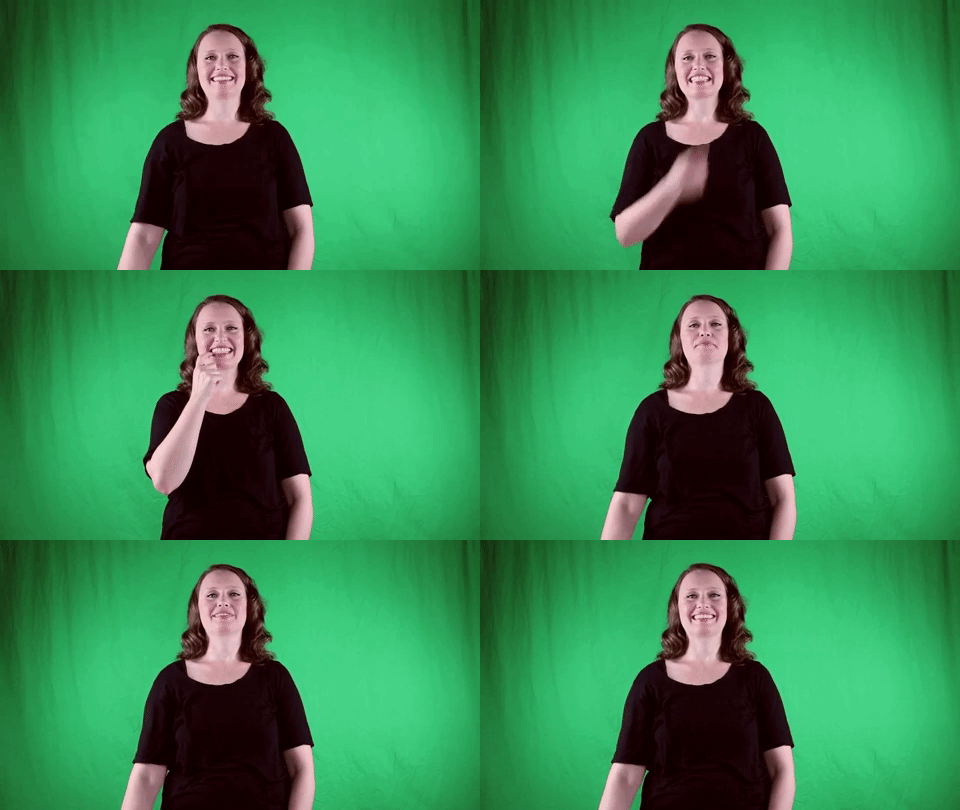
The sign for TEETH in ASL is typically made by pointing to the upper or lower teeth using the index finger of your dominant hand. Some signers use a bent index to lightly tap or point at their teeth, depending on the context. This sign is classified as a body-anchored sign, meaning it is produced near or on a specific part of the body. It is closely related to signs like TOOTH, TOOTHACHE, and BRUSH-TEETH. While TOOTH may involve a similar pointing motion, it is often more specific—indicating a single tooth instead of the whole set. The sign for TEETH in ASL refers to all the teeth collectively. Common errors include placing the sign too far away from the mouth or using the wrong handshape. Beginners might also confuse the sign with similar mouth-related signs such as SMILE or MOUTH. To avoid confusion, make sure your movement is precise and your facial expression matches the context—whether you’re talking about pain, hygiene, or smiling. Sometimes, learners attempt to create new or mimed versions of the sign for TEETH in ASL. While ASL allows for some iconicity, standard signs are always preferred, especially in formal or educational settings. Stick to the established sign unless you’re engaging in storytelling or poetic ASL where creative signing is more accepted.
Tips for Beginners3>
Starting with the sign for TEETH in ASL can feel simple at first, but attention to detail is crucial. Make sure your handshape remains consistent, and the pointing motion is gentle but clear. Overly aggressive or vague pointing can distort the meaning. One common mistake is confusing the sign for TEETH in ASL with similar facial-area signs. MOUTH, for example, uses a circular motion around the lips, while TEETH involves direct contact or proximity to the teeth area. Pay close attention to movement and location during practice. Use a mirror often. Seeing yourself sign reinforces correct positioning and helps you self-correct. It’s also a great confidence booster as you see your progress over time. Don’t rush the learning process. Mastering even simple signs takes repetition and real-life application. Incorporate the sign for TEETH in ASL into your daily routines—especially during moments that naturally involve teeth, such as brushing or eating. If you’re feeling stuck, watch videos of native Deaf signers using the sign in full ASL sentences. Observing how it’s used in context provides insights that isolated practice might not offer. It’s also helpful to sign along with ASL storybooks or children’s videos that include vocabulary like the sign for TEETH in ASL.
Connections to Other Topics
The sign for TOOTH is directly related and often used interchangeably depending on whether you’re referring to one tooth or all teeth. The main difference is in the context and specificity. While the sign for TEETH in ASL covers all teeth, TOOTH narrows it down to a single unit. TOOTHACHE is another closely connected sign. It usually involves a grimacing facial expression and a tapping or holding motion near the cheek. Combining the sign for TEETH in ASL with a pain indicator helps convey dental discomfort. BRUSH-TEETH is a compound sign that mimics the motion of brushing. It often follows the sign for TEETH in ASL and is used in conversations about hygiene routines. It’s a great way to build full sentences and express daily habits. MOUTH is a foundational sign that shares facial space with TEETH. Understanding the differences in movement and handshape helps avoid confusion. MOUTH involves a circular shape around the lips, while TEETH is more focused and precise. SMILE and FROWN are facial expressions that often accompany discussions about teeth, especially in children’s conversations or storytelling. These signs help reinforce emotional context and support the use of the sign for TEETH in ASL in expressive communication.
Lengthy Summary
Mastering the sign for TEETH in ASL opens up conversations about health, hygiene, and personal care. It’s a simple yet vital sign that plays a big role in everyday ASL communication. With clear handshape, correct placement near the mouth, and appropriate facial expressions, learners can use this sign effectively in many contexts. From mirror work to advanced sentence drills, practicing the sign for TEETH in ASL in multiple ways builds fluency and confidence. Understanding its cultural context—such as how the sign is used in the Deaf community and when it’s appropriate—ensures respectful and accurate communication. By exploring related signs like TOOTH, TOOTHACHE, and BRUSH-TEETH, learners develop a broader vocabulary and deeper understanding of ASL’s structure. These connections also help learners form full sentences and narratives, making their signing more expressive and natural. Beginners should stay mindful of placement and movement, using resources like mirrors, videos, and Deaf mentors to refine their skills. Avoiding common mistakes—like incorrect handshape or placement—will lead to more effective communication and faster progress. Whether you’re just starting or deepening your ASL knowledge, the sign for TEETH in ASL is a meaningful addition to your vocabulary. Keep practicing daily, integrate the sign into real-life scenarios, and stay curious about how it connects to broader ASL themes. Every sign you learn brings you closer to fluency, one visual word at a time. Keep signing, keep learning, and let your hands do the talking . Synonyms: chompers, gnashers, pearly whites, fangs, dentures Educational resources: Find related learning materials in our course bank! Want more? Check out some of our popular learning activities on the homepage! Need to look up a sign? Use our highly rated dictionary: https://aslinteractive.com/best-asl-dictionary/ Follow us on tiktok: https://www.tiktok.com/@aslinteractive. More social media links at the bottom of this page! Long-tail Keywords: what is the sign for teeth in ASL, how do you sign teeth in ASL, ASL sign for teeth Categories: tags: teeth signs, ASL anatomy vocabulary, body parts in ASL, dental health signs, American Sign Language dictionary
Want more? Check out some of our popular learning activities!
ASL Interactive Resources
ASLInteractive YouTube Channel
Follow us on tiktok: @aslinteractive.com
Follow us on Instagram: aslinteractive
Facebook page: aslinteractive
Facebook group: aslinteractive
LInkedIn: ASL Interactive LLC
Twitter: @ASL_interactive
*Some information on this page is AI-generated. AI can make mistakes. Please check the information.
Responses