
Practice Activities
One of the most effective ways to master the sign for WORD in ASL is through mirror work. Stand in front of a mirror and practice the sign slowly, focusing on handshape, location, and movement. This helps you catch subtle errors in your form and refine your technique over time. Recording your practice sessions can also boost retention and self-awareness. Use your phone or webcam to record yourself signing sentences that include the sign for WORD in ASL. Play them back to evaluate fluency, clarity, and facial expressions, which are essential in American Sign Language. Incorporate the sign for WORD in ASL into daily conversation by signing in context. For example, during a conversation about vocabulary, language, or school, use the sign naturally. This deepens your memory through real-life application. Advanced learners can create drills using multiple vocabulary signs alongside the sign for WORD in ASL. Try signing short phrases like “new word,” “spell the word,” or “what does the word mean?” to build fluidity and automaticity in your signing. Group practice can also be powerful. Get together with fellow learners or members of the Deaf community to practice using the sign for WORD in ASL in interactive dialogues, games, or storytelling activities. This adds a social and cultural layer to your learning.
SEO Cultural Context
Understanding the cultural context behind the sign for WORD in ASL is essential for respectful and accurate communication. In Deaf culture, language is a central part of identity, and words are often viewed in terms of their visual and conceptual meaning rather than just their spelling or sound. The sign for WORD in ASL represents the idea of a single lexical item or unit of language. It is commonly used in educational settings, especially in Deaf schools and during literacy instruction. It’s also frequently used in conversations about learning ASL, interpreting, or discussing English as a second language. While the basic sign for WORD in ASL is standardized, there may be slight regional variations in how it’s executed. Some communities may emphasize different aspects of the movement or handshape. It’s always respectful to observe and adapt to local signing norms when interacting with Deaf individuals from different regions. Using the sign for WORD in ASL correctly also means understanding when it is appropriate. In Deaf culture, clarity and directness are valued, and overusing or misusing signs like WORD can lead to confusion or appear unnatural. Context is key, especially when discussing abstract concepts versus concrete terms.
Extended Definition
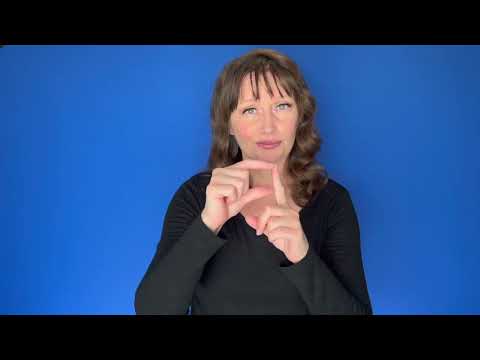
The sign for WORD in ASL typically involves the dominant hand in the “G” handshape (index finger and thumb extended) tapping the index finger of a flat non-dominant hand, which is held palm-up. The motion simulates the idea of picking out a single word from a line of text or thought. This sign visually represents the concept of isolating or referencing a single element in language. It’s closely related to signs like SENTENCE, LANGUAGE, and SPELL. Each of these signs emphasizes a different aspect of communication, but they often appear together in ASL conversations. A common mistake with the sign for WORD in ASL is confusing it with the sign for SENTENCE or LANGUAGE. These signs may look somewhat similar to beginners but differ in movement and intent. Make sure to keep the handshape and placement accurate—slight changes can completely alter the meaning. Another issue is incorrect orientation of the non-dominant hand. It should be steady and palm-up, acting like a base or page. If the palm is facing sideways or down, the sign may become unclear or misinterpreted. Consistency is key in clearly expressing the concept of a “word.”
Tips for Beginners
If you’re just starting to learn the sign for WORD in ASL, take your time and focus on precision. The sign is simple, but like many in ASL, it depends on clear handshapes and movement. Practicing slowly at first will help you build muscle memory. Beginners often overlook the importance of facial expressions in ASL. While signing the word WORD, your facial expression should match the context. If you’re asking about a difficult word or a new word, your eyebrows might be raised to indicate a question. This adds depth and clarity to your signing. Another common mistake is making the sign too large or too small. The movement should be small and controlled, not exaggerated. Over-signing can make you appear unsure or unnatural. Keep your signs crisp and confident. Use repetition as a learning tool. Try signing the sign for WORD in ASL repeatedly in different contexts—on its own, in sentences, and during storytelling. Repetition helps solidify the sign in your memory and improves fluency. Don’t be afraid to ask for feedback. Whether you’re learning in a classroom setting or from Deaf community members, constructive input is invaluable. Most fluent signers appreciate the effort and are willing to help you improve your use of the sign for WORD in ASL.
Connections to Other Topics
The sign for WORD in ASL connects closely with the sign for LANGUAGE. Both are used when discussing communication, dialects, or bilingualism. While WORD refers to individual units, LANGUAGE covers the broader system. SPELL is another related sign, frequently used together with the sign for WORD in ASL. When asking someone to spell a word or clarify a term, these signs often appear in sequence. This is especially useful in educational and interpreting contexts. The sign for SENTENCE is also conceptually related. It builds on the idea of combining words together into a structured thought. Understanding the sign for WORD in ASL helps form a foundation for learning more complex grammar in ASL. VOCABULARY is another sign that often overlaps in usage. In academic or classroom discussions, you may sign “new vocabulary” or “hard vocabulary” where the sign for WORD in ASL is included. This supports learning and teaching ASL comprehensively. Lastly, the sign for MEAN or MEANING pairs naturally with the sign for WORD in ASL. This is useful when asking what a word means, defining terms, or discussing language comprehension. Together, they form a powerful toolset for nuanced communication.
Lengthy Summary
The sign for WORD in ASL is a foundational element in American Sign Language, connecting deeply with topics of communication, education, and culture. Its simple yet expressive form captures the essence of language at the word level, making it an essential sign for learners at all stages. Through consistent practice—whether in front of a mirror, on camera, or in conversation—learners can develop fluency and confidence. The sign for WORD in ASL becomes more meaningful when used in real-life contexts, such as discussing language learning, interpreting, or classroom instruction. Culturally, the sign reflects the Deaf community’s emphasis on visual language and clear expression. Understanding its proper use, regional variation, and contextual meaning ensures you’re not just signing correctly, but also respectfully. It’s more than just a sign; it’s a window into how Deaf culture approaches and values language. A deep dive into the sign structure reveals how vital handshape, location, and movement are. Confusing the sign with similar ones like SENTENCE or SPELL is common, but avoidable with careful observation and practice. Beginners should focus on precision, avoid over-signing, and incorporate facial expressions to enhance clarity. The sign for WORD in ASL links naturally with other vocabulary like LANGUAGE, SPELL, SENTENCE, VOCABULARY, and MEANING. These connections enrich your understanding and allow you to engage in more advanced conversations about language and communication. To master the sign for WORD in ASL, keep practicing, stay curious, and immerse yourself in everyday signing. Whether you’re learning ASL for personal, academic, or professional reasons, each word you learn brings you closer to fluency and deeper connection with the Deaf community. Keep signing, keep learning ✨ Synonyms: Word, Term, Expression, Saying, Phrase Educational resources: Find related learning materials in our course bank! Want more? Check out some of our popular learning activities on the homepage! Need to look up a sign? Use our highly rated dictionary: https://aslinteractive.com/best-asl-dictionary/ Follow us on tiktok: https://www.tiktok.com/@aslinteractive. More social media links at the bottom of this page! Long-tail Keywords: Categories: tags: ASL vocabulary, American Sign Language dictionary, ASL learning categories, ASL signs by theme, sign language topics
Want more? Check out some of our popular learning activities!
ASL Interactive Resources
ASLInteractive YouTube Channel
Follow us on tiktok: @aslinteractive.com
Follow us on Instagram: aslinteractive
Facebook page: aslinteractive
Facebook group: aslinteractive
LInkedIn: ASL Interactive LLC
Twitter: @ASL_interactive
*Some information on this page is AI-generated. AI can make mistakes. Please check the information.
Responses