
Definition: A close companion (third instance).
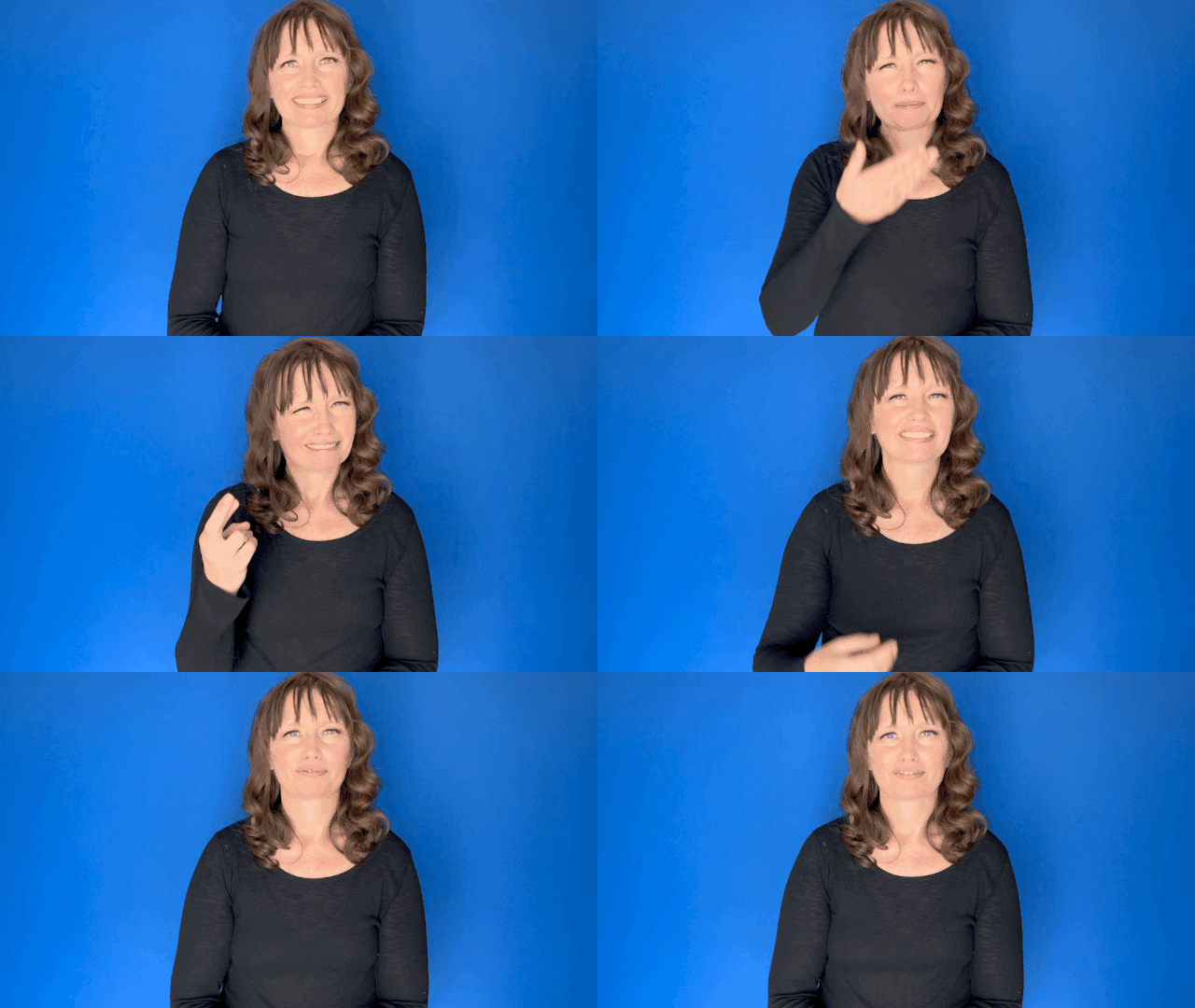
Sign for BEST FRIEND 3 in ASL

Practice Activities:
To build fluency with the sign for BEST FRIEND 3 in ASL, start by practicing the sign in front of a mirror. Focus on the handshape, movement, and facial expressions to ensure clarity. Alternate between producing the sign slowly and at conversational speed to gain confidence.
Use fingerspelling drills in conjunction with the sign for BEST FRIEND 3 in ASL to help reinforce recognition and production. Fingerspell names or other context words that might appear in a sentence with the sign. Adding fingerspelling helps you transition more smoothly into full ASL sentence structures.
Create simple sentences to use the sign in everyday contexts. Try: “That is my best friend,” or “We became best friends in school.” Practice signing these sentences clearly while emphasizing the proper use of the sign for BEST FRIEND 3 in ASL. Record yourself and watch for accurate hand movements and transitions into the next signs.
For storytelling, invent a short narrative about how you met your best friend and sign the short story to a peer or in front of a mirror. Include details like how long you’ve known each other, what activities you enjoy together, and why they are your best friend. Incorporate the sign fluidly while telling the story.
Pair up with another signer for a role-play. One person pretends to introduce their best friend and provides background information, while the other person asks questions in ASL. This activity encourages spontaneous use of the sign for BEST FRIEND 3 in ASL and develops interactive fluency.
Review real-life settings where you might use this phrase, like meeting someone at a party or chatting about relationships. Think about how you would naturally talk about your best friend in those moments and practice those exchanges regularly until the structure and vocabulary feel natural.
Cultural Context:
The sign for BEST FRIEND 3 in ASL represents more than just a gesture—it captures deep emotional bonds and unique interpersonal connections in Deaf culture. In American Sign Language, relationships are often communicated visually and spatially, which adds layers of meaning to a sign like BEST FRIEND 3. Signing about friends, especially a third close friend, offers personal and cultural insights into how the Deaf community values trust and loyalty.
In the Deaf community, the concept of a best friend can have significant social importance. The sign for BEST FRIEND 3 in ASL reflects not only a naming of the relationship but also its rank in social circles. It’s common in conversations to identify your first, second, or even third closest friend, and this sign helps clarify that dynamic in a visual and expressive way.
Using ranking in friendship may seem unfamiliar to hearing individuals, but for many signers, indicating relationship order provides clearer social cues. This can be important in group settings where people need to understand who holds more personal significance. The sign for BEST FRIEND 3 in ASL helps establish that hierarchy quickly in conversation.
The visual and spatial layout of ASL makes it possible to assign “friends” to certain areas around the signer. When referring to the third best friend, the signer often places this friend in a consistent spatial location, which helps with clarity in storytelling or discussions. This use of space reinforces the meaning behind the sign for BEST FRIEND 3 in ASL and enhances communication.
Social structures in Deaf culture often rely more on trusted interpersonal relationships than on formal institutions. For this reason, a best friend—even a third best friend—can play an important role in someone’s life. The sign for BEST FRIEND 3 in ASL expresses that trusted circle with respect and cultural relevance.
Friendship in ASL is also marked by shared experience and communication depth rather than just frequency of interaction. So when someone uses the sign for BEST FRIEND 3 in ASL, it often comes from genuine social experience rather than casual ranking. This reflects a deeper, culturally-informed view of relationships.
Deaf and signing communities place high value on connection, trust, and community. The sign for BEST FRIEND 3 in ASL allows people to navigate those relationships with clarity and mutual understanding. It is one of the many ways that ASL strengthens communication through visual structure and cultural resonance.
Understanding the sign for BEST FRIEND 3 in ASL helps increase cultural awareness and respect for the signing community. It also aids learners in becoming more thoughtful and intentional in
Extended Definition:
The sign for BEST FRIEND 3 in ASL is a unique variation that showcases a close bond between two individuals in American Sign Language. Like other ASL terms, this version of the sign relies on specific movements and handshapes to convey the deep connection associated with a best friend. Signers often use this variation in casual or storytelling contexts where emotional emphasis is key.
To perform the sign for BEST FRIEND 3 in ASL, the handshape and motion may differ slightly from the standard sign for best friend. This version can sometimes incorporate elements that reference the number three, indicating either a specific version of the friendship sign or a designated group of friends. These variations help ASL signers express deeper levels of specificity and meaning during conversations.
Understanding the sign for BEST FRIEND 3 in ASL includes recognizing its contextual use. ASL is a visual language that relies heavily on facial expression, body movement, and spatial organization. That means the meaning of a sign like BEST FRIEND 3 can vary depending on the context in which it’s used, including tone, emotion, and the relationship between the people signing.
In everyday usage, people might use the sign for BEST FRIEND 3 in ASL when talking about long-term friendships, childhood friends, or a primary friend out of a larger group. This specific variation allows individuals to identify or refer to a third person who holds a special place within a friend group. The ability to modify signs to suit personal or cultural nuances makes ASL dynamic and expressive.
As with many ASL terms, it’s important to learn the sign for BEST FRIEND 3 in ASL from real-life signers, video demonstrations, or qualified instructors. Watching how native or fluent ASL users perform the sign can help learners grasp correct hand placement, movement, and facial expressions. Video content can also highlight regional or community-based variations in the way the sign is done.
This particular version of the sign adds depth to vocabulary in American Sign Language. It shows that beyond simple translations, ASL enables speakers to describe relationships with emotional and social details. The sign for BEST FRIEND 3 in ASL is more than a label—it’s a way to identify a meaningful person in one’s life using visual communication.
Online ASL dictionaries that include the sign for BEST FRIEND 3 in ASL provide learners and educators with helpful resources to improve signing accuracy. These platforms also build access to language for Deaf and hard-of-hearing communities. When learning this sign, users can
Synonyms: bestie, close friend, confidant, bosom buddy, trusted companion
Educational resources: Find related learning materials in our course bank!
Want more? Check out some of our popular learning activities on the homepage!
Need to look up a sign? Use our highly rated dictionary: https://aslinteractive.com/best-asl-dictionary/
Follow us on tiktok: https://www.tiktok.com/@aslinteractive. More social media links at the bottom of this page!
Long-tail Keywords: what is the sign for best friend in asl, how do you sign best friend in asl, best friend in american sign language
Categories:
tags: relationships, people, language learning, introductions, friendship
Parameters
*Handshape*:
The handshape for the Sign for BEST FRIEND 3 in ASL begins with both hands forming the index fingers, or the “1” handshape. These fingers are then interlocked to symbolize a strong connection, emphasizing the closeness of a best friendship.
This configuration visually represents a bond between two individuals. The Sign for BEST FRIEND 3 in ASL focuses heavily on the linking of the index fingers to show a lasting and supportive relationship.
*Palm Orientation*:
For the sign for BEST FRIEND 3 in ASL, the palm orientation typically varies depending on the sign variation being used. In one version, both hands form index fingers with palms facing each other or slightly inward to indicate closeness. The movement may include linking or crossing the fingers, and the palms remain facing the body or slightly downward.
This variation of the sign for BEST FRIEND 3 in ASL emphasizes connection and closeness. The consistent palm orientation throughout the sign helps clarify the relationship between the two individuals indicated.
*Location*:
The sign for BEST FRIEND 3 in ASL is typically located at the upper chest or near the shoulder area, depending on the regional variation or personal signing style. The dominant hand is used, and the movement starts close to the body, often near the center of the chest, which symbolizes a close personal connection.
In expressing the sign for BEST FRIEND 3 in ASL, the location helps emphasize intimacy and trust between best friends. Using space close to the heart conveys emotional closeness, reinforcing the meaning behind the sign.
*Movement*:
To perform the sign for BEST FRIEND 3 in ASL, start with both hands forming the number “1” handshape (index fingers extended). Cross the index fingers together so they form an “X” shape. Bounce the crossed fingers gently once or twice to show the strong bond of best friendship. The movement is small and centered in front of the chest.
The sign for BEST FRIEND 3 in ASL may emphasize closeness and connection by holding the fingers firmly or adding slight facial expression like a smile . This variation highlights a deeper bond, often reserved for someone extremely close.
*Non-Manual Signals*:
When performing the sign for BEST FRIEND 3 in ASL, the facial expression should show familiarity and warmth, such as a small smile or soft eyes, to reflect the emotional closeness of the relationship. Slight head nods or tilts can also enhance the sign, emphasizing the friendly and personal nature of the bond.
Maintaining eye contact during the sign for BEST FRIEND 3 in ASL helps convey sincerity and connection. The overall face should stay relaxed, avoiding tension to keep the tone casual and affectionate.
*Prosody, Dominant/Non-Dominant Hand*:
The sign for BEST FRIEND 3 in ASL uses the dominant hand to create an interlocked gesture with the index and middle fingers, forming an “X” shape. This crisscross motion symbolizes close friendship. The non-dominant hand remains stationary or mirrors the gesture depending on the variation.
In the sign for BEST FRIEND 3 in ASL, the dominant hand moves slightly while locking fingers, emphasizing closeness. Prosodic features like a head nod or warm facial expression can enhance the emotion behind the sign, showing a deep bond .
Tips for Beginners:
When learning the sign for BEST FRIEND 3 in ASL, it’s important to recognize that it’s a variant used in specific contexts, possibly informal or regional. Since ASL signs can have variations based on location or community, understand that this version may not be standard everywhere. Observe native signers or educators to gain contextual understanding before using the sign.
Practice the movement slowly at first. Speed often comes at the expense of clarity, which can confuse your communication partner. For the sign for BEST FRIEND 3 in ASL, pay attention to the specific handshape and movement — slight changes can alter the meaning entirely. Repetition and mirror practice can help reinforce accuracy.
Facial expressions matter in conveying the emotional tone of “best friend” in ASL. If you’re expressing joy or love toward your best friend, let that reflect on your face. Flat expressions can reduce the emotional impact and lead to misunderstandings.
Avoid combining elements from similar signs unless you are confident with their differences. Some learners confuse signs for “friend,” “close,” and “best,” which can create unintentional ambiguity. Make sure you learn each component of the sign for BEST FRIEND 3 in ASL clearly and in context so you can reproduce it without hesitation.
Pay attention to palm orientation and hand contact. Misaligned hands or inconsistent movements are common beginner errors. Check your positioning in the mirror to ensure both your handshape and movement are consistent with the correct version of the sign.
When in doubt, fingerspell first and then ask your conversation partner if they recognize a specific version of the sign. It’s okay to confirm understanding—clarity is more important than speed. Use feedback from Deaf community members to improve, and try watching ASL video dictionaries like Lifeprint for visual consistency with the sign for BEST FRIEND 3 in ASL.
Connections to Other topics:
The sign for BEST FRIEND 3 in ASL connects strongly to broader topics of social relationships, emotional bonds, and human connections, which are core themes in American Sign Language. This version of the sign often involves combining signs like BEST and FRIEND to communicate not just a close relationship, but a tier or subgroup—as in a third best friend or a specific variant of a best friend. This nuance bridges into how ASL expresses hierarchy and specificity in relationships, using handshape changes, repeated movements, or facial expressions.
This variation of the sign can be linked thematically with other signs like CLOSE FRIEND, PARTNER, or TEAMMATE, where the depth or nature of a connection can be clarified with additional signs or context-driven modifications. For example, adding signs for SCHOOL or WORK before the sign for BEST FRIEND 3 in ASL can indicate a best friend from those specific settings. ASL frequently relies on contextual layering to communicate complex interpersonal roles.
Understanding the sign for BEST FRIEND 3 in ASL also opens the door to learning compound and possessive signs such as MY BEST FRIEND or THEIR BEST FRIEND. These combinations demonstrate how placement and directionality in sign space inform meaning. Furthermore, you can connect this sign to emotion-based signs like LOVE, TRUST, or SUPPORT to elaborate on the quality of the friendship.
This concept also ties into classifiers when expressing stories involving friends. You might use classifier roles to depict how your third best friend interacts in a scene. Mastering the sign for BEST FRIEND 3 in ASL and its variations helps learners handle narrative storytelling, describe social dynamics, and express nuanced emotions—skills central to ASL fluency .
Summary:
The sign for BEST FRIEND 3 in ASL represents a variation on the foundational ASL concept of “best friend,” incorporating unique handshape and movement elements that differentiate it from more common versions. This variant can reflect regional usage, generational influences, or specific community contexts across Deaf culture in the United States.
Unlike the traditional interlacing or “hooked fingers” version often seen when indicating close friendship, the sign for BEST FRIEND 3 in ASL tends to use a more modified motion. This form may involve using the dominant index and middle fingers making a twist or operating as a tight tandem, suggesting a pair that is physically and emotionally intertwined.
This variation highlights a linguistic nuance where the degree of friendship intensity or permanence is subtly adjusted through kinetics. The third variant enriches the expressive lexicon available to signers, offering more personal precision in conversation.
The sign for BEST FRIEND 3 in ASL exemplifies how ASL structure allows layered expression without shifting into a different language or dialect. Its use continues to illustrate the tactical role space and motion play in distinguishing nuance.
Culturally, the concept of a best friend carries strong emotional resonance in both Deaf and hearing communities. In Deaf culture, bonds of friendship often substitute for family, especially when access to communication at home was limited. This adds emotional weight to how one signs BEST FRIEND.
This emotional association means that the sign for BEST FRIEND 3 in ASL could serve as an intentional choice to visually amplify intimacy, trust, or longevity within a friendship. That expressive variation is a key hallmark of native or fluent signers.
Grammatically, signing BEST FRIEND follows standard noun syntactic rules. It often appears after an adjective or before role-shifting lines in narratives. When used in plural or directional constructs, the sign can be adjusted to align with the spatial referencing system in ASL.
The sign for BEST FRIEND 3 in ASL may also show morphophonemic variation, where small tweaks to movement or hand orientation embody emotional context. Speed, facial expressions, and tension contribute to this shifting interpretation. Faster signing may suggest energy and youth; a slower tempo could convey deeper history or comfort.
In storytelling, particularly in ASL poetry or visual vernacular, this variant can be stylized to convey attachment, loyalty, or betrayal. The movement pathway can even imply temporal layers—childhood friends, new friendships, or evolving bonds.
In signed discourse, the use of the sign for BEST FRIEND 3 in ASL could diagnose in-group familiarity. A viewer identifying this variant might associate it with a specific school, camp, or regional variation, building deeper identification.
From a linguistic viewpoint, it illustrates how classifiers, handshape shifts, and movement layering convey morphological complexity. Unlike spoken terms, which lean on tone or word choice, ASL applies spatial elements to embed deeper meaning in signs like BEST FRIEND 3.
Applied linguistics highlights the sign’s utility in bilingual environments. Deaf children learning ASL and English might find visual constructs such as this one more emotionally intuitive than abstract lexical equivalents. Bridging these visual-linguistic contrasts is crucial in early intervention settings.
Educators teaching the sign for BEST FRIEND 3 in ASL often note that learners engage more personally with signs for emotional or relational concepts. This engagement encourages not just language retention, but also empathy and cultural immersion. Role play activities involving friendship bonds are common in ASL classrooms for this reason.
The social significance of friendship among Deaf youth should not be understated. With widespread use of residential schools, far from family homes, these friendships often become foundational and lifelong. That deep significance sometimes shows in the chosen way to sign “best friend,” and the variant in BEST FRIEND 3 conveys that emotional layering.
In media and storytelling about the Deaf experience, characters may use alternate signs like the sign for BEST FRIEND 3 in ASL to visually emphasize loyalty or shared childhood. This adds a cinematic element, as hands not only communicate but also perform emotive gestures.
For second language learners, picking up variations like BEST FRIEND 3 might not come automatically but could appear through immersion or exposure in communicative use. It’s an example of how ASL is lived as much as it is studied.
Many native Deaf signers use this variation situationally—perhaps more animated around youth or using richer facial expressions to tell anecdotes from school years. There’s also a performative contrast between how friendship is described formally versus conversationally in signs.
The sign for BEST FRIEND 3 in ASL also allows a bridge between formal instruction and folk sign variations. ASL is not monolithic, and tracing how signs like this one evolve serves as a reminder of the richness of visual language diversity.
Children who learn ASL as their first language often adopt signs like this one with emotional intention well before academic mastery. It becomes a natural part of their identity expression and social bonding.
This visual-intentional expression supports research that ASL acquisition follows similar neurodevelopmental pathways as spoken languages. The emotional
Want more? Check out some of our popular learning activities!
ASL Interactive Resources
ASLInteractive YouTube Channel
Follow us on tiktok: @aslinteractive.com
Follow us on Instagram: aslinteractive
Facebook page: aslinteractive
Facebook group: aslinteractive
LInkedIn: ASL Interactive LLC
Twitter: @ASL_interactive
*Some information on this page is AI-generated. AI can make mistakes. Please check the information.
Responses