
Definition: A two-story structure used for various purposes such as housing, businesses, or storage, typically designed for human use.
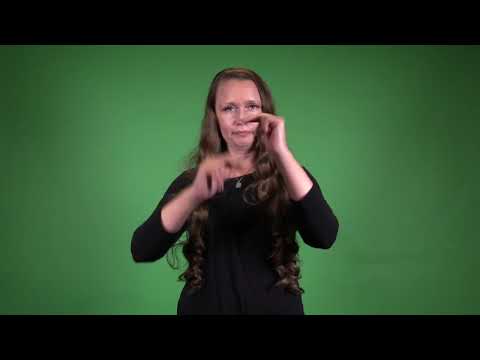
Sign for BUILDING 2 in ASL
Practice Activities:
To become fluent with the sign for BUILDING 2 in ASL, start by practicing the sign repeatedly in front of a mirror. Observe your handshape, movement, and facial expressions to ensure accuracy. Record yourself to compare with video references to gain better control over the motion and pace. Use the sign in isolation until it feels natural.
Move to using the sign in short phrases such as “tall building,” “new building,” or “school building.” Focus on facial expressions to convey adjectives like size or condition. Use these phrases both while signing silently and when voicing to reinforce connection between English context and ASL structure. Signing in front of a peer or instructor can provide helpful feedback on clarity and fluency.
Create simple sentences like “That building is old,” “They work in that building,” or “The building collapsed.” Sign these in front of a mirror or camera and evaluate your fluidity. Then translate short English sentences to ASL structure while incorporating the sign for BUILDING 2 in ASL.
Try storytelling to place the sign in context. Share a story about a day when a new building opened in your neighborhood. Include images or toy blocks to help visualize the building as you sign. As you narrate, use the sign multiple times to become more comfortable integrating it naturally.
Work with a partner to point out different actual buildings and describe them using ASL. Take turns describing features or telling where a friend is going using the sign for BUILDING 2 in ASL. Flashcard games with different types of buildings can also help make practice fun.
Finally, walk through your community or use photos online, choosing five to ten buildings to describe in ASL. The repetitive use of the sign for BUILDING 2 in ASL will increase your confidence and reinforce muscle memory in a meaningful context.
Cultural Context:
In American Sign Language, the sign for BUILDING 2 in ASL carries cultural nuances that enhance its meaning beyond the visual representation. The sign for BUILDING 2 in ASL may appear simple, but it plays a significant role in conversations about architecture, city life, and education within the Deaf community. Understanding how spatial awareness and visual storytelling guide ASL grammar adds depth to using this sign effectively.
When using the sign for BUILDING 2 in ASL, Deaf signers often incorporate facial expressions and body movements to indicate the size and type of the building. For instance, a casual reference might look different from a specific description of an office building or apartment complex. This is a key aspect of ASL—signs are not always static but adapt to the context, and BUILDING 2 in ASL is no exception.
The use of numbers alongside nouns, like BUILDING 2 in ASL, reflects a broader cultural behavior in the Deaf community where precision and clarity are paramount. Spatial referencing is common in ASL grammar, and the sign for BUILDING 2 in ASL often pairs with directional signs or classifiers to show location. This allows signers to paint a vivid picture of where something is in relation to other structures or spaces.
In many Deaf educational settings, the sign for BUILDING 2 in ASL may refer to specific buildings on a campus. For students or staff in Deaf schools or universities, this sign becomes part of everyday language, signaling a classroom building, dorm, or administrative office. Naming buildings using number sequences also promotes efficiency in signed conversation, especially when the topic involves navigation or directions.
Deaf culture places a strong emphasis on visual cues, and this flows into how the sign for BUILDING 2 in ASL is taught and used. When sharing stories or giving directions, the flow of visual information helps recipients understand not just the spoken word but also the layout and spatial relationships. This makes signs like BUILDING 2 in ASL incredibly functional and adaptable across different contexts.
Another cultural point related to the sign for BUILDING 2 in ASL is how it’s used in group settings or public events. At Deaf conferences, community centers, or even church gatherings, referencing places by signed numbers is both quick and universally understood among attendees. Signing BUILDING 2 in ASL becomes a shorthand that cuts through confusion and keeps dialogues smooth.
Understanding the cultural relevance of building numbers in ASL helps users become more fluent and respectful conversationalists. The sign for
Extended Definition:
The sign for BUILDING 2 in ASL is a variation of the basic sign for “building,” combined with a specific number to distinguish it. In American Sign Language, numbers are often integrated into signs to express concepts like room numbers, addresses, floors, and specific buildings. The number 2 is signed using the non-dominant hand while the dominant hand signs the word “building,” typically using both hands in a stacking motion that mimics the structure of a building.
When learning the sign for BUILDING 2 in ASL, it’s essential to first be comfortable with the sign for “building.” This foundational sign involves both open “B” handshapes facing each other and moving upward in a rhythmic stacking motion. The number 2 is then added either before or after, depending on the context, using a clear “2” handshape with the palm facing out.
In signed environments, precision in signing numbers is vital. When you sign the number 2, make sure your palm orientation and finger placement are correct so it doesn’t get confused with other numbers or signs. To accurately sign BUILDING 2 in ASL, you want to smoothly transition from the building sign to a firm and clear sign for the number 2, helping the viewer understand that it’s the second building in a sequence or location.
This sign can be useful in various contexts, especially in educational, professional, or community settings where multiple buildings are identified with numbers. For example, on a school campus or a hospital, you might need to refer to Building 2 to give directions or clarify a meeting location. Using the correct ASL sign for BUILDING 2 ensures that this information is conveyed clearly to other ASL users.
Facial expressions and body language play a key role in ASL signing. When signing BUILDING 2 in ASL, you may also indicate the direction or location by shifting your body or pointing, depending on where the building is in relation to other landmarks. Context helps provide clarity, so always pay attention to your surrounding environment when using signs that incorporate numbers.
This sign demonstrates how flexible and nuanced ASL can be. By adapting the basic sign for “building” and combining it with numeric indicators, ASL communicates detailed and helpful location-based information quickly and effectively. Developing confidence with number incorporation will make your ASL usage more fluent and precise in a variety of real-world scenarios.
Whether you’re teaching ASL, learning it as a second language, or simply expanding your vocabulary,
Synonyms: structure, construction, edifice, facility, premises
Educational resources: Find related learning materials in our course bank!
Want more? Check out some of our popular learning activities on the homepage!
Need to look up a sign? Use our highly rated dictionary: https://aslinteractive.com/best-asl-dictionary/
Follow us on tiktok: https://www.tiktok.com/@aslinteractive. More social media links at the bottom of this page!
Long-tail Keywords: what is the sign for building in ASL, how do you sign building in ASL, ASL sign for building
Categories:
tags: Facilities and other locations/needs, Construction, Housing, Describing Residence, Cities
Parameters
*Handshape*:
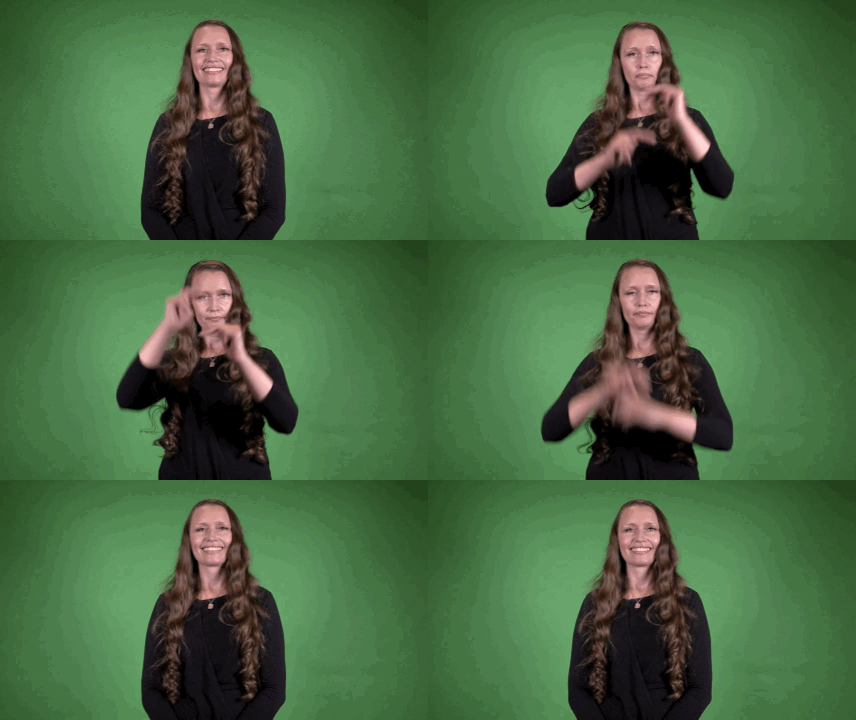
The handshape for the sign for BUILDING 2 in ASL uses both hands in a flat “B” handshape . The fingertips of each hand lightly touch and then alternate tapping as they move upward, mimicking the structure of a building being constructed floor by floor.
This alternating, upward movement supports the visual metaphor behind the sign for BUILDING 2 in ASL. The repeated use of the “B” handshape helps reinforce the concept and makes it visually intuitive for describing buildings across various contexts.
*Palm Orientation*:
The palm orientation for the sign for BUILDING 2 in ASL features both hands in a flat “B” handshape. The palms are typically facing each other, with fingers extended and held vertically. They alternate moving slightly up and down in a stacking motion, similar to flat boards stacking on top of each other . This movement mimics the look of a multi-level structure, relating to the meaning of the sign for BUILDING 2 in ASL.
*Location*:
The sign for BUILDING 2 in ASL is produced in the neutral space in front of the torso, usually at chest level. Both hands alternate tapping on top of each other with flat palms, mimicking the layers of a structure going upward.
The location remains mid-torso throughout, with no contact on the body. Because this handshape and placement represent construction or stacking levels, it effectively conveys the concept behind the sign for BUILDING 2 in ASL .
*Movement*:
The sign for BUILDING 2 in ASL involves both hands in flat “B” handshapes, palms facing each other and parallel. Starting near chest level, alternate each hand moving upward one after the other, resembling the layering of bricks .
This upward alternating motion repeats about twice to simulate the construction of a structure. The sign for BUILDING 2 in ASL clearly demonstrates the concept of assembling or constructing a physical space.
*Non-Manual Signals*:
When using the sign for BUILDING 2 in ASL, keep a neutral or slightly raised eyebrow expression to indicate a descriptive concept. Lips should remain relaxed or may slightly mouth the word “building” depending on context. The head may nod slightly forward to emphasize the formation or structure concept expressed by the sign.
The non-manual signals for the sign for BUILDING 2 in ASL help clarify that a specific building or structure is referenced. This facial expression enhances the meaning, making the overall communication more accurate and engaging.
*Prosody, Dominant/Non-Dominant Hand*:
In the sign for BUILDING 2 in ASL, both hands are in “flat B” handshapes, held parallel and slightly apart at chest level. The dominant and non-dominant hands alternate as they move upward in a stacking motion, mimicking the construction of floors on a building .
The prosody emphasizes rhythm and repetition, capturing the structured rise of a building. This movement and synchronization help reinforce clarity and meaning in the sign for BUILDING 2 in ASL.
Tips for Beginners:
When learning the sign for BUILDING 2 in ASL, it’s helpful to know that this version may be used regionally or stylistically. Make sure to observe your local Deaf community to check if this version is commonly used or if another sign for “building” is preferred. The sign typically mimics the idea of layers or construction, and hand placement and motion are key to making the sign clear and accurate.
For better clarity, keep your fingers straight and hands anchored in a stable “B” handshape. A common issue beginners face is unclear hand positioning or poor spacing between movements, which could make the sign hard to understand. Practicing in front of a mirror can really help you evaluate your spacing and movement fluidity .
Don’t forget facial expressions! While the sign for BUILDING 2 in ASL is manually focused, your face supports the overall message and keeps your signing more engaging. Always keep your movements deliberate but not stiff—allow natural fluidity so the sign flows well.
Start slow and practice regularly. Repetition trains muscle memory and helps you build confidence, especially when signing in spontaneous conversation. Review videos from Deaf signers to observe how they express the sign for BUILDING 2 in ASL within full sentences. It’s not just about the sign itself, but how it fits into the overall language structure.
If you’re uncertain whether you’re doing the sign correctly, ask a fluent signer or instructor for feedback . Getting early corrections saves time and reinforces good habits. Also, don’t worry if you see small variations of the sign—those may reflect regional accents in ASL. Stay flexible and open to learning them.
building sign in ASL, how to sign building in ASL, sign for building in American Sign Language, ASL building sign, sign for BUILDING 2 in ASL, building construction in ASL, learn ASL building sign, regional ASL signs for building
Connections to Other topics:
The sign for BUILDING 2 in ASL connects closely with signs denoting structures, places, and man-made environments. It is typically related to other nouns such as HOUSE, APARTMENT, SCHOOL, or HOSPITAL. These categories share similar structural features in their execution, such as the use of both hands and placement in space to show volume or construction.
This sign also contributes to compound signs like SCHOOL-BUILDING, where separately signed concepts are joined to indicate a particular type of building. When discussing urban planning or environments in ASL, the sign for BUILDING 2 in ASL can appear in sequences with STREET, CITY, or NEIGHBORHOOD. By stringing together these individual signs, users can describe scenes and locations with depth and specificity.
There is also a conceptual connection between the sign for BUILDING 2 in ASL and directional or locative classifiers in ASL. For example, after identifying a BUILDING, a signer may use classifiers to explain where people are going within or around it. These could include movements for entering, exiting, or indicating positional references like beside, behind, or above the building.
The sign also supports discussions on professions, as many job titles or daily activities connect to specific buildings. For instance, combining BUILDING with SCHOOL points toward educational professions, while a pairing with HOSPITAL gives context for healthcare roles. This allows learners to communicate more complex ideas by building off the basic sign.
In storytelling or narrative ASL, the sign for BUILDING 2 in ASL often represents imagined or real environments. Combined with indexing, facial expression, and body shifts, the signer can animate an entire scene centered around a location. Learning the sign opens doors to diverse topics like architecture, community layout, and social institutions. ♂️
Summary:
The sign for BUILDING 2 in ASL shows how nuanced signing can become depending on context or intended meanings. Unlike the primary sign, this variation may demonstrate regional or stylistic influences, highlighting the language’s visual richness. It adds depth to a signer’s vocabulary and builds fluency when distinguishing various structures.
To produce the sign for BUILDING 2 in ASL, both hands use bent B handshapes. The palms face each other and the fingertips alternately move up and down, as though mimicking the stacking of floors. This rhythmic vertical motion symbolizes the conceptual height or design of structures.
This version closely resembles the canonical base sign for “building” but may come across with slight differences in movement or speed. Some signers emphasize the synchronicity between hand motions more in this version, providing a more architectural feel. This can suggest intentional specificity when referring to more formal or institutional buildings.
The sign for BUILDING 2 in ASL is often employed when expressing tall office towers, city skyscrapers, or broader urban-residential complexes. By varying intent, this sign draws its strength from contextual clarity. A signer could use this to differentiate a structure from smaller stand-alone buildings.
Grammar plays an essential role in the structure of ASL and affects this particular sign. When combined with classifiers or locatives, BUILDING 2 connects fluidly to construct or expand visual narratives. Sentence structure is preserved so that it serves time-topic-comment framing, a hallmark of ASL grammar.
The broader linguistic framework of ASL relies on space for meaning, making the placement of BUILDING 2 significant within a conversation. A signer might sign a “school” building referencing a specific location in space and later refer back to that placement. This elk of spatial grammar situates stories and directions more clearly.
Culturally, buildings hold various social and personal meanings, and fluent ASL users adjust their signing to reflect these layers. Whether discussing a church, a government office, or an apartment complex, identity and community affect how BUILDING 2 may be interpreted and expanded upon. This feeds into Deaf Gain—the framing of Deaf cultural experiences as contributions rather than deficits.
The handshape used in the sign for BUILDING 2 in ASL carries additional meaning across related signs. The flat B handshape appears in signs like “wall,” “floor,” and “window,” making it a foundational gesture in architectural lexicons. This allows for modular sign construction when narrating scenes or explaining location layouts.
A student describing their school in ASL might begin with the sign for BUILDING 2 and follow with descriptions of hallways, rooms, and entrances. The sequential, logically constructed nature of ASL allows such chains of meaning to form. Because BUILDING 2 signifies verticality and constructed space, it invites descriptive elaboration.
Engaging storytelling in ASL benefits from signs like BUILDING 2 that evoke structure, height, and form without reliance on spoken language. The visual metaphor of erecting stories or ideas aligns well with building imagery. This supports ASL’s capacity for layered narrative development where one sign unlocks broader conceptual relationships.
Among related signs, signs like “BUILD” and “CONSTRUCTION” frequently accompany BUILDING 2 in ASL, especially during industry-related discussions. These can shape discourses on architecture, city planning, and professions in the building sector. It demonstrates the specialized vocabulary Deaf professionals may use in technical fields.
In younger signers, especially in educational or youth programs, BUILDING 2 may surface in games and classroom contexts to distinguish between places like a fieldhouse, cafeteria, and academic wings. Children trained in these differences gain visual mapping skills and categorize their environments with linguistic precision. This also expands their modal reasoning through sign language use.
From an applied linguistics perspective, the sign for BUILDING 2 in ASL highlights key ASL morphology components. The use of movement repetition and hand orientation adds systemic meaning, which builds vocabularic structure. Learners internalize that minor hand dynamic variations can change semantic frames.
In translations of English content, BUILDING 2 may substitute or blend with classifiers or fingerspelled equivalents depending on concept clarity. A signer interpreting the word “edifice” or “institution” might choose BUILDING 2 because of its visual presence and structural nuance. Thus, translation is guided not just by lexical equivalence but by clarity, register, and accessibility.
Language acquisition studies show that signs like BUILDING 2, which are both concrete and abstract, help learners develop conceptual density. Children or late learners can anchor sign meaning with the visual metaphor of stacking hands. Then, abstraction can develop, allowing them to transfer that sign into broader discourse functions and grammatical applications.
Deaf artists and storytellers may creatively use the sign for BUILDING 2 in ASL to symbolize processes of growth, development, or metaphorical structure. In an ASL poem, a building may represent the establishment of identity or the accumulation of experiences. This showcases how
Want more? Check out some of our popular learning activities!
ASL Interactive Resources
ASLInteractive YouTube Channel
Follow us on tiktok: @aslinteractive.com
Follow us on Instagram: aslinteractive
Facebook page: aslinteractive
Facebook group: aslinteractive
LInkedIn: ASL Interactive LLC
Twitter: @ASL_interactive
*Some information on this page is AI-generated. AI can make mistakes. Please check the information.
Responses