Definition: “Bye-bye” in ASL is a common gesture for saying goodbye, typically performed by waving an open hand side-to-side.
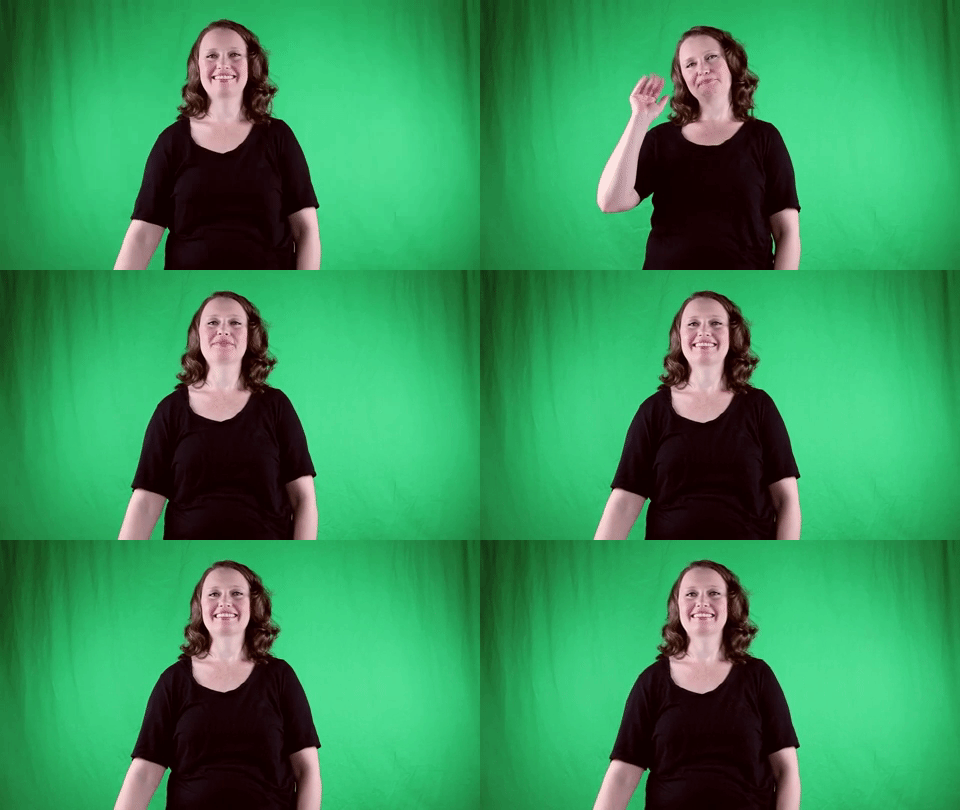
Sign for BYE-BYE in ASL

Practice Activities:
To begin practicing the sign for BYE-BYE in ASL, start by standing in front of a mirror. Practice the motion multiple times, focusing on the natural waving gesture of your dominant hand. Keep your fingers spread and relaxed while moving your hand side to side in a small wave. This helps build muscle memory and visual clarity.
Practice the sign in isolation by signing it ten times in a row while saying the English word silently in your head. Then, sign BYE-BYE while looking in the mirror and pretending to say goodbye to someone behind you. This gives the sign realistic context and helps you connect movement with meaning.
Try using the sign in simple sentences like “I go now, BYE-BYE” or “Friend leave, BYE-BYE.” Repeat each sentence slowly, using your non-dominant hand to keep time or rhythm if needed. Record yourself and watch the playback to check hand movement clarity and facial expression.
Create a quick goodbye scene. You could imagine leaving for school or saying bye to someone at a store. Act out a simple goodbye scenario, signing BYE-BYE at the correct moments during your imagined dialogue. This helps you get comfortable using the sign in storytelling.
With a partner, take turns acting out short goodbye situations. One person pretends to leave while the other says farewell. Use facial expressions to match the emotion of your goodbye. Try casual, excited, or sad goodbyes to add depth.
Play a signing game where you take turns showing the sign for BYE-BYE in ASL in different ways—slow, fast, silly, or formal—and have your partner copy it. This can be a fun way to reinforce the sign, especially for younger learners. Mix it up with scenarios for school, home, or social gatherings to reinforce understanding.
Cultural Context:
In Deaf culture, the sign for BYE-BYE in ASL is more than just a farewell gesture. It carries warmth, familiarity, and often replaces spoken goodbyes in everyday interaction among members of the Deaf community. This sign is commonly understood across all age groups and environments, from formal classroom settings to casual social events.
The sign for BYE-BYE in ASL mimics the natural waving motion that hearing people might use, but in Deaf culture, it’s used with purpose, clarity, and intention. It’s not just a wave; it’s a visual expression of parting consistent with the values of visibility and intentional communication.
Because ASL is a rich visual language, physical expression is crucial. The sign for BYE-BYE in ASL not only conveys the farewell but can also reflect tone and emotion. A quick, energetic wave can suggest excitement, while a slower, soft wave might show tenderness or sadness.
Children in Deaf households learn the sign for BYE-BYE in ASL from an early age. It becomes one of their first interactions with visual language and social engagement. You’ll often see Deaf children waving goodbye to their parents, teachers, or friends using this familiar gesture during everyday routines.
Within the Deaf community, this sign is used in both personal and professional settings. From saying goodbye after a meeting to parting after a group activity, the sign for BYE-BYE in ASL provides a shared, mutually recognized goodbye that bridges communication. It’s widely accepted and feels natural for both Deaf and hearing signers.
The sign for BYE-BYE in ASL is often accompanied by facial expressions, another cornerstone of ASL grammar and communication style. Smiles, nods, or even a small laugh can completely change the tone of the gesture, adding a layer of connection to the simple act of saying goodbye.
During public events or social gatherings in the Deaf community, the sign for BYE-BYE in ASL is used repeatedly and visibly. It creates a sense of closure and respect among participants. Whether leaving a classroom or signing off from a video call, the gesture serves as both an end and a polite transition.
In Deaf storytelling and performances, this sign can take on theatrical significance. Actors may exaggerate or stylize the sign for BYE-BYE in ASL to emphasize a character’s exit or to involve the audience in the action. This adds an artistic dimension to a basic cultural norm.
It’s also common to see the sign for BYE-B
Extended Definition:
The sign for BYE-BYE in ASL is a simple and widely recognized gesture that resembles a wave of the hand. It is commonly used in both casual and formal settings to say goodbye. This sign is one of the first signs that many children and beginners in American Sign Language learn because of its visual clarity and everyday use.
In American Sign Language, the sign for BYE-BYE in ASL is executed by extending the fingers and repeatedly opening and closing the hand, similar to how someone might wave goodbye in spoken English culture. The hand is positioned approximately at shoulder or head level when signing. This movement naturally mirrors the cultural gesture for waving, making it intuitive even for those new to ASL.
Though simple, the sign for BYE-BYE in ASL can carry different tones depending on how it’s used. A slow wave may be used for a gentle or sad farewell, while a quick wave might be used in a cheerful goodbye among friends. Facial expressions also play a key role in conveying the right emotion behind this sign.
This sign is widely accepted in everyday communication and can be used with people of all ages. It is common in settings like daycares, classrooms, and family environments where clear and expressive communication matters. Deaf and hearing people alike often use the sign for BYE-BYE in ASL when ending a social interaction or leaving a room.
In professional settings or more structured environments, the sign for BYE-BYE in ASL remains appropriate and is often accompanied by polite expressions or phrases to add formality. For example, you might say “it was nice to meet you” in ASL before using the BYE-BYE sign. Because the sign is polite and non-verbal, it fits well in quiet environments or when speech is not possible.
Many people incorporate the sign for BYE-BYE in ASL during video calls, social media interactions, or digital communication to gently end a conversation. In such contexts, the visual clarity of the gesture allows for easy recognition, especially when focusing on person-to-person connection. Seeing someone use a familiar goodbye sign adds friendliness and approachability to virtual interaction.
Children often enjoy using this sign, making it popular in books and ASL learning videos aimed at toddlers and early learners. Since young children naturally wave goodbye, the transition into understanding the sign for BYE-BYE in ASL is smooth and fun ️. This reinforces both language development and non-verbal communication skills.
Even advanced ASL users rely
Synonyms: goodbye, see you, farewell, so long, bye
Educational resources: Find related learning materials in our course bank!
Want more? Check out some of our popular learning activities on the homepage!
Need to look up a sign? Use our highly rated dictionary: https://aslinteractive.com/best-asl-dictionary/
Follow us on tiktok: https://www.tiktok.com/@aslinteractive. More social media links at the bottom of this page!
Long-tail Keywords: What is the sign for bye-bye in ASL?, How do you sign bye-bye in American Sign Language?, Learn how to sign bye-bye in ASL
Categories:
tags: farewells and greetings, language learning, everyday activities, commands, responses
Parameters
*Handshape*:
The handshape for the sign for BYE-BYE in ASL uses an open flat hand, similar to a high-five position ️. All fingers are extended and spread slightly apart, with the palm facing outward.
In the sign for BYE-BYE in ASL, the hand moves side to side or in a slight flapping motion, mimicking a waving gesture commonly used in informal goodbyes. The movement reinforces the casual and friendly tone of the sign.
*Palm Orientation*:
The palm orientation for the sign for BYE-BYE in ASL involves one open hand held up near the side of the head, with the palm facing outward, away from the signer. The fingers stay together and may bend slightly during the waving motion.
This gesture is repeated with a soft wave, generally two or three times. The sign for BYE-BYE in ASL resembles a natural gesture used when waving goodbye, making it intuitive and easy to understand.
*Location*:
The sign for BYE-BYE in ASL is typically made in the neutral space in front of the signer’s shoulder or face. The hand is slightly raised to about shoulder level, palm facing outward. This location allows for a natural, waving motion which mimics a common gesture used in everyday goodbyes.
When making the sign for BYE-BYE in ASL, the motion occurs in the air just a few inches from the upper part of the body. The location does not involve contact with the head or torso, helping maintain visual clarity for this expressive farewell gesture.
*Movement*:
The sign for BYE-BYE in ASL is performed by raising one hand, typically the dominant hand, with fingers extended and held together, palm facing outward. The hand then opens and closes two to three times in a light flapping motion, similar to waving.
This movement mimics a casual handwave used in everyday gestures. The sign for BYE-BYE in ASL is often used with a friendly facial expression and can be repeated for emphasis or enthusiasm.
*Non-Manual Signals*:
The sign for BYE-BYE in ASL is typically accompanied by a friendly facial expression, often with a small smile to convey warmth or positivity. Eyebrows and eyes remain neutral or slightly raised, and the head may tilt slightly with a gentle nod to match the casual tone of a goodbye.
When using the sign for BYE-BYE in ASL with children or in informal situations, a bigger smile and exaggerated wave may occur. This helps reinforce the welcoming or playful mood often associated with parting ways.
*Prosody, Dominant/Non-Dominant Hand*:
The sign for BYE-BYE in ASL uses the dominant hand only. The hand is open with fingers extended and together, palm facing outward. The hand waves side to side in a small, loose motion near the side of the head, similar to a casual wave used when saying goodbye. This sign is universally understood and often used in both casual and formal settings.
The non-dominant hand does not participate in the sign for BYE-BYE in ASL. Since it only involves the dominant hand, the movement and position are simple, making it one of the first gestures children typically learn when acquiring sign language.
Tips for Beginners:
One of the easiest signs to learn, the sign for BYE-BYE in ASL mimics a natural wave. It’s the same motion most people already use when saying goodbye, making it intuitive and perfect for beginners. To perform it correctly, raise your dominant hand, fingers extended and together, palm facing forward, and give a short wave twice, like a gentle flutter of your fingers.
For beginners, try practicing the sign for BYE-BYE in ASL in front of a mirror to ensure the motion looks natural and friendly. Avoid stiff or overly large movements; the key is to keep it relaxed and fluid. A common mistake is waving too slowly or holding the hand at an unnatural angle—this can confuse the viewer or make the sign look awkward.
Children especially love using the sign for BYE-BYE in ASL because it’s expressive and easy to remember. If you’re signing to a child or someone learning ASL for the first time, match your facial expression with the sign to enhance your message. A warm smile goes a long way in reinforcing its meaning .
When signing in a group or parting ways in public, be mindful of others’ visual lines. Make sure they can see your hand clearly, even in a crowd. Practicing this sign in different real-life contexts—at the end of a class, when leaving a room, or saying goodbye to friends—can help reinforce your muscle memory and increase your confidence .
Since the sign for BYE-BYE in ASL is so widely used in casual and formal settings, mastering it early helps build your fluency. Practice it with intention, and over time, the movement becomes second nature. Keep your handshape consistent and your wave smooth for the clearest communication.
Connections to Other topics:
The sign for BYE-BYE in ASL is closely connected to a range of social gestures and greeting signs, such as HELLO, HI, and SEE-YOU. These signs all serve the purpose of initiating or ending interactions, and often utilize expressive facial cues to match context and mood. In informal situations, the sign for BYE-BYE in ASL shares many similarities with natural gestures used in spoken cultures, creating a bridge between Deaf and hearing interactions.
This sign can appear in various compound constructions like BYE-BYE SEE-YOU-LATER or BYE-BYE TAKE-CARE. These combinations help expand the meaning of the farewell and can add warmth or intent to the departure. They reflect the richness of ASL syntax and the fluid way it incorporates emotion, context, and relationship clues into everyday exchanges.
The gesture used in the sign for BYE-BYE in ASL also links to signs in the baby sign lexicon. Young children often learn BYE-BYE as one of their first signs because of its simplicity and its overlap with natural gesturing. This makes it both a practical sign for early communication and a great example of how ASL can build on intuitive behavior.
The sign for BYE-BYE in ASL also overlaps with concepts in Deaf culture around social agency and connection. Saying goodbye with this sign is more than just ending a conversation—it may include a relational tone that reflects respect, affection, or shared community. This is especially true when a signer intentionally delays or emphasizes the sign to express emotional meaning.
In performance or storytelling contexts, the sign for BYE-BYE in ASL can represent departure, ending, or letting go. These broader metaphorical uses give the sign artistic depth when used in visual poetry or ASL literature, connecting it to expressive signing beyond daily conversation.
Summary:
The sign for BYE-BYE in ASL is one of the most recognizable and intuitive signs in American Sign Language. Often performed with an open dominant hand waving gently from the wrist, it visually mirrors its spoken English counterpart, making it easily understood even by those unfamiliar with ASL.
This sign mimics the natural gesture used among hearing people to say goodbye. For that reason, the sign transcends specific linguistic barriers and is widely accepted both within and outside of the Deaf community. The motion is usually casual and friendly, capturing the same tone as its spoken equivalent.
In informal settings, especially among peers or children, the sign for BYE-BYE in ASL can be playful or exaggerated. That flexibility makes it emotionally expressive and ideal for a range of social contexts. You might see small children in both Deaf and hearing households use it as one of their first gestures.
Culturally, this sign embodies the warmth and openness of many ASL exchanges. It invites a sense of closure without rigid formality. It is common in classroom interactions, social farewells, and even performances in Deaf culture events.
Multiple repetitions of the hand wave can indicate enthusiasm or affection. A quick double wave might accompany an affectionate goodbye between close friends or family members. Some even couple it with facial expressions that add layers of meaning to the farewell.
The sign for BYE-BYE in ASL is strongly tied to body language and facial expression. A happy parting might be shown through a smile and rapid wave, while a more solemn exit could involve slower movement and a neutral or sad expression. This linking of gesture and facial emotion is a hallmark of ASL’s rich visual modality.
Though it may resemble a natural gesture, the sign is indeed codified within ASL. It is taught formally in early childhood education settings and Deaf culture environments. It also becomes part of early language acquisition in homes where ASL is the primary language.
Grammatically, the sign for BYE-BYE in ASL typically stands alone as a form of parting. It’s not usually embedded in longer phrases unless emphasizing repetition, as in a double or triple wave to suggest excitement. It functions as a farewell interjection, much like it does in English.
Because of its intuitive gestural nature, the sign serves as a strategic tool for engaging with non-signers. Hearing people often feel comfortable attempting this sign when learning basic ASL, making it a welcome starting point in sign language instruction. It helps to break down participation barriers and leads to fuller immersion.
In linguistic analysis, this sign falls under iconic signs due to its visual similarity to the concept it conveys. When discussing semiotics, this serves as a prime example of motivated signs versus arbitrary ones in language studies. It visually represents its meaning, leading to easier memory retention for ASL learners.
In applied linguistics, the sign for BYE-BYE in ASL showcases how visual languages build semantic fields. Alongside signs like HELLO, SEE-YOU, and LATER, it helps construct a clear category of greetings and partings. These are essential for pragmatic interactions and discourse cohesion.
The sign also reveals how ASL adapts to different social encounters. In professional settings, a more reserved form might be used, while in playful environments, high-energy versions appear. This adaptability characterizes ASL’s rich capacity for mirroring tone and emotion through gesture.
The sign for BYE-BYE in ASL also plays a significant role in cross-cultural contexts. Deaf travelers, educators, and community workers often use it as a gesture that transcends sign systems across different sign languages. It acts as a brief but effective bridge in international Deaf communication.
Children learning sign language often treat this as one of their first expressive gestures. The simplicity of hand movement combined with mirror-effect learning enhances developmental milestones. Researchers note its appearance in early gestural communication, indicating its foundational linguistic value.
Interestingly, this sign is sometimes used in repeated movements to indicate interactions with multiple people. For example, waving twice left and right might be used when saying goodbye to a group. This directional aspect emphasizes the spatial nature of ASL grammar and usage.
Comparing the sign for BYE-BYE in ASL with similar signs in other sign languages reveals variations yet underlying visual logic. In British Sign Language, for instance, the motion may differ slightly, but cultural context often fills in the interpretive gap. This showcases how universal gestures can evolve with local meaning.
The sign is also common in ASL storytelling and poetry. In these settings, it’s frequently stylized to build rhythm or reflect emotion. Its recognizable form makes it effective in performances that rely on audience connection and cultural resonance.
In Deaf education, this sign serves as an entryway into deeper understanding about visual language. Students might learn it alongside other easy gestures to build confidence. From that foundational vocabulary, they progress to more complex grammatical structures.
Sociolinguistically, the use of the sign for BYE-BYE in ASL reflects community dynamics
Want more? Check out some of our popular learning activities!
ASL Interactive Resources
ASLInteractive YouTube Channel
Follow us on tiktok: @aslinteractive.com
Follow us on Instagram: aslinteractive
Facebook page: aslinteractive
Facebook group: aslinteractive
LInkedIn: ASL Interactive LLC
Twitter: @ASL_interactive
*Some information on this page is AI-generated. AI can make mistakes. Please check the information.
Responses