
Definition: A place where students eat.
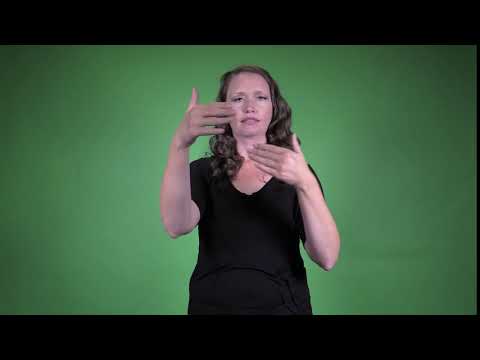
Sign for CAFETERIA 2 in ASL
Practice Activities:
To practice the sign for CAFETERIA 2 in ASL, begin by isolating the sign. Practice in front of a mirror, repeating the movement several times to ensure accuracy in handshape, movement, and facial expressions. Sign it slowly at first, then gradually increase speed while maintaining clarity.
Try incorporating the sign for CAFETERIA 2 in ASL into basic sentences like “I eat lunch at the cafeteria,” or “The cafeteria is closed.” Pair these with signs for school, time, eat, or drink to build fluency. Repeating simple sentences helps reinforce both vocabulary and syntax.
Use flashcards with pictures of school locations or food items. When you see a picture of a cafeteria or a lunch tray, use the sign for CAFETERIA 2 in ASL to describe what it is. You can say phrases like “Go cafeteria” or “Food in cafeteria” to simulate natural communication.
Engage in role-playing with a partner where one person acts as a student and the other as a school staff member. Take turns asking and answering questions using the sign for CAFETERIA 2 in ASL in context. For example, “Where are you going?” “I’m going to the cafeteria.”
Create a short story that involves characters at school deciding where to eat. Include signs like cafeteria, classroom, friends, and lunchtime. Sign the story aloud and share it with a study partner to build confidence using the sign in narrative form.
Watch a school-themed ASL video clip and look for instances where the sign for CAFETERIA 2 in ASL appears. Mimic the signing as a way to mirror natural speed and usage. Rewind and repeat sections if needed to better internalize the flow of conversation.
Review and self-check often by recording your signing. Compare it to reference videos or ASL dictionaries to make adjustments in hand placement and execution.
Cultural Context:
In American Sign Language, the sign for CAFETERIA 2 in ASL reflects not just a physical place but also a shared cultural experience among Deaf communities. Cafeterias are often more than just places to eat—they serve as vital social hubs where communication flows freely. This gives the sign for CAFETERIA 2 in ASL cultural significance as it represents more than a mealtime location; it represents connection.
Deaf culture values spaces that are visually accessible and conducive to interaction. Cafeterias, particularly in Deaf schools and organizations, often become spaces filled with stories, laughter, and expressive exchanges. Knowing the sign for CAFETERIA 2 in ASL allows Deaf and hard-of-hearing individuals to quickly identify these gathering places in conversation and storytelling.
Within educational institutions, using the correct sign for CAFETERIA 2 in ASL helps young signers develop language skills through context and routine. Students discuss daily plans, class events, and weekend outings—all while referencing familiar spaces like the cafeteria. This consistent usage turns routine vocabulary like the sign for CAFETERIA 2 in ASL into essential tools for language growth.
The sign for CAFETERIA 2 in ASL carries a variant from the more commonly used cafeteria sign. Regional differences and personal preferences contribute to the use of alternate versions. When you recognize or use the sign for CAFETERIA 2 in ASL, you’re also taking part in the diversity of ASL expression.
Food culture in the Deaf community often plays a central role during social events. Understanding and using the sign for CAFETERIA 2 in ASL enables participation in conversations about lunch, potlucks, and shared meals during Deaf club meetings or Deaf social nights. Signing this correctly helps bridge communication during these events.
Access to language in public spaces is a major part of Deaf autonomy. Having a shared and recognized sign for CAFETERIA 2 in ASL in public signage or interpreted tours shows a consideration for inclusivity. It empowers Deaf individuals when public areas are navigable through familiar ASL vocabulary.
Stories in ASL often include references to everyday places. When telling a story involving school memories, a job breakroom, or a college campus, the sign for CAFETERIA 2 in ASL may be used to paint a vivid picture. The natural use of this sign enriches storytelling and perception of environment.
Interacting with hearing educators or interpreters who know the sign for CAFETERIA 2 in ASL builds rapport and trust in education
Extended Definition:
The sign for cafeteria 2 in ASL is a recognized variation used to express the concept of a dining area, typically associated with schools, workplaces, hospitals, or large institutions. This version differs slightly from the primary cafeteria sign, often incorporating a specific motion or location on the face to distinguish it from other food-related signs. Knowing multiple variations, such as sign for cafeteria 2 in ASL, helps with clear communication in diverse settings.
In this version of the sign, the dominant hand typically forms the ASL letter C and moves across the side of the mouth or chin, sometimes repeating the motion on both sides of the face. This may reflect the idea of eating or the location where meals are served. The movement is smooth and deliberate, signaling a formal or public eating space rather than casual or home dining.
The sign for cafeteria 2 in ASL is commonly taught in educational settings to help deaf and hard-of-hearing students identify and access their lunchrooms. It’s also helpful in medical or workplace environments when directing someone to a public eating space. The use of this variation can depend on the regional dialect of ASL, and some signers may prefer one version over another.
Learning more than one version of a sign allows greater flexibility and understanding within the Deaf community. If someone is unfamiliar with the sign for cafeteria 2 in ASL, it’s always helpful to clarify by using context or pairing it with the sign for food or eat. Non-manual markers, such as facial expressions or direction of movement, also support the meaning of this sign.
ASL is a rich and dynamic language, evolving with cultural and practical influences. The sign for cafeteria 2 in ASL illustrates how one concept can be represented in different ways, often shaped by location, usage, or community preference. Having this understanding helps make conversations smoother and more inclusive.
This variant is especially useful for interpreters working in schools, hospitals, or large community centers. Knowing signs like cafeteria 2 helps with swift comprehension and provides clarity when navigating large institutions. It also demonstrates cultural awareness and sensitivity to the regional use of signs.
For learners, practicing the sign for cafeteria 2 in ASL can develop stronger signing skills and promote better comprehension of spatial and directional elements in ASL. Mimicking real-world usage and interacting with native signers can reinforce accuracy and fluency. It’s common to see this sign used in both casual conversation and institutional announcements.
Teachers, parents, and interpreters often encourage exposing students to multiple ASL versions
Synonyms: dining hall, canteen, food court, lunchroom, mess hall
Educational resources: Find related learning materials in our course bank!
Want more? Check out some of our popular learning activities on the homepage!
Need to look up a sign? Use our highly rated dictionary: https://aslinteractive.com/best-asl-dictionary/
Follow us on tiktok: https://www.tiktok.com/@aslinteractive. More social media links at the bottom of this page!
Long-tail Keywords: what is the sign for cafeteria in ASL, how do you sign cafeteria in ASL, ASL sign for cafeteria
Categories:
tags: Cafeteria, Facilities and other locations/needs, Colleges/Universities/schools, Everyday activities, Objects in the Classroom
Parameters
*Handshape*:
The handshape used in the sign for CAFETERIA 2 in ASL involves forming the “C” handshape with your dominant hand . The fingers and thumb are curved to create a “C” shape, with all other fingers held together and the palm facing in toward the face.
This handshape is used as you tap the “C” on one cheek and then repeat the motion on the other cheek. The sign for CAFETERIA 2 in ASL maintains the consistent integrity of the “C” handshape throughout the motion, helping to visually represent the concept of a dining area.
*Palm Orientation*:
For the sign for CAFETERIA 2 in ASL, the palm orientation begins with the dominant hand in an open “C” shape. The palm faces inward toward the face as the “C” hand touches one side of the mouth, then moves across to tap the other side. This motion mimics the movement for “FOOD” or “EAT,” linking the sign to a place where food is eaten. The sign for CAFETERIA 2 in ASL keeps the palm steady throughout the transition. ️
*Location*:
The sign for CAFETERIA 2 in ASL is produced at the side of the face, near the cheek area. The hand moves from one side of the mouth to the other, aligning with where a person might place food or drink. This location helps visually associate the sign with eating or dining, reinforcing the meaning behind the sign for CAFETERIA 2 in ASL . The cheek area provides a natural context for food-related signs.
*Movement*:
The sign for CAFETERIA 2 in ASL involves making the handshape for the letter “C” . Place the “C” hand at the corner of your mouth on one side, then move it across to the opposite corner in a small arc or semi-circle motion, as if drawing a line from cheek to cheek.
This movement mimics a similar path as the sign for “restaurant,” but uses a “C” handshape to emphasize “cafeteria.” The sign for CAFETERIA 2 in ASL may vary slightly, but the C-shaped motion near the mouth remains consistent.
*Non-Manual Signals*:
When using the sign for CAFETERIA 2 in ASL, maintain a neutral facial expression or a slight head tilt depending on conversational context. This version of the sign mimics the sign for “restaurant,” so it often carries a respectful or neutral tone, reflecting an informative rather than emotional intent.
Use direct eye contact with your conversation partner and keep your brows relaxed. Since the sign for CAFETERIA 2 in ASL typically references food or eating spaces, your face should remain clear of exaggerated emotion unless specifying more context like dislike or preference.
*Prosody, Dominant/Non-Dominant Hand*:
The sign for CAFETERIA 2 in ASL uses the dominant hand in the “C” handshape. Starting near the dominant side of the mouth, the hand moves in a small arc from one side of the mouth to the other, touching both corners. The non-dominant hand is not used.
This movement mirrors the motion seen in the sign for FOOD or EAT but utilizes the “C” handshape to represent cafeteria. The sign for CAFETERIA 2 in ASL is often preferred in institutional or school-related contexts.
Tips for Beginners:
The sign for CAFETERIA 2 in ASL is a helpful alternative to the standard cafeteria sign and is often used in certain regions. To produce it, sign “EAT” by bringing your dominant flat hand to your mouth, then slide the hand downward on both cheeks in the sign for “CLEAN” or “WASH.” This version emphasizes the idea of food and cleanliness coming together, as in a food-serving area. Make sure your handshape is accurate and movements are deliberate to avoid confusion with other signs.
It’s important to keep the movement smooth between the two parts of the sign for CAFETERIA 2 in ASL. Beginners often rush, making it look choppy, or they drop their facial expression, which can make the sign less meaningful. Focus on transitioning fluidly from the eating gesture to the cheek motion. Practice in the mirror to build muscle memory and get comfortable with the overall flow.
Consistency makes a big difference with this sign. Try to maintain a neutral to slightly positive facial expression, especially in a conversation about places or schedules. Using a distracted or neutral face can make it harder for others to understand your intent. If you’re unsure which version of the cafeteria sign is most common in your area, don’t hesitate to ask Deaf community members. Regional variation is normal and accepted.
When learning the sign for CAFETERIA 2 in ASL, don’t rely solely on video tutorials. Engage in live practice sessions or signing games with others to reinforce your recall. Use the sign in everyday scenarios like talking about school lunch, workplace cafeterias, or travel destinations. Adding contextual usage will greatly improve retention and fluency. And remember, accuracy and repetition are key to mastering this helpful sign in real-life conversations.
Connections to Other topics:
The sign for CAFETERIA 2 in ASL is closely related to signs involving food and dining settings. It uses the dominant hand in the “C” handshape, tapping each side of the mouth, resembling how some signs for “food” or “eat” involve touching the mouth area. This visual and locational similarity helps learners build associations between various food-related signs.
Understanding the sign for CAFETERIA 2 in ASL creates a bridge to other institutional location signs like SCHOOL, HOSPITAL, and LIBRARY. These signs often share a pattern of combining a descriptive classifier with a locational concept. For example, compound signs like SCHOOL+LUNCH can describe a school cafeteria, helping learners build compound descriptions in ASL.
This version of the cafeteria sign is sometimes compared with other location-based food signs such as RESTAURANT and DINING ROOM. In these cases, handshape and placement often determine the meaning, and subtle differences can change context entirely. This encourages attention to handshape consistency and spatial referencing in ASL grammar.
Sign for CAFETERIA 2 in ASL also connects well to the broader category of workplace or public service locations, which are useful in advanced conversations. For instance, in conversations about daily routines or job settings, knowing how to sign CAFETERIA 2 allows broader narrative descriptions like I WORK HOSPITAL, HAVE CAFETERIA-THERE.
The structure of the sign encourages learners to consider directional movement and symmetrical signing when both sides of the mouth are touched. This can enhance fluency when transitioning to two-handed symmetrical signs and improve body referencing, skills critical in constructing grammatically accurate ASL sentences.
ASL learners exploring the sign for CAFETERIA 2 in ASL can benefit by pairing it with other context-rich signs like BREAK, LUNCH, or EMPLOYEE. Creating context with these related signs strengthens understanding of compound meaning and situational use, which is invaluable for interpreting real-life conversations more naturally.
Summary:
The sign for CAFETERIA 2 in ASL is a visually intuitive motion that helps distinguish it from other related signs like RESTAURANT or DINING. This version uses a one-handed motion, signed with the dominant hand in a modified “C” handshape. The “C” moves from one side of the chin to the other, mimicking the path of eating from both cheeks.
Some signers may use a flat “C” hand that lightly touches the cheek, going from one side to the other. Others may use a more curved “C” as if tracing the shape of a cup or bowl against their face. The motion is smooth, usually left to right for right-handed signers, and gives an expressive dimension to the concept of food and dining areas.
This particular variation of the sign for CAFETERIA 2 in ASL is commonly used in educational institutions, especially in schools, universities, and cafeterias attached to large buildings or organizations. The analogy to eating, paired with the distinct facial location, reinforces the meal-time context connected to cafeterias. It helps signers zero in on the meaning even if they are unfamiliar with the setting.
The cultural relevance of the sign for CAFETERIA 2 in ASL is tied to communal food environments in American institutions. Cafeterias are not just about food; they’re about shared spaces, routines, and often childhood experiences. Students in Deaf schools learn this sign early as it relates directly to their day-to-day school schedules and locations.
In a linguistic context, the sign for CAFETERIA 2 in ASL employs classifiers through spatial representation. This nonmanual marker interface—connecting body location and handshape—delivers meaning through contrast and placement. The “C” handshape, while descriptive of the word “cafeteria,” also acts as a semi-iconic symbol of food.
Grammatically, the sign functions as a noun, sometimes paired with directional or locative markers depending on sentence structure. When a signer is referencing going to the cafeteria, they may follow up the sign with movement in the direction of the implied location using spatial referencing techniques. It becomes part of a larger, dynamic system of ASL syntax.
The relationship between the sign for CAFETERIA 2 in ASL and signs like RESTAURANT, KITCHEN, or EAT is semantically rich. The primary difference lies in specificity and institutional association. While RESTAURANT uses an “R” handshape following a similar cheek path, the “C” in CAFETERIA 2 emphasizes its closed-environment, typically self-service nature.
In applied linguistics, analyzing the use and spread of variations like the sign for CAFETERIA 2 in ASL helps scholars understand regional dialects within the signing community. Different Deaf schools or urban areas may develop preferences for one version over another. Accents in sign language—including directional flow and intensity—also play a role in these preferences.
This variation may also serve pedagogical functions. Educators teaching ASL might use this version to distinguish more public eating spaces like cafeterias from private or commercial ones like restaurants. It’s easier for learners to categorize new vocabulary when distinct movements and meanings align.
From an anthropological viewpoint, the development of unique signs for shared spaces like cafeterias signals the cultural importance of community. The Deaf community, having rich traditions of sociability, often centers around common places for gatherings. Thus, knowing how to sign CAFETERIA 2 can unlock deeper cultural engagement.
Facial expression also plays an important role in delivering the sign effectively. A neutral or slightly positive expression is most typical when signing CAFETERIA 2, matching the casual nature of the space. Stress in the sign could be altered with expression to convey urgency, such as being late to lunch.
Iconicity, a key principle in sign linguistics, is evident in the sign for CAFETERIA 2 in ASL. The cupping motion of the “C” across the face gestures both food intake and evokes the sensation of interacting with a bowl or plate, creating a tactile connection to the concept of mealtime. This blending of visual-spatial representation and metaphor is one strength of ASL communication.
Usage of the sign may differ depending on the level of language fluency. Deaf native signers might use subtle shifts in speed or location to connote specific messages, such as referencing one cafeteria versus another. For beginner or L2 learners, the variation CAFETERIA 2 provides a more intuitive link to the idea of communal food halls.
In storytelling or narrative ASL, identifying locations such as a cafeteria helps set visual scenes for the audience. The sign for CAFETERIA 2 in ASL becomes a visual anchor for that setting. It allows for layering of information like who was there, what happened, and what time it occurred, using spatial referencing and time indicators.
Comparatively, the sign for CAFETERIA 2 is often considered more elegant in shape than
Want more? Check out some of our popular learning activities!
ASL Interactive Resources
ASLInteractive YouTube Channel
Follow us on tiktok: @aslinteractive.com
Follow us on Instagram: aslinteractive
Facebook page: aslinteractive
Facebook group: aslinteractive
LInkedIn: ASL Interactive LLC
Twitter: @ASL_interactive
*Some information on this page is AI-generated. AI can make mistakes. Please check the information.

Responses