Definition: A holiday in December 2.
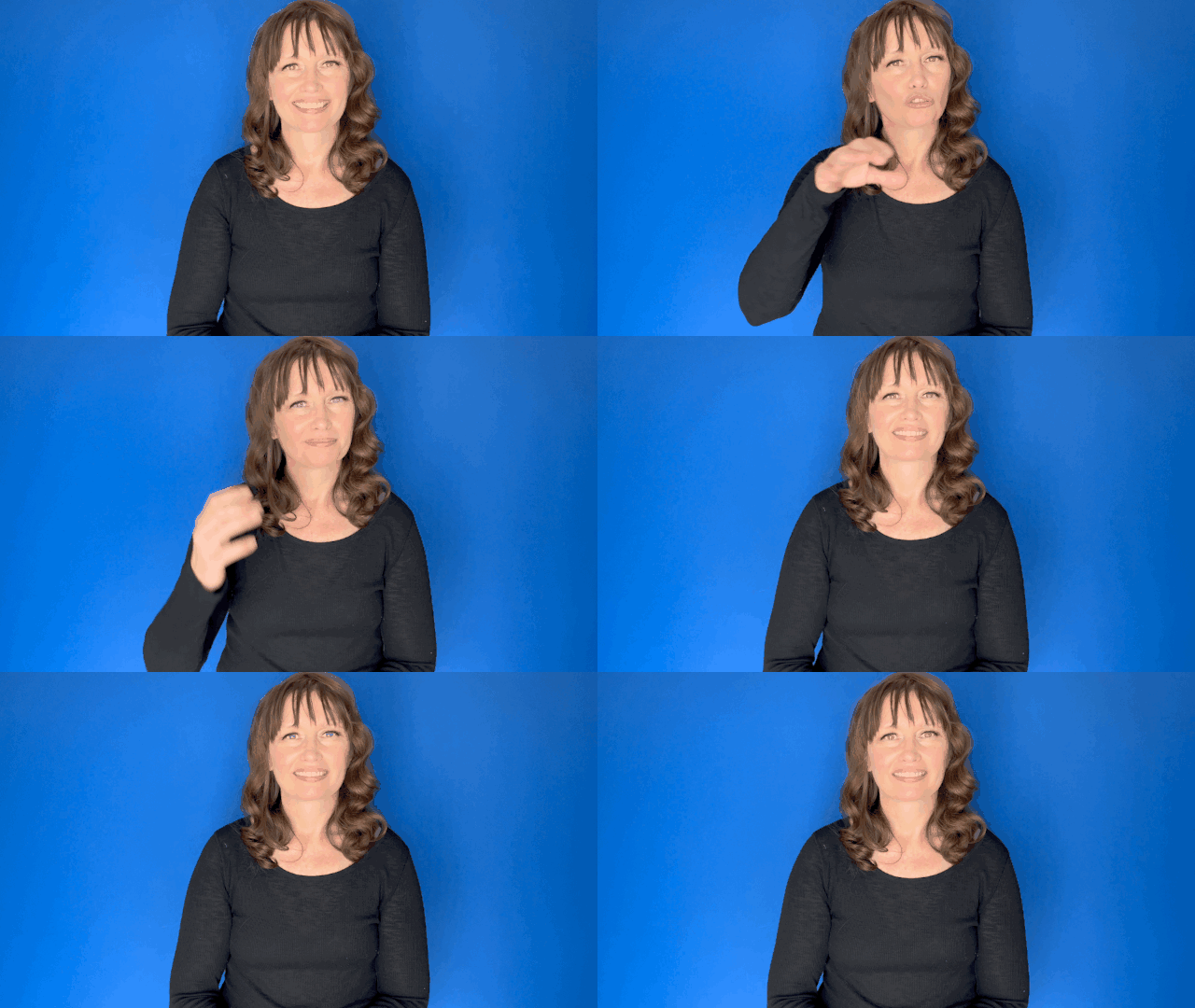
Sign for CHRISTMAS 2 in ASL

Practice Activities:
To practice the sign for CHRISTMAS 2 in ASL, start by isolating the sign and repeating it in front of a mirror. Focus on your handshape, movement, and facial expression. Do this a few times daily to build muscle memory and confidence.
Try using the sign for CHRISTMAS 2 in ASL in simple sentences, such as “I love CHRISTMAS 2” or “CHRISTMAS 2 is fun.” Sign these slowly at first, then work on your pace to match conversational ASL. Use flashcards with holiday vocabulary like tree, present, and family to build related vocabulary and incorporate them into short phrases.
Practice creating short stories that include the sign for CHRISTMAS 2 in ASL. For example, tell a story about decorating your house, exchanging gifts, or having a big dinner. Make sure to show emotion and excitement with your facial expressions to match the spirit of the holiday.
Work with a partner and take turns asking and answering questions like “What do you do for CHRISTMAS 2?” or “Who do you see at CHRISTMAS 2?” This will help reinforce the vocabulary in a conversation format and improve your receptive skills. If you don’t have a partner, record yourself signing and play it back to see areas for improvement.
Try watching holiday-related ASL videos or vlogs that include the sign for CHRISTMAS 2 in ASL. Pause the video and copy what the signer does. This helps with understanding how native signers incorporate the sign into natural dialogue.
Wrap up practice by playing a holiday-themed ASL charades game, using the sign to describe favorite traditions or decorations. Reinforcing the sign for CHRISTMAS 2 in ASL in fun and meaningful ways will help solidify its use in various contexts.
Cultural Context:
The sign for CHRISTMAS 2 in ASL holds deep cultural significance in the Deaf community. American Sign Language is not just a means of communication, but a reflection of the traditions and values of the people who use it. The sign for CHRISTMAS 2 in ASL may vary slightly across regions, but it consistently conveys warmth, celebration, and cultural identity.
In the Deaf community, holiday traditions are often rich with visual storytelling and shared experience. The sign for CHRISTMAS 2 in ASL represents more than just a date on the calendar—it embodies the joy, love, and connection that this season brings. Whether people are celebrating with family, attending Deaf social events, or participating in festive activities, this sign is a meaningful part of their expression.
Many Deaf families and communities mark the holiday season by gathering together and sharing through ASL songs, signed stories, and holiday-themed performances. The sign for CHRISTMAS 2 in ASL becomes a central feature during these times. It is used in storytelling, during holiday plays, and while describing holiday traditions passed down from generation to generation.
The visual nature of ASL allows the sign for CHRISTMAS 2 in ASL to capture the feeling of the season. This version of the sign might reflect a more specific or personalized way of showing the holiday spirit. In some communities, it may be preferred for emphasizing a particular mood, scene, or context related to Christmas celebrations.
Deaf culture places strong emphasis on visual and spatial awareness. Holiday decorations, signing carols in ASL, and watching interpreted holiday performances are all part of the experience. The sign for CHRISTMAS 2 in ASL fits into this vivid, engaging cultural narrative.
Learning the sign for CHRISTMAS 2 in ASL is a meaningful step for anyone looking to participate more fully in holiday conversations with the Deaf community. It shows respect for the language and its cultural roots. When used appropriately, it helps bridge understanding and makes holiday gatherings inclusive.
In schools or ASL classes, students often practice holiday vocabulary, especially signs like CHRISTMAS 2 in ASL. These lessons make it easier to engage in seasonal topics and create stronger bonds between students, teachers, and the Deaf community. It’s common to see classrooms decorated with both visuals and signs during this season.
Online and in social media, the sign for CHRISTMAS 2 in ASL is often shared as part of videos showing how to sign various holiday terms. These videos contribute to the cultural exchange and appreciation of ASL
Extended Definition:
The sign for CHRISTMAS 2 in ASL is one of several variations used across different regions and communities. This version is commonly seen in conversational and storytelling contexts, especially during the holiday season. It captures the visual and expressive nature of American Sign Language through a unique motion.
In the sign for CHRISTMAS 2 in ASL, the hand typically moves in a specific arc or shape that symbolizes part of the seasonal imagery. The movement may indicate a tree shape or mimic the festive decorations associated with Christmas. Like many ASL signs, it relies on facial expressions and body language to emphasize meaning and emotion.
This version of the sign may differ slightly depending on geographical location or individual ASL users. Some may use it more frequently in church settings, community events, or holiday performances. It’s often paired with other seasonal signs to tell stories or share holiday greetings.
For learners, mastering the sign for CHRISTMAS 2 in ASL can deepen their understanding of cultural expressions in the deaf community. It also helps connect with others during celebrations, giving more opportunities to participate in ASL-based social and family gatherings. Videos and visuals are especially helpful in learning this expressive sign accurately.
ASL is a dynamic and fluid language, and signs like CHRISTMAS 2 evolve as they’re shared widely. Some families might use this variant as their preferred way of sharing “Merry Christmas” or signing songs during December. Children often enjoy learning this version, especially when it’s incorporated with songs and visual storytelling.
The sign for CHRISTMAS 2 in ASL may also be used in classrooms or ASL interpretation during holiday-themed plays and programs. Interpreters often choose this version when they want to match the tone or artistic style of the speaker or performer. This sign adds variety and richness to the visual language of ASL.
Its use is not limited to native signers. Many ASL students, educators, and even hearing community members learn the sign for CHRISTMAS 2 in ASL as part of their holiday vocabulary. It’s a fun and seasonal way to build connections and show respect for the language and culture.
Emoji can often go hand in hand with festive signs on social media . When sharing the sign for CHRISTMAS 2 in ASL in online posts, using emojis and videos helps capture the spirit of the season. It’s a great way to spread holiday cheer in both digital and face-to-face settings.
Practicing the sign for CHRISTMAS 2 in ASL encourages greater fluency and expression
Synonyms: Christmas, Xmas, Yule, Noel, Yuletide
Educational resources: Find related learning materials in our course bank!
Want more? Check out some of our popular learning activities on the homepage!
Need to look up a sign? Use our highly rated dictionary: https://aslinteractive.com/best-asl-dictionary/
Follow us on tiktok: https://www.tiktok.com/@aslinteractive. More social media links at the bottom of this page!
Long-tail Keywords: what is the sign for Christmas in ASL, how do you sign Christmas in ASL, learn to sign Christmas in American Sign Language
Categories:
tags: Christmas, Holidays, Occasions, Emotions, Family
Parameters
*Handshape*:
The handshape used in the Sign for CHRISTMAS 2 in ASL begins with a dominant hand forming a curved “C” handshape, symbolizing a wreath or the shape of a holiday arch. The fingers are curved, and the thumb is opposite the fingers, forming an open semi-circle.
The non-dominant hand remains out of the signing space. This expressive C handshape is gently rotated at the wrist near the shoulder, adding movement and clarity to the Sign for CHRISTMAS 2 in ASL .
*Palm Orientation*:
For the sign for CHRISTMAS 2 in ASL, the palm orientation starts with the dominant hand in a “C” handshape facing slightly upward and outward from the side of the head. The hand then moves in a small arc or semi-circle, maintaining the palm outward throughout the motion.
Maintaining this palm orientation is essential for accurately performing the sign for CHRISTMAS 2 in ASL, as it mimics a decorative or festive movement that aligns with the season.
*Location*:
The sign for CHRISTMAS 2 in ASL is produced in the neutral space in front of the upper chest, slightly to the dominant side. The movement centers around the upper torso area, with the hand generally starting at head level and moving outward, depending on the version being used.
When performing the sign for CHRISTMAS 2 in ASL, keep the hand above mid-chest level and in comfortable signing space. This variation remains clearly visible and accessible within the signer’s field of view for clarity and ease of understanding.
*Movement*:
The sign for CHRISTMAS 2 in ASL begins with the dominant hand forming the letter “C” in ASL. Start by placing the “C” handshape near the non-dominant shoulder area. Move the “C” hand upward in a slight arc, then downward toward the center of the chest in a graceful semi-circle motion.
This creates a shape that mimics a decorative wreath or tree ornament. The movement in the sign for CHRISTMAS 2 in ASL should be smooth and expressive, showing a celebratory, joyful feeling.
*Non-Manual Signals*:
The non-manual signals for the sign for CHRISTMAS 2 in ASL often include a gentle and joyful facial expression, reflecting the festive and warm nature of the holiday. A soft smile is common, often paired with raised eyebrows to convey excitement or celebration. This adds emotional context to the sign and enhances the visual clarity.
Using proper non-manual signals while doing the sign for CHRISTMAS 2 in ASL helps convey the cultural and emotional meaning behind the word. A relaxed upper body and calm, fluid movement support the expression of positivity, making the sign feel more authentic and appropriate for holiday contexts.
*Prosody, Dominant/Non-Dominant Hand*:
The sign for CHRISTMAS 2 in ASL uses the dominant hand in a curved “C” shape, similar to a half-circle, like a garland or wreath. The dominant hand moves in a small arc over the stationary non-dominant hand, which remains at the lower chest level. Hand movement is fluid and expressive, representing the festive atmosphere.
In the sign for CHRISTMAS 2 in ASL, the dominant hand may be slightly more elevated and active, emphasizing the curve and celebratory tone. The non-dominant hand helps anchor the motion, maintaining a steady posture. This version highlights the joyous tone often associated with the holiday.
Tips for Beginners:
When learning the sign for CHRISTMAS 2 in ASL, focus on smooth and relaxed arm movement. This version involves forming your non-dominant arm horizontally in front of you, palm down, and then making a “C” handshape with your dominant hand. Move the “C” upward in a gentle arc over your non-dominant arm, representing the shape of a wreath or the festive curve of a Christmas decoration. Keep your motion fluid—avoid jerky or stiff hand movements.
A common mistake beginners make with the sign for CHRISTMAS 2 in ASL is over-exaggerating the motion or holding the “C” too rigidly. This can confuse the visual meaning. Practice in front of a mirror to ensure your motion stays within a natural arc. Clarity is more important than size—you don’t need a large or overly complex movement to be understood.
Another tip is to maintain eye contact while signing. It can be tempting to focus only on your hands, but keeping your facial expressions engaged helps give the proper emotional tone. For CHRISTMAS, a warm, joyful expression supports the feeling behind the word—let your face show the holiday spirit .
Repetition is key to mastering the sign for CHRISTMAS 2 in ASL. Watch multiple native signers to observe slight variations in the execution and practice daily in short sessions. Muscle memory will develop over time, and your movement will become more natural.
Lastly, remember to differentiate the sign for CHRISTMAS 2 in ASL from its other version. Both are correct but used depending on region or personal preference. Knowing multiple versions of a sign increases your communicative range and helps you better understand various signers in real conversations.
Connections to Other topics:
The sign for CHRISTMAS 2 in ASL connects closely with other holiday-related signs, offering a rich opportunity to explore how celebrations are depicted in ASL. This version of the Christmas sign typically incorporates a gesture resembling the shape of a wreath or ornament, which ties it thematically to decorations and symbols commonly associated with the holiday season.
Learners can benefit from comparing the sign for CHRISTMAS 2 in ASL with other event-based signs such as EASTER, THANKSGIVING, and BIRTHDAY. These signs often involve culturally specific gestures and imagery, offering insight into how abstract and festive concepts are visualized using handshapes and motion. For instance, CHRISTMAS 2 may be combined with signs such as TREE, DECORATE, or FAMILY to create compound expressions that enrich storytelling or event descriptions.
In conversations or narratives, the sign for CHRISTMAS 2 in ASL may form part of larger expressions like MERRY CHRISTMAS or CHRISTMAS GIFT. These compounds use the base concept of the holiday and layer it with emotion or action, helping signers convey more complete ideas with clarity and emotion. This also highlights the flexibility of syntax in ASL when modifying or combining existing signs.
The holiday also shares connections with season-related signs like WINTER and SNOW. These contextual links support learners in developing smoother transitions when describing scenes or events. Since ASL is heavily visual, aligning seasonal elements with events such as CHRISTMAS 2 can enhance visual coherence in signing.
Additionally, this sign may appear in religious or cultural conversations. When paired with signs like JESUS, CHURCH, or CELEBRATE, the sign for CHRISTMAS 2 in ASL aligns with topics of faith and tradition, offering further practice opportunities in expressive signing. These connections make the sign a useful entry point for mastering holiday vocabulary and related concepts in ASL.
Summary:
The sign for CHRISTMAS 2 in ASL offers a visually distinct variant of the more commonly used CHRISTMAS sign. This version brings a subtle aesthetic difference, representing cultural variations and personal preferences within signing styles. Many signers adopt CHRISTMAS 2 for its fluid motion and graceful representation of the festive season.
To perform the sign for CHRISTMAS 2 in ASL, begin with a dominant “C” handshape. Raise your arm and create a gentle arc over your head toward the side and downward, resembling a tree or wreath shape. This motion mimics the arch often associated with holiday decorations or the shape of a Christmas ornament being lifted and placed.
Unlike the other more static form of the CHRISTMAS sign, CHRISTMAS 2 adds dynamic movement. The soft curve created in the air suggests warmth and celebration, aligning with the joyous tone of the season. Many interpreters use this sign during performances or storytelling due to its engaging visual trigger.
The sign for CHRISTMAS 2 in ASL often appears in holiday songs and event interpretation. Its sweeping motion makes it suitable for rhythm and expression. D/HH communities enjoy its expressiveness when used in carols or church sermons themed around the Christmas holiday.
Culturally, the sign for CHRISTMAS 2 in ASL connects deeply with shared community experiences during the holiday season. It symbolizes not only the religious aspects of Christmas but also its broader cultural traditions like gift-giving, tree decorating, and communal celebrations. Within Deaf culture, where nuance and facial expression enrich meaning, this sign allows for layered emotional expression.
Grammatically in ASL, holiday signs like this one are often used as topic markers. You might begin a sentence with the sign for CHRISTMAS 2 in ASL to frame your conversation around the holiday context. In ASL structure, this helps to orient the viewer before offering further content, aligning with the language’s topically-driven format.
There’s also an emotional clarity in this version of the sign. The expressive, flowing gesture invites warmth. It is especially meaningful in family-centered conversations or during church services where collective emotional resonance is key.
Linguistically, the sign for CHRISTMAS 2 in ASL is a rich study in classifiers and visual metaphor. The “C” handshape traditionally represents the English word’s initial but in motion, it becomes evocative of Christmas ornaments, halos, or arches. The hand’s arc can be viewed as metaphorical, encapsulating the holiday’s cycle of light and harmony.
This alternative version of the word highlights linguistic variability in ASL. A single concept like Christmas can have multiple acceptable signs. These options reflect regional trends, personal preferences, and historical influences on sign language evolution.
The existence of the sign for CHRISTMAS 2 in ASL demonstrates the flexibility and creativity within ASL vocabulary. Signers can choose signs based on context, audience, or communicative mood. This diversity helps ASL remain a living, evolving language.
ASL learners often encounter CHRISTMAS 2 during cultural immersion settings such as Deaf community holiday events or interpreting workshops. It provides a conversation opportunity around how signers choose between multiple available signs. Learners observing this variant gain a better awareness of the stylistic richness embedded in ASL.
The broader theme surrounding the sign connects to how language embodies tradition. In using CHRISTMAS 2, the signer brings ritual and symbol into communication. Whether referencing a nativity scene or sending warm seasonal wishes, the sign captures culture in motion.
In applied linguistics, CHRISTMAS 2 demonstrates how sign choice affects communication aesthetics. This version may be selected to match the mood in children’s storytelling or in festive banquets where visual clarity and beauty enhance engagement. Trainers often incorporate this variant to encourage expressive signing practice.
In multilingual interpreting, the sign for CHRISTMAS 2 in ASL can align with poetic or musical translation. Its smooth motion pairs well with rhythm, making it preferred among interpreters who handle liturgical or artistic presentations. Interpreters always consider visual tone alongside literal meaning.
Historically, signs like CHRISTMAS 2 may appear newer due to their contemporary usage in artistic settings. However, oral histories within the Deaf community show that variations often co-exist for decades or longer. This version might have regional roots or stem from interpreted theater.
The social layer of this sign cannot be overstated. In events like Deaf-led holiday celebrations, this sign helps create shared emotional rhythms. Its style matches the communal joy found in silent nightlights, gift exchange, and signing choirs.
In theological contexts, CHRISTMAS 2 can be tied to the symbolism of Christ’s birth. The flowing upward arc may be interpreted as heavenly or divine. The sign’s elegance can enrich religious storytelling, emphasizing sacredness while staying accessible through visual clarity.
ASL poetry finds visual potential in this version. Sign poets manipulate its shape, flow, and rhythm to evoke holiday passions or spiritual themes. The sign’s flexible motion serves as a linguistic brushstroke in expressive creations.
ASL users
Want more? Check out some of our popular learning activities!
ASL Interactive Resources
ASLInteractive YouTube Channel
Follow us on tiktok: @aslinteractive.com
Follow us on Instagram: aslinteractive
Facebook page: aslinteractive
Facebook group: aslinteractive
LInkedIn: ASL Interactive LLC
Twitter: @ASL_interactive
*Some information on this page is AI-generated. AI can make mistakes. Please check the information.
Responses