
Definition: The far left corner.
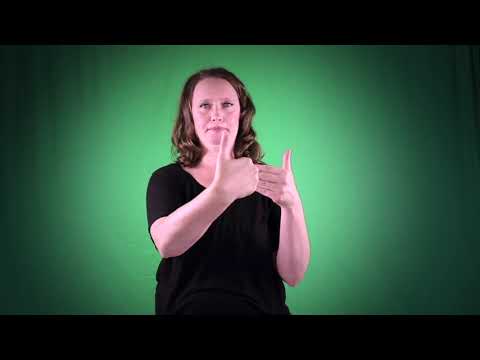
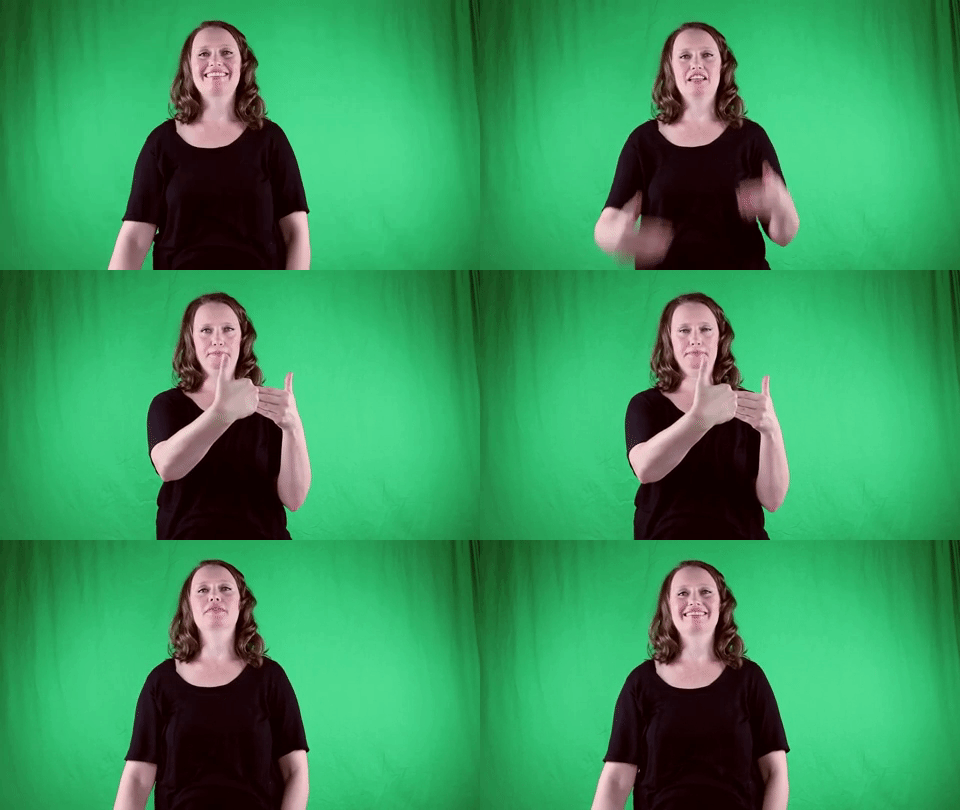
Sign for CORNER FAR LEFT in ASL
Practice Activities:
To build fluency with the sign for CORNER FAR LEFT in ASL, start by practicing the sign in isolation. Stand in front of a mirror and focus on the spatial movement, emphasizing the orientation toward the far left side. Try repeating it slowly and then increasing the speed while keeping clarity. Use your non-dominant hand as a point of reference to establish location before moving to the far-left corner with your dominant hand.
Incorporate the sign into short sentences describing physical spaces. For example, sign “the lamp is in the corner far left” or “my backpack is in the corner far left of the room.” Practice describing your actual surroundings to reinforce real-world meaning. Walk around your home or classroom and label items, pointing out what is in the corner far left in different contexts.
Storytelling prompts can further integrate the sign. Create a short story about losing something and later finding it in the corner far left of a room. You can even use directional indexing to show movement through a space to that specific corner. Descriptions like “I entered the room, looked around, turned left, and there it was—in the corner far left” help reinforce spatial language.
Engage in partner activities by playing a scavenger hunt game. One person describes where an object is located using signs, and the other person must find it based on that description. Emphasizing the sign for CORNER FAR LEFT in ASL will help both partners master directional referencing.
Use flashcards with pictures of room layouts and have learners sign the location of different objects. Rotate the image orientation each time so learners must adjust which side is the far left, reinforcing spatial thinking along with the sign. Practicing the sign for CORNER FAR LEFT in ASL in a variety of ways will improve your confidence and reading of 3D spatial space.
Cultural Context:
In American Sign Language (ASL), spatial referencing plays a crucial role in describing locations and directions. The sign for CORNER FAR LEFT in ASL combines both directional cues and spatial awareness, helping Deaf individuals describe specific positions in a room, on a map, or even within a group of people.
Understanding the sign for CORNER FAR LEFT in ASL involves more than just learning handshapes. You must also grasp the cultural and linguistic importance of visual space in ASL. Signers visualize the location as they produce the sign, making it meaningful and accurate within the context being communicated.
Deaf culture relies heavily on visual strategies for clarity, especially when it comes to giving directions or describing scenes. Using the sign for CORNER FAR LEFT in ASL reflects that cultural emphasis on clear spatial representation and shared perspective.
When communicating, native signers often mentally map out their surroundings before producing spatial signs. This ensures that signs like CORNER FAR LEFT in ASL are not only correct but also contextually relevant. The use of space in ASL mirrors how Deaf people experience the world visually.
In classrooms, storytelling, or interpreter settings, spatial signs are essential. The sign for CORNER FAR LEFT in ASL allows signers to paint a clear picture for their audience using body orientation and eye gaze. These techniques make communication more effective and engaging in ASL.
This sign is often used when describing seating arrangements, positioning objects in a room, or highlighting areas in visual presentations. The sign for CORNER FAR LEFT in ASL is part of a larger conversation about location and layout, crucial in Deaf visual language.
ASL doesn’t translate word-for-word from English, so signs like CORNER FAR LEFT in ASL represent concepts rather than fixed vocabulary. Signers might use classifiers or modify their signing space, depending on the context and perspective of the situation.
Deaf-friendly spaces are often designed with open layouts so visual communication is not obstructed. The concept of positioning, including the sign for CORNER FAR LEFT in ASL, fits into these environments where visual cues guide navigation and interaction.
Even in storytelling, such as ASL poetry or visual vernacular, the sign for CORNER FAR LEFT in ASL can help establish setting and scene. This enhances the narrative and builds a richer, more immersive visual experience for the audience.
New learners of ASL may find spatial signs challenging at first, but with practice, the application becomes intuitive. The sign for CORNER FAR LEFT in ASL helps them think
Extended Definition:
The sign for corner far left in ASL is a spatial and directional sign that visually describes both the concept of a corner and its location on the far left side. This sign combines elements of location, space, and geometry to accurately convey where something or someone is positioned.
In American Sign Language, directional signs often rely on real-world visual layout. When signing corner far left in ASL, you are using classified structures and spatial referencing to point out the farthest left-hand area that also forms a corner, such as in a room, intersection, or layout.
To express this concept clearly, you will typically use your dominant hand to form a visual cue that portrays the shape of a corner. Then, your hands or body shift to emphasize that the referenced point lies on the far left side. This allows the signer to clearly indicate an object’s or person’s precise location in conversation or storytelling.
The sign for corner far left in ASL often uses a combination of classifiers to represent walls or boundaries, followed by a shift or point towards the far left side. Depending on the context, signers might also incorporate body movement or head positioning to enhance clarity.
This sign works especially well in situations that require giving or receiving directions, as well as in classroom, home, or public settings where visual layout matters. It helps create a visual map for the listener, a critical component of effective ASL communication.
Signers might use this sign in combination with other location-based ASL signs to describe corners on a street, seating arrangements in a room, or where to find a person or object. Because the concept relies on visual context, using the sign for corner far left in ASL can be very descriptive and efficient, especially for detailed narratives.
In ASL storytelling, accurate use of spatial language like this enriches the experience, making it more immersive. Correctly signing spatial references such as corner far left can show familiarity and fluency in the language, enhancing clear communication.
This sign may also be part of lesson plans for ASL learners when studying location words and spatial concepts. Understanding complex directional signs like this encourages stronger observation and mimicking skills, which are essential for language acquisition in the deaf and hard of hearing community.
Whether you’re locating a desk in a classroom, a couch in the living room, or a post on the street map, the sign for corner far left in ASL helps provide visual precision. It’s a frequently used phrase in practical real-life settings and is useful to both beginners and advanced sign
Synonyms: far left corner, extreme left corner, leftmost corner, upper left edge, lower left corner
Educational resources: Find related learning materials in our course bank!
Want more? Check out some of our popular learning activities on the homepage!
Need to look up a sign? Use our highly rated dictionary: https://aslinteractive.com/best-asl-dictionary/
Follow us on tiktok: https://www.tiktok.com/@aslinteractive. More social media links at the bottom of this page!
Long-tail Keywords: what is the sign for corner far left in ASL, how do you sign corner far left in ASL, corner far left in American Sign Language
Categories:
tags: Directions, Spatial Orientation, Classroom, Commands, Activities
Parameters
*Handshape*:
The handshape for the sign for CORNER FAR LEFT in ASL typically involves both hands taking on the L-handshape . The non-dominant hand stays stationary, angled vertically to represent a boundary line, while the dominant L-hand moves away and to the far left side, illustrating distance and direction.
This use of L-handshapes for the sign for CORNER FAR LEFT in ASL clearly represents both the spatial orientation and the concept of a corner located in a far-left direction. The movement, combined with the precise handshape, effectively conveys the visual aspect of the term.
*Palm Orientation*:
In the sign for CORNER FAR LEFT in ASL, the dominant hand typically forms a flat handshape (B-hand), with the palm orientation initially facing inward toward the non-dominant side. As the hand outlines the corner, the palm rotates outward and slowly angles toward the left to indicate distance and direction.
This changing palm orientation helps convey both the concept of ‘corner’ and the spatial reference of ‘far left.’ The sign for CORNER FAR LEFT in ASL uses these subtle palm shifts to enhance clarity in directional communication. ⬅️
*Location*:
The sign for CORNER FAR LEFT in ASL is produced in the signing space to the extreme left side of the signer’s body. It typically starts with both hands forming a right angle, representing a corner, and is then spatially shifted or articulated toward the far left.
This placement emphasizes the distant location on the left within the signer’s signing area. The use of a clear leftward movement combined with spatial referencing helps convey the specific meaning in the sign for CORNER FAR LEFT in ASL.
*Movement*:
To produce the sign for CORNER FAR LEFT in ASL, begin with both hands in flat-B handshapes. Hold the non-dominant hand vertically on the right side to represent a wall. Move the dominant hand perpendicularly from it to the left to form a right angle, mimicking a corner.
Then, shift the dominant hand outward in an arching motion toward the far left space. This emphasizes distance and direction, completing the sign for CORNER FAR LEFT in ASL .
*Non-Manual Signals*:
When demonstrating the sign for CORNER FAR LEFT in ASL, the signer should use a slight lean or shift of the upper body and head toward the left to emphasize distance. Maintain widened eyes or a more intense gaze to show that the corner is not nearby.
A slightly open mouth or subtle pursed lips can also help convey the concept of “far.” Combining these facial cues enhances clarity and strengthens the visual aspect of the sign for CORNER FAR LEFT in ASL.
*Prosody, Dominant/Non-Dominant Hand*:
The sign for CORNER FAR LEFT in ASL uses both hands. The non-dominant hand stays stationary in front of the body, palm facing right. The dominant hand creates an L-shape and moves in an arc around the non-dominant hand, suggesting the shape of a corner. Then the dominant hand continues outward in a sweeping motion toward the far left, emphasizing distance.
This movement clearly shows spatial orientation for the sign for CORNER FAR LEFT in ASL . The arc and extended motion help indicate both direction and position, which are essential when expressing this concept. Maintain clear eye gaze and body orientation toward the left to reinforce the meaning.
Tips for Beginners:
When learning the sign for CORNER FAR LEFT in ASL, it’s important to focus on expressing both spatial orientation and distance accurately. Start by mastering the basic sign for “corner,” which typically uses the nondominant hand to form a wall-like shape in front of you, while the dominant hand moves around it to create an L-shape, representing a corner. To indicate “far left,” you then need to extend your dominant hand to the far left of your signing space while showing distance with a slight lean or extension away from your body.
One helpful tip is to clearly define your signing space and always use your own point of view. The sign for CORNER FAR LEFT in ASL represents a very specific location, so make sure to exaggerate the spatial range slightly, especially when communicating with someone further away or in a group. Keep your movements fluid but not rushed—the clarity of the placement matters more than speed.
Beginners often make the mistake of not fully extending the arm or of placing the “left” location too close to the center, which confuses directionality. Practice using a mirror or recording yourself to check whether your signs are visually easy to interpret from the viewer’s perspective. Remember, left and right are viewer-relative in ASL, so consistency and clarity are key.
Adding facial expressions and slight head turns can reinforce the meaning of “far” as part of the sign for CORNER FAR LEFT in ASL. Don’t be afraid to use your body to express distance and place. When telling a story or describing locations, this sign can add a strong visual element for better understanding. ✨ Practice with object placement exercises so you get used to signing different directions quickly and accurately.
Connections to Other topics:
The sign for CORNER FAR LEFT in ASL connects to broader spatial and directional vocabulary such as left, right, near, far, and corner. Each of these elements has standalone signs that, when combined, can create more specific directional concepts. This type of compounding is central to ASL’s spatial grammar, which uses classifiers and handshapes to describe locations, placements, and movements in space.
Understanding the sign for CORNER FAR LEFT in ASL requires comprehension of spatial referencing, a concept extensively used in classifiers. Classifier constructions allow signers to show where an object is located relative to others. For example, using an L-handshape for a corner, followed by directional emphasis to the far left, gives a visual-spatial indication of where something is located, much like a map ️.
This compound sign also relates closely to real-world descriptions in interpreting or storytelling. When giving directions or describing a scene, such as “the library is at the corner far left of the plaza,” ASL users rely on accurate spatial modifications. The sign for CORNER FAR LEFT in ASL is instrumental in such contexts, allowing for precise visual communication.
Signs like NEAR, FAR RIGHT, BEHIND, or NEXT TO serve as building blocks in developing advanced spatial language. By combining these with classifiers or modifying movement and facial expressions, signers enhance clarity and visual storytelling. The sign for CORNER FAR LEFT in ASL may be used in describing room layouts, giving stage directions in theater, or during ASL narratives involving multiple characters or landmarks .
In academic or professional settings, especially in interpreting or ASL translation work, mastering complex spatial signs like this one supports fluency. It encourages a deeper understanding of how ASL conveys not just language but orientation and relation among objects and people within a space.
Summary:
The sign for CORNER FAR LEFT in ASL combines spatial referencing with directional placement to clarify both location and orientation. To convey this idea, signers typically utilize a three-dimensional signing space, beginning with a sign for “corner” and modifying it with directional movement toward the far-left spatial zone.
This sign starts with both hands in L shapes, palms facing each other, positioned in front of the body as if outlining the edge of a square corner. After establishing the “corner” concept, one hand moves to the signer’s extended left side, mimicking the idea of distance or farness in relation to the central neutral space.
Facial expressions play a critical role during the movement, particularly in establishing the “far” part of CORNER FAR LEFT. Eyebrows may raise, lips may purse, or the signer may slightly shift their upper body to emphasize that the location is well to the left side.
The incorporation of body space in the sign for CORNER FAR LEFT in ASL aligns with ASL’s rich use of location and spatial mapping. ASL is a visual/spatial language; directionality and space replace the grammatical markers you might find in English.
In a more complex sentence, the sign for CORNER FAR LEFT helps identify location in reference to other objects or signs. For example, in narrative sign language storytelling or when giving directions, a signer might establish multiple reference points and then indicate CORNER FAR LEFT to ground the next detail in physical space.
This sign allows for visual storytelling, packing information that could take several sentences in English into a brief, expressive moment in ASL. The FAR direction functions like a prepositional phrase, enhancing the specificity of the “corner.”
It’s common to pair the sign for CORNER FAR LEFT in ASL with classifiers depending on the object or person being referenced. A building in the far-left corner might be marked with a Classifier-B handshape, further emphasizing its location and footprint.
The form and movement of this sign exemplify ASL’s emphasis on perspective. The FAR LEFT placement relates to the signer’s vantage point, but can shift for the viewer if role-shifting is used.
Deixis is essential in this sign. Pointing or gesturing into an expanded spatial zone makes the concept of “far left” intuitive and tangible. This is a great example of how ASL duplicates real-world space with linguistic mappings.
The use of the left side of the body and extended reach reflect ASL’s grammar and how space compensates for modality. There’s no need for words like “the” or “is”—the concept is presented as a location, not a subject.
Spatial verbs often appear nearby in conversation with the sign for CORNER FAR LEFT in ASL. Verbs of motion—like “go”, “run”, or “drive”—can be modified to arc toward that far-left corner to show narrative direction or character movement.
ASL’s spatial syntax allows speakers to build maps in the air. Using the sign for CORNER FAR LEFT, a signer draws the viewer’s eye toward a specific imagined corner, doing so rhythmically and densely.
The visual grammar of ASL values the physical portrayal of a concept. This includes how expectations about corners and cardinal directions are culturally situated, often based on intuitive understandings of shared space.
The sign for CORNER FAR LEFT in ASL also demonstrates cross-linguistic differences in how languages define and manage space. While English uses adjectives and prepositions, ASL integrates those ideas in placement and body movement.
Chronologically, signs like CORNER FAR LEFT show how Deaf communities developed spatial conventions to communicate detailed environmental or architectural concepts. This sign has practical everyday value, like when describing campus directions or locating exits in theaters.
Its functionality becomes especially vivid in signed conversations with spatial-logic themes, like describing a maze, garage layout, or street grid. It’s an excellent educational tool to teach location concepts to both Deaf children and second-language learners.
The location of this sign on the left side also supports the mirror-image comprehension theory in ASL pedagogy. When teaching this sign, instructors help students understand that left and right are anchored to the active signer’s frame.
CORNER FAR LEFT integrates well into bigger narrative arcs, especially in storytelling genres. Visual metaphors involving journeys or perils often emphasize how far or isolated a corner might be, turning physical space into moral or emotional weight.
In signed drama or interpreted settings, adding the descriptor FAR emphasizes the dramatic or practical degree of distance. Rather than just “corner,” it’s the one that’s way out—adding tension or clarity depending on the context.
The set of signs related to this idea include CORNER, FAR RIGHT, MIDDLE, CENTER, and NEAR. All these give signers the ability to transfer visual maps from their minds into shared visual-spatial constructions.
Learners struggle at first with left/right orientation—especially when interpreting from English to ASL—but accuracy improves when spatial logic is tied to three-dimensional visualization
Want more? Check out some of our popular learning activities!
ASL Interactive Resources
ASLInteractive YouTube Channel
Follow us on tiktok: @aslinteractive.com
Follow us on Instagram: aslinteractive
Facebook page: aslinteractive
Facebook group: aslinteractive
LInkedIn: ASL Interactive LLC
Twitter: @ASL_interactive
*Some information on this page is AI-generated. AI can make mistakes. Please check the information.
Responses