
Definition: To overcome or beat an opponent, adversary, or challenge; achieving victory or success against opposition.
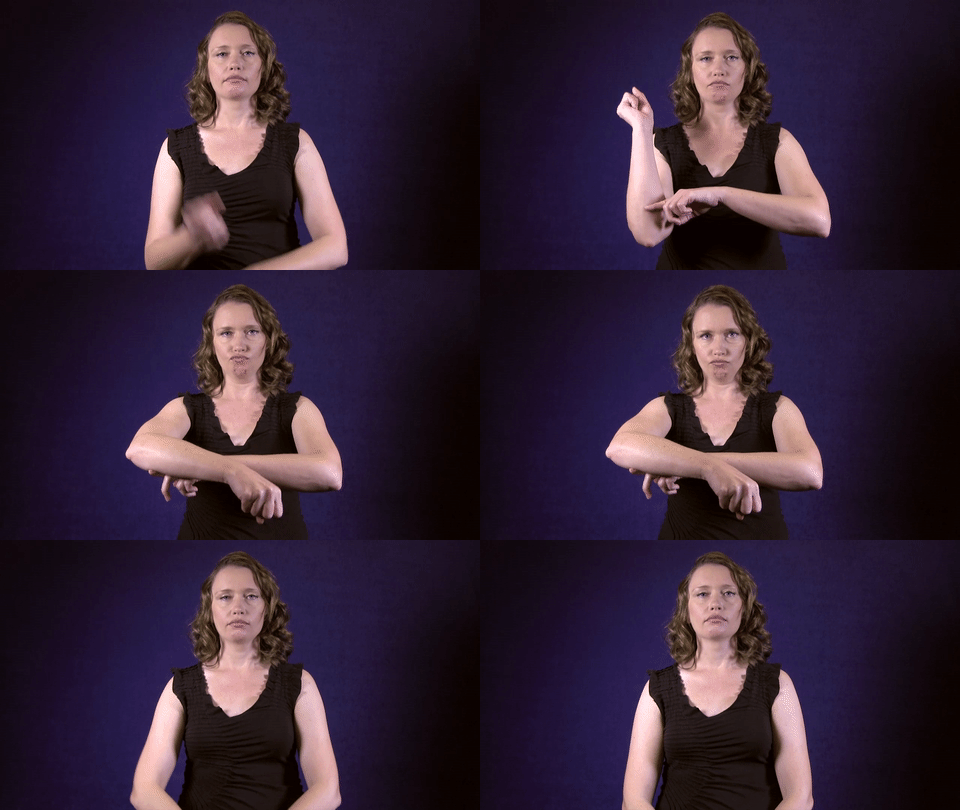
Sign for DEFEAT 2 in ASL

Practice Activities:
To practice the sign for DEFEAT 2 in ASL, begin with isolated repetition in front of a mirror. Focus on handshape, movement, and facial expressions that align with the sign’s meaning. Practice transitioning into and out of the sign using simple phrases to give it context.
Create sentences such as “Our team will defeat them,” “He accepted defeat,” or “They were defeated yesterday.” Use the sign for DEFEAT 2 in ASL while signing these sentences to build fluidity. Record yourself or practice signing these in front of a trusted peer who can offer feedback.
Engage in storytelling using competitive themes. You might describe a basketball game where your team played hard and eventually defeated the opponent. Integrate the sign for DEFEAT 2 in ASL into the story each time the outcome is expressed.
Pair up with another learner and create a mock debate or game result exchange in ASL. Take turns presenting who won and who suffered defeat, making sure to use the correct version of the sign. Alternate between formal events like elections and informal ones like board games to broaden your experience with the sign in real-life scenarios.
In a group activity, write short competitive scenarios on slips of paper. Take turns drawing a slip and improvising a short ASL scene that fits the context, accurately using the sign for DEFEAT 2 in ASL. Encourage expressive signing and appropriate use of classifiers, directionality, and facial grammar.
Finally, watch recorded ASL storytelling or sports commentary clips and identify when a version of the sign for defeat appears. Mimic the signer’s use of space, intensity, and body language to better understand the proper use of this specific variation. Repeating this daily will reinforce comprehension and accuracy.
Cultural Context:
The sign for defeat 2 in ASL carries both linguistic and cultural significance in the Deaf community. Understanding how defeat is expressed visually offers insight into how emotions and concepts are conveyed in American Sign Language beyond simple translations. The sign for defeat 2 in ASL often reflects context, clarity, and emotional intensity, depending on the situation.
In Deaf culture, facial expressions play an important role in communicating attitudes, emotions, and intentions. When using the sign for defeat 2 in ASL, a signer may incorporate a defeated facial expression or even show exaggerated disappointment to match the sentiment. This cultural emphasis on expression makes the language feel more connected and personal.
The sign for defeat 2 in ASL is not only used in sports or games but also in personal discussions, storytelling, and social conversations. For example, someone might use this sign when talking about being emotionally defeated, losing an argument, or experiencing failure. Its versatility within language shows how ASL adapts to human experiences in a way that’s deeply visual and expressive.
Deaf storytelling often incorporates the sign for defeat 2 in ASL to show character development or moments of transformation. The sign supports the narrative by showing pivotal moments of struggle or loss. Whether it’s a life challenge or a minor setback, this sign captures the essence of feeling defeated.
ASL evolves within the community, and signs like the sign for defeat 2 in ASL may vary slightly depending on regional influences or generational usage. However, the core meaning remains consistent, reflecting shared cultural values and collective experiences. In everyday communication, it’s not only about the handshape but how it’s delivered with body language and emotion.
In learning environments, discussing the sign for defeat 2 in ASL introduces students to the combination of visual grammar and cultural relevance. Teachers often emphasize how certain signs carry more than their English equivalents; they carry history, emotion, and usage based on real-life contexts. This depth enriches the learner’s understanding and appreciation of ASL as a living language.
Social interactions within the Deaf community use signs like defeat 2 to relate shared experiences, sometimes even humorously. A person might jokingly refer to their defeat in a card game or vent about a bad day at work. The sign for defeat 2 in ASL serves as a tool of connection, relating emotions universally understood but shared uniquely among signers.
The influence of Deaf media and vlogs has helped standardize the visibility of signs such as the sign for defeat 2 in ASL. Inter
Extended Definition:
The sign for defeat 2 in ASL refers to one way American Sign Language users express the concept of a loss, failure, or being overcome in a situation. This version of the sign is different from other variations, offering a unique handshape and movement to convey a more specific context. It may be more commonly used in certain regions or signing communities.
To form the sign for defeat 2 in ASL, start with one hand in a flat B-handshape and the other in a V-handshape. The V-handshape moves downward onto the flat hand, showing one thing being overwhelmed or overtaken by another. This motion visually reinforces the meaning of suffering a defeat, such as in sports, arguments, or battle.
In ASL, the same English word can have various signs depending on meaning and context. The sign for defeat 2 in ASL is applied when discussing competition, losing control, or being conquered in a metaphorical or literal way. The visual element of the sign helps make abstract ideas more concrete through motion and body language.
When using the sign in daily conversation, it’s important to match the facial expressions and body posture with the intensity of the event being described. If talking about a major loss, a disappointed expression helps add emphasis. In lighter contexts, a shrug or smile can express the moment as less serious.
This sign is often used in discussions about sports, politics, or challenges. You might see it in descriptions like a team being defeated, or a person feeling emotionally defeated after a stressful day. ASL allows for rich storytelling, and signs like defeat 2 contribute to that visual storytelling.
The differentiation between defeat 1 and defeat 2 is part of what makes ASL unique. Rather than relying on one generic motion, ASL provides signers with tools to tailor their message. Choosing the correct version of the sign for defeat 2 in ASL makes communication more accurate and expressive.
Using the sign for defeat 2 in ASL is a great way for learners to deepen their understanding of how American Sign Language handles nuanced meanings. It shows that ASL goes beyond translating word-for-word and instead captures the feeling and concept through motion. This helps signers become more skilled at conveying subtle differences.
This sign can be included in storytelling, classroom settings, or casual conversations. It adds depth and emotion when recounting personal hardships, unsuccessful attempts, or even fictional events. Becoming familiar with signs like defeat 2 improves fluency and understanding of ASL grammar and culture.
Synonyms: conquer, overcome, subdue, vanquish, beat
Educational resources: Find related learning materials in our course bank!
Want more? Check out some of our popular learning activities on the homepage!
Need to look up a sign? Use our highly rated dictionary: https://aslinteractive.com/best-asl-dictionary/
Follow us on tiktok: https://www.tiktok.com/@aslinteractive. More social media links at the bottom of this page!
Long-tail Keywords: what is the sign for defeat in ASL, how do you sign defeat in American Sign Language, learn the ASL sign for defeat
Categories:
tags: Defeat, Emotions, Sports, Verbs, Negation
Parameters
*Handshape*:
The handshape for the sign for DEFEAT 2 in ASL uses dominant and non-dominant hands. The dominant hand forms an open flat “B” handshape, while the non-dominant hand may be in a fist or another passive position, depending on the regional variation.
In the sign for DEFEAT 2 in ASL, the dominant hand moves forcefully forward or strikes the non-dominant hand to convey the idea of loss or being overcome. This motion enhances the meaning and intensity of the specific version of the sign.
*Palm Orientation*:
For the sign for DEFEAT 2 in ASL, the dominant hand typically faces downward with the palm oriented toward the non-dominant side. The non-dominant hand is open and upright, and the dominant hand makes contact as if knocking it down or overtaking it. This downward palm orientation emphasizes the action of overpowering or winning, which aligns with the meaning in the sign for DEFEAT 2 in ASL.
*Location*:
The sign for DEFEAT 2 in ASL is produced in the neutral space directly in front of the chest, slightly below shoulder height. Both hands remain in a comfortable range that allows for clear visibility and fluid motion. This central space emphasizes the action and interaction of the hands for the sign.
In the sign for DEFEAT 2 in ASL, the dominant hand moves toward the non-dominant hand in a specific directional motion that implies overpowering or conquering. Keeping the sign in front of the upper torso ensures clarity and consistent visibility during communication.
*Movement*:
The sign for DEFEAT 2 in ASL typically involves one hand in a flat “B” shape, held palm-down, moving forcefully down onto the back of the other hand, which is also in a flat position. The dominant hand strikes the non-dominant hand with a quick, firm motion to symbolize overpowering or conquering.
This motion emphasizes the suddenness of loss, conveying the idea behind the sign for DEFEAT 2 in ASL . The facial expression usually includes a stern or intense look to further reinforce the meaning of the sign for DEFEAT 2 in ASL.
*Non-Manual Signals*:
The non-manual signals for the sign for DEFEAT 2 in ASL typically include a frustrated or disappointed facial expression, often with slightly furrowed brows and a subtle downward tilt of the mouth. This mirrors the emotional impact of experiencing loss or failure.
When using the sign for DEFEAT 2 in ASL, you may also see a brief head shake or a quick sigh to help convey the depth of defeat. These non-manual cues enhance the meaning and intensity of the sign.
*Prosody, Dominant/Non-Dominant Hand*:
The sign for DEFEAT 2 in ASL uses both hands, with the dominant hand formed in a bent 5-handshape and the non-dominant hand in a fist or S-handshape. The dominant hand moves forcefully downward and arcs over the non-dominant hand, as if overpowering it.
This movement visually expresses the idea of overcoming or defeating someone. The sign for DEFEAT 2 in ASL powerfully illustrates struggle and triumph, often accompanied by a serious facial expression to show emphasis .
Tips for Beginners:
When learning the sign for DEFEAT 2 in ASL, a helpful tip is to focus on the interaction between the dominant and non-dominant hands. This version shows one hand representing a person or entity being pushed downward or back, symbolizing being defeated. Ensure that the movement is forceful but clean — sloppy motion can confuse the meaning with similar directional signs.
One common error beginners make with the sign for DEFEAT 2 in ASL is not maintaining the correct handshape or using weak, unclear motion. The non-dominant hand should stay steady while the dominant hand moves with purpose. Practice the sign in a mirror to check positioning, and ask a fluent signer or teacher to give feedback on clarity and hand orientation.
Another helpful technique is to pair the sign with a clear facial expression that matches the concept of loss, disappointment, or frustration. In ASL, facial grammar strengthens what your hands communicate. A neutral or incorrect expression can cause the sign for DEFEAT 2 in ASL to feel flat or ambiguous, especially in emotionally charged conversations.
It can also help to study the sign in multiple sentence contexts. Use it in phrases like “our team was defeated” or “they expected defeat.” This will train your brain to associate syntax, grammar, and pacing along with the actual movement of the sign. Use repetition to reinforce this version if you’re familiar with other variants.
Lastly, do consistent finger and wrist exercises to improve control and endurance. Beginners often struggle with smooth, confident movement, so staying physically relaxed and strong will make learning the sign for DEFEAT 2 in ASL smoother and more enjoyable over time. ✋
Connections to Other topics:
The sign for DEFEAT 2 in ASL connects closely with concepts of loss, failure, and competition. It can be seen as part of a semantic group of signs that express outcomes of confrontations or challenges, such as LOSE, FAIL, and GIVE-UP. These signs often share directional or movement elements that reflect the outcome of an action, making them useful for contrasting ideas in narratives or discussions.
Many native signers combine the sign for DEFEAT 2 in ASL in compound expressions such as GET-DEFEATED, BEAT-DOWN, or TOTAL-DEFEAT. These combinations allow for nuanced descriptions of events, like a sports game result or an emotional setback. In conversational ASL, it’s common to see expressions like YOU DEFEAT-ME or THEY DEFEAT US, which incorporate directional signing to show who is affected.
The sign for DEFEAT 2 in ASL can also be related to figurative expressions. In stories, it may accompany signs like DISAPPOINT or HOPE-DASHED to add emotional context. This enriches storytelling by layering meaning onto the basic idea of defeat, showing the impact beyond just losing.
When discussing competition, this sign frequently appears in contrast with WIN and COMPETE. It’s useful in educational settings or sports commentary to explain different outcomes, and it promotes deeper understanding when students compare those signs. For example, a classroom scenario may use DEFEAT in multiple contexts – intellectual, physical, or emotional.
Additionally, signs like DEFEAT in ASL often connect to directional verbs, which are foundational in ASL grammar. Using spatial referencing, learners can show who defeats whom, adding clarity and fluency to signed conversations. Thus, practicing the sign for DEFEAT 2 in ASL with directional cues builds strong signing structure and expressive skills.
Summary:
The sign for DEFEAT 2 in ASL represents a specific nuance within the broader context of expressing loss, failure, or being overpowered. This sign emphasizes a direct or impactful defeat, often used in competitive or metaphorical scenarios. It conveys a more forceful tone compared to other variations of defeat in ASL.
To produce the sign for DEFEAT 2 in ASL, one usually starts with both hands in a flat-B shape. The dominant hand strikes down forcefully on the non-dominant flat hand, which is held horizontally. This striking motion mimics the concept of being beaten down or overpowered.
The force and rhythm of the movement are significant in establishing emotional tone. A sharper or more dramatic motion intensifies the meaning, suggesting a dramatic defeat. A milder gesture might imply merely losing or failing with less severity.
Facial expressions are essential when performing the sign for DEFEAT 2 in ASL. A frustrated, disappointed, or even exaggeratedly shocked expression enhances the delivery. ASL relies heavily on non-manual signals, and in signs like this, they complete the sentiment.
This sign is often used in conversations about competition, sports, debates, or emotional battles. It can reference literal defeat or metaphorical concepts such as giving in to temptation, pressure, or emotions. Context decides the intended depth of meaning.
Culturally, the sign for DEFEAT 2 in ASL resonates with Deaf community values of resilience and persistence. By expressing defeat clearly in signing, one also engagingly presents vulnerability or the need to reflect on struggle. This aligns with storytelling traditions in the Deaf community.
The sign’s structure exemplifies ASL’s spatial-temporal grammar. The dominant hand moving downward implies dominance or force, visually supporting the underlying theme of overpowering. The asymmetry between the hands also reflects imbalance, a metaphor for one entity overpowering another.
Grammatically, the sign integrates easily into ASL syntax. It can serve as a verb in sentences like HE DEFEAT ME or THEY DEFEAT US YESTERDAY. When combined with classifier constructions, it can create spatial narratives showing who was defeated, how, and where.
Linguistically, the sign for DEFEAT 2 in ASL shares similarities with signs for BEAT, OVERCOME, and SURRENDER. These semantically related signs use different handshapes and motions but share a conceptual field. Understanding the distinctions enhances interpretive clarity in translation.
The sign also connects to broader themes in cognitive linguistics. The use of spatial dynamics and motion pathways in ASL reflects embodied cognition. The handing-down motion mimics real-world physical impacts, facilitating mental processing and memory retention.
In applied linguistics, this sign helps demonstrate how ASL teaches abstract concepts through visual-spatial means. For second-language learners, recognizing the metaphor in the motion supports faster acquisition. Teachers often explain the origin of the movement to aid comprehension.
Related signs include WIN, LOSE, VICTORY, and FIGHT. These signs form a thematic group often used together in discussions. By juxtaposing DEFEAT with these, a signer can express complex ideas like cycles of success and failure.
ASL also allows intensification. For example, modifying the sign for DEFEAT 2 in ASL by repeating the motion or exaggerating facial signals can imply total or humiliating defeat. These subtle changes parallel vocal emphasis in spoken English.
In storytelling, especially visually rich narratives, this sign provides dramatic flair. A skilled signer can enact a battle, argument, or emotional tug-of-war by using signs like DEFEAT in sequence, building tension. Eye gaze and body posture complement the signing for heightened realism.
Emotionally, this sign has layers. While it denotes a factual loss, it can also carry feelings of regret, exhaustion, or acceptance. It supports emotional literacy in ASL discourse, allowing speakers to express internal states without needing added explanation.
In interpreter settings, knowing when to use the sign for DEFEAT 2 in ASL versus another variation becomes key. It depends on tone, register, and the audience. A courtroom setting might warrant a more neutral variation, while a sports match recap could evoke this more emphatic version.
The visual metaphor in this sign is especially notable. Think of it as a symbolic hammering down, a gesture almost cinematic in its swift, emphatic movement. This visual storytelling enhances communication efficiency in ASL.
When representing DEFEAT metaphorically—such as losing hope or failing an exam—this variation remains appropriate. However, contextual framing is vital to ensure clarity. For example, pairing it with facial expressions like a disappointed sigh or shaking the head helps anchor the meaning in context.
The sign for DEFEAT 2 in ASL reinforces the modality distinction between spoken and signed languages. Where English uses intonation, ASL uses space, motion, and facial expression. Learning this distinction promotes more fluent ASL production.
In educational environments
Want more? Check out some of our popular learning activities!
ASL Interactive Resources
ASLInteractive YouTube Channel
Follow us on tiktok: @aslinteractive.com
Follow us on Instagram: aslinteractive
Facebook page: aslinteractive
Facebook group: aslinteractive
LInkedIn: ASL Interactive LLC
Twitter: @ASL_interactive
*Some information on this page is AI-generated. AI can make mistakes. Please check the information.
Responses