
Definition: To reduce in rank 2.
Sign for DEMOTE 2 in ASL
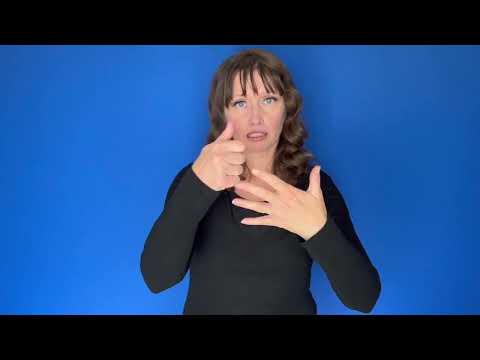
Practice Activities:
To begin practicing the sign for DEMOTE 2 in ASL, start with isolated repetition. Stand in front of a mirror and produce the sign multiple times while focusing on accuracy and consistency. Check your facial expression to make sure it matches the meaning—typically conveying disappointment, frustration, or a change in status.
Next, use the sign in simple sentence frames like “He got demoted,” “They will demote her,” or “The boss demoted him unfairly.” Try signing these phrases multiple ways, altering the subject or time to improve fluency. Make sure to maintain the proper directional movement, as this sign is likely modified depending on who is being demoted.
Develop short stories or workplace scenarios where someone is demoted due to performance or policy violations. Practice retelling these stories using the sign for DEMOTE 2 in ASL at appropriate points, ensuring you convey the event’s impact through both the motion of the sign and your facial expressions. Use these storytelling practices to build context recognition and comfort with the sign.
With a partner, role-play performance reviews or office conversations. One person can be a supervisor discussing a demotion, while the other reacts. Swap roles to explore both perspectives. This will help solidify real-life applications of the sign for DEMOTE 2 in ASL.
Record yourself signing explanations or mock interviews describing why someone was demoted. Watch the video to assess clarity and flow. Challenge yourself by explaining other workplace changes and incorporating the sign within them.
Use flashcards or digital tools to mix the sign for DEMOTE 2 in ASL with other employment-related vocabulary such as “promote,” “transfer,” and “terminate.” Alternate between them quickly to reinforce distinct meaning through subtle difference in movement and palm orientation.
Cultural Context:
In American Sign Language (ASL), understanding the cultural context behind specific signs can enhance both comprehension and expression. The sign for DEMOTE 2 in ASL is not only a vocabulary word but also reflects how workplace hierarchy and social change are communicated within the Deaf community. Because ASL is a visual language closely tied to Deaf culture, the choice of signs and expressions can carry more nuance than in spoken English.
The sign for DEMOTE 2 in ASL particularly resonates in conversations about employment, authority, and organizational change. When someone is demoted, it typically means a step down in responsibility or status. In Deaf culture, discussing workplace matters like this requires sensitivity and context so that the message does not come off as overly harsh or direct.
Facial expressions play a big role in delivering the full meaning of the sign for DEMOTE 2 in ASL. It’s common to see a shift in expression when describing someone being moved to a lower position. The body language and context help reflect whether the demotion is formal, deserved, or perhaps even controversial.
Deaf professionals, educators, and interpreters often use the sign for DEMOTE 2 in ASL in formal settings, such as job interviews, HR meetings, and conversations about business structure. Though the term is professional in nature, understanding how to sign it correctly and respectfully is important in everyday discussions within the Deaf community.
Like many workplace-related signs, the sign for DEMOTE 2 in ASL also appears in educational settings when teaching about job roles, fairness, and social status. Teachers and students alike use it to discuss scenarios that reflect real-world experiences, such as changes in job position or performance reviews. It can also be paired with other signs related to promotion, authority, and discipline, helping paint a fuller picture.
Media and entertainment that include Deaf characters or ASL interpretation often incorporate signs related to job roles and hierarchy. The sign for DEMOTE 2 in ASL is used in scenes involving workplace drama or shifts in status, bringing cultural context to the storytelling. These representations help normalize the vocabulary and make it more accessible to a wider audience.
Making accurate, respectful use of the sign for DEMOTE 2 in ASL requires more than a basic hand movement. It’s about conveying the right tone and context. In Deaf culture, clarity and intention carry significant weight, and this is especially true for signs that deal with sensitive topics like job loss or position changes.
When building vocabulary, it’s vital to understand not just how to form
Extended Definition:
The sign for demote 2 in ASL refers to a specific way to communicate the concept of lowering someone’s status, position, or rank using American Sign Language. In work or social settings, this sign is used when someone is moved to a lower level or loses a role or responsibility. This version of the sign may differ slightly depending on regional variations or context.
To make the sign for demote 2 in ASL, one common method involves a downward movement with both hands representing rank or status levels. The dominant hand often mimics the action of pushing something down from a higher level, symbolizing a decrease in status. Facial expressions are key here—they reinforce the idea of disappointment or decline.
Demotions can relate to work, teams, academics, or social groups. When someone is demoted at work, a signer might use the sign for demote 2 in ASL while including signs for job or manager to give full context. This helps ensure that the meaning is clearly understood by the ASL user or the person watching.
In learning environments, instructors may teach the sign for demote 2 in ASL as part of more advanced vocabulary related to employment and management. It also appears in conversations about performance issues, team reassignments, or behavior-related consequences. This sign fits naturally into discussions around authority and responsibility within American Sign Language.
Context always matters in ASL. The tone or implication of the sign for demote 2 in ASL can change based on how it is delivered. Slow movements can suggest a formal decision, while quick or sharp movements might indicate an emotional or abrupt demotion.
There may also be slight regional distinctions in how this sign is used or performed. Some signers may combine it with other gestures or modify the motion to fit their specific signing community. This is common with signs that describe hierarchical changes or workplace actions.
The sign for demote 2 in ASL is a good example of how ASL visualizes abstract concepts clearly and effectively. Rather than spell out the idea, the signer uses physical motion to symbolize movement from a higher to a lower level. This makes ASL a powerful and expressive language for communicating workplace or organizational dynamics.
Search engines often direct users to visual content related to this ASL term, especially from students or professionals looking to describe changes in professional roles. Learning the sign for demote 2 in ASL gives users access to precise communication about authority, workplace shifts, or even punitive measures.
Using this sign in real-life
Synonyms: reduce, downgrade, lower, relegate, assign to a lower rank
Educational resources: Find related learning materials in our course bank!
Want more? Check out some of our popular learning activities on the homepage!
Need to look up a sign? Use our highly rated dictionary: https://aslinteractive.com/best-asl-dictionary/
Follow us on tiktok: https://www.tiktok.com/@aslinteractive. More social media links at the bottom of this page!
Long-tail Keywords: what is the sign for demote in ASL, how do you sign demote in ASL, ASL sign for demote
Categories:
tags: demote in ASL, how to sign demote in ASL, ASL sign for demote, learn demote in ASL, demote American Sign Language
Parameters
*Handshape*:
The Sign for DEMOTE 2 in ASL typically uses flat B handshapes with fingers extended and held together, palms facing downward. Both hands start at shoulder height, then move simultaneously in a downward motion to around chest level. This downward movement visually conveys the concept of being lowered or moved to a lesser position.
When making the Sign for DEMOTE 2 in ASL, maintain a firm and steady handshape to emphasize the reduction in rank. Facial expressions can support the meaning, showing seriousness or disapproval to reinforce the demotion concept .
*Palm Orientation*:
The palm orientation for the sign for DEMOTE 2 in ASL typically faces downward throughout the motion. Both hands start with palms facing down, and the dominant hand moves below the non-dominant hand, suggesting a lowering or demotion in position ⬇️.
In the sign for DEMOTE 2 in ASL, the direction of motion and palm orientation emphasize the concept of moving to a lower status. This visual metaphor is reinforced by keeping the palms parallel to the ground as the hands move.
*Location*:
The sign for DEMOTE 2 in ASL is performed in the area directly in front of the upper chest, just below the shoulders. This location allows for the downward motion to be emphasized clearly, reflecting the concept of moving to a lower rank or position.
Maintaining the hands in this mid-torso space is key in the sign for DEMOTE 2 in ASL as it supports visual contrast between the starting and ending positions. The location helps underscore the meaning of going down in status or authority.
*Movement*:
Start with both hands in flat-B handshapes, palms down, stacked vertically in front of the chest, dominant hand above the non-dominant. In the sign for demote 2 in ASL, move the dominant hand downward in a short, gentle arc, passing the non-dominant hand and settling just below it. The motion resembles moving someone to a lower position.
This movement clearly conveys the idea of decreasing in status or rank. The sign for demote 2 in ASL emphasizes the downward change by showing the shift in placement, reinforcing the concept visually.
*Non-Manual Signals*:
For the sign for demote 2 in ASL, the facial expression typically involves a serious or slightly disappointed look, showing disapproval or recognition of a lowered status. Eyebrows may be furrowed, and the mouth might form a flat or slightly downturned shape to emphasize the negative or downward motion associated with being demoted.
The non-manual signals help convey the nuance of the sign for demote 2 in ASL, reinforcing the concept of a decrease in rank or position. Slight shoulder movement downwards can further support the meaning, along with a subtle head nod forward to denote emphasis.
*Prosody, Dominant/Non-Dominant Hand*:
The sign for DEMOTE 2 in ASL uses both hands in a movement that shows a downward hierarchy. The dominant hand, usually in a flat “B” shape, moves from a higher position above the non-dominant hand and drops downward with a slight emphasis, as if indicating a lower rank or status. The non-dominant hand stays palm-up and steady.
This positioning visually represents someone being moved to a lower level. The sign for DEMOTE 2 in ASL clearly conveys a reduction in rank or position, making use of space and hand height to reflect the concept.
Tips for Beginners:
When learning the sign for DEMOTE 2 in ASL, it’s important to focus on hand placement and directionality. This variation often includes a motion where a flat hand moves downward, symbolizing a drop in status or rank. Be sure your palm orientation matches what’s commonly used in regional dialects—typically, the palm is down, and the movement should be smooth and controlled.
Beginners sometimes confuse the sign for DEMOTE 2 in ASL with similar directional signs like “reduce” or “lower.” To avoid this, exaggerate the downward movement slightly when practicing so the meaning is visually clear. Facial expressions should reflect the meaning—often, a serious or neutral expression fits this concept best. Try not to overuse emotion unless the context calls for it.
Practicing in front of a mirror can help you spot small errors in your form. Pay attention to whether your hand stays flat and how much movement you’re using from your elbow or shoulder. Ideally, most of the movement comes from your elbow for a controlled decrease. Avoid floppy or overly animated movements—they can distort the meaning of the sign for DEMOTE 2 in ASL.
Consistent repetition is key to muscle memory . Try signing while describing workplace scenarios, like changing roles or transferring job responsibilities, to naturally incorporate the sign. This helps reinforce the gesture within practical settings. Also, try it with other workplace-related signs like “promote” or “transfer” to build vocabulary in a related theme.
Getting feedback from fluent signers or instructors is valuable ✅. They can help you fine-tune your movements and offer corrections to make your signs more precise. Watching native ASL users convey this sign in context on video platforms is also an effective way to gain real-world exposure and improve your fluency with the sign for DEMOTE 2 in ASL.
Connections to Other topics:
The sign for DEMOTE 2 in ASL often appears in contexts involving work, hierarchy, or status shifts. This connects closely with signs such as DOWNGRADE, REASSIGN, and LOSE-POSITION, as they all convey a movement from a higher to a lower status. These relational signs help reinforce understanding of directional movement in ASL grammar, where spatial modulation shows relative power or status.
In compound contexts, the sign for DEMOTE 2 in ASL might appear with signs like JOB, POSITION, or WORK to specify who is being demoted and where they are moving to. For instance, pairing DEMOTE with MANAGER and then CLERK clearly outlines a demotion in professional rank. These combinations are effective grammatical tools in complex sentence structures, especially in professional or narrative interpretation settings.
The movement in the sign for DEMOTE 2 in ASL is directionally iconic, drawing connections to CONDESCEND or LOWER, which also utilize downward motions to visually represent a decrease in level. This kind of classifier-like movement strategy is common in ASL to convey metaphoric shifts, such as status changes or emotional declines.
Understanding DEMOTE 2 can also support learners in grasping how ASL expresses abstract concepts like status and respect visually. It promotes nuanced use of space and facial grammar to emphasize levels of authority or disappointment, often expanding into more emotionally driven signs like DISAPPOINT and EMBARRASS when used in narrative.
In educational or workplace settings, users might employ the sign for DEMOTE 2 in ASL alongside ADMINISTRATOR or TEACHER to indicate a reduction in rank due to performance. These contextual cues deepen thematic understanding and introduce learners to sign sequencing practices common in native-level ASL fluency.
Summary:
The sign for DEMOTE 2 in ASL captures the concept of reducing rank, position, or status. It is most often used in work-related contexts or social hierarchies, highlighting a downward shift of power or standing. It can convey the idea of someone being reassigned to a lower role or stripped of authority.
In producing the sign for DEMOTE 2 in ASL, both hands begin in flat B-handshapes, facing downward. The dominant hand, held above the non-dominant, moves down a level, illustrating a drop. This vertical motion visually conveys relegation from a higher place to a lower one.
The non-dominant hand plays an important role, setting a reference point. It holds a still, lower position while the dominant hand descends past it. This contrast implies movement from a superior to an inferior level, which communicates demotion clearly.
Sign for DEMOTE 2 in ASL is particularly graphic in its symmetry and metaphor. It’s an example of iconicity in ASL, where the visual form reflects the concept’s meaning. This motion-based visualization taps into universal ideas of hierarchy and directionality.
Native signers rely on this type of spatial metaphor to communicate authority dynamics. The concept of “up” equating to power and “down” indicating a loss of it has cross-linguistic resonance. ASL uniquely emphasizes this through easily perceivable handpaths.
Grammatically, the sign for DEMOTE 2 in ASL functions as a verb. It can be modified with facial expressions or pace changes to illustrate severity or context. For example, a swift downward motion may reveal surprise or frustration behind the action.
Facial grammar enhances the sign’s intent. A furrowed brow or pout can express regret or disapproval when narrating a demotion. On the other hand, a calm expression could denote objectivity or neutrality in professional settings.
The sign pairs logically with others in employment discourse. It often appears near signs like WORK, BOSS, or FIRE when explaining organizational decisions. A sentence in ASL might structure the subject, then gesture DEMOTE 2 followed by clarifying signs to flesh out the narrative.
One linguistic insight is that signs like DEMOTE 2 show how ASL communicates abstract social concepts non-linearly. Unlike English’s reliance on word sequences, ASL leverages space and movement. This enables simultaneous communication of action, actor, and emotional nuance.
Sign for DEMOTE 2 in ASL belongs to a broader sign family linked to hierarchy. Signs like PROMOTE, RANK, and LEVEL often place emphasis on vertical orientation. This reinforces the cultural mental map of authority being above, and subordination below.
This sign’s structure plays into directional sign phenomena. Directional verbs in ASL involve motion that incorporates both subject and object references. While DEMOTE 2 is not strictly directional, its movement aligns with grammatical space to improve clarity.
The concept of demotion also reveals cultural values within Deaf communities and their interaction with societal structures. Power dynamics in institutions like schools, businesses, and advocacy organizations are discussed with signs like this one. Sign for DEMOTE 2 in ASL assists in that dialogue.
Its use can be metaphorical as well. A person might say they feel demoted emotionally, socially, or within a family or friend group. ASL signers adapt this sign beyond career contexts into interpersonal and emotional spaces.
In classroom ASL instruction, DEMOTE 2 is an important vocabulary entry when discussing career paths. It helps students describe cause-effect sequences, such as behavior leading to a reassignment. Learners practice role-shifting and space use with this verb.
Applied linguistics also draws from such signs in understanding how Deaf individuals construct narratives. Sign for DEMOTE 2 in ASL reveals the impactful role of sign movement in temporality, causality, and consequence. It allows elaboration of stories in a highly embodied manner.
Comparisons with spoken languages show a high degree of semantic transparency in ASL. For English speakers, the term “demote” may be abstract or administrative. ASL’s visual strategy makes the downgrade immediately visible and relatable.
Deaf culture emphasizes equity and respect within roles. For that reason, context can shape whether DEMOTE 2 is received positively, indifferently or negatively. In some settings, “demotion” can be mutually agreed upon and not stigmatized.
Tone is communicated visually in ASL, making personal or organizational values clear. Whether the demotion is punitive, routine, or voluntary affects how the sign’s delivered. The signer’s demeanor helps the audience interpret the broader implications.
The sign for DEMOTE 2 in ASL connects well with the theme of change. In storytelling, this sign commonly sets up comeback arcs or character evolution. For example, a student stripped of title may later earn back leadership through redemption.
Contrastive structure in ASL means this sign might be visually juxtaposed with signs like PROMOTE or SUCCE
Want more? Check out some of our popular learning activities!
ASL Interactive Resources
ASLInteractive YouTube Channel
Follow us on tiktok: @aslinteractive.com
Follow us on Instagram: aslinteractive
Facebook page: aslinteractive
Facebook group: aslinteractive
LInkedIn: ASL Interactive LLC
Twitter: @ASL_interactive
*Some information on this page is AI-generated. AI can make mistakes. Please check the information.
Responses