
Definition: Not done or accomplished at this time.
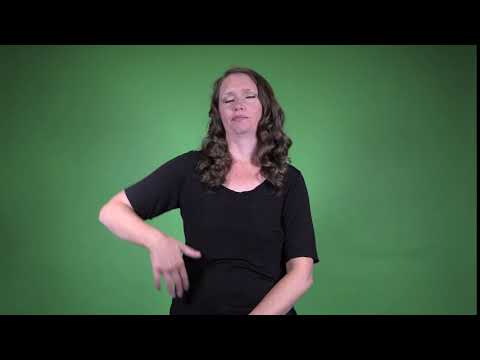
Sign for NOT YET in ASL
Practice Activities
To master the sign for NOT YET in ASL, learners should engage in consistent and mindful practice. A great place to start is by practicing in front of a mirror. Watch your nonmanual signals—especially the slight head shake and the facial expression that conveys a sense of delay or incompletion. This sign depends heavily on facial grammar, so mirror work is essential to ensure clarity.
Recording yourself signing can be incredibly helpful. Sign a few sentences using the sign for NOT YET in ASL and play them back to check for accuracy. Compare your sign with trusted video resources or fluent signers. This helps you catch subtle issues with timing, mouth morphemes, or hand positioning.
Using the sign in real-life scenarios will help embed it into your visual vocabulary. Try telling a story in ASL and include the sign naturally when talking about delayed actions. For example, sign “I haven’t eaten yet” or “She hasn’t arrived yet” using the appropriate ASL structure.
Advanced drills can include time-based exercises. Set a timer and respond to prompts that require the use of the sign for NOT YET in ASL. You can also work with a language partner or tutor to role-play conversations that involve incomplete actions or future intentions that haven’t happened.
Incorporate receptive practice by watching videos and identifying the sign for NOT YET in ASL when it appears. This helps you build recognition skills and understand how the sign fits into larger narratives or dialogues.
SEO Cultural Context
The sign for NOT YET in ASL is deeply tied to Deaf cultural norms around time and expectation. In Deaf culture, direct communication is valued, and conveying whether something has happened, is happening, or will happen is important. NOT YET is used to clearly indicate that an event or action has not occurred, but is still expected.
This sign also carries a nuance of patience or delay. For example, when a Deaf person says they have not yet completed a task, it communicates both honesty and intention. It’s not just a denial—it’s an acknowledgment of an incomplete process. This subtlety is crucial in Deaf culture, where nonverbal cues and facial expressions add layers of meaning.
There can be minor regional variations in how the sign is executed, particularly in the speed of the movement or the intensity of facial expression. However, the core features remain consistent across communities. The sign is recognized nationwide and is used in both conversational and formal ASL.
Understanding when to use the sign for NOT YET in ASL also involves knowing when not to use it. It should not be used when discussing events that will never happen. Instead, it’s reserved for temporary delays or actions that are pending. This cultural understanding helps learners use the sign appropriately.
Extended Definition
The sign for NOT YET in ASL is a combination of manual and nonmanual components. The dominant hand is held in a flat “B” handshape, palm facing backward, near the mouth. The hand then swings backward slightly under the chin with a single motion. The movement is paired with a slight head shake and the mouth morpheme “th,” which indicates that something is late or hasn’t occurred yet.
This sign is distinct from the sign for LATE. While both signs involve similar handshapes and movements, the sign for NOT YET in ASL includes the mouth morpheme and a more exaggerated backward swing. LATE is more abrupt and lacks the nonmanual marker that signals incompletion.
A common error is omitting the facial expression or mouth movement, which can lead to misunderstanding. Without these nonmanual signals, the sign may be confused with other time-related signs. Learners should also avoid over-exaggerating the movement, as this can distort the sign’s meaning.
The sign for NOT YET in ASL is often used with time indicators, like “today,” “this week,” or “so far.” For example, you might sign “I not-yet finish homework,” with proper ASL grammar. The timing, facial expression, and context all work together to convey the full meaning.
Tips for Beginners
New ASL learners may find the sign for NOT YET in ASL a bit tricky at first because it requires coordination between hand movement and facial expression. Don’t worry—this is completely normal. Focus first on getting the handshape and motion correct, then gradually add the facial grammar.
One of the biggest beginner mistakes is skipping the mouth morpheme. The “th” mouth shape is essential in this sign. Practice saying the “th” sound silently while signing to train your facial muscles. It may feel odd at first, but it will become second nature with repetition.
Beginners might also confuse the sign for NOT YET in ASL with similar signs like LATE or NOT. Take time to learn the differences. Re-watch tutorials and practice in slow motion if needed. Understanding the context in which each sign is used will help reinforce the correct form.
It’s also helpful to practice short phrases. Instead of just signing NOT YET in isolation, use it in full sentences. For example, “My friend not-yet come” or “Dinner not-yet ready.” This helps you think in ASL rather than translating from English.
Be patient with yourself. Mastery takes time, and every attempt is progress. Keep practicing the sign for NOT YET in ASL in a variety of settings to build muscle memory and confidence.
Connections to Other Topics
The sign for NOT YET in ASL connects closely with the sign for LATE. Both involve backward hand motion and time-related contexts, but their meanings and nonmanual markers differ. Learning both helps clarify the timeline of events in ASL conversations.
It also connects to the sign for NOT, which is used for general negation. While NOT indicates denial or refusal, NOT YET implies something is pending. Understanding this distinction enhances your ability to express nuanced meanings.
Another related sign is FINISH. FINISH is often used to show that something is completed, in contrast to NOT YET. For example, “I finish homework” versus “I not-yet finish homework.” These signs together help you construct more precise statements.
The sign for STILL is another useful comparison. STILL expresses continuity, while NOT YET implies delay. Recognizing how these signs interact allows you to describe various stages of action.
Lastly, the sign for WAIT can be thematically related. WAIT and NOT YET both suggest that something is pending, but WAIT focuses on the process, while NOT YET emphasizes the current state of incompletion. Understanding these connections supports richer ASL expression.
Lengthy Summary
The sign for NOT YET in ASL is a powerful tool for expressing time-based information within a culturally rich and visually precise language. It combines a specific hand movement with essential facial grammar, particularly the “th” mouth morpheme and a slight head shake. These components work together to convey that an event or action has not occurred but is still expected.
Practicing the sign in front of a mirror, recording yourself, and using it in context are all effective strategies to build fluency. As you continue learning, it’s important to understand how the sign for NOT YET in ASL functions differently from similar signs like LATE, NOT, and FINISH. Recognizing these distinctions allows for clearer and more accurate communication in ASL.
Deaf cultural norms emphasize clarity and directness, especially when discussing time or expectations. Using NOT YET appropriately shows respect for these norms and helps avoid miscommunication. The sign is commonly used in daily conversations, storytelling, and even formal settings to indicate temporary delays or pending actions.
For beginners, the key is to focus on both the manual and nonmanual components of the sign. Avoid skipping the facial expression, and make sure your movement is smooth and deliberate. Start with simple phrases and build up to more complex sentences as you gain confidence.
Related signs such as LATE, NOT, STILL, FINISH, and WAIT provide valuable context and help deepen your understanding of time and negation in ASL. These signs share grammatical structures and thematic roles that make them useful companions to the sign for NOT YET in ASL.
Now that you’ve explored the cultural, grammatical, and practical aspects of the sign for NOT YET in ASL, it’s time to take action. Keep practicing every day, integrate the sign into your conversations, and challenge yourself with new contexts. With consistent effort and curiosity, you’ll continue to grow in your ASL journey. Keep signing and stay motivated!
Synonyms: not ready, pending, in progress, awaiting, still to come
Educational resources: Find related learning materials in our course bank!
Want more? Check out some of our popular learning activities on the homepage!
Need to look up a sign? Use our highly rated dictionary: https://aslinteractive.com/best-asl-dictionary/
Follow us on tiktok: https://www.tiktok.com/@aslinteractive. More social media links at the bottom of this page!
Long-tail Keywords: what is the sign for not yet in ASL, how do you sign not yet in ASL, not yet American Sign Language meaning
Categories:
tags: negative signs, ASL timing signs, common ASL phrases, ASL vocabulary for beginners, American Sign Language semantics
Want more? Check out some of our popular learning activities!
ASL Interactive Resources
ASLInteractive YouTube Channel
Follow us on tiktok: @aslinteractive.com
Follow us on Instagram: aslinteractive
Facebook page: aslinteractive
Facebook group: aslinteractive
LInkedIn: ASL Interactive LLC
Twitter: @ASL_interactive
*Some information on this page is AI-generated. AI can make mistakes. Please check the information.
Responses