
Cultural Context:
In American Sign Language, the sign for number two thousand follows a logical structure, blending numerical and counting principles. ASL uses a combination of handshapes and movement patterns to represent large numbers clearly. Understanding the structure of numbers in ASL helps improve fluency and comprehension. The sign for number two thousand in ASL is commonly used in dates, financial contexts, and large numerical references. Whether discussing the year 2000, money, or high quantities, ASL signers need to express the number accurately. Knowing this sign enhances everyday conversations and professional interactions. In Deaf culture, numbers play a crucial role in storytelling, history, and education. The sign for number two thousand in ASL appears frequently in discussions of years, especially when talking about historical events or personal milestones. Clear numerical communication is essential for accessibility in Deaf communities. ASL learners should practice the sign for number two thousand to develop fluidity in signing large numbers. Signing numbers correctly ensures clarity during conversations, reducing misunderstandings. Mastering numerical sequences in ASL strengthens overall signing skills and confidence. The sign for number two thousand in ASL is part of a systematic approach for signing numbers in the thousands. Learning this number paves the way for understanding larger numbers in an efficient and consistent manner. ASL follows a logical numerical structure that simplifies communication. When signing number two thousand in ASL, hand movements should be smooth and deliberate. Proper hand positioning ensures the number is easily understood by others. ASL relies on visual accuracy, making precise execution crucial for effective communication. This number is often used in discussing history, finances, and statistics within ASL conversations. Whether referring to years, prices, or large quantities, the sign for number two thousand in ASL appears frequently in daily interactions. ASL users rely on numerical fluency to convey important information clearly. Understanding the sign for number two thousand in ASL enhances a signer’s ability to express dates, addresses, and measurements. ASL numbers are foundational for describing timelines, financial figures, and units of measurement. Practicing number signs strengthens overall ASL proficiency. Being able to sign number two thousand in ASL accurately is vital for effective communication in various settings. Whether in educational environments or casual conversations, number fluency supports clear exchanges of information. Strengthening number comprehension improves overall ASL literacy. ASL numbers follow a pattern that simplifies the learning process for signers. Recognizing the structure of number two thousand in ASL aidsExtended Definition:
The sign for number two thousand in ASL is an important number sign that follows a specific pattern in American Sign Language. Understanding how to sign large numbers can improve fluency and help with various conversations that involve dates, years, and large figures. Knowing the correct way to sign this number ensures clarity in communication. When signing number two thousand in ASL, the movement and handshape are crucial for accuracy. The sign uses the numeral two followed by a specific motion to indicate the concept of a thousand. Practicing this sign will help build confidence in using large numbers correctly. Numbers in ASL often follow a logical structure, making it easier to learn once you recognize the patterns. The sign for number two thousand in ASL is based on the way other large numbers are signed, reducing the need for memorization. Once you become familiar with the general format, signing other numbers in the same range becomes much easier. This number is commonly used when discussing years, financial amounts, or quantities in various contexts. Whether talking about historical events or prices, knowing how to sign number two thousand in ASL can be very useful. Accurate number signing is essential in everyday conversations and professional settings. Practice is key when learning how to sign large numbers in ASL. Watching native signers and repeating the sign for number two thousand in ASL will help reinforce the correct movements. Using numbers in real-world conversations strengthens memory and improves signing fluency. ASL number signs must be clear and deliberate to avoid confusion. Since many numbers share similar handshapes, precise finger placement and movement ensure the correct meaning is understood. Keeping the handshape steady and consistent prevents misinterpretation. Context plays a significant role in how numbers are signed in ASL. Depending on the conversation, signing number two thousand in ASL may require adjustments in emphasis or pacing. Signing numbers naturally within sentences is important for fluid communication. Learning number signs in ASL enhances comprehension and expands vocabulary. The ability to sign numbers with confidence helps in both casual and formal discussions. Mastering large numbers like number two thousand in ASL is a step toward greater proficiency in the language. Efficient communication relies on accurate number representation in ASL. Misunderstanding or misrepresenting numbers can lead to confusion, making it essential to practice regularly. Signing with clarity ensures effective and professional dialogue with other ASL users. Using the sign for number two thousand in ASL correctly will improve your overall signing skills. The more comfortable you are with number signs, the easier it Synonyms: two thousand, 2k, 2,000, twenty-first century, millennium marker, 21st century Educational resources: Find related learning materials in our course bank! Want more? Check out some of our popular learning activities on the homepage! Need to look up a sign? Use our highly rated dictionary: https://aslinteractive.com/best-asl-dictionary/ Follow us on tiktok: https://www.tiktok.com/@aslinteractive. More social media links at the bottom of this page! Long-tail Keywords: what is the sign for number two thousand in ASL, how do you sign number two thousand in ASL, learn how to sign number two thousand in American Sign Language Categories: Numbers – Basics, thousands, cardinal numbers tags: Numbers, Years, Counting, Mathematics, Educational, Language LearningParameters
*Handshape*:
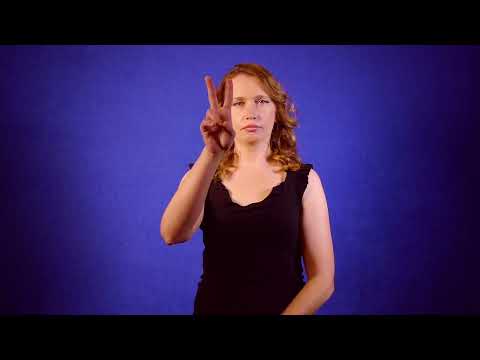
The sign for NUMBER TWO THOUSAND in ASL uses the “2” handshape followed by the “open palm” handshape. Begin with the index and middle fingers extended, forming a “V” shape. Then, transition to an open palm, tapping the fingertips against the opposite palm to represent “thousand.” This sign clearly conveys the numerical concept in ASL. The fluid movement between handshapes ensures clear and natural signing.*Palm Orientation*:
The palm orientation for the sign for NUMBER TWO THOUSAND in ASL varies based on the numeric sequence. When signing “two,” the index and middle fingers extend while the palm faces outward. For “thousand,” the dominant hand forms a bent “B” shape and taps the stationary palm, which faces sideways. The combination of these movements clearly represents the sign for NUMBER TWO THOUSAND in ASL, ensuring clarity and accuracy. ✋*Location*:
The sign for NUMBER TWO THOUSAND in ASL is produced in the signing space in front of the body at chest level. The dominant hand forms the number “2” and then transitions into the motion for “THOUSAND” by bringing the fingertips of the bent hand to the palm of the non-dominant flat hand. The movement stays within a neutral space without touching the body directly.*Movement*:
To produce the sign for number two thousand in ASL, begin by forming the number 2 with your dominant hand, extending the index and middle fingers while keeping the others folded. Move the hand slightly forward and then transition into a bent-hand shape, touching the fingertips to the palm as if tapping twice. This motion mimics the sign for thousand. The combined gestures represent the concept of two thousand effectively.*Non-Manual Signals*:
When signing the sign for NUMBER TWO THOUSAND in ASL, maintain a neutral or slightly focused facial expression. If emphasizing the quantity or importance of the number, slightly raise your eyebrows and widen your eyes. Keep your head steady, but if you’re clarifying or emphasizing “two thousand,” a slight forward head movement may help reinforce understanding. If counting or listing, a rhythmic head nod can provide additional structure.*Prosody, Dominant/Non-Dominant Hand*:
For the sign for NUMBER TWO THOUSAND in ASL, the dominant hand forms the number 2️⃣ while the non-dominant hand remains open with the palm facing up. The dominant hand touches the fingertips of the non-dominant hand and then moves slightly forward as if making contact again, representing the concept of “thousand.” This sign combines the numerical gesture for 2 and a modified motion used for expressing large numbers like THOUSAND in ASL.Tips for Beginners:
When learning the sign for NUMBER TWO THOUSAND in ASL, start by focusing on the individual components of the sign. First, make sure you can sign the number TWO correctly, using your index and middle fingers extended while the remaining fingers stay down. Then practice signing THOUSAND by forming a flat handshape and tapping the fingertips of your dominant hand against the palm of your non-dominant hand. Breaking the motion down will help with accuracy and fluidity. One common mistake with the sign for NUMBER TWO THOUSAND in ASL is confusing the sign for THOUSAND with similar number-based signs. The correct motion involves a single controlled tap, not a repeated movement. Avoid making quick or sloppy transitions between the numbers, as this can make the sign unclear. Keep your fingers steady and your movements precise to ensure clarity. Finger dexterity is crucial for signing numbers accurately, so practice everyday number signs before moving on to large numbers. Smooth transitions between numbers make signing quicker and more natural. Using a mirror can help you check your hand positioning, or you can record yourself to catch any inconsistencies. Pay special attention to keeping your fingers distinct while signing the number TWO. If you are signing in a conversation, maintaining eye contact is important while delivering the sign for NUMBER TWO THOUSAND in ASL. Looking at your hands too frequently can disrupt the natural flow of your signing. To build confidence, practice signing large numbers in different contexts, such as when discussing money, dates, or measurements. Consistent repetition and reinforcement will help solidify this sign in your ASL vocabulary.Connections to Other topics:
The sign for number two thousand in ASL connects to the broader system of number signs, which follows consistent patterns for expressing numerical concepts. ASL has unique number signs for small values, but larger numbers often combine basic number signs with a movement pattern. The sign for number two thousand in ASL builds on the sign for “two” and incorporates the general method for signing “thousand,” demonstrating how ASL structures numerical expressions. Understanding the sign for number two thousand in ASL helps with learning larger numbers, such as years, addresses, and financial figures. The signed structure can be easily modified to form numbers like three thousand or five thousand, supporting numerical fluency in ASL. This concept is essential when discussing historical dates, listing items with specific quantities, or conveying large sums in conversations related to business or education. The concept of large numbers also connects to time-related signs, such as years in ASL. For example, the sign for number two thousand in ASL closely resembles the structure used for saying the year 2000 or 2020, where the motion and placement of hand numbers indicate the grouping of digits. This structure is useful when discussing history, important events, or personal milestones. The motion involved in signing “thousand” relates to broader ASL grammar, where repetition and placement emphasize meaning. This principle appears in signs beyond number signs, such as “family” or “group,” where gestures with placement add specificity. Learning the sign for number two thousand in ASL enriches understanding of numerical patterns and enhances comprehension of structured movements across ASL language development.Summary:
The sign for number two thousand in ASL follows a structured numerical pattern commonly used in signing large numbers. In ASL, numbers follow a specific format that distinguishes between cardinal and ordinal forms, making clarity essential. For this number, the sign is generally produced by combining the signs for “two” and “thousand” in a way that flows smoothly. To begin, hold up your dominant hand with the index and middle fingers extended to form the number “2.” This must be done with palm orientation facing out. For the number “thousand,” the flat dominant hand moves forward slightly to tap the fingertips against the palm of the non-dominant hand. This formation represents large numbers and is commonly used for multiples of a thousand. The sign for number two thousand in ASL closely mirrors how other large numbers are signed. This system allows for flexible and intuitive communication when dealing with big figures. Once a signer learns the pattern, they can modify the base number to sign different thousands efficiently. Numbers hold significant importance in ASL, as they are used not only for counting but also for time, measurements, and financial contexts. Numeracy in sign languages follows a unique structure, often adopting principles specific to non-spoken languages. The visual-spatial nature of signing allows for efficient representation of numerical concepts. American Sign Language bases many of its numerical signs on common movement patterns that increase clarity and consistency. The placement and repetition of number signs can change slightly depending on the surrounding context. Learning these standard formatting patterns makes signing large numbers more natural over time. Grammatically, the sign for number two thousand in ASL can appear in different sentence structures depending on use. If it appears in counting sequences, it might be signed with a steady rhythm. When incorporated into a sentence, signing pace and emphasis can shift slightly to ensure comprehension. The use of numerals in ASL differs slightly from English because it relies more heavily on structured patterns rather than separate words. This efficiency makes ASL numbers easy to learn but requires attention to small distinctions in movement and hand positioning. Without the correct format, misinterpretation between numbers might occur. Related signs include other multiples of a thousand, such as one thousand or three thousand. Each of these follows the same pattern, only modifying the leading numeral appropriately. By mastering this format, signers can quickly learn how to sign any number using this structured approach. ASL number signs are also influenced by Deaf culture and its approach to education. Numeracy concepts are crucial in both spoken and signed languages, with ASL users often developing strong visual-motor memory for numerical information. The manual nature of ASL gives a unique tactile experience when conveying numbers. In applied linguistics, number signs highlight the importance of spatial representation in language. Unlike spoken languages, which rely on phonetic distinctions, ASL numbers depend on distinct movements to establish meaning. This reinforces the significance of kinesthetic learning in ASL communication. Numbers in ASL also connect to broader themes of accessibility and language equity. Many educational systems are adapting to provide better number-sign instruction for Deaf individuals. Learning proper numerical signs helps to ensure accurate communication in school, business, and daily life. In discussions about language evolution, numeracy is often a focal point in bridging communication barriers. ASL continues to refine its numerical system to match ongoing linguistic adaptations. As technology improves, digital platforms are incorporating better ASL numeral recognition for various applications. The sign for number two thousand in ASL is a perfect example of how number signs function as structured yet flexible units of communication. The combination of handshapes and movement results in an intuitive yet expressive numerical system. Efficient number representation is crucial for linguistic accessibility within the Deaf community. Mastering numerical signs enhances a signer’s ability to navigate various social and professional settings. Large numbers, such as two thousand, frequently appear in financial discussions, measurements, and historical references. Fluent use of number signs contributes to overall ASL proficiency. Practicing the sign for number two thousand in ASL helps reinforce recognition of similar numerical patterns. Repetition improves finger dexterity and movement memory, making large numbers easier to recall. Consistency in structuring numerical signs ensures clarity for both users and observers. By learning ASL number systems, signers gain a deeper understanding of grammar structures beyond simple vocabulary. The organization of number signs demonstrates how ASL utilizes spatial relationships within linguistic contexts. This further reinforces ASL’s standing as a sophisticated, rule-governed language. Context plays a major role in how number signs are interpreted. The sign for number two thousand in ASL might be adjusted slightly in informal conversations versus exact numerical presentations. Eye gaze and body positioning can further emphasize numerical significance in different settings. Teaching large numbers in ASL involves breaking down complex figures into manageable components. Educators often introduce the thousands concept by comparing it with smaller numbers first. This step-by-step approach improves comprehension and encourages sign fluency. TechnologyWant more? Check out some of our popular learning activities!
ASL Interactive Resources
ASLInteractive YouTube Channel
Follow us on tiktok: @aslinteractive.com
Follow us on Instagram: aslinteractive
Facebook page: aslinteractive
Facebook group: aslinteractive
LInkedIn: ASL Interactive LLC
Twitter: @ASL_interactive
*Some information on this page is AI-generated. AI can make mistakes. Please check the information.
Responses