
Practice Activities
To master the sign for RAIN in ASL, start with mirror practice. Stand in front of a mirror and watch your handshape and movement as you produce the sign. This allows you to self-correct and build muscle memory. Focus on the motion, ensuring your hands appear to “fall” in a natural, downward pattern, similar to raindrops. Record yourself signing and play it back. This helps you evaluate facial expressions and hand movement accuracy. Compare your recording to fluent Deaf signers or trusted instructional videos that demonstrate the sign for RAIN in ASL. Noticing subtle changes in motion or expression can elevate your accuracy. Use the sign for RAIN in ASL during real-life conversations or practice scenarios. For example, when discussing the weather with a friend or describing a story that involves a storm, include the sign fluidly. Contextual signing helps reinforce vocabulary and teaches you how signs function in natural flow. Advanced learners can incorporate the sign into longer weather forecasts or storytelling drills. Describe an entire rainy day using classifiers, location markers, and temporal sequencing. By embedding the sign for RAIN in ASL into full narratives, you’ll gain fluency and confidence in more complex sentence structures.
SEO Cultural Context
The sign for RAIN in ASL reflects how closely Deaf culture is tied to visual and environmental cues. Since ASL is a visual language, signs often mirror the physical world. In this case, the downward fluttering of open hands mimics raindrops falling from the sky, making the sign highly iconic and intuitive. In Deaf culture, weather signs are frequently used in daily conversation—especially in storytelling and casual updates. The sign for RAIN in ASL is commonly paired with facial expressions to indicate intensity. A neutral face might indicate light rain, while puffed cheeks or a squint can suggest heavier rainfall. These nonmanual signals are essential cultural components that add depth and clarity to communication. Regional variations may exist. In some areas, signers might modify the speed or movement of the hands for local expression. While the standard form of the sign for RAIN in ASL is widely understood, you may notice subtle differences in how it’s performed across the country. Understanding when to use weather-related signs like this is vital. Deaf individuals often use the sign for RAIN in ASL to begin conversations, share travel plans, or express moods affected by the weather. It’s also a favorite in ASL poetry and visual storytelling, where the rhythm of the sign can match a spoken cadence or visual narrative.
Extended Definition
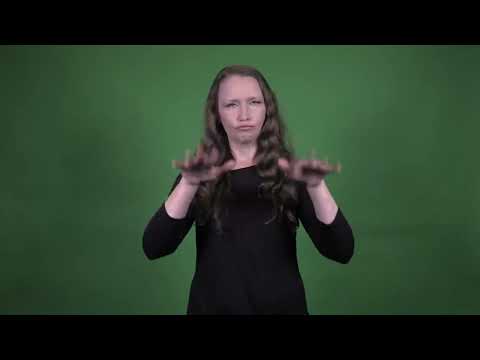
The sign for RAIN in ASL typically involves both hands held above shoulder level, palms facing down, fingers spread. The hands move downward in a fluttering motion, mimicking raindrops. The movement can be repeated or adjusted to reflect the intensity of the rain—lighter or heavier—by changing speed and size of motion. It’s important not to confuse the sign for RAIN in ASL with similar weather signs like SNOW or DRIZZLE. Snow involves downward circular hand motions with a slower, drifting quality. Drizzle uses a more delicate, subtle downward flick. Paying attention to these distinctions is crucial to avoid miscommunication. One common error beginners make is using stiff hands or straight fingers, which can make the sign look unnatural or robotic. Another frequent mistake is signing too low or too high. The sign for RAIN in ASL should begin around the head or shoulder level since that’s where we visually imagine rain falling from the sky. The facial expression accompanying the sign is also key. A neutral face suggests regular rain, while exaggerated expressions show extreme weather like a storm or heavy downpour. These nuances are part of ASL’s rich, expressive grammar and should be practiced alongside the hand movements.
Tips for Beginners
If you’re just starting out, don’t worry if your version of the sign for RAIN in ASL isn’t perfect right away. Focus on getting the handshape and movement right first. Use a mirror or video feedback to check your positioning and keep your fingers relaxed. Think about how rain looks and move your hands to reflect that imagery. A common beginner mistake is signing too quickly or too mechanically. Slow down and focus on fluid, natural movement. Imagine you’re showing someone what rain looks like without using words. That mental image helps guide your hands more intuitively. Another tip is to pair the sign for RAIN in ASL with other weather signs to build fluency. Try forming simple sentences like “Today is rain,” or “It will rain tomorrow.” These short phrases help you get comfortable using the sign in context and build your expressive skills. Don’t skip facial expressions. In ASL, your face is part of the grammar. Practice adding a gentle smile for light rain or a worried look for a storm. Over time, these expressions will feel more natural and help your signing come to life.
Connections to Other Topics
The sign for RAIN in ASL connects naturally to other weather signs such as CLOUDY, STORM, and SNOW. These signs often appear together in conversations or stories about the weather, making them useful companions to learn alongside rain. Each has distinct movements and facial expressions that illustrate different weather conditions. Another related concept is the use of classifiers. In ASL, classifiers can show how rain interacts with the environment. For example, a flat-hand classifier might show rain pooling on the ground, or a directional classifier might show rain falling sideways in strong wind. Understanding classifiers adds depth to your use of the sign for RAIN in ASL. Grammatically, this sign is often used with time markers. Learning how to sign expressions like “yesterday,” “tomorrow,” or “later” helps you form full sentences such as “It rained yesterday” or “It will rain tomorrow.” These time markers are essential for fluent ASL storytelling and conversation. The sign for RAIN in ASL is also frequently used in Deaf poetry and visual narratives. It can symbolize emotions such as sadness, renewal, or peace, depending on context. This artistic use connects the sign to broader themes and helps you appreciate ASL’s expressive range. Finally, the sign belongs to a broader category of visually iconic signs. These are signs whose movements resemble the real-world objects or actions they describe. Learning about iconicity in ASL helps you understand how signs are formed and remembered, making vocabulary acquisition easier.
Lengthy Summary
The sign for RAIN in ASL is a visually rich and culturally significant sign that captures the natural motion of falling rain. With open hands fluttering downward from shoulder level and an expressive facial component, this sign is both intuitive and deeply connected to the way ASL reflects the physical world. Whether used in daily conversation, storytelling, or artistic expression, the sign for RAIN in ASL conveys more than just weather—it can set the scene, evoke emotion, and connect signers in shared experiences. From a linguistic standpoint, it’s a prime example of ASL’s use of space, movement, and nonmanual markers. Its clarity and iconic nature make it an ideal vocabulary word for beginners, while its versatility in expression makes it invaluable for advanced learners. Practicing with mirrors, recordings, and in context helps learners not just memorize the sign but internalize it. Understanding the cultural context behind the sign for RAIN in ASL deepens your appreciation for how the Deaf community communicates visually and expressively. You begin to see how a simple sign can convey layers of meaning—from a basic weather report to a metaphor in a poem. This sign also opens the door to related concepts and grammatical structures, enhancing your overall fluency in ASL. By connecting this sign with others in the weather category, practicing expressive techniques, and being mindful of common beginner errors, you build a strong foundation. The sign for RAIN in ASL is more than just vocabulary; it’s a gateway into the beauty and depth of American Sign Language. Keep practicing, stay curious, and don’t be afraid to make mistakes. Every time you use the sign for RAIN in ASL, you’re one step closer to fluency. ️ Keep signing and let your skills grow like a steady, nourishing rain. ️ Synonyms: rain, rainfall, precipitation, shower, drizzle Educational resources: Find related learning materials in our course bank! Want more? Check out some of our popular learning activities on the homepage! Need to look up a sign? Use our highly rated dictionary: https://aslinteractive.com/best-asl-dictionary/ Follow us on tiktok: https://www.tiktok.com/@aslinteractive. More social media links at the bottom of this page! Long-tail Keywords: what is the sign for rain in ASL, how do you sign rain in ASL, ASL sign for rain Categories: tags: weather, ASL signs for weather, nature in ASL, rain vocabulary in ASL, environmental ASL signs
Want more? Check out some of our popular learning activities!
ASL Interactive Resources
ASLInteractive YouTube Channel
Follow us on tiktok: @aslinteractive.com
Follow us on Instagram: aslinteractive
Facebook page: aslinteractive
Facebook group: aslinteractive
LInkedIn: ASL Interactive LLC
Twitter: @ASL_interactive
*Some information on this page is AI-generated. AI can make mistakes. Please check the information.
Responses