
Practice Activities
One of the best ways to master the sign for STORM in ASL is through consistent practice in front of a mirror. This allows you to observe your handshape, movement, and facial expressions, which are all essential in conveying the intensity and type of storm being described. Try signing while imagining different storm scenarios—light rain with wind, or a heavy thunderstorm—to vary your expression and accuracy. Recording yourself while practicing the sign for STORM in ASL is another useful tool. Watch the playback to evaluate your precision and fluency. Compare your signing to native signers in video resources or ASL dictionaries to identify areas of improvement. Practicing in context adds depth to your learning. Describe a weather report in ASL, or tell a short story about a time you experienced a storm. Adding the sign for STORM in ASL into these narratives helps reinforce vocabulary and encourages fluid communication. Advanced drills can include speed and fluidity exercises. Alternate between related weather signs and the sign for STORM in ASL, increasing your signing speed without sacrificing clarity. You can also try receptive practice by watching others use the sign in conversation or storytelling and identifying it in real-time.
SEO Cultural Context
The sign for STORM in ASL is not just a vocabulary word—it reflects cultural nuances within the Deaf community. Weather signs, including the sign for STORM in ASL, are often used in storytelling, especially in narratives that involve nature, emotion, or dramatic events. Expressiveness is key; facial grammar adds vital context to the sign, indicating whether the storm is mild, severe, or metaphorical. There may be slight regional variations in how the sign for STORM in ASL is performed. In some areas, the motion may be more circular or exaggerated, while in others it may be compact and sharp. These variations are accepted within the community and add to the richness of ASL as a visual language. Deaf culture places a strong emphasis on visual clarity, especially in storytelling and description. When using the sign for STORM in ASL, signers are expected to use body movement and facial expressions to match the intensity of the storm, enhancing the visual impact and emotional resonance of the sign. In daily life, the sign for STORM in ASL is used to describe weather conditions, plan outdoor activities, or even metaphorically express emotions like anger or turmoil. Understanding the cultural and contextual use of this sign helps learners become more fluent and culturally competent.
Extended Definition
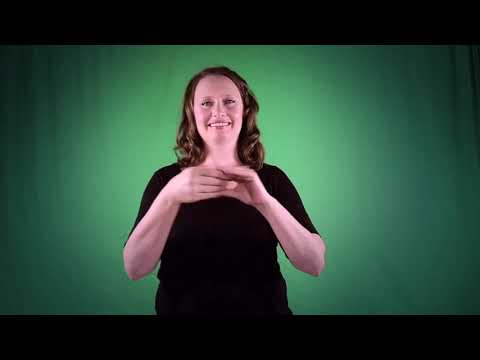
The sign for STORM in ASL typically involves a combination of handshapes and movements that simulate the chaotic swirling of storm clouds or strong winds. It often starts with both hands in open-5 handshapes, moving in a circular or twisting motion in front of the body, mimicking the motion of a storm system. Facial expressions enhance the sign’s meaning—narrowed eyes and tense facial muscles can suggest a severe storm. This sign can be modified depending on the type of storm. For example, pairing the sign for STORM in ASL with signs for RAIN, THUNDER, or WIND can provide more descriptive detail. These combinations allow for expressive and nuanced communication about weather conditions. A common error when learning the sign for STORM in ASL is using repetitive or robotic motion without proper facial expression. ASL relies heavily on non-manual markers, and leaving these out can lead to misinterpretation. Another mistake is confusing the sign with other weather signs like WIND or TORNADO—though similar, they have distinct movements and contexts. It’s also important to understand classifiers in ASL. When telling a story involving a storm, signers often switch from the basic sign for STORM in ASL to classifiers that show the storm’s movement over land or its interaction with people or buildings. This makes the communication more dynamic and vivid.
Tips for Beginners
For those just beginning to learn the sign for STORM in ASL, it’s important to focus first on the shape and motion of your hands. Keep your fingers relaxed in an open-5 position and make sure your circular motion is fluid, not stiff. Practice slowly to develop muscle memory before increasing speed. Don’t forget to incorporate facial expressions. This is one of the most common challenges for beginners, but it’s crucial for accurate and expressive signing. Try practicing in front of a mirror and exaggerate your emotions to see how facial expressions change the meaning of the sign for STORM in ASL. Another helpful strategy is to learn related signs simultaneously. This helps you build a thematic vocabulary and reduces confusion between similar signs. For example, practice STORM along with signs for WEATHER, RAIN, and WIND to understand how they differ and how they can be combined. If you’re struggling to remember the movement, think of the swirling motion of storm clouds or strong gusts of wind. Visual associations can help anchor the sign in your memory. And remember, it’s okay to make mistakes—consistent practice is the key to improvement.
Connections to Other Topics
The sign for STORM in ASL connects naturally with the sign for WEATHER. WEATHER acts as a category, and STORM is a more specific type within that group. Practicing both together can help you understand how ASL categorizes and describes environmental conditions. Another related sign is WIND. While similar in motion, the sign for WIND usually involves a side-to-side sweeping motion, while the sign for STORM in ASL includes more chaotic or circular movement. Comparing the two can deepen your understanding of how ASL represents motion. The sign for RAIN is often used alongside STORM to describe storm types. RAIN involves tapping fingertips downwards, and when combined with STORM, it describes a rainstorm. Using these signs together helps expand your weather-related vocabulary. Lightning is another relevant sign. Like STORM, it involves directional movement and facial expression to convey intensity. Practicing the sign for STORM in ASL along with LIGHTNING can help you improve your expressive range in narrative contexts. Lastly, the sign for EMOTION or ANGRY can be used metaphorically with STORM. In ASL storytelling, storms often symbolize inner turmoil. Understanding this metaphorical use adds depth to your signing and connects language skills with cultural storytelling traditions.
Lengthy Summary
The sign for STORM in ASL is much more than a simple hand movement—it’s a rich, expressive component of American Sign Language that conveys the physical and emotional intensity of storms. Whether used in a literal sense to describe weather or in a metaphorical way to convey emotion, this sign is deeply embedded in both the structure and culture of ASL. Learning the sign for STORM in ASL involves mastering hand movements, facial expressions, and context. Beginners should focus on accuracy and expression, using tools like mirrors, video recordings, and real-life storytelling to build their skills. Advanced learners can explore variations, regional differences, and classifier use to deepen their understanding and fluency. Culturally, this sign plays an important role in storytelling and everyday communication. Whether used to explain a weather forecast or to add drama to a personal narrative, the sign for STORM in ASL is a dynamic part of the language. Knowing how to use it properly demonstrates both linguistic competence and cultural respect. The connections to other signs—like RAIN, WIND, LIGHTNING, and EMOTION—make this a foundational vocabulary word for any ASL learner interested in weather, storytelling, or expressive communication. These relationships reveal the interconnected nature of ASL vocabulary and grammar. In sum, mastering the sign for STORM in ASL opens up a wide range of expressive possibilities. It’s a sign that challenges you to combine motion with emotion, structure with spontaneity. Keep practicing with intention and creativity—you’re building not just vocabulary, but a deeper connection to the language and culture of the Deaf community ️ . Keep signing, stay curious, and let your learning journey grow like the storm clouds on a summer day. Synonyms: tempest, squall, gale, thunderstorm, cyclone Educational resources: Find related learning materials in our course bank! Want more? Check out some of our popular learning activities on the homepage! Need to look up a sign? Use our highly rated dictionary: https://aslinteractive.com/best-asl-dictionary/ Follow us on tiktok: https://www.tiktok.com/@aslinteractive. More social media links at the bottom of this page! Long-tail Keywords: what is the sign for storm in ASL, how do you sign storm in ASL, ASL sign for storm Categories: tags: weather, natural events, ASL vocabulary, ASL weather signs, nature-related ASL signs
Want more? Check out some of our popular learning activities!
ASL Interactive Resources
ASLInteractive YouTube Channel
Follow us on tiktok: @aslinteractive.com
Follow us on Instagram: aslinteractive
Facebook page: aslinteractive
Facebook group: aslinteractive
LInkedIn: ASL Interactive LLC
Twitter: @ASL_interactive
*Some information on this page is AI-generated. AI can make mistakes. Please check the information.
Responses