
Practice Activities
To master the sign for TO STOP in ASL, it’s important to engage in consistent and varied practice. Start with mirror work by standing in front of a mirror and practicing the sign slowly, watching your handshape and movement. This helps ensure your palm orientation and facial expression match the correct usage. Use recorded signing to evaluate your progress. Record yourself signing the word in isolation and in full sentences. Then compare your video with examples from trusted ASL resources or fluent signers. This gives you visual feedback to make meaningful corrections. Sign in context by using the sign for TO STOP in ASL during everyday conversations or role-plays. For instance, practice saying things like “Stop talking,” “Stop running,” or “Stop the car” using the correct ASL structure. This helps reinforce vocabulary and sentence construction. Advanced drills might include speed and reaction activities. Have a partner sign commands and respond quickly using the correct sign. You can also alternate between the sign for TO STOP in ASL and other action verbs to build fluency. Group practice and feedback from peers or instructors can also help refine your skills.
SEO Cultural Context
Understanding the cultural context of the sign for TO STOP in ASL adds important depth to your learning. In Deaf culture, directness and clarity are highly valued. The sign for TO STOP in ASL is often used in a straightforward and assertive manner, without being considered rude. This reflects cultural norms where clear visual communication is key. The sign is commonly used in a variety of real-life situations. For example, a teacher in a Deaf classroom might use the sign for TO STOP in ASL to manage student behavior or pause classroom activity. A parent may sign it to a child to prevent unsafe behavior. In social settings, it can be used to pause a conversation or stop someone from continuing a story. Regional variation in the sign is minimal, although some areas may incorporate slight changes in movement or facial expressions. It’s always good to stay open to these nuances, especially when communicating with signers from different parts of the country. The sign reflects a clear, physical action, which aligns with the visual-spatial nature of ASL. Its use, like many ASL signs, is deeply embedded in the context of the conversation and the relationship between signers.
Extended Definition
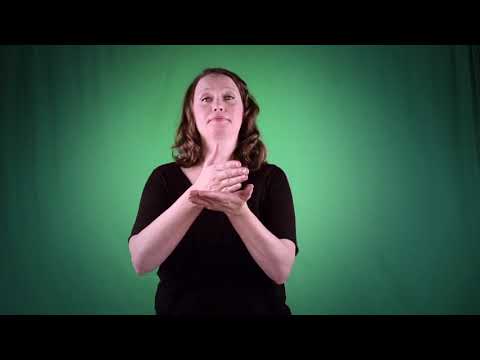
The sign for TO STOP in ASL involves bringing one hand down sharply onto the palm of the other hand. Start with your non-dominant hand held flat, palm up. Then bring your dominant hand down perpendicularly, palm facing sideways, so the fingertips meet the palm of the non-dominant hand. This motion mimics the idea of something coming to a sudden halt. This sign is classified as an action verb in ASL and is typically used with a serious or firm facial expression to match the intent. The sign for TO STOP in ASL can be modified slightly with facial expressions and body language to indicate urgency, frustration, or gentleness depending on the situation. A related sign is “pause,” which may use a different handshape or motion and carries a softer meaning. Another closely related sign is “quit,” which conveys a more permanent cessation and uses a different sign altogether. One common error is reversing the hand orientation—placing the dominant hand palm-down instead of perpendicular. Another mistake is using a weak movement. The sign for TO STOP in ASL should be deliberate and clear. Vague or half-hearted execution can lead to confusion or misinterpretation.
Tips for Beginners
If you’re just starting to learn the sign for TO STOP in ASL, don’t be discouraged by the need for precision. This sign is both simple and powerful, and with consistent practice, you’ll gain confidence. Start by mastering the hand positioning. Use slow motion at first and check your form in a mirror. Pay attention to how your hands connect—this physicality is essential for clarity. Avoid the common mistake of making the motion too softly or too quickly. A fast or unclear movement can make the sign look like a different word or simply confuse the viewer. Practice with exaggerated motion at first if necessary, then refine it to natural speed. Also, remember that ASL is more than hand movements. Your facial expressions should match your intent. When using the sign for TO STOP in ASL, your face might show seriousness, urgency, or concern—depending on what you’re trying to say. Practice in small chunks. Use flashcards, video prompts, or mobile apps that allow you to focus on this one sign. Repetition is key, and even five minutes a day can make a big difference in your progress.
Connections to Other Topics
The sign for TO STOP in ASL connects naturally with a variety of related signs and topics. One of the most common is the sign for GO or WALK. These action verbs are often paired in everyday sentences, such as “Stop walking” or “Go, then stop.” Another important connection is the concept of NEGATION in ASL. The sign for TO STOP in ASL is often used in sentence structures that involve telling someone not to continue an action, which pairs with signs like NOT or DON’T. The sign also links closely to BEHAVIORAL COMMANDS. Commands such as “Stop talking,” “Stop fighting,” or “Stop touching” are practical and frequently used, especially by parents, teachers, or anyone in a supervisory role. A useful grammar concept related to this sign is TIME SEQUENCING. In ASL, the order of signs often reflects the sequence of events. For example, “You run, then stop” would be structured differently than in English, and the sign for TO STOP in ASL would appear at the end of the action chain. Finally, the sign relates to EMOTIONAL CONTEXT. ASL uses facial expressions to convey tone and emotion. When using the sign for TO STOP in ASL, your facial cues might show frustration, relief, or authority. This gives the sign more depth and communicates your intent more clearly.
Lengthy Summary
The sign for TO STOP in ASL is a foundational verb that learners encounter early in their journey. It’s easy to learn in terms of handshape and motion but requires attention to detail in execution. The clear downward motion of one hand hitting the palm of the other mimics the concept of halting or ceasing action, making it an intuitive and visually strong sign. In Deaf culture, the sign is used frequently and with great clarity. Its use spans many real-life scenarios—from classrooms to casual conversations, from parenting to public safety. Understanding the cultural importance of clear and direct communication enriches your use of this sign and helps avoid misinterpretation. Beginners should work on mastering the hand orientation and movement, watching out for common errors like reversed palm positions or unclear motion. Incorporating facial expressions is just as important as the hand movement itself. ASL is a rich, expressive language where body language plays a critical role in meaning. Practicing the sign for TO STOP in ASL through a variety of methods—mirror work, video analysis, contextual usage, and advanced drills—builds both accuracy and fluency. Using the sign in context alongside related vocabulary such as GO, DON’T, and PAUSE helps reinforce meaning and usability. The sign also connects to grammatical structures like negation and sequencing, which appear throughout ASL. These connections are essential for building full, grammatically correct sentences and engaging in meaningful conversations. As you continue to learn and grow in ASL, keep revisiting core signs like the sign for TO STOP in ASL. The more you use it in real conversations, the more natural it will become. Make it part of your daily practice, and soon it will be second nature . Keep signing, keep learning, and enjoy the journey toward fluency! Synonyms: halt, cease, quit, discontinue, end Educational resources: Find related learning materials in our course bank! Want more? Check out some of our popular learning activities on the homepage! Need to look up a sign? Use our highly rated dictionary: https://aslinteractive.com/best-asl-dictionary/ Follow us on tiktok: https://www.tiktok.com/@aslinteractive. More social media links at the bottom of this page! Long-tail Keywords: Categories: tags: ASL verbs, common ASL actions, stop sign in ASL, ASL daily use vocabulary, American Sign Language basics
Want more? Check out some of our popular learning activities!
ASL Interactive Resources
ASLInteractive YouTube Channel
Follow us on tiktok: @aslinteractive.com
Follow us on Instagram: aslinteractive
Facebook page: aslinteractive
Facebook group: aslinteractive
LInkedIn: ASL Interactive LLC
Twitter: @ASL_interactive
*Some information on this page is AI-generated. AI can make mistakes. Please check the information.
Responses