
Practice Activities
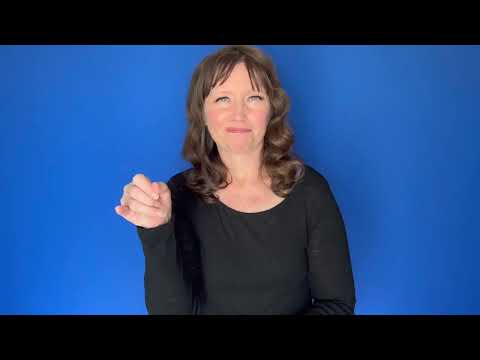
To master the sign for UNDERLINE in ASL, start with mirror work. This helps you see your handshape, palm orientation, and movement clearly. Make sure your facial expression matches the intent of your message, as ASL is a visual language that relies heavily on non-manual signals. Next, try recorded signing. Use your phone or webcam to record yourself signing sentences that include the sign for UNDERLINE in ASL. Then, watch the video to evaluate your accuracy and fluidity. Compare your sign with native signers using reliable ASL video dictionaries or educational platforms. Practice using the sign in context. For example, simulate giving a presentation where you describe written text, emphasizing that a certain word is underlined. You might say, “This word is important; it is underlined,” using the sign for UNDERLINE in ASL naturally within your sentence. Advance your skills with drills that incorporate speed and clarity. Try fingerspelling a word and immediately following it with the sign for UNDERLINE in ASL to simulate writing or editing. This is especially useful for academic or professional interpreting contexts. Group practice is also helpful. Sign with classmates or Deaf community members and give each other feedback. Try games like “edit the sentence,” where one person signs a sentence and another modifies it by adding visual markers like underlining.
SEO Cultural Context
The sign for UNDERLINE in ASL reflects how Deaf culture values visual and spatial representation. In ASL, abstract concepts like underlining are expressed through classifiers and descriptive signs that simulate the act of underlining a word or line. This visual representation ties directly into the cultural emphasis on clear, expressive communication. While the concept of underlining is universal in writing systems, its use in ASL is often context-driven. You might see the sign for UNDERLINE in ASL during educational settings, such as when a teacher is emphasizing a term on a board or document. It may also be used in professional interpreting when translating written instructions or texts that include formatting cues. Regional variation in the sign is minimal, though some signers may use a flat index finger to mimic drawing a line under an imaginary word, while others may use a flat hand or modify movement slightly. What remains consistent is the visual mimicry of the underlining action. In Deaf culture, clarity is kindness. The use of the sign for UNDERLINE in ASL is one more tool that helps ensure messages are visually rich and immediately understood. It supports literacy, academic success, and professional communication in ASL-using environments.
Extended Definition
The sign for UNDERLINE in ASL typically involves a dominant hand shaped as an index finger or flat hand, making a horizontal movement under an imagined word or phrase in front of the signer. The motion simulates the act of drawing a line beneath text, mirroring the written concept of emphasis. This sign belongs to a category of descriptive signs that visually depict formatting or editing marks. It is considered an initialized or classifier-like sign, depending on how it’s used. For example, when describing a list or paragraph, you might switch between signs like BOLD, ITALIC, and UNDERLINE to describe formatting. Common errors in signing UNDERLINE include incorrect palm orientation and movement direction. Some beginners mistakenly point upward or make the motion too vertically, which can confuse the meaning. Another error is using a chopping motion rather than a smooth horizontal line. Related signs include WRITE, EDIT, and EMPHASIZE. Each of these has its own distinct form but can appear in sentences with UNDERLINE to create a fuller visual description. Understanding how the sign for UNDERLINE in ASL works with these related signs improves fluency and natural expression.
Tips for Beginners
Learning the sign for UNDERLINE in ASL can be a rewarding step in building your ASL vocabulary, especially if you’re interested in academic or professional vocabulary. Start by practicing the handshape and movement slowly. Don’t rush the line-drawing motion—keep it smooth and deliberate. A common beginner mistake is not visualizing the word you are underlining. ASL thrives on visual context, so imagine the word or sentence in front of you and make your motion directly underneath it. This helps your sign look more natural and meaningful. Use tactile learning methods to reinforce the concept. Write a word on paper and physically underline it. Then, mimic that motion in the air while signing. This helps bridge the gap between written English and ASL expression. Another useful tip is to anchor the sign in a sentence. Practice saying things like “This word is important,” and then use the sign for UNDERLINE in ASL to show visual emphasis. Embedding the sign in real sentences helps develop muscle memory and contextual awareness. Most importantly, be patient with yourself. It takes time to coordinate handshape, movement, and facial expression. Watching native signers and practicing regularly will lead to gradual improvement and confidence.
Connections to Other Topics
The sign for UNDERLINE in ASL connects naturally to the sign for BOLD. Both are used in contexts where written formatting is described visually. Signing BOLD involves a handshape and movement that emphasizes thickness or strength of print, often paired with UNDERLINE for full formatting explanation. Another related sign is EMPHASIZE. While UNDERLINE shows visual emphasis through formatting, EMPHASIZE can be used to indicate spoken or signed emphasis. Using both together can convey a layered meaning, such as a word being both underlined and stressed in tone. The sign for WRITE is also closely connected. Teachers and interpreters often pair WRITE with UNDERLINE to show that a written word should receive special attention. This pairing is useful in educational and academic settings. EDIT is a useful companion sign when discussing documents, homework, or digital content. If you’re describing changes made to a paper or file, you might use UNDERLINE in combination with EDIT and DELETE for a full visual explanation of the modifications. Finally, the concept of CL:LINE or classifier line can be used in more advanced ASL to visually represent underlining or other linear visual elements. This classifier allows for more nuanced and spatially descriptive signing, especially in storytelling or presentations.
Lengthy Summary
The sign for UNDERLINE in ASL is a highly visual and functional part of academic and professional ASL vocabulary. It mimics the action of drawing a line beneath a word, providing a clear and intuitive way to show emphasis or formatting. Though simple in form, the sign plays a significant role in contexts where visual literacy and language precision are valued. Practicing the sign effectively means incorporating a variety of techniques: mirror work, video recording, contextual usage, and advanced drills. These methods help learners internalize the movement and make it a natural part of their expressive toolkit. The sign for UNDERLINE in ASL is not just a static gesture—it’s a dynamic way to add depth and clarity to communication. Culturally, this sign reflects the Deaf community’s emphasis on visual clarity and meaningful expression. Whether used in classrooms, presentations, or conversations about documents, the sign offers a concise way to convey formatting without needing written text. Understanding the sign for UNDERLINE in ASL also means recognizing its connections to other signs like BOLD, EMPHASIZE, WRITE, EDIT, and classifier elements. These connections build a broader understanding of how ASL adapts to visual contexts, especially in educational and professional domains. For beginners, the sign is approachable yet essential. With strategic practice and attention to detail, learners can avoid common mistakes and use the sign confidently. Remember to visualize the text and allow your hand movement to reflect that visualization. This is key in making your signing look natural and expressive. As you continue your ASL journey, return to the sign for UNDERLINE in ASL often. Use it in conversations, in mock teaching scenarios, or when describing documents. The more you practice, the more fluent and expressive your signing will become. Keep signing, keep learning, and let every sign bring you closer to mastery . Synonyms: Please provide the underlined words that you’d like me to generate synonyms for. Educational resources: Find related learning materials in our course bank! Want more? Check out some of our popular learning activities on the homepage! Need to look up a sign? Use our highly rated dictionary: https://aslinteractive.com/best-asl-dictionary/ Follow us on tiktok: https://www.tiktok.com/@aslinteractive. More social media links at the bottom of this page! Long-tail Keywords: Categories: tags: writing-related signs, ASL grammar, educational signs, formatting in ASL, academic vocabulary
Want more? Check out some of our popular learning activities!
ASL Interactive Resources
ASLInteractive YouTube Channel
Follow us on tiktok: @aslinteractive.com
Follow us on Instagram: aslinteractive
Facebook page: aslinteractive
Facebook group: aslinteractive
LInkedIn: ASL Interactive LLC
Twitter: @ASL_interactive
*Some information on this page is AI-generated. AI can make mistakes. Please check the information.
Responses