
Practice Activities
To master the sign for ZERO in ASL, start with mirror work. Stand in front of a mirror and carefully observe your handshape and facial expressions. This helps reinforce accuracy and confidence. Pay attention to the circular shape your fingers make and ensure it remains consistent. Another effective strategy is to record yourself signing. Watching playback allows you to self-correct and compare your sign to reliable models. This is especially helpful when fine-tuning subtle aspects like palm orientation and movement. Use the sign for ZERO in ASL in context. Incorporate it into simple sentences such as “I have zero homework” or “There are zero cookies left.” Practicing in real-life phrases improves fluency and retention. Try advanced drills by signing numbers from one to ten, then backward, inserting the sign for ZERO in ASL where appropriate. You can also challenge yourself by doing speed drills or playing number games with a partner. These activities build muscle memory and reinforce comprehension.
SEO Cultural Context
The sign for ZERO in ASL carries more than just mathematical meaning. In Deaf culture, numbers are often used expressively and in everyday conversation. Understanding how to use the sign for ZERO in ASL appropriately reflects cultural fluency, not just vocabulary knowledge. In everyday life, this sign may be used to express absence, emptiness, or a count of none. For instance, someone might use it when talking about having zero responsibilities or zero plans over the weekend. It’s common in both casual and formal contexts, from classroom settings to storytelling. There may be slight regional variations in how people produce the sign for ZERO in ASL. In some areas, the handshape is a perfect circle, while in others it may resemble the letter “O.” Understanding these regional differences is part of becoming fluent in ASL and respectful of the community’s diversity. It’s important to remember that facial expressions play a key role in conveying meaning. When signing the number zero, the expression can change the tone—whether it’s neutral, humorous, or serious. These expressions are deeply tied to Deaf cultural norms and should be considered when learning the sign.
Extended Definition
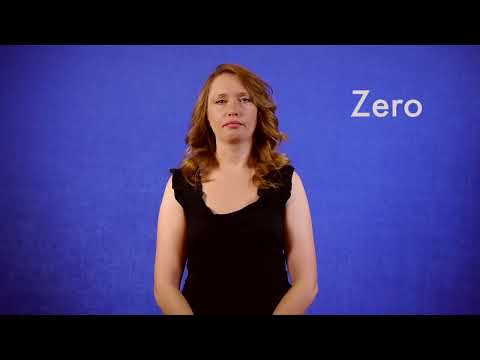
The sign for ZERO in ASL is typically made by forming a circle with all five fingers touching at their tips, resembling the numeral 0. The handshape is held in front of the body with a neutral palm orientation. It may look similar to the letter “O,” but context, movement, and facial expression help distinguish it. This sign is static, meaning it does not require movement unless used within a larger phrase. For example, when counting or listing, the sign for ZERO in ASL may be placed in different spatial locations to indicate subject or object references. A common error is confusing the sign for ZERO with the signs for “O” or “nothing.” While they may look similar, they differ in context and grammar. The sign for “nothing” often involves a motion away from the body, whereas ZERO stays relatively still. Another potential mistake is allowing the fingers to collapse or the circle to become too loose or irregular. The precision of the handshape is crucial for clarity. Beginners should also be cautious not to mouth the English word “zero” while signing, as this can interfere with proper ASL grammar and cultural norms.
Tips for Beginners
Learning the sign for ZERO in ASL can seem simple at first, but it requires attention to detail. Start slow and focus on forming a clean, circular handshape. Use a mirror to check your form and keep your wrist relaxed to avoid stiffness. Don’t rush the learning process. Practice daily in short, focused sessions rather than cramming. This helps build muscle memory and prevents burnout. Repetition with mindfulness is key. Be aware of common mistakes, such as confusing the sign for ZERO in ASL with signs for “O” or “nothing.” Focus on context and facial expressions to differentiate them clearly. If you’re just starting out, try pairing the sign with numbers one through five to get a feel for its place in counting sequences. This can help you retain the sign more effectively and integrate it into your signing vocabulary. Always remember that ASL is a visual and spatial language. Use your eyes as much as your hands. Watching skilled signers, either in person or through video resources, can provide invaluable models for how the sign for ZERO in ASL is used naturally.
Connections to Other Topics
The sign for ZERO in ASL connects closely to the broader category of number signs in American Sign Language. Learning this sign naturally leads to understanding other numerals like one through ten and beyond. It’s also related to the sign for “nothing,” which uses a distinct motion and facial expression. Understanding the difference between these signs helps avoid confusion and enhances expressive clarity. Another related concept is the ASL handshape family. The sign for ZERO uses a specific handshape that also appears in other signs, such as “O” and “OK.” Recognizing these similarities can deepen your understanding of ASL structure. The sign for ZERO in ASL often appears in discussions involving quantities, such as time, money, or availability. For example, in a conversation about store inventory, someone might sign “zero apples” to indicate none are left. This practical application makes it a foundational part of everyday ASL dialogue. Additionally, the sign connects with grammatical structures involving negation and absence. In ASL, you might pair the sign for ZERO with negation markers or facial expressions to emphasize “none” or “nothing at all.”
Lengthy Summary
The sign for ZERO in ASL is a crucial building block in both numerical literacy and expressive communication. Though seemingly simple, it contains layers of meaning that require thoughtful practice and cultural awareness. By focusing on the correct handshape—a clean circle formed by the tips of all five fingers—and maintaining a neutral palm orientation, learners can ensure clarity and accuracy. Practicing the sign for ZERO in ASL through various methods such as mirror work, recordings, and contextual signing helps solidify both form and function. These strategies not only improve your technical skills but also prepare you for real-life interactions where the sign is commonly used. Understanding the cultural context adds depth to your learning. The sign for ZERO in ASL is not just a number; it’s part of a dynamic, visual language shaped by the Deaf community. Respecting regional variations, recognizing the role of facial expressions, and avoiding common errors are all essential steps toward fluency. For beginners, the path may involve trial and error, but with consistent practice and exposure, the sign becomes a natural part of your ASL toolkit. Connecting this sign to related topics like number signs, negation, and handshape families expands your vocabulary and grammatical understanding. Ultimately, learning the sign for ZERO in ASL opens the door to more complex numerical and conversational structures. It enhances your ability to express absence, count accurately, and understand native signers more effectively. Keep practicing, stay curious, and don’t be afraid to make mistakes. Every repetition brings you closer to fluency—so keep signing and enjoy the journey toward mastering American Sign Language . Synonyms: Zero, None, Nothing, Nil, Naught Educational resources: Find related learning materials in our course bank! Want more? Check out some of our popular learning activities on the homepage! Need to look up a sign? Use our highly rated dictionary: https://aslinteractive.com/best-asl-dictionary/ Follow us on tiktok: https://www.tiktok.com/@aslinteractive. More social media links at the bottom of this page! Long-tail Keywords: Categories: tags: numbers in ASL, ASL signs for math, counting in ASL, learning ASL numbers, American Sign Language numbers
Want more? Check out some of our popular learning activities!
ASL Interactive Resources
ASLInteractive YouTube Channel
Follow us on tiktok: @aslinteractive.com
Follow us on Instagram: aslinteractive
Facebook page: aslinteractive
Facebook group: aslinteractive
LInkedIn: ASL Interactive LLC
Twitter: @ASL_interactive
*Some information on this page is AI-generated. AI can make mistakes. Please check the information.
Responses