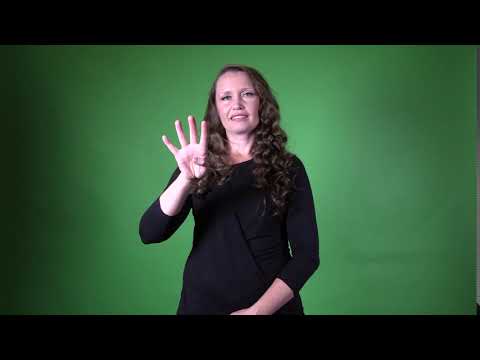
Sign for NUMBER TWENTY-FOUR in ASL | 🔢 ASL Dictionary

Definition: Refers to the number twenty-four

Sign for NUMBER TWENTY-FOUR in ASL 

YouTube player

Practice Activities:

Practicing the sign for number twenty-four in ASL can help improve fluency with numbers in signing. Start by signing it repeatedly in front of a mirror to check your handshape and movement. Try signing it while counting from twenty to twenty-five to reinforce its place in a sequence.

Use the sign for number twenty-four in ASL in real-world contexts to build confidence. Look for opportunities throughout your day, such as referring to the time (e.g., “24-hour store”) or talking about dates like December 24th. Challenge yourself by saying different numbers aloud and then signing them without hesitation.

Create practice sentences that incorporate the sign to build fluency. Try signing “I am twenty-four years old” or “There are twenty-four students in the class.” Expand on this by making up a short story where the number twenty-four plays a key role, such as “I have twenty-four books in my collection.”

Partner activities can also be useful. Practice with a friend by taking turns showing random numbers and signing them back correctly. Another interactive exercise is timing each other to count from twenty to twenty-four as quickly as possible without making mistakes.

For a fun challenge, use flashcards with different numbers between twenty and thirty written on them. Shuffle and draw a card, requiring yourself or a partner to sign the correct number. You can also play a number guessing game where one person signs a number, and the other has to say it aloud.

To strengthen your memory, watch ASL number signing videos and follow along. Pause the video, sign the numbers yourself, and then check your accuracy. Repetition and everyday usage will make the sign for number twenty-four in ASL feel natural and automatic.

Cultural Context:

american sign language (asl) uses unique number signs to represent numerical concepts efficiently. the sign for number twenty-four in asl is a combination of specific handshapes and movements that make it instantly recognizable. numbers like twenty-four are commonly used in dates, addresses, and counting sequences in asl communication.

the sign for number twenty-four in asl follows the standard pattern for numbering in asl. it combines the numbers two and four with a smooth transition, making it clear and easy to understand. fluent signers naturally incorporate it in everyday conversations, from discussing time to giving directions.

learning the sign for number twenty-four in asl helps improve overall fluency and understanding of numbering conventions. numbers are essential in both casual and formal sign language interactions, from talking about age to listing quantities. mastering number signs allows for better communication with the deaf and hard-of-hearing community.

in deaf culture, numbers are frequently used in storytelling, education, and relay important information. knowing the sign for number twenty-four in asl ensures clarity in numbered lists and sequences. accuracy and fluency in signing numbers demonstrate respect and proficiency in asl.

as with all number signs, handshape and movement precision are crucial when signing the number twenty-four. improper formation can lead to confusion with other numbers, so consistent practice is important. watching native signers or asl instructors can help learners perfect their technique.

the sign for number twenty-four in asl is part of the broader numbering system used in everyday life. from signing a birthdate to sharing contact information, number signs are fundamental. understanding how to sign numbers correctly makes communication in asl more natural and effective.

when fingerspelling or using numeral incorporation, signers often move fluidly between signs. the sign for number twenty-four in asl is useful in contexts such as sports scores, classroom settings, and event planning. strong number recognition skills help signers participate fully in asl discussions.

the ease of learning the sign for number twenty-four in asl increases with regular practice. many online resources and asl courses provide reinforcement for correct finger placement and movement. consistency in practice ensures accuracy and confidence in expressing numbers in asl.

mastering the sign for number twenty-four in asl contributes to overall asl competency. number signs form the foundation for financial transactions, scheduling, and mathematical concepts in asl. communicating numbers correctly supports clear and effective conversations in the deaf community.

Extended Definition:

The sign for number twenty-four in ASL is a combination of two hand shapes that smoothly transition into one another. It starts with the number two handshape, then changes into the number four handshape to represent “24.” This movement is fluid and performed in one motion.

In American Sign Language, numbers from 20 to 29 have their own unique movements. The sign for number twenty-four in ASL follows this rule by modifying the basic number signs. It’s a quick and efficient way to communicate numbers without finger-spelling each digit.

When signing number twenty-four in ASL, it’s important to maintain proper hand positioning. The fingers should be clearly formed to avoid confusion with similar numbers like twenty-five or twenty-three. Hand shape clarity is essential for accurate communication in ASL.

Number signs, including the sign for number twenty-four in ASL, are commonly used in daily conversations. Whether discussing ages, addresses, or quantities, numbers play a key role in ASL communication. Practicing these signs regularly helps improve fluency.

Context is crucial when using the sign for number twenty-four in ASL, just as it is with other numbers. Numbers can be used alone or in combination with other signs to convey meaning. For example, signing “24 years old” differs slightly from signing “24 dollars” due to context and sentence structure.

Numbers in ASL follow a structured pattern, making it easier to learn and remember them. The sign for number twenty-four in ASL fits within this number system and maintains the flow of natural signing. Learning these patterns helps signers use numbers more effectively.

Proper finger movement is key to signing number twenty-four in ASL clearly. A common mistake is rushing the transition between two and four, which can make the sign appear sloppy. Taking time to learn smooth transitions ensures better accuracy.

Deaf culture values clear communication, and the sign for number twenty-four in ASL is no exception. Using correct hand shapes, movement, and facial expressions can enhance understanding. Signers who take care in forming numbers properly contribute to better communication in ASL.

Mastering the sign for number twenty-four in ASL, along with other numbers, improves both receptive and expressive signing skills. Watching fluent signers can help beginners understand proper execution. Practicing numbers in different contexts builds confidence in using ASL.

Learning ASL numbers, including the sign for number twenty-four in ASL, benefits those communicating with the Deaf community.

Synonyms: twenty-four, number twenty-four, number 24, the number 24, the number twenty-four

Educational resources: Find related learning materials in our course bank!

Want more? Check out some of our popular learning activities on the homepage!

Need to look up a sign? Use our highly rated dictionary: https://aslinteractive.com/best-asl-dictionary/

Follow us on tiktok: https://www.tiktok.com/@aslinteractive. More social media links at the bottom of this page!

Long-tail Keywords: what is the sign for Number twenty-four in ASL, how do you sign Number twenty-four in ASL, learn the ASL sign for Number twenty-four

Categories: Numbers – Basics, Numbers 21-30, cardinal numbers

tags: Numbers 21-30, Numbers, Language Learning, Math, Education

Parameters

*Handshape*:

The sign for NUMBER TWENTY-FOUR in ASL uses the dominant hand, starting with the “2” handshape (index and middle fingers extended) and then transitioning into the “4” handshape (four fingers extended while the thumb remains tucked). The movement is fluid, with the fingers slightly flicking as the shape changes. This sign is performed at chest level and slightly in front of the body. Keep the hand relaxed to maintain clarity when signing the sign for NUMBER TWENTY-FOUR in ASL.

*Palm Orientation*:

For the sign for NUMBER TWENTY-FOUR in ASL, the palm orientation starts with the palm facing outward. The number 2 is formed with the index and middle fingers extended while the thumb, ring, and pinky fingers remain folded. As the transition is made to 24, the fingers move slightly, forming the number 4 with the index, middle, ring, and pinky fingers extended. Throughout the motion, the palm maintains its outward-facing direction. ✋

*Location*:

The sign for number twenty-four in ASL is produced in the neutral space in front of the body, slightly above chest level. The dominant hand forms the number “2” in ASL, with the index and middle fingers extended, then transitions smoothly into the number “4” by extending the ring finger. This sign is executed with a slight wrist movement, ensuring clarity and fluidity when conveying the number.

*Movement*:

To make the sign for number twenty-four in ASL, start with the number “2” handshape, where the palm faces outward and the index and middle fingers are extended. Then, transition smoothly to the number “4” handshape by extending the ring finger and positioning all three extended fingers apart. The movement should be fluid, ensuring a clear distinction between the “2” and “4” handshapes for clarity and accuracy.

*Non-Manual Signals*:

When signing the sign for NUMBER TWENTY-FOUR in ASL, maintain a neutral or slightly focused facial expression, as this is a standard number sign. If emphasizing the quantity or clarifying a detail, slightly raise your eyebrows or nod subtly. Keep your mouth relaxed, optionally mouthing “twenty-four” to reinforce understanding. Make sure your gaze remains on the recipient to ensure clarity when using the sign for NUMBER TWENTY-FOUR in ASL.

*Prosody, Dominant/Non-Dominant Hand*:

The sign for NUMBER TWENTY-FOUR in ASL uses the dominant hand, forming the number “2” with the index and middle fingers extended. The palm typically faces outward, then transitions smoothly into the “4” shape by extending the ring finger and pinky while keeping the thumb tucked. This movement is fluid, often incorporating a slight wrist rotation. The non-dominant hand is not used in this sign, keeping it a one-handed gesture. ✋

Tips for Beginners:

Mastering the sign for NUMBER TWENTY-FOUR in ASL requires fluidity and accuracy in hand positioning. Since this sign is produced using a quick movement of the dominant hand, ensure your fingers stay relaxed yet controlled. The motion must be precise, transitioning from the handshape for 2 to the handshape for 4 smoothly.

A common mistake beginners make with the sign for NUMBER TWENTY-FOUR in ASL is either hesitating between the number transitions or making the movement too rigid. Practice by focusing on muscle control in your fingers to smoothly shift from the “2” to the “4” without exaggerating the motion. Watching experienced signers or practicing in front of a mirror can help refine the fluidity of the sign.

Finger orientation is another key detail. Your palm should face forward while your fingers shift from the “2” to the “4.” Keeping your hand steady ensures clarity, so avoid unnecessary tilting or movement that may confuse the meaning. If your hand drifts too much, slow down your motion and focus on consistency.

Speed and natural flow will come with repetition. At first, it might feel unnatural, especially if you’re unfamiliar with signing numbers. Try practicing with other numbers in the twenties range to build confidence. Incorporating the sign into real-life counting and conversations will help reinforce memory and ease.

If you’re learning ASL for communication with deaf individuals, maintaining good eye contact and clarity in execution is just as important as the sign itself. Confidence grows over time, so remain patient with yourself. Keep practicing, and soon, signing numbers, including twenty-four, will become second nature.

Connections to Other topics:

The sign for number twenty-four in ASL is part of a pattern used when signing numbers in the twenties. Many numbers in the twenties incorporate a unique movement or slight handshape change, making them distinguishable from one another while following a general numbering system. Understanding these patterns can help learners more easily recognize and reproduce other number signs, such as number twenty-three and number twenty-five, which have similar alternating finger movements.

Numbers play an important role in ASL beyond just counting. The sign for number twenty-four in ASL may be used in contexts relating to age, time, and addresses. For example, when signing about someone’s age, the number is incorporated into the AGE sign for clarity. Similarly, numbers help structure phone numbers, prices, and measurements in various conversations, making number fluency essential for everyday interactions.

The way numbers are signed can influence how other numerical signs develop. Ordinal numbers, such as twenty-fourth, modify number signs by incorporating a twisting movement to indicate order or ranking. This transformation follows a common pattern seen with other ordinal numbers, reinforcing predictable shifts in meaning through movement. Understanding the sign for number twenty-four in ASL can therefore provide a foundation for using and forming other related numerical expressions.

Numbers in ASL are also commonly used in classifiers, which are handshape-based symbols that represent objects, amounts, or sizes. The same handshape used for signing number twenty-four in ASL might appear in a classifier to describe a small group or a quantity of objects. Recognizing these connections helps signers transition smoothly between general number use and classifiers, strengthening their overall fluency.

Summary:

The sign for number twenty-four in ASL follows a structured numerical system that builds from the numbers twenty and four. It begins with the hand forming the number twenty, which is represented by extending the index and thumb and repeatedly tapping them together. Then, without breaking the motion too much, the hand transitions into the number four, extending all fingers except the thumb.

This number follows the general rule for forming numbers in ASL, where a fluent transition between digits creates smooth communication. Some signers execute it as a single continuous movement, while others may briefly pause between twenty and four. The fluidity of the motion can indicate the signer’s level of comfort and familiarity with ASL numerical expressions.

Numbers play a crucial role in ASL grammar, and expressing them correctly ensures clarity. The sign for number twenty-four in ASL is used in various contexts, such as age, quantity, or time references. Understanding numerical sequences is essential for conversations involving dates, addresses, and measurements.

ASL numbers between twenty and thirty follow a predictable pattern similar to spoken English. The first digit stays static while the second transitions through the numerical sequence. This structure allows for efficient and consistent signing across different number ranges.

The sign for number twenty-four in ASL demonstrates ASL’s reliance on handshape and movement to convey information. Because sign language lacks spoken phonetics, numbers are conveyed through distinct hand configurations. Accuracy in hand positioning ensures the number is not misinterpreted as another two-digit number.

Fluency in ASL numbers depends on hand dexterity and movement control, skills developed through practice. A signer who struggles with fluid number transitions might appear less proficient. Smooth, natural transitions between numbers aid comprehension when discussing numerical information.

The sign for number twenty-four in ASL highlights ASL’s visual-spatial nature. Instead of relying on auditory changes like spoken languages, ASL depends on visual articulation. This emphasizes the importance of clarity in hand movements when signing numbers.

Culture plays a role in ASL number usage, as deaf communities rely on visual communication for practical and social interactions. Numbers are frequently used in classroom settings, financial transactions, and casual conversations. Mastery of numbers like twenty-four prevents misunderstandings regarding important figures.

The sign for twenty-four differs slightly in execution depending on regional dialects or personal signing styles. While the core motion remains the same, variations may occur in the speed or articulation of the transition. These differences do not alter meaning significantly but reflect individual comfort and fluency.

Numbers in ASL align closely with numerical concepts in written language. However, numbers above twenty occasionally involve different signing conventions, particularly in rapid-speech contexts. A skilled signer adapts their fingerspelling or numerical signs based on the context of the conversation.

The sign for number twenty-four in ASL maintains ASL’s principle of economy of motion. Signed numbers are designed to be efficient while remaining clearly distinguishable. This efficiency ensures rapid numerical communication in everyday discourse.

Children learning ASL may find higher numbers more challenging than single-digit numbers due to the necessity of transitioning between digits. Developing number fluency is critical for academic success in deaf education. Instructors encourage repetition and visual reinforcement to build confidence in numerical signing.

The sign for number twenty-four in ASL also reflects ASL’s influence from English numerical systems. While ASL grammar differs significantly from English, numbers largely follow English counting conventions. This demonstrates the impact of language contact between ASL and English due to historical language exposure.

Beyond basic numerical use, numbers appear in ASL storytelling, poetry, and sports communication. A number as simple as twenty-four can carry additional meaning in certain contexts. For example, jersey numbers in sports might hold significance beyond just their numeric value.

The sign for number twenty-four in ASL follows principles common in sign linguistics, including handshape distinctiveness and clear differentiation from similar numbers. Misarticulating the number could result in confusion, particularly in rapid or high-stakes communication. Precision in movement ensures accuracy.

In practical conversations, signers often pair numbers with classifiers or contextual signs to clarify meaning. For example, when discussing twenty-four objects, the number may be followed by an appropriate classifier. This system eliminates ambiguity and enhances understanding.

Technology and ASL both influence how numbers are signed, particularly in digital communication settings. For example, video calls may require more deliberate movements to ensure visibility. The sign for number twenty-four in ASL remains consistent but may require adjustments depending on the medium.

Understanding number formation is crucial for interpreting ASL accurately, as numbers appear frequently in daily interactions. From phone numbers to monetary transactions, numbers are unavoidable in communication. A lack of numerical fluency can cause misinterpretations and hinder conversation flow.

Because ASL is a fully visual language, numerical signs must be distinct to avoid confusion. Twenty-four must be signed clearly to differentiate it from visually similar numbers such as twenty-three or twenty-five. Proper finger

Want more? Check out some of our popular learning activities!

ASL Interactive Resources

ASLInteractive YouTube Channel

Follow us on tiktok: @aslinteractive.com

Follow us on Instagram: aslinteractive

Facebook page: aslinteractive

Facebook group: aslinteractive

LInkedIn: ASL Interactive LLC

Twitter: @ASL_interactive

*Some information on this page is AI-generated. AI can make mistakes. Please check the information.

Sign for THE NUMBER 24 in ASL, Sign for NUMBER 24 in ASL, Sign for THE NUMBER TWENTY-FOUR in ASL, Sign for NUMBER TWENTY-FOUR in ASL 

Responses