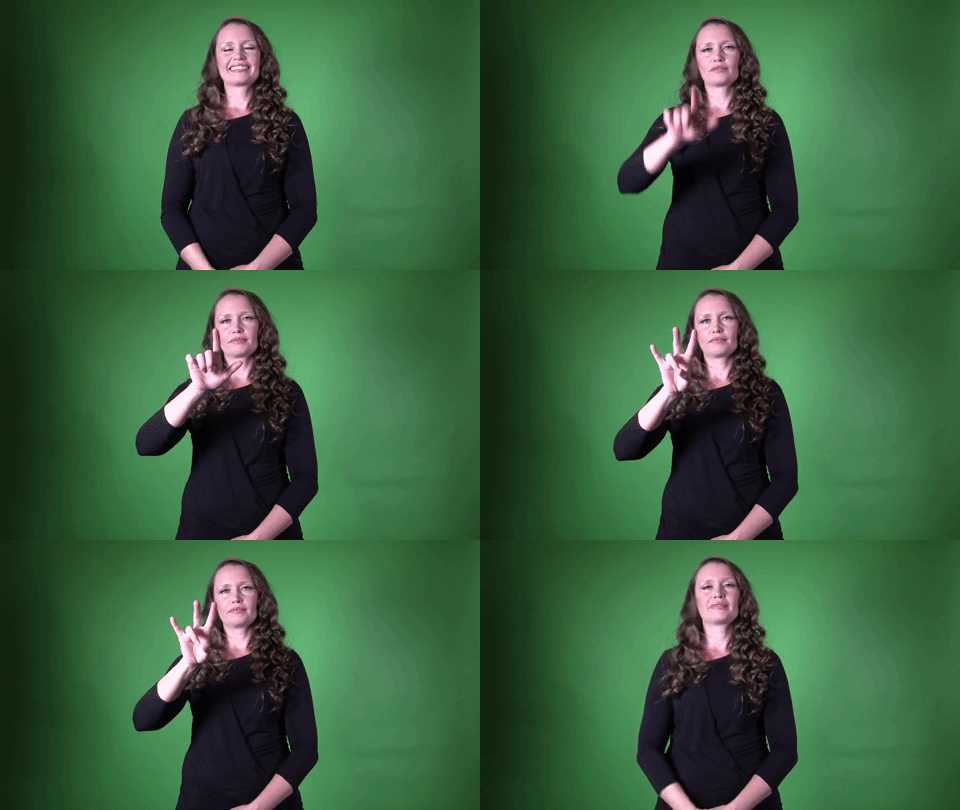
Sign for THE NUMBER TWENTY-SEVEN in ASL | Learn the Sign for THE NUMBER TWENTY-SEVEN in ASL with the #1 Best Free Dictionary!

Definition: Refers to the number twenty-seven

Sign for THE NUMBER TWENTY-SEVEN in ASL 

YouTube player

Practice Activities:

Practicing the sign for the number twenty-seven in ASL can be done in several ways to improve fluency and confidence. Start by signing the number repeatedly in front of a mirror to check your handshape and movement. Try alternating between signing twenty and twenty-seven to get used to the transition in movement. You can also practice by counting from twenty to thirty, making sure to include the sign for the number twenty-seven in ASL in sequence.

Use real-life applications to reinforce your understanding. Try signing different ages and addresses that include twenty-seven. For example, practice asking and answering questions like “How old are you?” responding with “I am twenty-seven years old” using ASL. You can also create math problems such as “What is fifteen plus twelve?” and respond by signing the number twenty-seven.

Engaging in interactive activities will make learning enjoyable. Pair with a friend and take turns signing random numbers to each other, ensuring that you both correctly recognize and produce the sign for the number twenty-seven in ASL. Play a game where one person fingerspells numbers, and the other must sign them back. You can also challenge yourself by timing how fast you can sign twenty through thirty without mistakes.

Storytelling activities will help you incorporate the number naturally. Create a short story where the number twenty-seven is significant, such as a person’s birthday, a sports jersey number, or an apartment number. Sign the story in ASL to reinforce fluency. Watching ASL number signing videos and copying the motions will also help refine accuracy. By consistently practicing, you will become more comfortable using this number in conversations.

Cultural Context:

The sign for the number twenty-seven in ASL is commonly used in daily communication, especially when discussing age, dates, addresses, or quantities. Numbers play a vital role in American Sign Language, and mastering them helps improve fluency. The number signs in ASL follow specific patterns, making them easy to recognize and remember.

When signing the number twenty-seven in ASL, it’s important to maintain clear handshape and movement. Proper finger positioning ensures accuracy and understanding. Signing numbers correctly helps avoid misinterpretations and enhances communication.

The sign for the number twenty-seven in ASL follows a natural pattern used for other two-digit numbers. Learning number signs is crucial for everyday conversations and various professional settings. Knowing these signs helps both beginners and fluent signers communicate effectively.

ASL numbers are frequently used in educational and workplace environments. The sign for the number twenty-seven in ASL may come up in discussions about finances, sports scores, or schedules. Numbers allow signers to convey important details clearly and efficiently.

In Deaf culture, numerical signs are essential for social interactions and storytelling. The sign for the number twenty-seven in ASL might appear in personal narratives or group discussions. Understanding number signs enhances a signer’s ability to participate in meaningful conversations.

When learning numbers, consistency and repetition improve signing skills. Practicing the sign for the number twenty-seven in ASL helps build confidence and accuracy. Mastering number signs makes everyday interactions smoother and more natural.

Facial expressions and body language add extra context to numerical signing. While signing the number twenty-seven in ASL, it’s important to maintain eye contact and natural movement. Expressive signing improves comprehension and fosters better connections within the Deaf community.

ASL includes unique variations for certain numbers, and recognizing these patterns helps with retention. The sign for the number twenty-seven in ASL follows a structured system that aligns with other numerical signs. Consistently practicing number signs strengthens overall language proficiency.

Technology and digital communication have made ASL numbers even more relevant. The sign for the number twenty-seven in ASL is useful for video chats, captioning, and online learning. Understanding numbers enhances accessibility and inclusion for Deaf and hard-of-hearing individuals.

Whether in casual conversations or formal settings, numbers are a key part of sign language. The sign for the number twenty-seven in ASL is a useful tool for sharing information accurately. Knowing number signs contributes to effective, efficient communication in any situation.

Extended Definition:

The sign for the number twenty-seven in ASL is a combination of two numerical signs, representing the numbers two and seven. This sign is commonly used in everyday situations, including counting, age, addresses, and math-related discussions. Mastering this number in American Sign Language helps improve numerical fluency and effective communication.

To sign the number twenty-seven in ASL, start by forming the number two with your dominant hand, extending the index and middle fingers while keeping the thumb, ring, and pinky fingers folded. Then, transition into the number seven by bringing the thumb and ring finger together while the remaining fingers stay extended. The movement between these handshapes should be smooth and natural.

This sign is part of the numerical system in ASL, which follows a structured pattern for numbers. The number twenty-seven maintains the same handshape pattern found in other numbers within the twenties series. Learning these structured number signs makes it easier to recognize and produce larger numerical figures.

Numbers in ASL are essential for signing dates, times, money, and phone numbers. The sign for the number twenty-seven in ASL can appear in conversations about birthdays, sports scores, or financial transactions. Familiarity with this sign helps in both personal and professional interactions.

Some variations of the sign for the number twenty-seven in ASL may exist depending on regional influences or signing speed. More experienced signers often make the transition between the two numbers fluid, ensuring efficient communication. Practicing this sign regularly will help new learners improve their signing speed and accuracy.

When fingerspelling or using numerical signs, maintaining proper hand placement is crucial for clarity. The sign for the number twenty-seven in ASL should be performed at chest height, with the palm facing outward. This positioning ensures that the other person can see the sign clearly.

Numbers in ASL contribute to the overall fluency of communication within the Deaf community. The sign for the number twenty-seven in ASL, like other numbers, follows specific linguistic rules that make ASL both structured and expressive. Understanding number signs enhances everyday communication and practical interactions.

Mastering number signs, including the sign for the number twenty-seven in ASL, helps with reading and understanding ASL sentences more efficiently. Many conversations require the use of numerical information, ranging from simple counting to more complex data discussions. Learning and practicing numerical signs builds confidence in using ASL in various settings.

To reinforce learning, it can be helpful to practice the sign for the number twenty

Synonyms: twenty-seven, number twenty-seven, number 27, the number 27, the number twenty-seven

Educational resources: Find related learning materials in our course bank!

Want more? Check out some of our popular learning activities on the homepage!

Need to look up a sign? Use our highly rated dictionary: https://aslinteractive.com/best-asl-dictionary/

Follow us on tiktok: https://www.tiktok.com/@aslinteractive. More social media links at the bottom of this page!

Long-tail Keywords: what is the sign for the number twenty-seven in ASL, how do you sign the number twenty-seven in ASL, ASL sign for the number twenty-seven

Categories: Numbers – Basics, Numbers 21-30, cardinal numbers

tags: Numbers 21-30, Numbers, Math, Language Learning, Educational

Parameters

*Handshape*:

The sign for the number twenty-seven in ASL is formed using a quick transition between two distinct handshapes. Start with the “2” handshape, where the index and middle fingers are extended while the thumb, ring, and pinky fingers remain folded. Then smoothly change to the “7” handshape by extending the thumb and ring finger while the index, middle, and pinky fingers remain folded. This transition is done with a slight bouncing or flicking motion.

*Palm Orientation*:

The palm orientation for the sign for the number twenty-seven in ASL starts with the palm facing outward. The hand transitions smoothly between the number twenty and the number seven, maintaining an open and clear palm position. Throughout the movement, keep the fingers relaxed and ensure the palm stays visible to maintain clarity. Whether signing casually or formally, maintaining proper palm orientation enhances accuracy when performing the sign for the number twenty-seven in ASL.

*Location*:

The sign for the number twenty-seven in ASL is made in the neutral space in front of the signer, around chest level. The dominant hand forms the number “2” with the index and middle fingers extended, then transitions into the number “7” by bending the ring finger down while the index and middle fingers remain extended. The motion is fluid, keeping the hand steady and relaxed.

*Movement*:

To make the sign for the number twenty-seven in ASL, start with the dominant hand in a “2” handshape, palm facing outward. Quickly transition to a “7” handshape by bending the index and middle fingers while extending the ring and pinky fingers. The motion should be fluid, with a slight bounce or flick to emphasize the number transition. Keep the hand steady to ensure clarity in signing.

*Non-Manual Signals*:

When signing the sign for the number twenty-seven in ASL, maintain a neutral or slightly focused facial expression. Keep your eyebrows relaxed, unless emphasizing the number in a sentence, in which case slight eyebrow raising may occur. Your mouth should remain in a neutral position, though slight mouthing of “twenty-seven” can add clarity.

If emphasizing the sign for the number twenty-seven in ASL for counting or listing, slight head nodding can reinforce the number. When used in a question, raising your eyebrows slightly and tilting your head forward can add emphasis. Eye contact with the listener supports engagement and clarity.

*Prosody, Dominant/Non-Dominant Hand*:

For the sign for the number twenty-seven in ASL, the dominant hand is used while the non-dominant hand remains inactive. The handshape transitions from a “2” handshape to a “7” handshape in one smooth motion. The fingertips flick slightly as the hand moves between these two numbers, maintaining a forward-facing palm orientation. This sign is performed in the neutral signing space without any additional movement.

Tips for Beginners:

Mastering the sign for the number twenty-seven in ASL requires precision in finger movements and transitions. This number is a combination of two signs: first for “two” and then for “seven.” Pay close attention to the smooth transition between these numbers, as jerky or disjointed motions can make the sign look unclear. Keep your hand steady and ensure that your fingers maintain proper positioning throughout both numbers.

A common mistake when signing the number twenty-seven is failing to position the fingers correctly, especially during the transition from “two” to “seven.” Make sure your index and middle fingers form a clear “two” before shifting smoothly into the “seven” handshape, with your thumb touching the ring finger. A sloppy transition can make the sign confusing or difficult to understand. Practicing in front of a mirror can help ensure that your fingers are forming the numbers accurately.

When practicing the sign for the number twenty-seven in ASL, focus on maintaining a smooth rhythm. Hesitation or rushing through the motion can make it harder for others to recognize the number. Try practicing at a moderate speed before increasing your fluency. Watching native signers or using video resources can reinforce proper movements and finger placements.

Finger flexibility plays a significant role in achieving accuracy in the number signs. If you struggle to move your fingers smoothly, try stretching exercises to improve dexterity. You can also practice signing sequential numbers to develop muscle memory. Repeated practice will help you sign the number fluently and with confidence.

Keep in mind that numbers are frequently used in daily ASL communication, so consistency is essential. Regularly using the sign for the number twenty-seven in ASL in different contexts, such as dates or math, will reinforce your learning. Stay patient, and your fluency will improve with time!

Connections to Other topics:

The sign for the number twenty-seven in ASL connects to the broader system of number signs, where numbers 20-29 often use a similar pattern involving movement or handshape changes. Understanding this number sequence helps in counting, giving dates, and stating prices. Since twenty-seven follows the typical two-digit number pattern, it also supports learning other numbers in the twenty series, reinforcing consistency in hand movements.

Cardinal numbers like the sign for the number twenty-seven in ASL play a critical role in everyday communication, from telling someone an address to discussing ages. This sign also connects with ordinal numbers, which modify the base number to indicate a sequence, such as “twenty-seventh” for ranking or placement. Fluency with these numbers ensures clarity when discussing time, measurements, and other essential numerical details.

Numbers frequently appear in compound signs where quantity is incorporated into a broader meaning. For example, numbers can be used when signing concepts like “27 years old” or “27 dollars,” where the number is immediately followed by an appropriate classifier or noun. Recognizing these patterns in ASL grammar helps learners form more fluid sentences and better express complex thoughts.

The sign for the number twenty-seven in ASL is also useful when describing sports statistics, heights, or weights, where numerical precision is crucial. It is especially important in educational and professional settings where accurate numerical communication keeps exchanges clear. Mastering number signs makes it easier to discuss math, finances, and schedules while maintaining a natural flow in conversations.

Summary:

The sign for the number twenty-seven in ASL is a combination of two handshapes, smoothly transitioning in a fluid motion. This sign combines the number twenty and the number seven into a single movement, making it distinct from simply signing the two numbers separately. Such numeral incorporation makes counting in ASL efficient, visually clear, and natural for signers.

To sign the number twenty-seven in ASL, begin with the hand in the “2” handshape, with the index and middle fingers extended while the thumb, ring, and pinky fingers are tucked in. The fingers close together and then reopen quickly, representing the number twenty. Immediately after that motion, shift into the “7” handshape by extending the index, middle, and ring fingers, with the ring finger tapping the thumb. The transition should be smooth, blending both numbers into one continuous gesture.

Finger movement in this sign is key to clarity and distinctiveness. The closing and opening motion for twenty allows it to remain recognizable before transitioning into seven. While signing, fluidity and speed help maintain natural expression, especially in rapid conversation or numerical listing situations. If the motion is choppy or unclear, the meaning can become ambiguous or difficult for the viewer to process.

The number system in ASL follows distinct patterns that integrate numerical concepts in logical sequences. The sign for the number twenty-seven in ASL follows a similar pattern as other numbers in the twenties, where the first digit incorporates a movement and the second digit is expressed in a more standard numerical handshape. This structure makes numbers in ASL highly adaptable and easy to learn once the general patterns are understood.

Numbers in ASL play an essential role in many aspects of daily communication. The sign for the number twenty-seven in ASL is commonly used in various contexts, from dates and age references to addresses, financial discussions, and lists. A well-executed numerical sign is crucial because numerical values convey precise meanings, and misunderstandings can lead to confusion.

ASL numerical signs have evolved over time to promote ease of use and clarity. Early signers may have used more fingerspelled versions of numbers before the numeric system became standardized. The modern sign for the number twenty-seven in ASL reflects efficiency and ease of motion, making it more intuitive for both native users and learners.

Hand dominance plays an important role in sign clarity. The dominant hand performs this sign, ensuring that it is easily visible and that the movement is naturally executed. Left-handed signers should use their left hand for clarity, just as right-handed signers use their right hand. Switching hands randomly can make communication inconsistent and confusing for fluent signers.

Numeral incorporation helps ASL remain space-efficient by reducing the need for multiple signs. Instead of showing the number two and then the number seven separately, the sign for the number twenty-seven in ASL compresses the information into one fluid movement. This efficiency mirrors the spoken language’s tendency to blend syllables smoothly for clarity.

Learning number signs such as the sign for the number twenty-seven in ASL is crucial for mastering ASL fluency. Numbers appear frequently in daily language use, and numeric comprehension is necessary for clear communication in academic, professional, and casual settings. Mastery of number signs allows ASL users to engage seamlessly in conversations about time, quantities, and sequences.

There are some common mistakes when signing this number. One issue is not transitioning smoothly between the handshapes, which can cause confusion with similar-looking numbers. Inconsistent finger placement or incorrect movement patterns can also make the sign appear unclear or incorrect. Practicing in front of a mirror or with a fluent signer can help refine precision and fluidity in execution.

Context is vital in ensuring the correct interpretation of numerical signs. The sign for the number twenty-seven in ASL may appear in conversations about sports scores, financial transactions, years, or rankings. Because many numbers share similar motions, signers must be mindful of contextual clues to avoid confusion with other similar-looking signs.

Signs for numbers in ASL are influenced by historical developments in ASL structure and linguistic principles. The movement and transition of numbers, including the sign for the number twenty-seven in ASL, reflect the way ASL prioritizes visual and kinetic efficiency. Studying these signs reveals how sign languages evolve to optimize communication across generations.

The grammatical placement of numbers in ASL differs from spoken languages. In ASL, numbers can function similarly to adjectives, nouns, or quantifiers, depending on their placement in a sentence. The sign for the number twenty-seven in ASL might modify an object (like “twenty-seven books”) or stand alone in response to a numerical question.

Number signs showcase ASL’s rich linguistic complexity. While the sign for the number twenty-seven in ASL follows a standard pattern, variations in execution can exist depending on regional dialects and generational differences. Some older signers may use slightly different transitions, but the general

Want more? Check out some of our popular learning activities!

ASL Interactive Resources

ASLInteractive YouTube Channel

Follow us on tiktok: @aslinteractive.com

Follow us on Instagram: aslinteractive

Facebook page: aslinteractive

Facebook group: aslinteractive

LInkedIn: ASL Interactive LLC

Twitter: @ASL_interactive

*Some information on this page is AI-generated. AI can make mistakes. Please check the information.

Sign for THE NUMBER TWENTY-SEVEN in ASL 

Responses