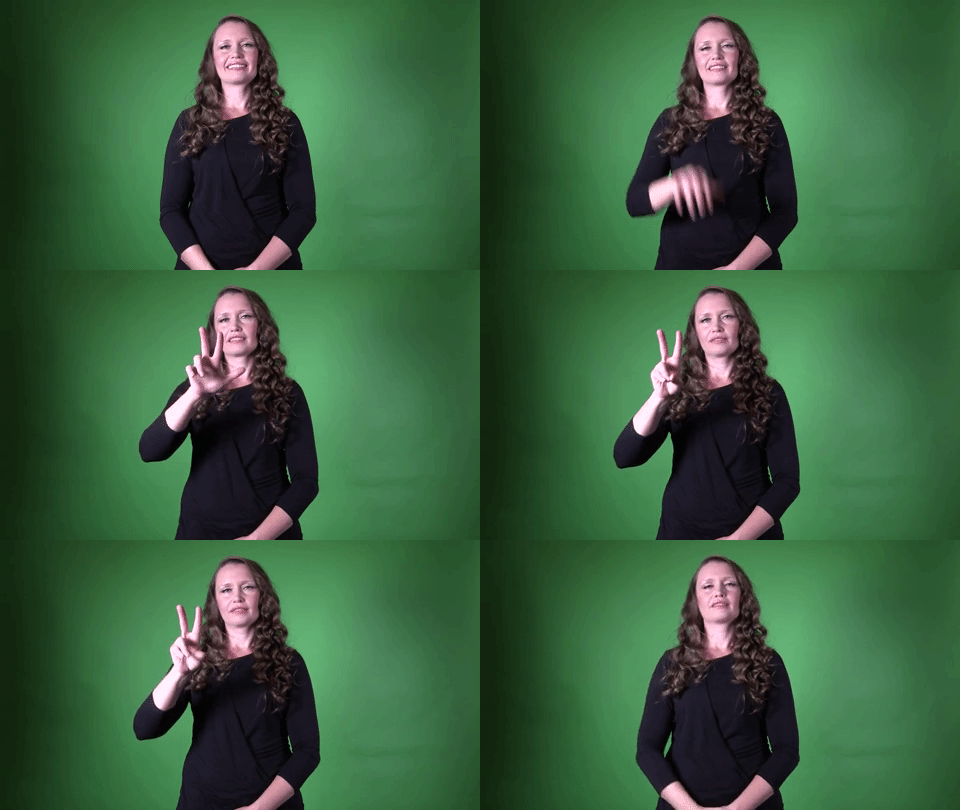
Definition: Refers to the number thirty-two
Sign for THE NUMBER THIRTY-TWO in ASL

Practice Activities:
To practice the sign for the number thirty-two in ASL, start with repetition drills. Hold up your dominant hand and practice switching between the number three and the number two. Repeat the movement ten times slowly, then increase your speed while ensuring clarity. Use a mirror to check your handshape and fluidity.
Try counting from thirty to thirty-five, emphasizing the smooth transition to the sign for the number thirty-two in ASL. Say the numbers aloud to reinforce memory, then sign them silently. This will help solidify the number sequence.
Incorporate the sign for the number thirty-two in ASL into everyday counting. Count objects such as coins, pieces of candy, or steps while walking. If you see numbers in daily life, take a moment to sign them, reinforcing recognition.
Use real-world applications to deepen understanding. Imagine telling a friend your age or referencing a sports jersey number. Create short sentences like “I saw thirty-two birds outside” or “The team scored thirty-two points.” Practice signing these with fluidity and confidence.
For partner practice, take turns signing a number and having your partner guess correctly. Incorporate speed drills to increase fluency. Mix numbers randomly to challenge recognition and transition skills.
In a storytelling activity, narrate a short scene where thirty-two items play a role, like “I bought thirty-two balloons for a party.” Sign each number accurately and clearly to maintain communication clarity. Adjust your speed to ensure precision while sharing your story.
A fun activity is playing a number bingo. Make a chart with random numbers and take turns signing them. Watching and recognizing the sign for the number thirty-two in ASL while interacting with others improves both expressive and receptive skills.
Cultural Context:
The sign for the number thirty-two in ASL is commonly used in various contexts, from counting and mathematics to everyday conversations. Numbers play an essential role in American Sign Language, making it important to know how to sign them accurately. Learning the sign for the number thirty-two in ASL helps improve numerical fluency for both beginners and advanced signers.
In Deaf culture, numbers are frequently signed in casual and formal settings, including classrooms, business meetings, and sports. The sign for the number thirty-two in ASL follows a specific pattern in number signing rules, making it easy to learn once you understand ASL numbering conventions. Knowing how to correctly produce the sign for the number thirty-two in ASL helps ensure clear communication.
Finger spelling is not typically used for numbers, making it crucial to learn the proper number signs. The sign for the number thirty-two in ASL follows a logical sequence, reflecting its place in the numerical system. Understanding this sign allows for smooth exchanges when discussing dates, statistics, or measurements.
Within ASL, numbers help tell time, share addresses, and provide information for precise communication. The sign for the number thirty-two in ASL, like other numbers, is used in storytelling, history lessons, and even casual chats about a person’s age. Being able to sign numbers accurately enhances both comprehension and expression in ASL conversations.
Mastering number signs like the sign for the number thirty-two in ASL improves efficiency when discussing prices, ordering quantities, and giving directions. Using the correct handshape and movement ensures that the number is understood without confusion. Accuracy in number signs is especially valuable in academic and professional contexts.
The Deaf community values clear and efficient communication, making number fluency an essential skill. The sign for the number thirty-two in ASL is part of a broader system that enables smooth information exchange. Whether interacting in a classroom, workplace, or social gathering, knowing number signs strengthens overall ASL proficiency.
Technology and media have made learning ASL easier with online dictionaries and videos demonstrating number signs. Watching demonstrations of the sign for the number thirty-two in ASL can help learners perfect their movements. Practicing with fluent signers also enhances understanding and signing accuracy.
ASL educators often emphasize the importance of numbers since they play a vital role in daily life. The sign for the number thirty-two in ASL appears in various learning materials, helping students recognize patterns in ASL numbering. Knowing how to sign numbers confidently supports effective communication and cultural
Extended Definition:
The sign for the number thirty-two in ASL is a combination of two numbers signed in sequence: three and two. This number follows a standard pattern used for representing numbers in American Sign Language. Understanding how to properly sign thirty-two ensures clear and accurate communication.
To sign the number thirty-two in ASL, start by forming the number three with your dominant hand, keeping your fingers clearly extended. Then, smoothly transition into the number two, ensuring the movement is fluid. This sequence is important for maintaining the rhythm and clarity of numerical signs.
Numbers in ASL often follow specific patterns that make them easy to recognize. When signing thirty-two, handshape transitions should be distinct but not abrupt. Proper finger positioning and movement are essential for avoiding confusion with similar numbers.
The sign for the number thirty-two in ASL is commonly used in everyday conversation, especially when discussing dates, quantities, or measurements. It is an important part of number literacy in American Sign Language. Practicing the correct technique helps improve fluency and comprehension.
In ASL, numbers from thirty-one to ninety-nine typically follow a similar format, transitioning from one digit to the next within the same hand movement. This system allows for easy communication of large numbers without spelling out each digit separately. Mastering these patterns is key to signing efficiently and naturally.
The sign for the number thirty-two in ASL is frequently used in educational settings when teaching numerical concepts. Learning to sign numbers correctly helps strengthen foundational ASL skills. Repetition and practice are key to achieving fluid and natural movements.
Fluent ASL users understand the importance of handshape clarity when signing numbers. The transition between signs for three and two should be smooth and well-paced. Practicing in front of a mirror or with a partner can help refine movement and accuracy.
The number thirty-two in ASL is part of basic numerical vocabulary used in conversations, storytelling, and math-related discussions. Whether discussing age, addresses, or calculations, knowing how to sign numbers correctly is essential. Quick and accurate number signs enhance overall communication.
When signing thirty-two, hand orientation and motion should match ASL conventions. A consistent approach to signing numbers ensures mutual understanding in both casual and formal settings. Paying attention to finger positioning helps prevent misinterpretation.
Numbers play a vital role in ASL communication, and learning the sign for the number thirty-two builds confidence in numerical fluency. Regularly using number signs in daily interactions helps reinforce memorization. As with
Synonyms: thirty-two, number thirty-two, number 32, the number 32, the number thirty-two
Educational resources: Find related learning materials in our course bank!
Want more? Check out some of our popular learning activities on the homepage!
Need to look up a sign? Use our highly rated dictionary: https://aslinteractive.com/best-asl-dictionary/
Follow us on tiktok: https://www.tiktok.com/@aslinteractive. More social media links at the bottom of this page!
Long-tail Keywords: What is the sign for the number thirty-two in ASL, How do you sign the number thirty-two in American Sign Language, Learn how to sign the number thirty-two in ASL
Categories: Numbers – Basics, Numbers 31-40, cardinal numbers
tags: Numbers 31-40, Numbers, Math, Educational, Language Learning
Parameters
*Handshape*:
The sign for the number thirty-two in ASL uses a combination of the “3” and “2” handshapes. Start with the dominant hand in the “3” handshape, where the index, middle, and thumb are extended while the ring and pinky finger are folded down. The hand then transitions smoothly into the “2” handshape, with only the index and middle fingers extended. This movement is fluid, creating a clear representation of the number.
*Palm Orientation*:
The palm orientation for the sign for the number thirty-two in ASL begins with the palm facing outward. The signer starts by forming the number three, then transitions into the number two in a quick, fluid motion. Throughout the sign for the number thirty-two in ASL, the palm remains forward, ensuring clear visibility. The fingers shift smoothly without excessive movement, maintaining a consistent orientation for easy recognition.
*Location*:
The sign for the number thirty-two in ASL is produced in the neutral space in front of the body, slightly above the waist. The dominant hand begins in the shape of the number three, then transitions into the number two in a quick, fluid movement. This location is typical for signing cardinal numbers and ensures clarity when signing the number. Keeping the hand steady in front of the chest makes the motion easy to see.
*Movement*:
To sign for the number thirty-two in ASL, start with the number three handshape, with the index, middle, and thumb extended while the ring and pinky fingers are tucked down. Flick the middle finger down while keeping the other fingers in place, then transition smoothly into the number two handshape by extending the index and middle fingers. The motion should be fluid, ensuring a clear distinction between the numbers while maintaining a natural rhythm.
*Non-Manual Signals*:
Facial expression should remain neutral or slightly focused when signing the number. Eyebrows may be slightly relaxed, as no specific emotional emphasis is needed for the sign for the number thirty-two in ASL. Head movement should stay steady, without tilting or nodding, unless used for contextual emphasis. Eye gaze should remain directed at the conversation partner or toward the signing space. Mouth should stay relaxed, with natural breathing, without unnecessary mouthing of the number.
*Prosody, Dominant/Non-Dominant Hand*:
The sign for the number thirty-two in ASL uses the dominant hand only. Start with the palm facing outward, forming the number three (index, middle, and thumb extended). Transition smoothly by bending and extending the middle and index fingers twice to form the number two while keeping the thumb extended. The movement should be fluid and relaxed . The non-dominant hand remains inactive during this sign.
Tips for Beginners:
When learning the sign for the number thirty-two in ASL, focus on smooth transitions between the digits. This number is formed using the “3” handshape followed by the “2” handshape. Make sure each number is clearly visible, with your palm facing outward to ensure clarity.
A common mistake is rushing through the movement, which can make the sign unclear. Move your fingers with controlled motions and avoid bending your wrist or changing hand orientation. A steady pace helps ensure accuracy, making it easier for others to recognize the number.
Finger dexterity is important when signing numbers in sequence. Practicing transitioning between “3” and “2” will help develop muscle memory. Try signing the number several times in front of a mirror to check for consistency.
Pay attention to finger positioning, especially with the “3” handshape. Your thumb should be extended along with the index and middle fingers, while the ring and pinky fingers are tucked down. When forming “2,” smoothly shift by closing your thumb and extending only the index and middle fingers.
Context also matters when using the sign for the number thirty-two in ASL. If you’re giving a phone number or using this number in counting, ensure your facial expressions match the situation. Remaining confident in your presentation will make your signing more natural.
Repetition is key to fluency. Incorporate the sign for the number thirty-two in ASL into daily practice, such as when stating dates, ages, or addresses. The more you use it, the more natural it will feel. Watching fluent signers and getting feedback from ASL teachers or Deaf community members can help refine your accuracy.
Connections to Other topics:
The sign for the number thirty-two in ASL follows a pattern common to many two-digit numbers, where the hand transitions between the individual numbers. This approach connects to other number signs, especially those in the thirties, like thirty-one and thirty-three, which follow a similar alternating movement. Understanding this pattern helps learners recognize and predict other number-related signs, which improves fluency when signing numbers in sequence.
Numbers play a crucial role in everyday communication, particularly in dates, times, and counting. The sign for the number thirty-two in ASL is useful when expressing a specific age, a quantity, or a numerical order in a list. This number could also be part of larger numerical concepts, such as monetary amounts or sports scores, where fast and accurate number signing is essential.
Patterns in ASL numbers also relate to other signed concepts, such as ordinals and classifiers. While the sign for the number thirty-two in ASL represents a cardinal number, ordinal numbers like thirty-second are typically signed by adding a twisting motion to the wrist. Recognizing the difference between cardinal and ordinal numbers in ASL is key when discussing rankings, measurements, or sequencing steps in a process.
The rhythmic nature of the sign for the number thirty-two in ASL reinforces motor memory in related signs that require repetition or alternation, such as phone numbers or complex numerical data. Many number-based classifiers, such as those used to indicate sports jersey numbers or lists, incorporate this kind of movement. Mastering these patterns helps signers feel more comfortable with numerical information in conversations and presentations.
Since numbers frequently appear in fingerspelling contexts, knowing how to smoothly integrate the sign for the number thirty-two in ASL into a signed sentence is beneficial. Some names, like sports teams or highway numbers, include numbers in them, making number fluency essential. Practicing these transitions ensures that communication remains fluid and natural.
Summary:
The sign for the number thirty-two in ASL is a combination of numerical handshapes. It begins with the number three and transitions into the number two in a fluid motion. This movement distinguishes it from fingerspelling and ensures clarity in numerical communication.
Numbers in ASL often follow a pattern that makes them visually distinct. The sign for the number thirty-two in ASL utilizes a bouncing motion or a flicking transition. This movement helps differentiate it from other numbers in the same range, such as twenty-three or forty-two.
American Sign Language relies heavily on numerical clarity. The sign for the number thirty-two in ASL must be executed with precision to avoid confusion with similar-looking numbers. Eye contact with the listener is crucial as it adds context to the numerical sequence.
Numbers in ASL reflect a structured system of modification. The sign for the number thirty-two in ASL falls within the thirty series, which often follows a flicking or alternating finger pattern. This system makes it easier for signers to count and communicate sequential numbers.
When learning ASL numbers, transitions between digits are essential. The sign for the number thirty-two in ASL transitions smoothly from three to two, ensuring an efficient visual representation. Practicing number transitions can help learners gain fluency and confidence in signing numbers correctly.
The history of numbers in ASL is rooted in visual efficiency. The sign for the number thirty-two in ASL, like other numbers, follows a concise and recognizable format. This allows Deaf and hard-of-hearing signers to communicate numbers quickly in conversation.
Numerical representation in ASL is different from English pronunciation. The sign for the number thirty-two in ASL requires a specific hand configuration to visually convey its value. Unlike spoken language, ASL depends entirely on handshape, movement, and facial expressions.
Cultural influences shape how numbers are expressed in ASL. The sign for the number thirty-two in ASL aligns with established norms used in the Deaf community. Understanding these norms helps maintain effective conversations without misunderstandings.
Linguistic patterns in ASL reveal recurring motions in number signs. The sign for the number thirty-two in ASL demonstrates a shifting motion that appears in other numbers of the same series. Recognizing these patterns enhances numerical comprehension for learners.
When using ASL in everyday life, numbers frequently appear in conversations. The sign for the number thirty-two in ASL might be used for addresses, prices, or ages. Because numbers hold so many meanings, accuracy in signing is essential for clear communication.
ASL numbers do not incorporate spoken sounds, making them visually dependent. The sign for the number thirty-two in ASL relies solely on hand movement and positioning. Mastering the shift between digits ensures smooth communication in conversations.
Counting in ASL involves a recognizable structure that differs from English counting. The sign for the number thirty-two in ASL adheres to the common transitioning pattern found in similar numbers. Learning numerical sequences makes numerical ASL more intuitive over time.
The rhythm of signing numbers influences comprehension. The sign for the number thirty-two in ASL requires a distinct transition to prevent confusion with similar signs. Maintaining clear spacing and movement ensures accuracy when signing numbers in a sequence.
Regional variations in ASL sometimes affect the way numbers are signed. The sign for the number thirty-two in ASL is generally standardized, but slight stylistic differences may exist. Recognizing such variations helps signers adapt to different signing communities.
Mathematical concepts in ASL are deeply connected to numerical signs. The sign for the number thirty-two in ASL is commonly used alongside addition, subtraction, or price discussions. Learning to sign numbers fluently allows for broader mathematical communication in ASL.
ASL learners often struggle with handshape transitions when signing numbers. The sign for the number thirty-two in ASL serves as an important example of smooth digit changes. Practicing repeated movements helps build muscle memory for more accurate signing.
ASL number signs must be executed with clarity to maintain their meaning. The sign for the number thirty-two in ASL is distinct from similar numbers by its specific motion. Ensuring clear positioning reduces misunderstandings in numerical exchanges.
Hand dominance plays a role in signing numbers clearly. The sign for the number thirty-two in ASL must be performed with the dominant hand to maintain consistency. Using the non-dominant hand could lead to confusion when signing in rapid conversations.
The structure of ASL numbers follows a logical progression. The sign for the number thirty-two in ASL adheres to this sequence by maintaining a direct modification of the base three handshape. Recognizing numerical patterns makes signing smoother for learners.
Some numerical signs in ASL incorporate movement as an integral feature. The sign for the number thirty-two in ASL includes a shifting handshape from three to two. This movement ensures the number is visually distinct from others.
In Deaf culture, clear number signs prevent miscommunication.
Want more? Check out some of our popular learning activities!
ASL Interactive Resources
ASLInteractive YouTube Channel
Follow us on tiktok: @aslinteractive.com
Follow us on Instagram: aslinteractive
Facebook page: aslinteractive
Facebook group: aslinteractive
LInkedIn: ASL Interactive LLC
Twitter: @ASL_interactive
*Some information on this page is AI-generated. AI can make mistakes. Please check the information.


Responses