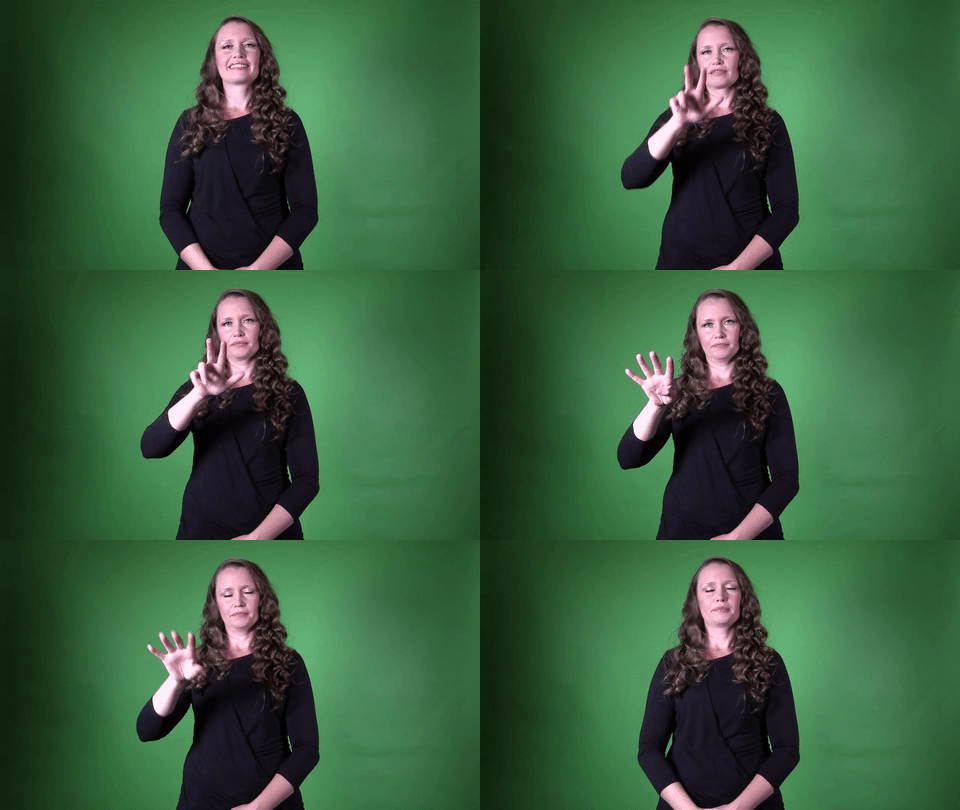
Sign for NUMBER THIRTY-FOUR in ASL | 🔢 ASL Dictionary

Definition: Refers to the number thirty-four

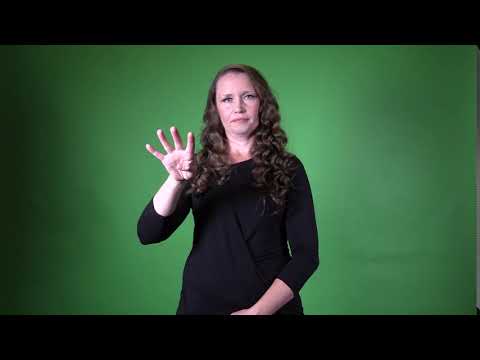
Sign for NUMBER THIRTY-FOUR in ASL 

YouTube player

Practice Activities:

Practicing the sign for number thirty-four in ASL starts with building comfort using the movement. Begin by signing the number repeatedly in front of a mirror to see the accuracy of your handshape and transitions. Try alternating between other double-digit numbers, such as thirty-three, thirty-five, and thirty-six, to improve fluency and differentiation.

Use the sign for number thirty-four in ASL in real-world contexts, such as mentioning it in addresses, prices, or measurements. For example, practice signing phrases like “I am thirty-four years old,” “The house number is thirty-four,” or “There are thirty-four students in the class.” Reinforcing this number in natural settings will help build retention.

Create a simple story or dialogue incorporating the sign for number thirty-four in ASL. For example, describe a scene such as a person buying thirty-four apples or celebrating their thirty-fourth birthday. This activity will encourage you to use the sign dynamically and in context rather than isolated practice.

Engage in a game with a partner where one person fingerspells a random two-digit number, and the other signs it back. This reinforces number recognition and strengthens recall of double-digit ASL numbers. You can also reverse the exercise by signing the number and having your partner say it aloud.

Try counting from one to forty, paying extra attention to transitioning smoothly into the sign for number thirty-four in ASL. If you struggle with fluidity, slow down and isolate the movement to refine your technique before speeding back up. The repetition of sequential numbers strengthens memory of numerical patterns.

Challenge yourself by signing numbers from a phone book, address list, or calendar, making sure to include the sign for number thirty-four in ASL. The more you integrate numbers into everyday learning, the quicker they become second nature.

Cultural Context:

American Sign Language is a rich and expressive visual language used by the Deaf community. The sign for number thirty-four in ASL follows a structured numerical pattern commonly used in signing numbers. Learning this sign helps improve number recognition when communicating in ASL.

Numbers are an important part of daily conversations in ASL. Knowing the sign for number thirty-four in ASL is useful for discussing addresses, ages, rankings, or quantities. Mastering number signs allows for fluent and efficient communication in various situations.

In ASL, numbers from 30 to 99 often follow a distinct pattern. The sign for number thirty-four in ASL combines the signs for three and four in a fluid motion. Practicing this number pattern helps signers become more comfortable with numerical expressions.

Many educational and professional settings require signing numbers accurately. The sign for number thirty-four in ASL may come up in classroom discussions, business transactions, or storytelling. Using the correct numerical handshape ensures clarity and reduces misunderstandings.

Deaf culture values precise and clear communication, making number fluency essential. The sign for number thirty-four in ASL is just one of many numbers used frequently in conversations. Learning numbers correctly enhances overall fluency and confidence in ASL.

Whether discussing prices, schedules, or statistics, knowing the sign for number thirty-four in ASL is beneficial. ASL users rely on numerical signs in everyday communication. Practicing these signs helps develop strong foundational skills in signing numbers.

Mastering numbers in ASL supports better engagement with the Deaf community. When signers accurately use the sign for number thirty-four in ASL, they demonstrate attention to detail and respect for the language. This builds better connections and promotes inclusive communication.

Using numbers correctly improves comprehension in ASL conversations. The sign for number thirty-four in ASL follows a logical structure that makes it easy to learn. Recognizing patterns in number signs can make signing more intuitive and efficient.

ASL classes often teach number signs early due to their practical use. The sign for number thirty-four in ASL is part of a broader system that learners benefit from practicing regularly. Developing fluency with numbers allows for more natural ASL communication.

Numbers are essential for personal and professional interactions. The sign for number thirty-four in ASL is commonly used in various contexts, from casual chats to formal settings. Expanding numerical vocabulary supports smoother and more effective ASL conversations.

Extended Definition:

The sign for number thirty-four in ASL is a combination of two number signs: three and four. To produce this sign, hold up your dominant hand in a three shape, then smoothly transition to a four. This movement should be fluid and natural to convey the number correctly.

When signing the number thirty-four in ASL, make sure your palm is facing outward. The fingers should be distinct and clearly extended to avoid confusion with other numbers. Practicing this transition will help improve accuracy and speed.

Numbers in ASL, including the sign for number thirty-four in ASL, are essential for everyday communication. They are used for counting, giving addresses, sharing phone numbers, and discussing quantities. Mastering number signs ensures clear and effective conversations in ASL.

Some numbers in ASL follow a unique signing pattern, and the sign for number thirty-four in ASL follows the standard movement for double-digit numbers. This means each digit is signed individually but in a continuous motion. Keeping the movement smooth prevents misinterpretation.

Handshape and palm orientation are crucial when performing the sign for number thirty-four in ASL. Small mistakes in finger positioning can change the meaning of the sign. Watching experienced signers and practicing regularly can help with accuracy.

ASL uses a combination of hand movements, facial expressions, and body language for communication. However, numbers like the sign for number thirty-four in ASL primarily rely on handshape and motion. Understanding number signs is a fundamental part of ASL fluency.

When learning the sign for number thirty-four in ASL, it’s helpful to practice alongside other numbers. This builds fluency and confidence in using ASL numbers naturally. Practicing number sequences also reinforces memory and improves recall speed.

ASL number signs, including the sign for number thirty-four in ASL, remain consistent across different regions. However, minor variations may exist depending on the signing community. Learning standardized number signs ensures effective communication with a broad audience.

Numbers are a crucial part of ASL education, and the sign for number thirty-four in ASL is no exception. Many ASL learners focus on mastering number sequences early on to build a strong foundation. Practicing with a mirror or a language partner can enhance learning.

Mastering the sign for number thirty-four in ASL contributes to overall ASL fluency. It allows signers to convey numbers quickly and accurately in conversations. Regular practice and real-world usage will reinforce memory and improve signing skills.

Synonyms: thirty-four, number thirty-four, number 34, the number 34, the number thirty-four

Educational resources: Find related learning materials in our course bank!

Want more? Check out some of our popular learning activities on the homepage!

Need to look up a sign? Use our highly rated dictionary: https://aslinteractive.com/best-asl-dictionary/

Follow us on tiktok: https://www.tiktok.com/@aslinteractive. More social media links at the bottom of this page!

Long-tail Keywords: what is the sign for number thirty-four in ASL, how do you sign number thirty-four in ASL, number thirty-four in American Sign Language

Categories: Numbers – Basics, Numbers 31-40, cardinal numbers

tags: Numbers 31-40, Numbers, Math, Educational, Language Learning

Parameters

*Handshape*:

The sign for NUMBER THIRTY-FOUR in ASL uses a shifting handshape, transitioning between the numbers three and four. The dominant hand begins with the number three handshape—thumb, index, and middle fingers extended while the ring and pinky fingers are closed. It then smoothly transitions to the number four handshape by extending the ring finger while keeping the thumb tucked.

This fluid movement makes the sign for NUMBER THIRTY-FOUR in ASL visually distinct. The motion is typically performed in a small, controlled space in front of the signer’s body. Keeping the transitions smooth ensures clarity, allowing the numbers to be easily recognized.

*Palm Orientation*:

The sign for NUMBER THIRTY-FOUR in ASL starts with the palm facing outward. The fingertips of the dominant hand form the number “3” before smoothly transitioning into the number “4” without breaking movement. Throughout the motion, the hand maintains a neutral position, ensuring clarity when signing. Keeping the palm facing forward helps distinguish the numbers properly for visual clarity in ASL.

*Location*:

The sign for number thirty-four in ASL is produced in the neutral signing space in front of the body. The hand moves slightly as the numbers transition from three to four. Maintain a comfortable distance between the chest and the hand to ensure clarity. Since ASL numbers are visually distinct, keeping the palm orientation correct is important for accurate communication. Signs should be positioned centrally to remain within the natural line of sight.

*Movement*:

To produce the sign for number thirty-four in ASL, begin with the hand in a “3” shape, with the index, middle, and thumb extended while the ring and pinky fingers are curled down. Quickly transition into the “4” shape by extending the ring finger while keeping the three other fingers raised. The movement is fluid, with a slight bounce as the hand shifts from “3” to “4,” maintaining palm orientation forward. This motion smoothly conveys the numerical sequence.

*Non-Manual Signals*:

Facial expression remains neutral or slightly focused when signing the sign for number thirty-four in ASL. Eyebrows may be slightly raised if asking a question about the number. Mouth position is generally relaxed, though slight mouthing of “thirty-four” can help clarify the number. Eye gaze stays natural and directed toward the conversation partner or the indicated reference. If emphasizing or confirming, a slight nod or head tilt may be used.

*Prosody, Dominant/Non-Dominant Hand*:

The sign for number thirty-four in ASL uses the dominant hand only. Begin with the hand in the “3” handshape, with the palm facing outward . Quickly transition to the “4” handshape by extending the ring finger while keeping the other fingers in position. This movement should be fluid and natural, ensuring clarity while signing the number. Keep the motion smooth and distinct to make the transition between digits clear.

Tips for Beginners:

When learning the sign for NUMBER THIRTY-FOUR in ASL, it’s important to practice fluid motion between the two numbers. The sign requires transitioning from “3” to “4” in one smooth movement. Make sure your fingers shift naturally without stiff movements to maintain clarity and ease of understanding.

A common mistake beginners make when signing the sign for NUMBER THIRTY-FOUR in ASL is tensing their fingers too much. Your hand should stay relaxed to make the transition smoother. Also, ensure that the palm orientation remains forward to maintain visibility for the person watching.

Finger positioning is key to accuracy. The number “3” in ASL is made with the thumb, index, and middle fingers extended, while the number “4” extends all fingers except the thumb. Practicing in front of a mirror or with a partner can help reinforce proper finger placement and movement.

It’s helpful to pay attention to hand placement. The sign for NUMBER THIRTY-FOUR in ASL should be performed at chest level with a steady, controlled motion. Avoid bouncing or jerky transitions between numbers, as this can make the sign unclear.

Watching fluent signers and mimicking their movements can improve your technique. Try slowing down the motion at first and gradually increasing your speed as you gain confidence. Repetition is essential for developing muscle memory and ensuring your fingers adjust smoothly between the numbers.

If you’re struggling with the transitions, break them down into individual numbers first, then practice combining them. This method allows you to focus on correct placement before speeding up. Over time, muscle coordination will improve, and the sign will feel more natural.

With consistency and practice, signing NUMBER THIRTY-FOUR in ASL will become second nature. Stay patient, watch experienced signers for reference, and use practice techniques to refine your execution.

Connections to Other topics:

The sign for number thirty-four in ASL connects to the broader number system in sign language, where each number has a distinct handshape and movement pattern. Numbers in ASL are foundational for various functions including age, dates, money, and quantity-related signs. The unique transitions in the handshape help reinforce finger dexterity and muscle memory, which are essential when signing other numerical concepts.

Ordinal numbers, such as thirty-fourth, modify the base sign for number thirty-four in ASL by adding a slight twist or movement to show ranking or sequence. This distinction is needed for indicating things like placement in a competition or steps in a process. Additionally, number incorporation in ASL allows number signs to combine directly with certain concepts, such as thirty-four dollars or thirty-four years old, to convey more complex numerical meanings efficiently.

The use of number signs extends to classifiers that relate to quantities, sizes, or arrangements. For example, some classifiers represent a group of thirty-four items by incorporating the numerical sign alongside a classifier shape that describes the objects. The cognitive skill of quickly shifting between numerical signs and classifiers is a valuable ASL skill that assists with rich visual descriptions.

Number signs also tie into math-related terms like addition, subtraction, and percentages. Signing arithmetic equations with the sign for number thirty-four in ASL helps enforce fluency in expressing mathematical concepts. Furthermore, signing numbers accurately plays a crucial role in relaying phone numbers, addresses, and statistics, which are essential in both daily conversations and professional contexts.

Summary:

The sign for number thirty-four in ASL follows a structured, two-digit movement that visually represents the digits 3 and 4. It begins with the dominant hand forming the number 3, using the index, middle, and thumb extended while the ring and pinky fingers remain down. The hand then transitions smoothly into the number 4, extending all fingers except the thumb.

A fluid motion connects both digits, with minimal hand adjustment to maintain clarity. The movement maintains a neutral space in front of the signer, avoiding unnecessary shifts in hand placement. This transition from 3 to 4 should remain smooth, emphasizing the numerical sequence.

American Sign Language often requires clarity when signing numbers, especially when communicating sequences. For the sign for number thirty-four in ASL, the signer must use precision in finger placement. Numbers with similar formations, such as thirty-three or thirty-five, could cause misunderstandings without careful differentiation.

This sign emphasizes the unique structure of ASL numbering, where double-digit formations are articulated distinctly. Unlike spoken languages, where intonation may hint at numerical significance, ASL depends solely on manual configurations. This makes handshape and motion crucial for conveying accurate numerical information.

Context is important when using the sign for number thirty-four in ASL, particularly in financial, statistical, or time-related discussions. Presenting numbers clearly eliminates ambiguity in conversations about dates, prices, addresses, or ages. Within these contexts, consistency in execution ensures comprehension.

Numbers in ASL follow certain visual and grammatical rules that enhance effectiveness. For instance, numbers related to money or counting may modify movement patterns slightly for clarity. The sign for number thirty-four in ASL aligns with this principle, keeping the transition seamless to maintain efficient communication.

Linguistically, ASL numbers provide insight into signed language structure, demonstrating how visual representation influences numerical comprehension. Instead of relying on phonetics, ASL numbers function expressively through shapes and seamless transitions. This makes learning numerical signs a key element of fluency.

Culturally, numbers are an integral aspect of ASL conversation, appearing in everyday discussions. Deaf individuals often rely entirely on numerical handshapes for age, addresses, or event planning. Mastery of transitions like the sign for number thirty-four in ASL is essential for fluency.

Deaf education often includes structured lessons on numerical signs, ensuring students grasp the importance of clarity when presenting numbers in ASL. Learning these foundations early aids in building communication skills within the Deaf community. Signing numbers precisely helps eliminate miscommunication in academic and professional settings.

Applied linguistics examines how visual-spatial languages like ASL structure numerical representations differently from spoken languages. Numerical classification in ASL follows a systematic approach, built upon handshape patterns. The sign for number thirty-four in ASL follows logical sequencing principles that facilitate understanding within signed communication.

ASL’s numerical system reflects its inherent efficiency, utilizing defined movements to present values quickly. Compared to spoken language, where numbers can be elongated verbally, ASL’s structure prioritizes concise visual representation. This reinforces why mastering number transitions is crucial in ASL fluency.

In academic settings, the sign for number thirty-four in ASL may appear in mathematics classes, lectures, or research presentations. Deaf students learning advanced math concepts must articulate numerical values clearly for instructors and classmates. This reinforces why signing precise numbers is critical in educational environments.

Within interpreted environments, sign language interpreters must ensure numerical signs are delivered accurately. Misrepresenting numbers can lead to significant miscommunications, particularly in financial statements, medical information, or contractual agreements. The sign for number thirty-four in ASL is just one component of a broader numerical system essential for accurate interpreting.

Comparing numerical systems in different signed languages reveals variations in number formation. While ASL has a distinct number-signing system, other signed languages may use different handshapes or movements. Understanding these differences is important for multilingual signers working across linguistic boundaries.

Some historical ASL number formations have evolved over time to increase efficiency. Older versions of number signs sometimes included extra movements or different palm orientations. The modern sign for number thirty-four in ASL represents a streamlined, standardized approach that enhances communication speed.

Technology has influenced how numbers are used in ASL, particularly with the rise of video communication. Video relay services (VRS) and online platforms emphasize the need for clear numerical articulation. This means that the sign for number thirty-four in ASL must be performed without excessive movement to ensure clarity on screens.

Sports and gaming environments frequently use numerical signs to communicate scores, rankings, and statistics. Athletes and coaches who sign rely on fast, clear numerical handshapes to discuss plays and strategies. The sign for number thirty-four in ASL can appear in jersey numbers, statistics, or game planning.

Legal and financial discussions often require signers to distinctly express numerical values. When sharing financial figures, business transactions, or legal details, clarity in signing numbers is

Want more? Check out some of our popular learning activities!

ASL Interactive Resources

ASLInteractive YouTube Channel

Follow us on tiktok: @aslinteractive.com

Follow us on Instagram: aslinteractive

Facebook page: aslinteractive

Facebook group: aslinteractive

LInkedIn: ASL Interactive LLC

Twitter: @ASL_interactive

*Some information on this page is AI-generated. AI can make mistakes. Please check the information.

Sign for THIRTY-FOUR in ASL, Sign for NUMBER THIRTY-FOUR in ASL 

Responses