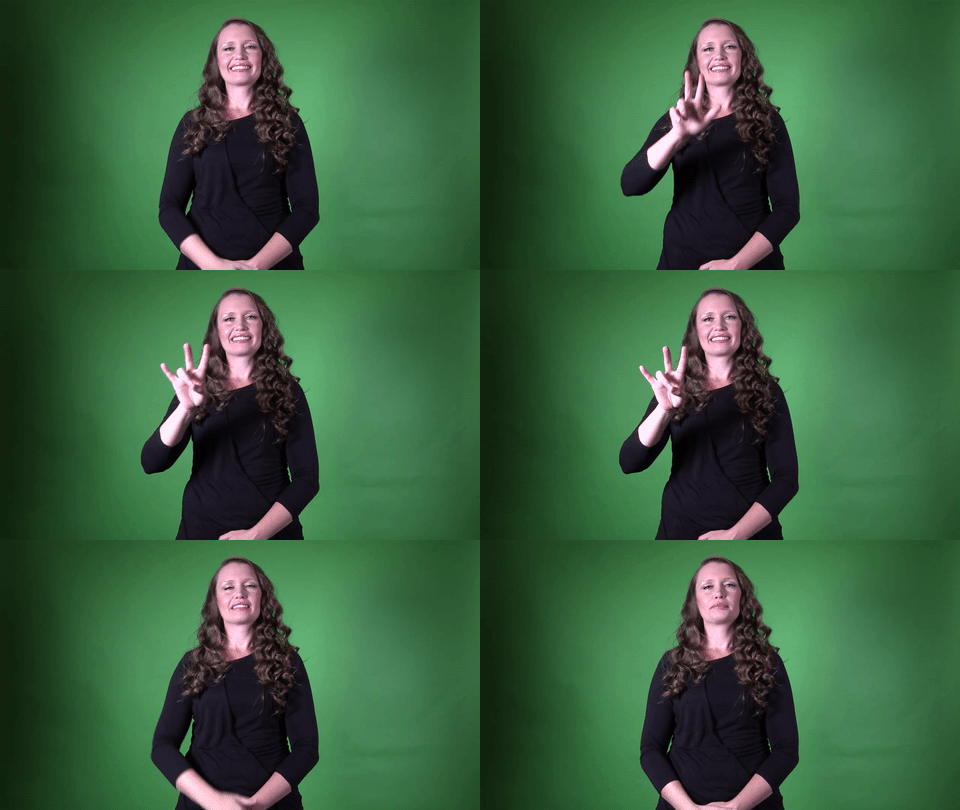
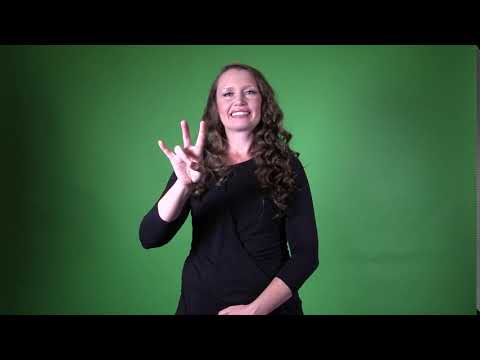
Definition: Refers to the number thirty-seven
Sign for NUMBER THIRTY-SEVEN in ASL

Practice Activities:
Practicing the sign for number thirty-seven in ASL can help with number fluency and accuracy in multiple contexts. Begin by signing it slowly in front of a mirror, paying attention to the handshape and transitions between the digits. Try repeating it five times in a row, gradually increasing your speed while maintaining clarity.
To build fluency, mix the sign for number thirty-seven in ASL with other numbers. Sign a sequence of numbers such as thirty-five, thirty-six, thirty-seven, and thirty-eight. Then, sign random numbers and challenge yourself to sign them as smoothly as possible. You can also practice by counting backward from forty to thirty.
Use real-world applications for deeper learning. Try signing real-life numbers that include thirty-seven, such as prices ($37), years (1937, 2037), or addresses. Write down different numbers ending in thirty-seven and sign them correctly. Ask a partner to sign a number, and you respond by signing whether it is higher or lower than thirty-seven.
Example sentences to practice include: My jacket costs thirty-seven dollars. I’ll meet you in room thirty-seven. That book is on page thirty-seven. Use these sentences to practice incorporating the sign for number thirty-seven in ASL into conversation.
For storytelling, describe an imaginary scenario where the number appears, such as a race where someone finishes in thirty-seventh place or a person celebrating their thirty-seventh birthday. Try explaining these scenarios while signing, reinforcing comprehension and accuracy.
Partner activities can include a number-guessing game where one person signs a number and the other must guess if it’s before or after thirty-seven. Another fun challenge is finger-spelling a price list with thirty-seven in it while a partner signs back the total.
Cultural Context:
The sign for number thirty-seven in ASL follows standard number patterns used in American Sign Language. ASL numbers from thirty to ninety typically use a combination of handshapes blended smoothly into each other. The movement and shape of the sign for number thirty-seven in ASL reflect this natural progression.
Numbers play a significant role in ASL communication, from everyday counting to phone numbers and addresses. The sign for number thirty-seven in ASL is used in many daily interactions, including discussing age, prices, and measurements. Knowing how to sign numbers fluently can enhance overall signing skills and comprehension.
ASL follows a logical system for numbers, making it easy to recognize patterns. The sign for number thirty-seven in ASL builds upon the same structure used for other two-digit numbers. This consistency in ASL helps learners master numbers quickly and use them in real conversations.
Number signs in ASL are often accompanied by facial expressions and context clues to add clarity. When signing the sign for number thirty-seven in ASL, positioning and motion are essential for accuracy. Small mistakes in finger movement can change the intended number, highlighting the importance of precision.
ASL users often use numbers for storytelling, sports scores, and financial transactions. The sign for number thirty-seven in ASL can come up in historical dates, countdowns, or statistics. Fluency in number signs supports clear and effective communication in a variety of situations.
Learning ASL numbers requires practice and repetition to ensure accuracy. The sign for number thirty-seven in ASL, like other number signs, follows a visual and intuitive pattern. Becoming comfortable with ASL numbers helps signers communicate efficiently in both conversational and professional settings.
Numbers in ASL are also context-dependent, meaning the same number sign can refer to different things. The sign for number thirty-seven in ASL could refer to a sports jersey number, room number, or even a time reference. Understanding context ensures correct interpretation and usage in signing.
ASL numbers are frequently used in classrooms, business transactions, and storytelling. The sign for number thirty-seven in ASL is one of many numbers signers should master to improve fluency. Developing confidence in signing numbers enhances overall ASL proficiency and communication skills.
Mastering the sign for number thirty-seven in ASL contributes to greater signing fluency. Paying attention to details like handshape, movement, and positioning improves clarity. Learning numbers in ASL strengthens overall communication and builds confidence in signing conversations.
Extended Definition:
The sign for number thirty-seven in ASL is a combination of the handshapes for three and seven. It follows the standard number-signing pattern used in American Sign Language, where each number from thirty to ninety is formed using distinct movements. Mastering the sign for number thirty-seven in ASL is essential for clear communication when discussing numbers in various contexts.
When signing the number thirty-seven in ASL, start with the handshape for three, then transition smoothly into the handshape for seven. This movement should be fluid and natural, as abrupt changes can affect the clarity of the sign. Practicing the sign for number thirty-seven in ASL in front of a mirror can help ensure accuracy.
Numbers are frequently used in ASL for dates, quantities, and measurements. The sign for number thirty-seven in ASL is useful in conversations involving prices, addresses, and time. Learning how to sign numbers correctly can improve fluency and confidence in ASL communication.
In ASL, number signs are often influenced by regional variations or personal signing styles. The sign for number thirty-seven in ASL may have slight modifications depending on the signer’s background or preference. However, the fundamental movement remains consistent to ensure comprehension among ASL users.
To reinforce learning, it helps to practice signing numbers in sequences. Counting from thirty to forty while focusing on the sign for number thirty-seven in ASL can strengthen muscle memory. Repetition and real-world usage are key to mastering ASL numbers effectively.
When fingerspelling or signing numbers, hand positioning plays a crucial role in clarity. Keeping fingers steady and well-formed while signing the number thirty-seven in ASL avoids confusion with similar numbers. Proper handshapes ensure that numbers are easily recognized without misinterpretation.
Using ASL numbers in everyday situations helps with retention. The sign for number thirty-seven in ASL may come up when discussing phone numbers, math problems, or statistics. Practicing number signs regularly builds confidence when engaging in ASL conversations.
Children and beginners may struggle with fluid transitions between numbers at first. Breaking down the movement of the sign for number thirty-seven in ASL into two clear steps can make it easier to learn. With time and practice, signing this number smoothly will become second nature.
Watching videos of fluent signers demonstrating numbers is a valuable learning tool. Observing how others sign the number thirty-seven in ASL helps refine technique and ensures proper form. Mimicking skilled signers can improve
Synonyms: thirty-seven, number thirty-seven, number 37, the number 37, the number thirty-seven
Educational resources: Find related learning materials in our course bank!
Want more? Check out some of our popular learning activities on the homepage!
Need to look up a sign? Use our highly rated dictionary: https://aslinteractive.com/best-asl-dictionary/
Follow us on tiktok: https://www.tiktok.com/@aslinteractive. More social media links at the bottom of this page!
Long-tail Keywords: what is the sign for number thirty-seven in ASL, how do you sign number thirty-seven in ASL, learn the ASL sign for number thirty-seven
Categories: Numbers – Basics, Numbers 31-40, cardinal numbers
tags: Numbers 31-40, Numbers, Math, Educational, Language Learning
Parameters
*Handshape*:
The sign for NUMBER THIRTY-SEVEN in ASL uses the dominant hand with an alternating movement. The hand begins in the “3” handshape with the index, middle, and thumb extended. Then, it transitions smoothly to the “7” handshape, where the thumb touches the ring finger. This fluid motion clearly represents the number sequence. The sign for NUMBER THIRTY-SEVEN in ASL maintains a steady rhythm to ensure clarity in communication.
*Palm Orientation*:
The palm orientation for the sign for NUMBER THIRTY-SEVEN in ASL faces outward, with the fingers slightly curved. The movement transitions between the “3” and “7” handshapes, where the thumb, index, and middle fingers form “3” before shifting to “7” with the thumb touching the ring finger. The palm remains forward throughout the motion, ensuring clear visibility of the changing numbers. This maintains accuracy and clarity when signing the sign for NUMBER THIRTY-SEVEN in ASL.
*Location*:
The sign for number thirty-seven in ASL is produced in the neutral space in front of the body, typically at chest level. The dominant hand forms the number three and transitions smoothly into the number seven. This movement occurs in a fluid, natural motion without exaggerated movement.
Keeping the hand steady and fingers clear ensures clarity when signing the number. The sign remains in front of the body, using the standard number-signing location for easy visibility.
*Movement*:
To produce the sign for number thirty-seven in ASL, start with the number three handshape, where the index, middle, and thumb are extended while the ring and pinky fingers are curled down. Transition smoothly to the number seven by bringing the middle finger down while the ring finger lifts to touch the thumb. The motion should be fluid, forming a single transition between the two numbers without breaking the flow.
*Non-Manual Signals*:
When signing the sign for NUMBER THIRTY-SEVEN in ASL, maintain a neutral or slightly focused facial expression to ensure clarity. Eyebrows should remain naturally relaxed, as this is a straightforward numerical concept. If emphasizing or clarifying, slightly raise your eyebrows and lean forward.
For instructional or questioning contexts, you may shift your head slightly or widen your eyes to engage the viewer. The sign for NUMBER THIRTY-SEVEN in ASL does not typically require exaggerated mouth movements, but mouthing “thirty-seven” subtly can enhance understanding.
*Prosody, Dominant/Non-Dominant Hand*:
The sign for NUMBER THIRTY-SEVEN in ASL uses the dominant hand, forming the number “3” (index, middle, and thumb extended) and smoothly transitioning into the number “7” (ring and thumb touching). The movement is fluid, with the hand slightly bouncing to distinguish each digit. The non-dominant hand is not used. Facial expressions remain neutral unless emphasizing a specific context. This sign is commonly used in counting, addresses, and numerical references.
Tips for Beginners:
When learning the sign for NUMBER THIRTY-SEVEN in ASL, focus on smooth transitions between the digits. This sign is executed using a continuous motion, starting with the number three and smoothly transitioning to the number seven. Keep your fingers relaxed and avoid stiff movements to ensure fluidity.
A common mistake when signing NUMBER THIRTY-SEVEN in ASL is separating the numbers too much. Instead of signing “three” and then pausing before “seven,” the movement should be seamless. Practicing in front of a mirror or recording yourself can help identify any hesitation or abrupt changes in the movement.
Hand positioning is essential for clarity when using NUMBER THIRTY-SEVEN in ASL. Make sure your palm orientation is correct—facing outward toward the recipient. If you accidentally turn your palm inward or slant it too much, it may confuse the viewer or make the sign appear like a different number.
Finger flexibility plays a big role in executing the sign for NUMBER THIRTY-SEVEN in ASL correctly. If your fingers feel stiff, try warming up by stretching them or gently shaking your hands loose before signing. This will help improve fluidity and reduce unwanted tension.
Finally, consistent practice is key. The more you practice NUMBER THIRTY-SEVEN in ASL, the more natural it will feel. Try incorporating it into everyday practice by signing other numbers in sequence to build proficiency. Engaging with fluent signers or watching videos will help reinforce accurate movements and improve your confidence over time.
Connections to Other topics:
The sign for number thirty-seven in ASL fits into the broader category of number signs, which follow consistent handshape and movement patterns. ASL uses a structured numbering system where certain numbers share common movements, making it easier to recognize patterns. Numbers like thirty-seven connect to others in the same range, like thirty-six and thirty-eight, which use a flowing motion from one digit to the next.
Number signs in ASL are frequently incorporated into larger sentences, especially when discussing dates, prices, or quantities. The sign for number thirty-seven in ASL may appear in contexts like stating an age, giving an address, or listing a numbered item. This makes mastery of sequential number movements important for improving fluency and clarity in signing.
Ordinal numbers in ASL build on basic number signs by adding movement to indicate sequence or ranking. For example, if using number thirty-seven in a sequence, a signer might incorporate a twisting motion to signify “thirty-seventh” in a list. This is useful in ranking, such as identifying a race placement or listing the 37th item in a series.
Numbers also commonly appear in ASL classifiers, which describe objects and movements. A signer might reference number thirty-seven in ASL when discussing specific details about measurements or spatial arrangements. These classifiers allow numbers to be integrated into descriptions of real-world objects and actions.
Many number signs in ASL are modified to blend smoothly with surrounding words in a conversation. The ability to fluidly transition between numbers like thirty-seven and other signs enhances natural rhythm in ASL. Practicing these numerical transitions improves overall communication efficiency and prevents choppy or unclear signing.
Summary:
The sign for number thirty-seven in ASL is a combination of numerical handshapes that transition smoothly. It starts with the palm facing forward in the “3” handshape, with the index, middle, and thumb extended while the ring and pinky fingers remain folded. The transition to the “7” handshape happens by closing the middle and thumb while extending the ring finger, maintaining fluidity in the movement.
This sign is part of a broader numerical system in ASL where numbers above thirty generally incorporate a shifting component. The transition in the sign for number thirty-seven in ASL mimics the natural movement of the hand in a controlled and efficient manner. This movement is distinct from numbers signed with a single static handshape, such as those below thirty, making the variation crucial to ASL fluency.
Number signs in ASL have a grammatical role in contexts like age, money, dates, and counting. The sign for number thirty-seven in ASL follows standard rules that ensure numbers are conveyed clearly and efficiently. This sign should be executed with an appropriate rhythm so its sequence is easily recognized by fluent ASL users.
The numerical sequencing involved in this sign is based on ASL’s unique numerical morphology. Each number retains its individual meaning, but when signed together, they create a seamless expression that ASL users immediately recognize. The sign for number thirty-seven in ASL reflects ASL’s preference for visual logic and efficiency in number signing.
Numbers above thirty often require a distinct wrist movement or finger positioning to maintain clarity. The number thirty-seven uses a flicking or shifting motion to differentiate it from other numbers like thirty-six or thirty-eight. This helps ensure accuracy in ASL communication, as a misplacement of fingers could easily lead to confusion with similar-looking numbers.
The frequency of the sign for number thirty-seven in ASL depends on the context of use. It may appear in age references, sports statistics, numerical lists, or specific measurements. When signing this number in a conversation, facial expressions or specific directional movements may provide additional semantic or grammatical information.
The cultural significance of numbers in ASL varies depending on usage. While the sign for number thirty-seven in ASL might not have an inherent cultural meaning, numbers often hold significance in historical events, sports teams, or symbolic traditions. In Deaf community discussions, precision in numerical representation is crucial for conveying accurate information.
ASL numbers follow structured linguistic patterns that differ from English. Unlike spoken languages that rely on intonation patterns for numerical clarity, ASL modifies handshape, movement, and palm orientation. The sign for number thirty-seven in ASL exemplifies how ASL conveys information efficiently within a visual-spatial modality rather than auditory progression.
Related signs include numbers within the thirty range, such as thirty-six and thirty-eight, which share similar phonological elements. The distinguishing factor among them is the sequence of finger positions and hand transitions. Recognizing these slight variations ensures fluency and prevents misinterpretations when signing rapidly in a conversation.
Linguistically, the transition between a dual-digit number in ASL demonstrates how ASL naturally integrates numerical morphology. The sign for number thirty-seven in ASL showcases the importance of smooth transitions in ASL number signing. This reinforces an applied linguistic understanding of how number formation in ASL operates efficiently within a manual-visual language structure.
When teaching ASL number signs, clear articulation of each digit is important. Beginners may find the transition between three and seven challenging due to finger dexterity requirements. The sign for number thirty-seven in ASL serves as an example of ASL’s detailed numerical system that requires both accuracy and fluidity.
In applied linguistics, ASL’s numerical system is studied for its cognitive impact on visual processing. The sign for number thirty-seven in ASL contributes to research on how signers process multi-digit numbers differently than spoken language users. This insight furthers the understanding of bilingualism between ASL and English, especially in mathematical and quantitative contexts.
Numerical representation in ASL has historical roots, evolving as more standardized number signs were developed for clarity. The sign for number thirty-seven in ASL follows the numbering conventions that early Deaf educators helped establish in schools for the Deaf. These standardizations allowed for a more uniform approach to teaching numbers across different regions in the United States.
Technology has influenced the way ASL number signs are learned and shared. Online resources and video tutorials help reinforce the correct execution of the sign for number thirty-seven in ASL. This ensures consistency in learning and prevents misinterpretations due to regional variations in signing styles.
Broader themes regarding numerical representation in ASL include its application in mathematics, finance, and statistical representation within the Deaf community. The sign for number thirty-seven in ASL contributes to a larger framework of numerical fluency that enables effective communication in educational and professional settings. Ensuring accuracy in number signs supports better information exchange within the ASL-using population.
The
Want more? Check out some of our popular learning activities!
ASL Interactive Resources
ASLInteractive YouTube Channel
Follow us on tiktok: @aslinteractive.com
Follow us on Instagram: aslinteractive
Facebook page: aslinteractive
Facebook group: aslinteractive
LInkedIn: ASL Interactive LLC
Twitter: @ASL_interactive
*Some information on this page is AI-generated. AI can make mistakes. Please check the information.


Responses