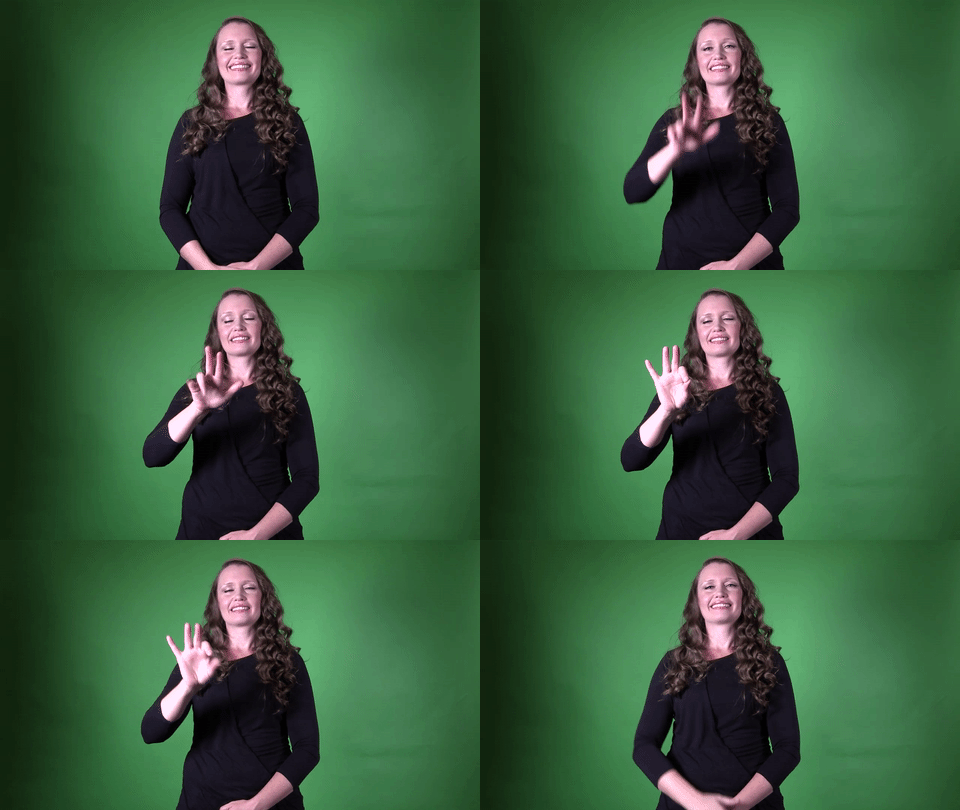
Definition: The number thirty-nine
Sign for THIRTY-NINE in ASL

Practice Activities:
Practicing the sign for thirty-nine in ASL can be done through repetition and interactive activities. Begin by signing the number multiple times in front of a mirror to ensure accuracy in handshape and motion. Say the number aloud while signing to reinforce the connection between the visual and auditory representation.
Challenge yourself by counting from thirty to forty while emphasizing the sign for thirty-nine in ASL. Try skipping numbers and randomly inserting thirty-nine to improve speed and accuracy. Another technique is to sign the number at different speeds to build fluidity in movement.
Incorporate the sign into real-life examples by saying your age or someone else’s using thirty-nine. For example, sign My father is thirty-nine years old. Practice structuring sentences with topics like math problems, countdowns, or discussing numbers in everyday situations.
A storytelling prompt could involve an imaginary scenario where you meet a person celebrating their thirty-ninth birthday. Describe the event, include food, decorations, and a timeline for the party using numbers in ASL. This helps with retention and application in narrative form.
For partner activities, work with a friend to quiz each other by randomly signing numbers and having the other person identify them. Compete to see who can correctly recognize and sign the most numbers in a given time. Another variation is asking one person to fingerspell a number, and the other must sign it back.
To reinforce memory, observe phone numbers, addresses, or license plates that include thirty-nine. Whenever you see this number in real life, pause and sign it. The more frequently you practice, the more comfortable you will become in using the sign naturally in conversations.
Cultural Context:
The sign for THIRTY-NINE in ASL is an essential part of numbers in American Sign Language. Numbers are widely used in daily interactions, from telling time to sharing ages and discussing prices. Mastering the sign for THIRTY-NINE in ASL helps improve fluency and comprehension in conversations.
In ASL, numbers follow specific patterns that make them easy to learn and remember. The sign for THIRTY-NINE in ASL follows the counting sequence used in cardinal numbers. Understanding these patterns is key to using ASL numbers naturally and efficiently.
Deaf culture values clear and expressive communication, making numbers an important aspect of signing. The sign for THIRTY-NINE in ASL reflects the linguistic structure of American Sign Language while maintaining fluidity. Signing numbers smoothly improves overall communication skills in ASL.
When using ASL in real-life situations, numbers appear frequently in discussions about dates, money, and measurements. The sign for THIRTY-NINE in ASL helps signers effectively convey specific quantities. Practicing number signs ensures accuracy and confidence in everyday conversations.
The correct use of ASL numbers, including the sign for THIRTY-NINE in ASL, enhances comprehension between signers. Consistency in number signs allows smooth communication without confusion. By learning proper ASL number representation, signers strengthen their signing abilities and understanding of ASL structure.
fluency in numbers, including the sign for THIRTY-NINE in ASL, contributes to the overall development of ASL proficiency. Whether discussing statistics, sharing personal details, or talking about events, numbers play a crucial role. Understanding number signs helps create seamless conversations in ASL.
Practicing the sign for THIRTY-NINE in ASL helps with retention and quick recall of numbers. Exposure to numbers in different contexts encourages confidence in signing numerical information. Signers frequently use numbers in social, professional, and educational settings, making them a vital part of ASL.
Using numbers accurately in ASL is crucial for effective communication in Deaf and signing communities. The sign for THIRTY-NINE in ASL, like other numbers, promotes mutual understanding among signers. Developing precision in ASL number signs enhances overall communication clarity.
Signing fluently requires a solid grasp of numbers and their patterns. The sign for THIRTY-NINE in ASL is part of a structured numerical system that follows ASL grammar. Learning and practicing these signs strengthens signing skills and builds
Extended Definition:
The sign for thirty-nine in ASL is a combination of two numbers, thirty and nine, blended into a single fluid motion. This number is formed with the dominant hand using a variation of the standard ASL number system. Knowing how to sign numbers correctly is crucial for conversations, math, dates, and addresses in ASL.
To sign thirty-nine in ASL, start by signing thirty with your dominant hand, forming a “3” and then a “0” with your fingers. Then, transition smoothly into nine by curling your index finger while the other fingers remain extended. This movement should be clear and fluid to ensure accurate communication.
Numbers play an important role in American Sign Language, helping to express age, time, money, and quantity effectively. The sign for thirty-nine in ASL follows the logical pattern used in numbering, making it easy for those familiar with ASL numbers to understand. Practicing regularly will help improve fluency and speed in signing numbers.
When signing thirty-nine in ASL, maintaining proper hand positioning and fluid motion ensures clarity. Facial expressions and context also play a role in making your signs more understandable. If signing in conversation, be aware of the other person’s signing speed to maintain smooth communication.
The sign for thirty-nine in ASL is commonly used in everyday conversations, whether discussing ages, prices, or statistics. Signing numbers correctly helps avoid misunderstandings and ensures accurate exchanges of information. If you’re learning numbers in ASL, consistent practice will help reinforce the correct signs and transitions.
American Sign Language numbers follow a structured system that makes counting easy once you understand the patterns. The sign for thirty-nine in ASL follows this numerical pattern, simplifying the process of signing and interpreting numbers. Learning these number signs can significantly enhance communication skills in ASL.
In ASL, numbers like thirty-nine are used in various practical situations, including telling time, stating addresses, and discussing money. Mastering numerical signs allows for smoother conversations and effortless exchanges of information. Becoming comfortable with numbers in ASL takes time, but with practice, gestures will become second nature.
When learning ASL numbers, practicing in front of a mirror or with a partner can help reinforce correct hand shapes and transitions. The sign for thirty-nine in ASL will become more natural as you refine your movements. Watching fluent ASL signers can also provide useful insights into proper technique and rhythm.
If you are new to ASL or still learning numbers, start by practicing frequently used
Synonyms: thirty-nine, number thirty-nine, number 39, the number 39, the number thirty-nine
Educational resources: Find related learning materials in our course bank!
Want more? Check out some of our popular learning activities on the homepage!
Need to look up a sign? Use our highly rated dictionary: https://aslinteractive.com/best-asl-dictionary/
Follow us on tiktok: https://www.tiktok.com/@aslinteractive. More social media links at the bottom of this page!
Long-tail Keywords: what is the sign for thirty-nine in ASL, how do you sign thirty-nine in ASL, thirty-nine in American Sign Language
Categories: Numbers – Basics, Numbers 31-40, cardinal numbers
tags: Numbers 31-40, Numbers, Math, Educational, Language Learning
Parameters
*Handshape*:
The sign for THIRTY-NINE in ASL uses a single hand, starting with the number “3” handshape—index, middle, and thumb extended while the ring and pinky fingers are curled in. The hand then transitions smoothly into the number “9” handshape, where the index finger and thumb form a small circle while the other fingers remain extended. This movement keeps the sign fluid and visually distinct. The sign for THIRTY-NINE in ASL is performed with a slight wrist motion, maintaining clarity in the transition.
*Palm Orientation*:
The sign for THIRTY-NINE in ASL begins with the palm facing forward in a neutral position. The number three is formed with the index, middle, and thumb extended, while the ring and pinky fingers are folded down. As the hand transitions to nine, the index and middle fingers fold down while the thumb remains extended, and the ring finger and pinky form a nine handshape. Throughout the movement, the palm remains facing outward. ✋
*Location*:
The sign for THIRTY-NINE in ASL is located in the neutral signing space in front of the body. The dominant hand begins in the shape of the number three and smoothly transitions into a nine. This movement occurs at chest level, ensuring clear visibility. Keeping the hand steady and controlled helps maintain accuracy and clarity in conveying the sign for THIRTY-NINE in ASL.
*Movement*:
To produce the sign for thirty-nine in ASL, start with the number three handshape, with the index, middle, and thumb extended while the ring and pinky fingers are curled. Transition smoothly into the number nine by folding down the middle finger while keeping the index and thumb in a circle. The motion should be fluid, with a slight change in handshape rather than a separate movement. Maintain a relaxed posture and ensure clarity in the transition between numbers.
*Non-Manual Signals*:
When using the sign for thirty-nine in ASL, maintain a neutral or slightly focused facial expression. Your eyebrows should remain relaxed unless using the number emphatically, in which case a slight upward or downward movement may occur. Keep your mouth neutral or slightly pursed to show precision, especially when signing multiple numbers in a sequence. Ensure your head remains steady, avoiding excessive tilting, to maintain clarity in signing.
*Prosody, Dominant/Non-Dominant Hand*:
The sign for THIRTY-NINE in ASL uses the dominant hand to form the number “3” with the index, middle, and thumb extended, while the ring and pinky fingers are curled in. The hand transitions smoothly into the number “9” by folding the index and middle fingers down while keeping the thumb extended. This movement is fluid, maintaining a slight bounce to show the numerical shift clearly.
Tips for Beginners:
When learning the sign for THIRTY-NINE in ASL, focus on keeping your hand relaxed while transitioning between the two number signs. The movement should be fluid and controlled to maintain clarity. Start by forming the number three with your dominant hand, then smoothly transition into the number nine without pausing in between.
One common mistake is tensing your hand too much, which can make the transition between the numbers look jerky. Make sure to practice moving your fingers smoothly to maintain the natural flow of the sign. Watching native signers and practicing in front of a mirror can help improve consistency.
Finger orientation is key to making the sign for THIRTY-NINE in ASL easy to understand. Your palm should face outward while signing the numbers, ensuring visibility for the person watching. If your fingers curl inward too much or the movement is unclear, the sign might be mistaken for a different number.
To increase accuracy, practice signing numbers in sequence, such as thirty-seven, thirty-eight, and thirty-nine. This helps reinforce muscle memory and ensures you can transition between numbers easily in conversation. Additionally, signing with a slightly exaggerated motion at first can help reinforce correct formation before refining it into a natural gesture.
Don’t rush when signing numbers, especially when learning the sign for THIRTY-NINE in ASL for the first time. Speed will come naturally with practice, but precision is essential for clarity. If you feel uncertain, slow down your movements to focus on correct hand shapes before increasing speed.
Watching ASL videos featuring number signs can help you recognize subtle hand movements that improve fluency. Engaging with Deaf signers whenever possible will also help you refine your sign and gain confidence using numbers in real-life conversations. Keep practicing, and soon, signing numbers will feel effortless!
Connections to Other topics:
The sign for thirty-nine in ASL follows a numerical signing pattern consistent with other numbers in the 30s. Understanding number signs in ASL helps learners see how number formation is structured with handshapes and motion. Learning the pattern in number signs like thirty-nine makes it easier to recognize numbers in different contexts, such as counting, age, and prices.
Numbers in ASL are frequently incorporated into time signs, such as years or monetary values. For example, the sign for thirty-nine can be signed alongside the dollar sign to denote $39. Similarly, it can be modified for time expressions such as thirty-nine minutes, thirty-nine days, or even an age like thirty-nine years old. Recognizing how numbers like thirty-nine interact with other signs builds fluency in everyday conversations.
The sign for thirty-nine in ASL is closely related to sequential numerical signs like thirty-eight and forty. Since ASL uses a consistent system for numbers, recognizing the similarities among these signs makes it easier to transition between them smoothly. This helps when signing numerical sequences in lists, addresses, and measurements.
Other mathematical and quantity-related concepts connect directly to the sign for thirty-nine in ASL. It can be combined with percentage signs or ranking indicators, such as “top thirty-nine” in a competition or “thirty-nine out of one hundred” in a fraction. Learning number signs like this helps with discussing statistics, sports scores, and numerical data in various ASL conversations.
Understanding number signs strengthens general ASL comprehension since numbers appear in many aspects of daily life. Calendar dates, scores, and addresses all involve number signs. By mastering signs like thirty-nine, signers improve their ability to communicate dates, math concepts, and financial amounts efficiently.
Summary:
The sign for THIRTY-NINE in ASL follows a numerical pattern used for numbers in the thirties. It begins with the number three handshape, where the index finger and thumb touch while the middle, ring, and pinky fingers remain extended. This hand then transitions smoothly into the number nine handshape, where the thumb and index finger form a circle while the other three fingers stay upright.
This sign is an example of ASL’s efficient numerical system, which allows fluent transitions between numbers without needing extra signs. The fluid movement from three to nine is executed in a way that keeps the hand stable and natural. Many numbers in ASL are produced with similar sliding or transitional motions to increase clarity and speed in communication.
Numerical signs in ASL are essential for daily communication, ranging from phone numbers to addresses and ages. The sign for THIRTY-NINE in ASL can appear in contexts involving money, counting, or specifying a quantity. When using the sign, facial expressions and context play a role in ensuring comprehension, especially when communicating large amounts of information.
Numbers in ASL follow a structured rule set, allowing for an intuitive learning process. ASL has unique rules for numbers beyond single digits, making it different from English and other spoken languages. Signing numbers fluently requires understanding how ASL organizes numerical expressions, ensuring that the movement between digits is smooth and legible.
Ordinal numbers, such as thirty-ninth, require a different modification of movement. Instead of simply signing the numeral, a slight twist or flick of the wrist may be added to indicate ranking or sequential order. This nuance is crucial in contexts like sports rankings, dates, or lists, differentiating cardinal from ordinal numbers.
Numbers are pivotal in ASL storytelling, classroom settings, and daily interactions. The sign for THIRTY-NINE in ASL can be used in scenarios like historical events, ages in autobiographical narratives, or even casual conversations specifying a count. Numerical accuracy is vital in ASL, as misunderstood numbers could cause significant communication challenges.
ASL numbers incorporate both iconicity and arbitrariness, blending meaningful hand configurations with linguistic convention. The sign for THIRTY-NINE in ASL showcases this mixture, as the shifting digits represent clear quantities while following a structured linguistic rule set. This balance between meaning and convention makes ASL numbers distinct within the language.
Culturally, numerical literacy in ASL is essential for Deaf education, business transactions, and social interactions. Numbers like thirty-nine may come up when discussing historical anniversaries, membership counts, or referencing a specific year. Mastery of ASL numbers aids in full linguistic and social integration within Deaf communities.
The history of ASL numbers traces back to early Deaf education, where numerical systems were formalized for instruction. Over time, specific number signs evolved for greater efficiency and clarity in conversation. The consistency seen in the sign for THIRTY-NINE in ASL is a result of this linguistic evolution, reflecting the language’s adaptation to user needs.
Hand dominance plays a critical role in signing numbers accurately. Right-handed signers generally use their dominant right hand for numerical signs, while left-handed signers do the reverse. Ensuring that the hand remains steady while transitioning from three to nine improves overall readability.
Speed and fluidity are important when signing numbers in rapid succession. The transition from the three-handshape to the nine-handshape should be smooth to avoid confusion with similar-looking numbers. Practicing these transitions helps ASL users develop clarity and efficiency in numerical communication.
Context determines whether the sign for THIRTY-NINE in ASL should be emphasized or modified within a conversation. If emphasizing an important number like an age or quantity, a signer might slightly hold or emphasize the transition. In formal settings, numerical signs may be produced with extra clarity to ensure comprehension in professional or academic discussions.
Comparing ASL numbers to other signed languages reveals both similarities and differences. Many sign languages around the world incorporate numerical handshapes, but variations exist in how numbers 30-39 are signed. Understanding these differences highlights the unique aspects of ASL numeracy while also showcasing cross-linguistic influences.
Advanced signers recognize how numerical sequences in ASL function within larger grammatical structures. The placement of numbers in a sentence, such as before or after a noun, affects meaning in ASL syntax. Numbers like thirty-nine often appear in discussions about durations, prices, or sequences, making them essential grammatical components.
Mnemonic devices can aid in mastering the sign for THIRTY-NINE in ASL. Some learners find it helpful to break down number sequences into patterns, practicing their smooth transitions repeatedly. Repetition builds muscle memory, ensuring that the transition between the three and nine happens effortlessly.
Technology has enhanced how ASL numerical concepts are taught and learned. Video tutorials, online ASL courses, and digital dictionaries provide visual aids for mastering precise number signs. Seeing the sign for
Want more? Check out some of our popular learning activities!
ASL Interactive Resources
ASLInteractive YouTube Channel
Follow us on tiktok: @aslinteractive.com
Follow us on Instagram: aslinteractive
Facebook page: aslinteractive
Facebook group: aslinteractive
LInkedIn: ASL Interactive LLC
Twitter: @ASL_interactive
*Some information on this page is AI-generated. AI can make mistakes. Please check the information.


Responses