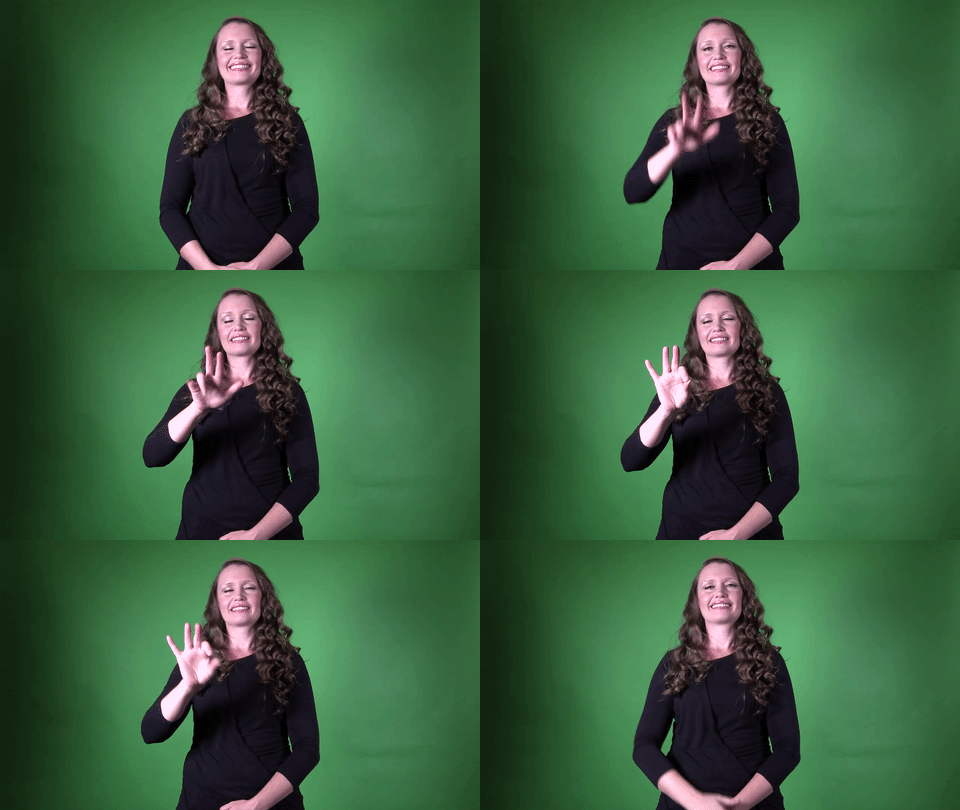
Sign for NUMBER THIRTY-NINE in ASL | 🔢 ASL Dictionary

Definition: Refers to the number thirty-nine

Sign for NUMBER THIRTY-NINE in ASL 

YouTube player

Practice Activities:

To practice the sign for number thirty-nine in ASL, start by signing it slowly and deliberately. Pay attention to the transition between the numbers three and nine, ensuring fluid movement. Repeat 10 times in front of a mirror to observe hand positioning and accuracy.

Use the sign for number thirty-nine in ASL with counting exercises. Count from thirty to forty while emphasizing thirty-nine. Try signing random numbers and inserting thirty-nine at different points to reinforce familiarity.

Practice recognizing the sign for number thirty-nine in ASL by watching a partner sign various numbers. Identify the number as quickly as possible before your partner moves to the next one. Switch roles to improve both expressive and receptive skills.

Create simple math problems that involve thirty-nine. Sign equations like twenty plus nineteen or forty minus one and sign the answer. This helps connect numerical concepts with ASL fluency.

Use the sign for number thirty-nine in ASL in context by practicing phrases such as “My mother is thirty-nine years old” or “There are thirty-nine students in the class.” Try forming original sentences while signing clearly and confidently.

Challenge yourself with a storytelling exercise that includes the sign for number thirty-nine in ASL. Create a scenario involving an address, price, or age that features the number thirty-nine. Sign the story smoothly while maintaining eye contact and natural pacing.

Engage in a speed drill by signing all the numbers between thirty and forty as quickly as possible, emphasizing thirty-nine. Increase speed gradually while maintaining clarity and accuracy.

Partner with a friend to quiz each other on random numbers, including the sign for number thirty-nine in ASL. One person signs a number, and the other must correctly identify it. Switch roles to strengthen both expressive and receptive skills.

Cultural Context:

American Sign Language plays a vital role in communication for the Deaf and hard-of-hearing community. Learning the sign for number thirty-nine in ASL helps develop number fluency and supports better everyday conversations. Understanding how numbers are formed in ASL is essential for counting, addresses, and many other real-life situations.

The sign for number thirty-nine in ASL follows the numerical pattern used in ASL number signs. ASL numbers 30 through 39 maintain a consistent flow, making them easy to learn once you understand the system. Recognizing patterns in ASL numbers speeds up learning and improves signing accuracy.

When signing the number thirty-nine in ASL, proper handshape and movement are essential for clarity. ASL follows distinct rules for numbers, ensuring that each one is visually clear and easily understood. Numbers are an essential part of daily communication, from discussing ages to exchanging phone numbers.

Understanding the sign for number thirty-nine in ASL also provides insight into ASL’s linguistic structure. The language relies on visual-spatial elements, making number signs unique from spoken or written numerals. Mastering number signs supports overall ASL fluency and builds confidence in conversations.

Deaf culture values visual clarity in communication, making precise number signs important. Learning the sign for number thirty-nine in ASL ensures effective communication while respecting cultural norms. Using proper number signs demonstrates respect and understanding of ASL as a fully developed language.

Knowing the sign for number thirty-nine in ASL is useful in many situations, from classroom discussions to daily interactions. Numbers are frequently used in addresses, phone numbers, prices, and measurements. Practicing ASL numbers regularly enhances signing skills and overall communication efficiency.

ASL number signs, including the sign for number thirty-nine in ASL, follow logical patterns that make learning easier. Understanding number signs helps with broader ASL fluency, strengthening both expressive and receptive skills. The more you practice ASL numbers, the more natural they become in everyday signing.

Learning ASL numbers builds confidence in signing and improves overall communication. Mastering the sign for number thirty-nine in ASL allows for clearer and more effective conversations. Whether in school, work, or social situations, knowing ASL numbers is essential for communication in the Deaf community.

Extended Definition:

The sign for number thirty-nine in ASL is formed using the number handshape for 3, then smoothly transitioning into the number 9. This movement follows the standard structure of ASL number formation, ensuring clear and effective communication. It is essential to use the correct handshape and motion to avoid confusion with similar numbers.

When signing the number thirty-nine in ASL, hold up the number 3 with your dominant hand, then smoothly transition into the number 9 by bending the middle finger and thumb together. This transition should be fluid without hesitation to maintain accuracy. Proper finger positioning ensures that the number is easily understood in conversation.

Numbers in ASL follow a pattern that allows signers to count efficiently and clearly. The sign for number thirty-nine in ASL follows this structure, making it simple to produce once familiar with ASL numbers. Practicing common number sequences will help reinforce proper handshape and movement.

ASL numbers are often used in daily conversations, appointments, and addresses. Knowing the sign for number thirty-nine in ASL is useful in various contexts, including phone numbers, sports scores, or ages. Understanding numerical signs builds confidence in communication and enhances signing fluency.

It is important to maintain proper palm orientation when signing. The number thirty-nine in ASL is typically signed with the palm facing outward, ensuring clarity for the viewer. Signers should also be aware of regional variations or stylistic differences in number signs.

Repetitive practice will improve muscle memory and hand movement. Watching native signers or using ASL dictionaries can help in mastering the sign for number thirty-nine in ASL. Engaging in conversations where numbers are commonly used reinforces proper technique.

ASL numbers are an essential part of everyday signing. Learning the sign for number thirty-nine in ASL contributes to developing a strong foundation in numerical expressions. Mastering numbers in ASL supports effective communication in both casual and professional settings.

Using ASL numbers correctly ensures smooth interactions with other signers. The sign for number thirty-nine in ASL is a simple combination of two digit signs, making it easy to remember once practiced. Accuracy and consistency are key to clear and effective signing.

For learners new to ASL, practicing numbers regularly will strengthen signing skills. The number thirty-nine in ASL is part of a broader numbering system that follows predictable patterns. Reviewing numbers daily can help in building confidence and fluency.

Mastering the sign for number thirty-nine in ASL is an

Synonyms: thirty-nine, number thirty-nine, number 39, the number 39, the number thirty-nine

Educational resources: Find related learning materials in our course bank!

Want more? Check out some of our popular learning activities on the homepage!

Need to look up a sign? Use our highly rated dictionary: https://aslinteractive.com/best-asl-dictionary/

Follow us on tiktok: https://www.tiktok.com/@aslinteractive. More social media links at the bottom of this page!

Long-tail Keywords: what is the sign for number thirty-nine in ASL, how do you sign number thirty-nine in ASL, learn how to sign number thirty-nine in American Sign Language

Categories: Numbers – Basics, Numbers 31-40, cardinal numbers

tags: Numbers 31-40, Numbers, Math, Educational, Language Learning

Parameters

*Handshape*:

The sign for NUMBER THIRTY-NINE in ASL uses a dynamic number transition. The dominant hand forms the number 3 handshape, with the thumb, index, and middle fingers extended while the ring and pinky fingers are curled. Then, the hand smoothly transitions to the number 9 handshape, where the index finger and thumb form a circle while the other fingers remain extended. This fluid motion visually represents the numerical sequence.

*Palm Orientation*:

The palm orientation for the sign for NUMBER THIRTY-NINE in ASL starts with the palm facing forward as you transition between the digits. Begin with the “3” handshape, where the index, middle, and thumb are extended, while the ring and pinky fingers are folded. Then, smoothly change into the “9” handshape by curling the index finger while keeping the thumb extended. Throughout the motion, the palm remains outward to maintain clarity.

*Location*:

The sign for NUMBER THIRTY-NINE in ASL is produced in the neutral space in front of the signer’s body, at about chest level. The movement involves transitioning smoothly between the digits three and nine using the dominant hand. The hand remains in a comfortable position, ensuring easy visibility for the viewer. Proper hand positioning and fluid motion are essential to clearly convey NUMBER THIRTY-NINE in ASL.

*Movement*:

To produce the sign for number thirty-nine in ASL, start with the number three handshape, with the thumb, index, and middle fingers extended while the ring and pinky fingers remain curled. Transition smoothly by changing from the three handshape to the number nine handshape, where the index finger and thumb form a circle while the other fingers extend. The motion should be fluid, maintaining the palm orientation outward to ensure clarity.

*Non-Manual Signals*:

Facial expressions remain neutral when forming the sign for number thirty-nine in ASL, though slight brow lowering may occur if clarifying or emphasizing the count. Eye contact is maintained with the listener, reinforcing engagement while signing. The mouth remains relaxed, though mouthing “thirty-nine” subtly can assist with comprehension in certain contexts. Precision in hand movement ensures the sign for number thirty-nine in ASL is clear, minimizing potential confusion with similar numbers.

*Prosody, Dominant/Non-Dominant Hand*:

The sign for NUMBER THIRTY-NINE in ASL uses the dominant hand. Begin with the number three handshape (index, middle, and thumb extended) and transition smoothly into the number nine handshape (thumb touching the pinky). The movement should be fluid, as the hand morphs from one numeral to the next. Maintain palm orientation facing outward, ensuring clarity. This numerical transition is common when signing multiple-digit numbers in ASL.

Tips for Beginners:

Mastering the sign for NUMBER THIRTY-NINE in ASL requires fluidity in movement. Since this sign transitions seamlessly between the handshapes for three and nine, practicing smooth shifts between these numbers is essential. Keep your fingers relaxed and slightly curved to maintain clarity in the movements.

A common mistake when signing the sign for NUMBER THIRTY-NINE in ASL is tensing the hand too much, which can make the transition between three and nine appear choppy. To avoid this, practice slowly at first, focusing on fluid wrist movements. As you become more comfortable, work on increasing speed while keeping the motion natural.

Hand positioning is crucial when signing the sign for NUMBER THIRTY-NINE in ASL. Ensure your palm faces outward so the numbers are clearly visible. Holding the hand at chest level provides the best visibility for your audience. If you hold your hand too low or at an odd angle, it may be harder to recognize the sign.

Consistent practice with a mirror or video recording helps refine accuracy. Watching how native signers produce the sign for NUMBER THIRTY-NINE in ASL can also help solidify proper form. Repetition is key, as muscle memory will make the transition between the numbers smoother over time.

Engaging with the Deaf community and using the number naturally in conversation is a great way to improve. Asking for feedback from fluent signers will help correct any subtle mistakes. The more you use the sign in real-world settings, the more effortless it will feel.

Connections to Other topics:

The sign for number thirty-nine in ASL is part of the larger system of number signs, which are frequently used in counting, age, time, and measurements. Numbers in ASL follow specific patterns, and understanding them helps in mastering numerical expressions across different contexts. The sign for number thirty-nine in ASL follows a predictable transition from three to nine, reinforcing the number system’s logical structure.

Counting in ASL often connects with concepts such as age, money, and ranking, where users can apply numbers fluently. For instance, when discussing someone’s age, you can incorporate the sign for number thirty-nine in ASL to indicate that someone is thirty-nine years old. Similarly, numbers are essential in signing for dates, addresses, and mathematical operations, making numerical fluency a valuable skill in ASL communication.

Ordinal numbers are another related concept, as they indicate order rather than quantity. While cardinal numbers like the sign for number thirty-nine in ASL indicate a standalone number, ordinal numbers such as thirty-ninth add movement or a slight variation to indicate position. These modifications apply when discussing competition placement, anniversaries, or sequence-based events.

Number incorporation in ASL also extends to time concepts, such as signing weeks, months, and years. For example, “39 weeks” can be signed by combining the sign for number thirty-nine in ASL with the sign for “WEEK.” This principle allows for efficiency in expressing quantities without needing separate signs for each number-related concept. The consistency in number patterns strengthens the clarity of signed communication.

The transition between digits within the sign for number thirty-nine in ASL also demonstrates ASL’s use of fluid handshape changes. Similar patterns appear when signing other numbers in the thirties, making it easier to learn related signs. This consistency from one numerical value to another helps signers apply rules across a broad range of numerical expressions confidently.

Summary:

The sign for number thirty-nine in ASL is a combination of the individual number signs for three and nine. It follows a standard numerical pattern used in ASL for expressing multi-digit numbers. The transition between the two digits is smooth, ensuring clarity and accuracy in communication.

When signing the number three in ASL, the dominant hand is used, with the palm facing outward and three fingers extended: the index, middle, and thumb. The ring and pinky fingers are folded down against the palm. This handshape is the American Sign Language representation of the numeral three.

To transition to the number nine, the thumb, index, and middle fingers adjust while the ring finger and pinky remain folded. The index finger and thumb touch at the tips to form an “O” shape. This numeral retains its fundamental structure across various signed languages, though some minor variations exist regionally.

In ASL, numbers from thirty to ninety-nine are often formed by smoothly connecting the digits. The transition between three and nine in the sign for number thirty-nine in ASL should be fluid. A choppy transition can lead to miscommunication or a perception of hesitation in the signer.

Numerical fluency is essential in ASL for signing numbers quickly and clearly. Practicing transitions between numbers ensures efficient comprehension. The sign for number thirty-nine in ASL is a good example of how ASL users employ economy of movement.

Numbers in ASL function grammatically in various ways, including quantifiers, classifiers, and time indicators. The sign for number thirty-nine in ASL can be used in contexts such as age, quantity, ranking, and statistical data. Signers must recognize the flexibility of numbers in ASL grammar.

ASL numbers have cultural relevance in displaying dates, addresses, and personal identification. This applies to sports jersey numbers, financial amounts, and countdowns. The sign for number thirty-nine in ASL may also be relevant in storytelling, business, or education.

Linguistically, ASL numbers follow handshape and movement rules that ensure consistency. Numbers must maintain their proper orientation and articulation to remain legible. The sign for number thirty-nine in ASL exhibits the natural rhythm found in numeric expressions.

Applied linguistics studies ASL numbers in language acquisition and cognitive processing. Research suggests that numeracy in sign languages follows similar cognitive mechanisms as spoken languages. The sign for number thirty-nine in ASL exemplifies how signed numbers integrate into daily language use.

Broader themes connected to ASL numbers include accessibility, Deaf culture, and education. Signing numbers correctly ensures effective communication in academic and professional settings. The sign for number thirty-nine in ASL showcases how ASL facilitates numerical literacy.

In Deaf education, students learn numerical systems in signed and written forms simultaneously. Number recognition supports mathematical understanding and problem-solving in ASL users. The sign for number thirty-nine in ASL is part of this foundational learning process.

The sign for number thirty-nine in ASL also connects to interpreting fields where accuracy is critical. Professional ASL interpreters must sign numbers fluidly to convey precise information. This ensures clarity in legal, medical, and financial settings.

Number incorporation in ASL extends to sports, time-telling, and measurement systems. Numerical classifiers provide additional grammar functions when discussing amounts, dimensions, and sequences. The sign for number thirty-nine in ASL is one of many numeric expressions that serve diverse communicative purposes.

Variations in number signing may exist depending on regional dialects of ASL. Some signers produce slight stylistic differences influenced by age or local signing communities. The sign for number thirty-nine in ASL typically follows a standardized form in most ASL dialects.

ASL users often reinforce number comprehension through repetition and contextual use. Finger dexterity plays a role in the accuracy of numerical transitions. The sign for number thirty-nine in ASL requires precision in forming the correct handshapes.

Some mnemonic techniques help new learners remember numerical transitions easily. Practicing counting sequences enhances muscle memory in ASL number signing. The sign for number thirty-nine in ASL benefits from consistent practice in number progression.

The efficiency of ASL numbering allows for rapid exchanges of information. This is particularly important in emergency situations, financial transactions, and game scores. The sign for number thirty-nine in ASL reflects the clarity needed in numerical exchanges.

Numbers contribute to storytelling by providing age references, distances, and quantities. ASL narratives often include numbers to give detailed descriptions of characters and events. The sign for number thirty-nine in ASL may appear in such contexts.

Technology has further integrated ASL numbering into digital spaces. Video relay services and online ASL learning platforms emphasize accurate number production. The sign for number thirty-nine in ASL remains an integral part of these digital linguistic interactions.

Number fluency parallels spoken language numerical proficiency. Just as hearing individuals use numbers daily, signers rely on numerical signs in everyday communication. The

Want more? Check out some of our popular learning activities!

ASL Interactive Resources

ASLInteractive YouTube Channel

Follow us on tiktok: @aslinteractive.com

Follow us on Instagram: aslinteractive

Facebook page: aslinteractive

Facebook group: aslinteractive

LInkedIn: ASL Interactive LLC

Twitter: @ASL_interactive

*Some information on this page is AI-generated. AI can make mistakes. Please check the information.

Sign for NUMBER THIRTY-NINE in ASL 

Responses