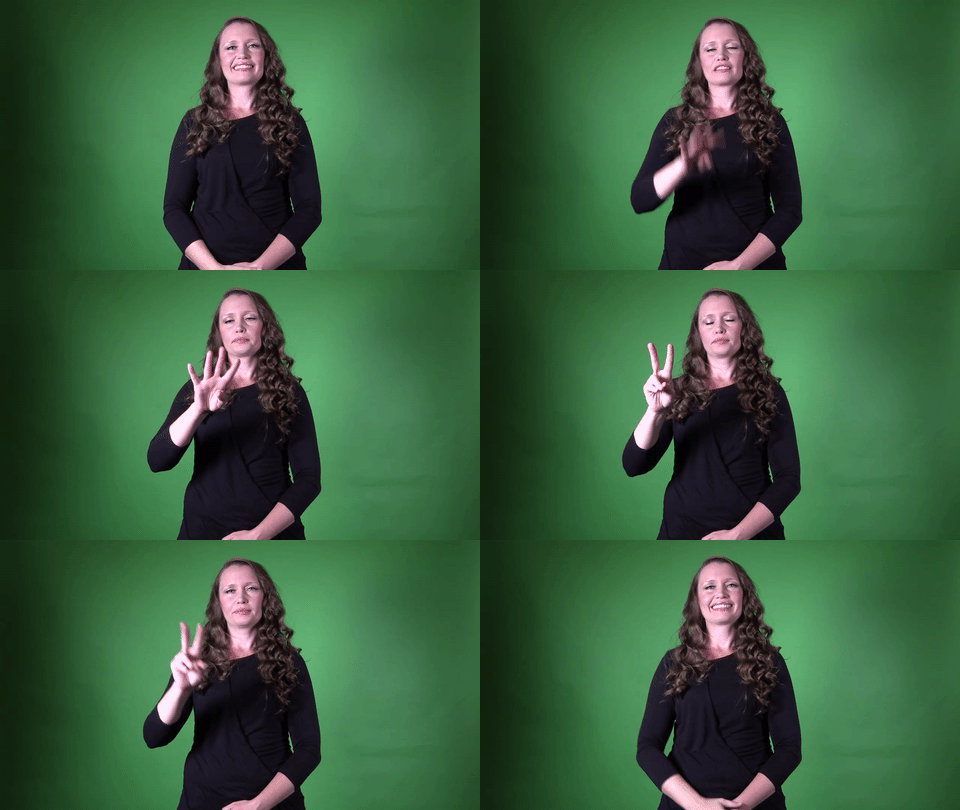
Definition: Refers to the number forty-two
Sign for NUMBER 42 in ASL

Practice Activities:
To practice the sign for number 42 in ASL, begin by forming the numbers 4 and 2 separately with clear handshapes. Repeat the number sequence slowly, ensuring smooth transitions between each number. Try signing it both with your dominant hand and non-dominant hand if you’d like to challenge your dexterity.
Use number recognition exercises by signing different two-digit numbers and asking a partner or friend to identify them. Likewise, have them sign various numbers, including the sign for number 42 in ASL, and practice interpreting their signs quickly and accurately. Increase the speed gradually to improve fluency.
Create real-world applications by using the number in context. Pretend to give someone an address that includes 42, or use it when discussing a price such as $42.00. Ask a partner to sign random two-digit numbers, and respond by indicating which number is greater or smaller.
Incorporate storytelling by creating a short narrative that includes the sign for number 42 in ASL. For example, tell a story about a 42-year-old astronaut or describe a scenario where you bought 42 apples for a community event. Use full ASL sentence structures to reinforce comprehension.
Challenge yourself by practicing counting sequences that include 42. Start from 30 and count to 50, stopping at 42 to emphasize the movement. You can also try backward counting to strengthen recall skills. Pair with a partner and take turns signing sequences to keep each other engaged.
End with a speed drill by signing numbers from 40 to 49 several times in a row. Pay attention to clarity and consistency, ensuring that the transition from 4 to 2 remains distinct. The more you practice, the more natural and fluid your signing will become.
Cultural Context:
The sign for number 42 in ASL follows the standard pattern for signing two-digit numbers in American Sign Language. It combines the signs for 4 and 2 in a fluid motion, maintaining clarity and accuracy. ASL numbers are an essential part of daily communication, appearing in conversations about age, prices, addresses, and more.
Numbers in ASL have a distinct structure, ensuring they are easily understood by signers. The sign for number 42 in ASL is no exception, following linguistic rules that make numerical signs efficient and visually distinct. Learning to sign numbers correctly helps improve fluency and prevents misunderstandings.
ASL numbers are often used in educational settings, businesses, and casual interactions. The sign for number 42 in ASL can be seen in contexts such as sports scores, schedules, and statistics. Mastering number signs allows smoother interactions in both everyday life and professional environments.
Cultural aspects of ASL influence the way numbers are signed, including elements like facial expressions and hand orientation. The sign for number 42 in ASL is understood in Deaf communities across North America, following the conventions of ASL numbering. Consistency in signing numbers ensures effective communication among signers.
Sign language users rely on numbers in ASL to convey precise information quickly and clearly. The sign for number 42 in ASL is useful for various purposes, from academic discussions to casual conversations. Recognizing number patterns in ASL enhances comprehension skills and signing proficiency.
Learning numbers in ASL, including the sign for number 42 in ASL, is fundamental for beginner and advanced signers alike. Numerical fluency increases confidence in ASL conversations and strengthens overall communication abilities. Engaging with the ASL numbering system fosters better understanding within the Deaf community.
ASL numbers, including the sign for number 42 in ASL, are used in formal and informal situations. From making appointments to discussing measurements, numbers play a vital role in communication. Expanding ASL vocabulary by mastering numbers contributes to fluency and effective interactions.
The sign for number 42 in ASL is part of a structured numbering system that ensures clarity for all signers. Proper handshapes and movements are important when signing numbers to maintain accuracy. Practicing ASL numbers regularly helps build strong language skills.
Understanding the sign for number 42 in ASL means engaging with the broader linguistic and cultural aspects of ASL. Number signs are an essential component of Deaf culture and language, serving as
Extended Definition:
The sign for number 42 in ASL follows the standard way of forming numbers in American Sign Language. It is a two-digit number, so it is signed using a combination of number signs. Because ASL is a visual language, handshape and movement are essential for accuracy.
To sign number 42 in ASL, start with the handshape for 4 and then transition smoothly to the handshape for 2. The movement should be fluid, with clear hand positioning to maintain clarity. Proper hand placement ensures that the number is easily understood by fluent and beginner signers alike.
Numbers in ASL often follow specific patterns based on their structure. The sign for number 42 in ASL follows the pattern for signing numbers in the forties. This is essential to ensure consistency in numerical representation within the language.
When signing number 42 in ASL, the palm orientation is also important. Depending on the regional variations, some signers may adjust orientation slightly, but the general movements remain the same. Practicing with fluent ASL users can help reinforce proper technique.
Number signs in ASL are commonly used in daily life, including counting, addresses, and mathematical concepts. The sign for number 42 in ASL can be useful in various contexts, such as discussing age, prices, or measurements. Learning to sign numbers correctly helps improve overall communication skills in ASL.
For beginners, mastering ASL numbers can take practice, especially when transitioning between digits. Watching videos or practicing with a mirror can help improve fluency with number signs. The sign for number 42 in ASL can be learned easily with repetition and proper hand positioning.
ASL number signs are based on clear handshapes that represent numerical values. Practicing each number individually before signing them in sequences can help develop confidence. Number 42 in ASL is part of this structured system, making it easier to learn within the broader context of ASL numeracy.
There may be minor variations in signing styles depending on the region or the signer’s preferences. However, the core method of signing number 42 in ASL remains consistent across most ASL users. Learning the standardized form ensures effective communication with a wider audience.
ASL numbers are commonly used in educational settings, business transactions, and everyday conversations. Knowing how to sign number 42 in ASL can be helpful when discussing topics that involve numerical values. Familiarity with number signs enhances overall fluency in American Sign Language.
To
Synonyms: forty-two, number forty-two, number 42, the number 42, the number forty-two
Educational resources: Find related learning materials in our course bank!
Want more? Check out some of our popular learning activities on the homepage!
Need to look up a sign? Use our highly rated dictionary: https://aslinteractive.com/best-asl-dictionary/
Follow us on tiktok: https://www.tiktok.com/@aslinteractive. More social media links at the bottom of this page!
Long-tail Keywords: what is the sign for number 42 in ASL, how do you sign number 42 in American Sign Language, learn how to sign number 42 in ASL
Categories: Numbers – Basics, Numbers 41-50, cardinal numbers
tags: Numbers 41-50, Numbers, Math, Educational, Language Learning
Parameters
*Handshape*:
The sign for NUMBER 42 in ASL uses a specific handshape pattern to represent the numerical value. It starts with the number “4,” where the hand is upright with the index, middle, ring, and pinky fingers extended while the thumb remains tucked. The transition to “2” involves folding down the ring and pinky fingers, leaving only the index and middle fingers extended. This movement ensures clarity when signing the sign for NUMBER 42 in ASL. The fingers move slightly in a bouncing motion to differentiate from other numbers.
*Palm Orientation*:
The palm orientation for the sign for NUMBER 42 in ASL starts with the hand in a relaxed position, facing outward. The numbers are signed sequentially, beginning with “4,” where the palm faces outward with four fingers extended. Then, smoothly transition to “2,” keeping the palm outward and shifting to the index and middle fingers. The movement should be fluid, with the palm orientation staying relatively consistent throughout the sign for NUMBER 42 in ASL.
*Location*:
The sign for number 42 in ASL is produced in the neutral signing space, which is typically in front of the chest. The dominant hand forms the number 4 with the fingers extended and separated, then quickly shifts to the number 2 with only the index and middle fingers extended. The hand remains at chest level while making this transition, ensuring clarity and proper formation.
This movement is done smoothly and efficiently in one motion while keeping the palm oriented outward. The transition between the handshapes should be fluid and well-paced to maintain accuracy. When signing the number 42 in ASL, it’s important to maintain proper hand positioning so the numerical value is clear to the viewer.
*Movement*:
To produce the sign for number 42 in ASL, start with the number 4 handshape, with your palm facing outward. Slightly bounce your hand as you transition from the number 4 to the number 2, maintaining the same outward palm orientation. The movement should be fluid but distinct, ensuring clarity between the two digits. This signing technique is used for numbering patterns in ASL, making the sign for number 42 in ASL easy to recognize.
*Non-Manual Signals*:
When signing the sign for number 42 in ASL, maintain a neutral or slightly focused facial expression to ensure clarity. Your eyebrows should remain in a relaxed position unless emphasizing the number for contrast or correction. Eye contact is essential, so keep your gaze directed towards the person you’re signing to. If clarifying or emphasizing, slightly raise your eyebrows and lean forward subtly to enhance the message.
*Prosody, Dominant/Non-Dominant Hand*:
The sign for NUMBER 42 in ASL uses the dominant hand in a “4” handshape, followed by a “2” handshape. The movement is a slight twisting motion, transitioning smoothly between the two numbers. The non-dominant hand is not used. Ensure fluidity in movement to maintain clarity when signing the number. This method is consistent with other number signs in ASL and helps convey numerical values efficiently.
Tips for Beginners:
When learning the sign for NUMBER 42 in ASL, it’s important to practice handshape precision. The numbers 4 and 2 each have distinct handshapes, so ensure your fingers are positioned correctly. Your palm orientation is also key—keep your palm facing outward for clarity.
One common beginner mistake when signing NUMBER 42 in ASL is having weak or inconsistent finger positioning. When forming the number 4, make sure all four fingers are extended and separated slightly while your thumb is tucked. When transitioning to 2, smoothly fold your fingers down while extending only the index and middle fingers.
Another challenge for learners is transitioning smoothly between the numbers. Make sure your movement is fluid without excessive hesitation between the 4 and the 2. If you’re struggling, practice transitioning between other two-digit numbers to develop muscle memory.
A great way to reinforce accuracy is by using a mirror or recording yourself signing NUMBER 42 in ASL. Pay attention to your finger placement and palm orientation, ensuring they match fluent signers. Practicing the sign in different signing speeds will help increase confidence and accuracy.
Context also matters when signing numbers in ASL. The way you sign NUMBER 42 in ASL may vary slightly depending on the situation, such as a phone number or age. Always be mindful of slight modifications that may be needed for clarity.
Lastly, remember that consistency is key in developing fluency. Regular practice with numbers in ASL will improve your confidence and ability to sign naturally. Keep practicing, and soon signing NUMBER 42 in ASL will feel effortless!
Connections to Other topics:
The sign for number 42 in ASL follows the same numerical signing system as other two-digit numbers. It follows a pattern similar to other numbers in the 40s, where the tens digit is formed first before transitioning into the ones digit. This pattern is useful for learning other numbers, as many share a similar movement or formation, reinforcing the consistency of ASL numbering conventions.
ASL numbers often appear in contexts such as addresses, ages, prices, and counting sequences. Understanding the sign for number 42 in ASL helps in situations like sports, where jersey numbers are signed, or when talking about historical events marked by specific years. Learning how to modify numbers in sequence, such as practicing 40 through 49, builds fluency in numerical expressions in everyday conversations.
Numbers in ASL can also be incorporated into classifiers, where they provide extra details about size, quantity, or an arrangement of objects. For example, the number 42 might be combined with a classifier for ranking, labeling, or indicating a precise location within a numbered list. The ability to smoothly transition between different numbers strengthens overall signing proficiency, making it easier to convey detailed information quickly.
Another relevant connection comes from ordinal numbers, where a signed number like 42 can be modified with a slight twisting movement to indicate 42nd place. This is useful in contexts like competitions, floors in a building, or sequence-based discussions. The understanding of how numbers function spatially in ASL opens doors to more complex linguistic structures, including time referencing and quantifiers.
Mastering numerical signs like the sign for number 42 in ASL helps with math-related discussions in ASL, such as measurements, statistics, and financial matters. Having a strong grasp of ASL numbers makes classroom learning, budgeting, and scheduling conversations smoother. With practice, fingerspelling and number fluency become second nature, supporting more natural communication in ASL.
Summary:
The sign for number 42 in ASL follows a common pattern used for two-digit numbers in the 40s. It utilizes the number signs for 4 and 2, transitioning smoothly between them. This movement is often done with a slight bounce or shift to indicate the change from one digit to the next.
Numbers in ASL often follow a distinct rhythmic motion that makes them easy to recognize. The sign for number 42 in ASL continues this pattern, using a natural finger transition. This helps distinguish it from other number signs that might appear visually similar.
In ASL, number signs can sometimes vary slightly based on regional dialects or personal signing styles. The sign for number 42 in ASL typically remains consistent in structure, though finger positioning might be more relaxed in casual contexts. Clarity in numbers is crucial, particularly in academic or financial settings.
ASL places a strong emphasis on numeric precision, especially in education and business communication. The sign for number 42 in ASL is essential in various scenarios, such as counting, listing, or referring to specific amounts. Its proper execution ensures that numerical information is accurately conveyed.
Numbers in ASL are deeply embedded in everyday interactions. The sign for number 42 in ASL might be used when discussing addresses, prices, or identifying specific items. Fluent signers often internalize numerical transitions, making them second nature.
Beyond mere enumeration, numbers in ASL play an essential role in cultural references. The sign for number 42 in ASL could appear in discussions about sports jersey numbers, historical events, or popular culture. The number 42 carries significance in various contexts, such as literature, mathematics, and entertainment.
Linguistically, ASL numbers are distinct due to their simultaneous use of handshape, palm orientation, and movement. The sign for number 42 in ASL requires the signer to be mindful of transitioning between the two digits fluidly. This highlights the visuospatial nature of ASL, distinguishing it from spoken languages.
Mathematics in ASL relies heavily on clear numerical signs to facilitate learning and problem-solving. The sign for number 42 in ASL may contribute to math discussions, number games, or teaching strategies. Deaf educators often emphasize number clarity to enhance students’ numerical literacy.
Technology has influenced ASL number signs through developments in video communication and digital signing. The sign for number 42 in ASL, like other number signs, is regularly used in online interactions, video conferences, and live captioning technologies. This reflects how ASL adapts to modern advancements.
Sports and statistics frequently feature numerical signing. The sign for number 42 in ASL might be used in scorekeeping, player statistics, or rankings. In baseball history, for instance, the number 42 is famously associated with Jackie Robinson, making it a culturally significant figure.
The number 42 has philosophical and pop culture relevance beyond ASL. The sign for number 42 in ASL could be referenced when discussing Douglas Adams’ “The Hitchhiker’s Guide to the Galaxy,” where 42 is humorously labeled as the answer to the ultimate question of life. Such references highlight the intersection of language, culture, and humor.
Numerical literacy in ASL is pivotal for academic achievement. The sign for number 42 in ASL may be taught in classrooms as part of foundational numeric instruction. Young learners benefit from structured number exposure to build strong mathematical skills in sign language.
ASL education incorporates various techniques to support clear number signing. The sign for number 42 in ASL might be included in finger exercises or drills focusing on dexterity and accuracy. Repetition and practice help ensure smooth transitions between number handshapes.
Hand dominance plays a role in signing numbers accurately. The sign for number 42 in ASL should be signed with the dominant hand to maintain consistency. Proper hand orientation prevents miscommunication and supports visual clarity.
Regional variations might influence how numbers are expressed, though two-digit numbers like 42 tend to be relatively standard. The sign for number 42 in ASL retains its fundamental shape across different signing communities. However, casual signers may introduce slight variations based on comfort and fluency.
Number signs in ASL demonstrate the language’s visual efficiency. The sign for number 42 in ASL is compact yet informative, delivering numerical meaning in one quick motion. This efficiency is a core feature of ASL’s grammatical structure.
Numbers in storytelling contribute to gripping narratives in ASL. The sign for number 42 in ASL might appear in anecdotes, historical stories, or trivia. Signers often incorporate numerical elements to add depth and detail to their narratives.
Fingerspelling and numerical signing coexist in ASL communication. Though fingerspelling is used for proper names and abbreviations, number signs like the sign for number 42 in ASL offer a faster alternative for numerical concepts. Mastery of both enhances fluency and comprehension
Want more? Check out some of our popular learning activities!
ASL Interactive Resources
ASLInteractive YouTube Channel
Follow us on tiktok: @aslinteractive.com
Follow us on Instagram: aslinteractive
Facebook page: aslinteractive
Facebook group: aslinteractive
LInkedIn: ASL Interactive LLC
Twitter: @ASL_interactive
*Some information on this page is AI-generated. AI can make mistakes. Please check the information.


Responses