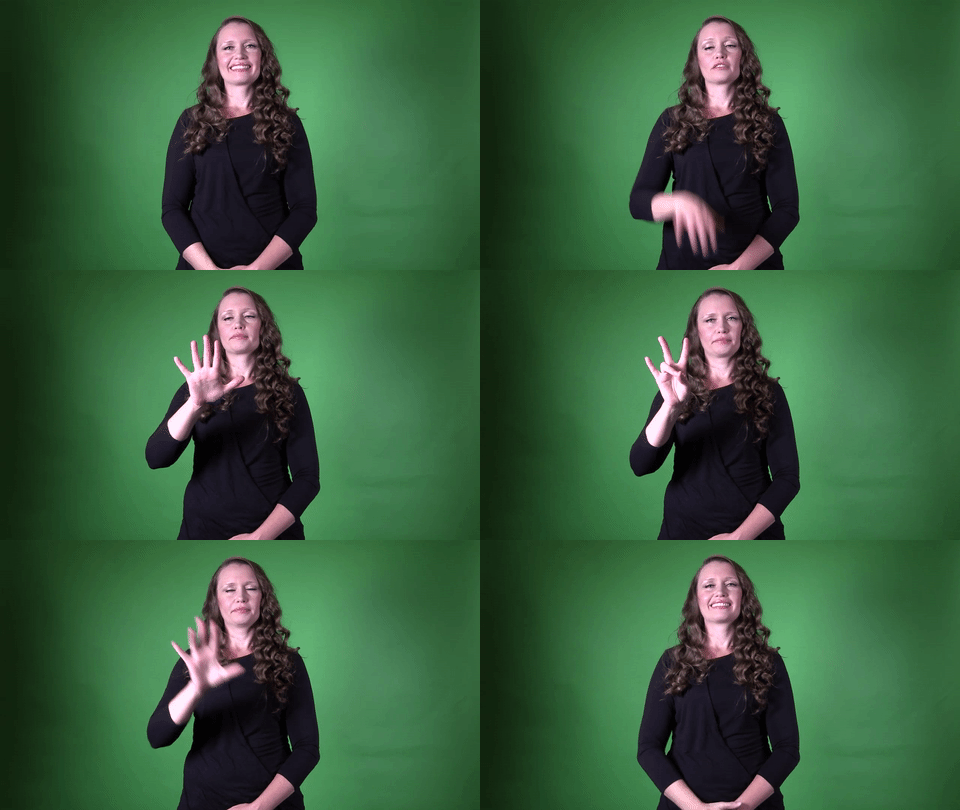
Definition: The number fifty-seven

Sign for FIFTY-SEVEN in ASL
Practice Activities:
To practice the sign for fifty-seven in ASL, start by isolating the sign and forming it several times while looking in a mirror. This helps build muscle memory and ensures correct finger movement. Try switching between different numbers leading up to fifty-seven, such as fifty-five, fifty-six, and fifty-eight, to improve fluency.
Once you are comfortable, practice counting from fifty to sixty, making sure to include the sign for fifty-seven in ASL naturally in the sequence. Say each number out loud while signing to reinforce the connection between the sign and its meaning. Speed up gradually to develop fluidity.
Use the sign in simple sentences. Try signing “I have fifty-seven dollars,” or “There are fifty-seven chairs in the room.” Practice with a partner by having them say random numbers for you to sign, focusing on transitioning smoothly to the sign for fifty-seven in ASL.
Engage in a storytelling activity where you describe a scenario that includes fifty-seven. For instance, imagine a classroom with fifty-seven students or a road trip covering fifty-seven miles. This helps incorporate the sign in a more natural context.
Play a game where you or a partner write down numbers on small cards, shuffle them, and draw a random one to sign. For an extra challenge, sign the number first, and the partner must guess it correctly before switching roles. This improves both recognition and recall.
Practice rapid recall by setting a timer for one minute and signing as many numbers in the fifties range as possible, making sure to sign fifty-seven multiple times. Repeating this daily will lead to increased speed and confidence in using the number naturally.
Cultural Context:
The sign for fifty-seven in ASL follows the standard pattern for signing numbers in American Sign Language. It blends the number five and the number seven smoothly, maintaining clarity and visual accuracy. Proper handshape and movement are essential for ensuring the sign is easily understood in conversation.
Numbers like the sign for fifty-seven in ASL are frequently used in daily life, from discussing prices to talking about a person’s age or addresses. Knowing how to sign numbers fluently is a key part of mastering ASL and improving communication. The ability to smoothly transition from one number to another makes conversations more natural.
The sign for fifty-seven in ASL is part of a larger numeric system that follows consistent patterns. Learning these patterns helps signers quickly grasp numbers from fifty to sixty and beyond. Practicing with different number combinations builds confidence and improves signing speed.
In Deaf culture, numbers play a significant role in conversations about events, dates, and statistics. The sign for fifty-seven in ASL may be used to refer to a year, a count, or even a jersey number in sports. Fluency in signing numbers enhances discussions in both casual and formal settings.
Mastering the sign for fifty-seven in ASL requires attention to handshape, palm orientation, and transitions. Watching native signers and practicing in real-life conversations can help solidify the skill. Repetition and feedback from fluent signers or teachers are valuable for improving accuracy.
When using the sign for fifty-seven in ASL, it’s important to maintain a relaxed hand to prevent stiffness or awkward movements. Smooth transitions between numbers make communication more efficient and visually clear. Consistency in finger placement ensures the sign remains recognizable.
The sign for fifty-seven in ASL may vary slightly in different signing communities but follows the general number formation rules. Regional variations or slight personal styles do not affect overall understanding. Exposure to multiple signers can help learners recognize different signing styles.
Numbers are an essential part of ASL, and learning them strengthens communication skills. The sign for fifty-seven in ASL is just one of many numbers that contribute to fluent signing. Regular practice and engagement with the Deaf community help enhance proficiency and confidence.
Extended Definition:
The sign for fifty-seven in ASL follows the standard pattern for forming numbers in American Sign Language. It is part of the series of numbers from fifty to fifty-nine, which follow a similar handshape transition. Mastering these numbers helps improve fluency and comprehension when discussing numerical values in ASL.
To sign fifty-seven in ASL, start with the number five handshape, with the palm facing outward. Then transition smoothly to the number seven by bending the ring finger down while keeping the other fingers extended. This movement is quick and requires fluidity to ensure clear communication.
Like other numbers in ASL, the sign for fifty-seven in ASL needs to be executed with precision. Hand orientation, finger positioning, and movement must be accurate to avoid confusion with similar signs. Practicing in front of a mirror or with a fluent signer can help refine your skills.
ASL relies heavily on visual and spatial communication, making it essential to maintain eye contact while signing fifty-seven. Facial expressions and body language add additional meaning, reinforcing the intended message. In conversations, numbers like fifty-seven are often used when discussing ages, money, addresses, and other numerical information.
There may be slight variations in how different signers produce the sign for fifty-seven in ASL. Some minor differences occur due to regional influences or individual signing styles. However, the fundamental movement remains the same, ensuring overall consistency in understanding.
Achieving fluency in signing numbers, including fifty-seven, requires consistent practice. Repetitive drills help improve muscle memory, making the transition between handshapes smoother. Watching native signers and following along can also enhance proficiency.
The sign for fifty-seven in ASL is an important part of learning cardinal numbers in sign language. Numbers play a crucial role in daily conversations, classroom settings, and professional environments. Developing strong numerical signing skills improves overall ASL communication.
When fingerspelling or signing numbers, maintaining a natural rhythm is essential. Hesitation or stiffness can make numbers harder to recognize. Practicing commonly used numbers like fifty-seven helps build confidence and signing speed.
Online resources, video tutorials, and ASL dictionaries provide excellent references for mastering fifty-seven and other numbers. Watching recordings of fluent signers aids in understanding the nuances of hand movement and transitions. Engaging in real-life signing situations further reinforces learning.
Consistency and repetition are key to effectively signing fifty-seven in ASL. Over time, familiarity with number patterns enhances overall ASL fluency.
Synonyms: fifty-seven, number fifty-seven, number 57, the number 57, the number fifty-seven
Educational resources: Find related learning materials in our course bank!
Want more? Check out some of our popular learning activities on the homepage!
Need to look up a sign? Use our highly rated dictionary: https://aslinteractive.com/best-asl-dictionary/
Follow us on tiktok: https://www.tiktok.com/@aslinteractive. More social media links at the bottom of this page!
Long-tail Keywords: what is the sign for Fifty-seven in ASL, how do you sign Fifty-seven in ASL, Fifty-seven in American Sign Language
Categories: Numbers – Basics, Numbers 51-60, cardinal numbers
tags: Numbers, Numbers 51-60, Counting, Math, Language Learning
Parameters
*Handshape*:
The sign for FIFTY-SEVEN in ASL uses a shifting number handshape. Begin with the number 5 handshape, where all fingers are spread apart and extended. Then, smoothly transition into the number 7 by bringing the thumb and ring finger together while the other fingers remain extended. This movement should be fluid to ensure clarity. The sign for FIFTY-SEVEN in ASL relies on precision in handshape transitions for proper number representation. ✋
*Palm Orientation*:
The palm orientation for the sign for FIFTY-SEVEN in ASL faces outward. The hand starts in a five-hand shape, with fingers spread apart. The thumb and index finger then come together to form a seven-hand shape while the remaining fingers stay extended. This transition happens smoothly and fluidly without changing the palm’s outward direction. Keeping the palm steady ensures clarity and maintains proper number formation.
*Location*:
The sign for FIFTY-SEVEN in ASL is produced in the neutral space in front of the signer’s body, typically at chest level. The dominant hand forms the number five handshape and transitions into the number seven handshape by bringing the thumb and ring finger together in one smooth motion. This movement maintains a clear and fluid transition, ensuring proper numerical representation while keeping the hand within a comfortable signing area.
*Movement*:
To sign for fifty-seven in ASL, start with the number five handshape, where the thumb is extended and the fingers are spread apart. Quickly transition by pulling the pinky and ring finger down to form the number seven handshape. The movement should be smooth and fluid, without pausing between the two numbers. This number transition happens in place, without forward or backward motion. Keep your palm facing outward for clarity.
*Non-Manual Signals*:
When signing the sign for FIFTY-SEVEN in ASL, maintain a neutral or slightly focused facial expression. The eyebrows should remain relaxed unless emphasizing or clarifying the number in conversation. Eye contact is important, ensuring engagement with the person receiving the sign.
Mouth movements should stay natural, avoiding excessive mouthing of the English word. If emphasis is needed, a small head nod or slight forward movement can reinforce the sign for FIFTY-SEVEN in ASL. Avoid exaggerated expressions unless emphasizing quantity or contrast.
*Prosody, Dominant/Non-Dominant Hand*:
The sign for FIFTY-SEVEN in ASL uses the dominant hand in a neutral space. Start with the number 5 handshape, then smoothly transition to the number 7 by tucking the ring finger while keeping the thumb and pinky extended. The movement should be fluid without pausing between numbers. Ensure your palm faces forward, and the motion remains crisp for clarity. This sign for FIFTY-SEVEN in ASL follows a consistent numerical transition pattern used in counting.
Tips for Beginners:
When learning the sign for FIFTY-SEVEN in ASL, focus on smooth movement and proper handshape transitions. This sign follows the pattern of ASL number signs, combining “5” and “7” seamlessly. Start with an open “5” handshape, then quickly transition by closing the middle and ring fingers to form the “7” handshape. The motion should be fluid, without pausing between the two shapes.
A common mistake beginners make when signing FIFTY-SEVEN in ASL is hesitating between fingers or misplacing the transition. Be sure to keep your palm facing outward and maintain relaxed fingers to avoid stiffness. Overextending or curling the fingers too tightly can make the movement more difficult. Practicing in front of a mirror can help you refine the motion and build confidence.
To ensure clarity, avoid unnecessary movement or a jerky transition. Some learners tend to flick their fingers too aggressively or move their hand up and down. The transition in the sign for FIFTY-SEVEN in ASL should happen in one smooth, relaxed motion while keeping your hand positioned at chest level. Precision is key in distinguishing this number from similar signs, such as FIFTY-SIX or FIFTY-EIGHT.
Try practicing with a fluent signer or using online video resources to compare your handshape and positioning. Repetition will strengthen your muscle memory and allow for more natural signing. Watching native signers will also help you develop consistency with speed and fluidity. Remember to also work on recognizing signs, not just producing them, so you can engage in conversations confidently.
With patience and consistent practice, forming number signs will become second nature. The sign for FIFTY-SEVEN in ASL might seem tricky at first, but with dedicated effort, your transitions will become smoother and more natural over time. Keep practicing and refining your technique to build fluency.
Connections to Other topics:
The sign for fifty-seven in ASL is part of a numeric system that follows a distinct pattern for signing numbers in the fifties. Like other numbers in this range, it maintains the general structure of transitioning between the digits within one fluid motion. Learning this pattern can make signing other two-digit numbers more intuitive, as similar transitions occur for numbers like fifty-six, fifty-eight, and fifty-nine. Recognizing these patterns strengthens overall fluency in ASL number signs.
Numbers in ASL are deeply connected to concepts of time, money, and quantity, making the sign for fifty-seven in ASL useful in many contexts. When discussing money, it can pair with the sign for dollars or cents to indicate specific monetary values. In time-related contexts, such as describing the year 1957 or listing an event’s attendance count, the proper articulation of fifty-seven ensures clarity. Mastering number incorporation allows for smoother conversations in everyday and formal settings.
Many signs incorporate fingerspelled numbers as part of a structured numbering system. Sports scores, addresses, and percentages often require the use of fifty-seven when conveying specific information. The sign for fifty-seven in ASL can also be used in statistics or age representation, linking it to other linguistic structures like ranking systems. Knowing how numbers function grammatically within ASL sentences deepens comprehension and enhances expressive signing.
Ordinal numbers related to fifty-seven, such as fifty-seventh, follow a modified motion incorporating the typical ordinal number movement. This connection shows the flexibility of ASL’s number system, which adapts to different contexts while retaining consistency. The ability to smoothly transition between cardinal and ordinal numbers is essential for discussions involving sequences, competition rankings, or event placements. Strengthening ordinal number proficiency complements everyday communication and broadens interaction possibilities in ASL.
Summary:
The sign for fifty-seven in ASL is based on the standard number formation used in American Sign Language. It follows the pattern of transitioning smoothly from one digit to the next while maintaining clarity. The movement is fluid, ensuring that both numerical values are clearly visible to the viewer.
To form fifty-seven, start with the number five handshape, where all five fingers are extended outward. Then transition to the seven handshape by bending the ring finger downward while keeping the index, middle, and pinky fingers extended. The thumb remains in contact with the bent ring finger to form the seven.
This numerical transition must be executed with precision to avoid confusion with other numbers. The movement should not be rushed, as clarity in number signing is essential for effective communication. A signer must be aware of hand positioning and consistency in forming numbers.
In ASL, numbers are essential for everyday communication, covering topics such as time, age, money, and addresses. The sign for fifty-seven in ASL is particularly relevant in contexts involving statistics, measurements, and specific numerical references. Numbers are used frequently in casual conversation, business settings, and instructional environments.
ASL number signs are deeply integrated into the grammar structure of the language. While some numbers require discrete handshapes, others use movement to convey additional meaning. Cardinal numbers such as fifty-seven are usually signed with a stationary handshape without added motion.
Historically, ASL number systems evolved through influences from French Sign Language (LSF). Early ASL incorporated numerical conventions that have been refined over generations. Variability in regional number signing has resulted in slight differences in how certain numbers are represented.
Numbers like fifty-seven in ASL may also be used within larger numerical sequences. For example, when stating a street number or a year, numerals may be grouped or signed sequentially. Signers must be aware of spacing and pacing when delivering multi-digit numbers to maintain legibility.
One key aspect of ASL numbers is their palm orientation. Numbers from fifty to fifty-nine should maintain a forward-facing position to ensure comprehension. The consistency of this orientation prevents miscommunication with similar handshapes.
Numerical signs also integrate with classifiers and descriptive signs when conveying specific quantities. In discussions involving fifty-seven objects, the number may be followed by a classifier denoting shape, size, or arrangement. This pairing of number signs with classifiers is a vital feature of ASL grammar.
Hand dominance plays an essential role when signing numbers in ASL. The dominant hand should always be used for clarity and ease of communication. Using the non-dominant hand for primary number signs can cause confusion and reduce signing efficiency.
In a cultural context, numerical literacy is a fundamental part of ASL fluency. Deaf individuals frequently use numbers in daily interactions, including financial transactions and scheduling. The ability to clearly sign numbers such as fifty-seven in ASL is critical in professional and personal settings.
Finger dexterity is important for signing numerical sequences smoothly. Regular practice of number formations, including transitions between digits, improves fluency. Many educational programs incorporate drills and exercises to enhance number-signing proficiency.
The sign for fifty-seven in ASL may also appear in fingerspelling contexts when individuals spell out numbers explicitly. While most numbers are signed using dedicated numerical handshapes, fingerspelling may be necessary for emphasis or clarity. This often occurs in formal presentations or technical discussions.
American Sign Language uses a base ten system for signing numbers, reinforcing patterns that make recognition easier. The transition between five and seven in the sign for fifty-seven follows an expected numerical pattern. Understanding these base structures simplifies number memorization and recall.
Number signs are frequently incorporated into specific signed phrases. For instance, discussing a price, an age, or a historical year would involve signing fifty-seven within a larger sentence. Context guides the exact presentation of the number.
Teaching numerical ASL signs requires step-by-step instruction to ensure accuracy. Educators often emphasize handshape precision and transitions to reinforce correct formation. Drills involving counting up and down through numerical sequences help build fluency.
Linguistically, number signs like fifty-seven are part of a sophisticated system within ASL morphology. Unlike spoken English, which uses vocal articulation, ASL relies on visual-manual expression to convey numbers. This reliance on handshape and position demonstrates the structured nature of the language.
Numbers in ASL also feature in statistical reports and data presentations. When reporting survey results, demographic figures, or experimental data, signers use number signs to relay precise information. Clarity in numerical signs is essential in these contexts to avoid misinterpretation.
The sign for fifty-seven in ASL fits into broader discussions on accessibility in numerical representation. Many advancements in Deaf education have focused on ensuring that students gain fluency in mathematical communication. Mastering number signs promotes inclusivity in academic and technical fields.
Complex numerical expressions often involve fingerspelling for added specificity. In some legal or official
Want more? Check out some of our popular learning activities!
ASL Interactive Resources
ASLInteractive YouTube Channel
Follow us on tiktok: @aslinteractive.com
Follow us on Instagram: aslinteractive
Facebook page: aslinteractive
Facebook group: aslinteractive
LInkedIn: ASL Interactive LLC
Twitter: @ASL_interactive
*Some information on this page is AI-generated. AI can make mistakes. Please check the information.


Responses