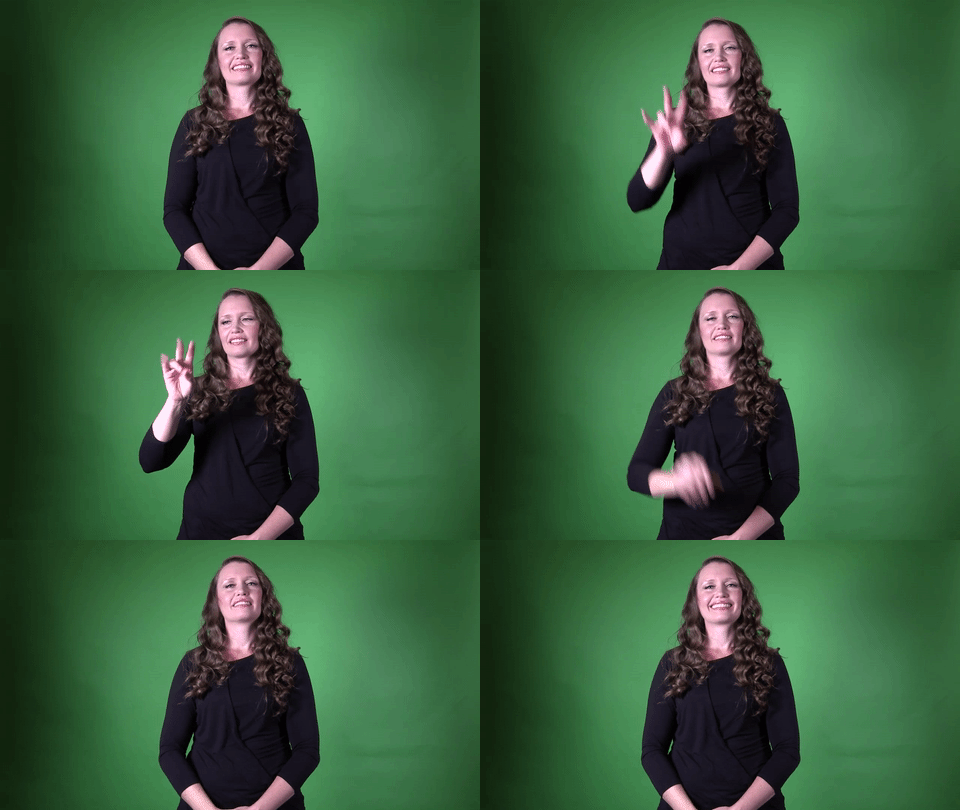
Definition: Refers to the number seventy
Sign for THE NUMBER SEVENTY in ASL

Practice Activities:
Begin by practicing the sign for the number seventy in ASL in isolation. Sign it slowly and clearly, paying attention to the correct handshape and movement. Repeat the sign several times, gradually increasing your speed while maintaining accuracy. Use a mirror or record yourself to ensure your hand movement remains smooth and consistent.
Try counting from sixty to eighty, making sure to transition smoothly into the sign for the number seventy in ASL. This will help reinforce your understanding of sequential numbers. For an added challenge, sign the numbers backward from eighty to sixty while focusing on maintaining fluidity.
Integrate the sign into real-world contexts by practicing sentences that include numerical references. For example, sign “My grandmother is seventy years old” or “The book costs seventy dollars.” You can also create math equations, such as “Fifty plus twenty equals seventy,” and sign both the equation and the answer.
Use storytelling to reinforce learning. Create a short story that includes the sign for the number seventy in ASL, such as talking about a long road trip that takes seventy miles to complete, or a historical fact about something that happened seventy years ago. This will help solidify the sign within meaningful contexts.
Practice with a partner by playing a number-guessing game. One person signs a number between sixty and eighty, and the other person guesses what it is. You can also take turns signing and asking, “What number is this?” to reinforce recognition.
Lastly, incorporate the sign into everyday conversations. Set a goal to use the sign for the number seventy in ASL at least five times in a day. The more you use it, the quicker it will become second nature.
Cultural Context:
In American Sign Language, the sign for the number seventy follows a standard pattern used for numbers in the seventy range. The handshape starts with the number seven and transitions smoothly into a zero. This fluid motion ensures that the sign for the number seventy in ASL remains clear and easy to recognize.
Number signs in ASL are essential for daily communication, whether discussing age, money, measurements, or counting. The sign for the number seventy is commonly used in addresses, phone numbers, and years. Understanding how to properly form ASL numbers helps improve fluency and enhances clear communication.
The structure of ASL numbers reflects visual and logical consistency, making them efficient and accessible. The sign for the number seventy in ASL is part of a numerical system that includes sixty, eighty, and ninety, following the same palm orientation and movement. Learning number signs correctly helps avoid confusion and ensures accuracy in conversations.
When signing the number seventy, facial expressions and context play a role in reinforcing meaning. In fast-paced conversations, fluent signers can modify speed and emphasis to match their signing style. Mastering the sign for the number seventy in ASL supports natural communication in both casual and professional settings.
Using ASL numbers correctly is crucial for accessibility within the Deaf community. The sign for the number seventy is widely recognized and used just like spoken numbers in English. Practicing ASL numbers builds confidence and ensures smoother interactions in real-life situations.
From classroom learning to social interactions, the use of ASL numbers is a fundamental part of everyday signing. The structure of the sign for the number seventy in ASL aligns with other two-digit numbers, reinforcing consistency in ASL grammar. Becoming comfortable with number signs enhances overall signing proficiency, making conversations seamless.
Extended Definition:
The sign for the number seventy in ASL is an essential part of learning American Sign Language numbers. It follows the standard pattern for signing numbers in the tens and is created with specific hand movements. Mastering this sign helps improve fluency and communication in ASL.
To sign the number seventy in ASL, start with your dominant hand in a five-handshape. Then, transition smoothly into a seven-handshape while maintaining a clear movement. This motion visually represents the number seventy and follows the typical pattern for signing other numbers in this range.
Facial expressions and clarity in handshape movements are crucial when using the sign for the number seventy in ASL. A slight movement or misplacement of fingers can change the sign’s meaning. Practicing in front of a mirror or with a fluent signer can help improve accuracy.
Numbers play a significant role in ASL and are used in various contexts such as counting, telling age, and giving addresses. The sign for the number seventy in ASL is often used in conversation, ensuring that numerical information is understood clearly. Mastering this sign is part of building strong number recognition in ASL.
Fingerspelling is not required when signing the number seventy in ASL. Instead, the specific handshape and movement act as a direct representation of the number. This makes signing numbers in ASL more efficient and faster compared to fingerspelling each digit.
Understanding the broader system of ASL numbers helps users grasp patterns more quickly. The sign for the number seventy in ASL fits into the sequence of multiples of ten, making it easier to learn alongside other similar signs. Recognizing this pattern can accelerate learning and recall.
ASL numbers, including seventy, are widely used in daily interactions, education, and business settings. Communicating numbers accurately ensures clarity and prevents misunderstandings. Frequent practice with numbers enhances overall signing proficiency.
Different sign variations exist based on regional and generational differences in ASL. While the standard sign for the number seventy in ASL is widely used, some signers may demonstrate slight variations. Exposure to different signing styles helps build comprehension and adaptability.
Using the sign for the number seventy in ASL correctly helps in conversations related to prices, statistics, and schedules. Whether discussing quantities or measurements, knowing the proper number signs improves communication. Developing strong number-signing skills benefits both beginners and advanced signers.
When learning the sign for the number seventy in ASL, repetition and consistent practice are key. Watching
Synonyms: seventy, number seventy, number 70, the number 70, the number seventy
Educational resources: Find related learning materials in our course bank!
Want more? Check out some of our popular learning activities on the homepage!
Need to look up a sign? Use our highly rated dictionary: https://aslinteractive.com/best-asl-dictionary/
Follow us on tiktok: https://www.tiktok.com/@aslinteractive. More social media links at the bottom of this page!
Long-tail Keywords: What is the sign for the number seventy in ASL, How do you sign the number seventy in American Sign Language, Learn how to sign seventy in ASL
Categories: Numbers – Basics, Numbers 61-70, cardinal numbers
tags: Numbers, Numbers 61-70, Language Learning, counting by 10s
Parameters
*Handshape*:
The sign for the number seventy in ASL uses a changing handshape. It starts with the “7” handshape, where the thumb and ring finger touch while the other fingers are extended. Then, the hand smoothly transitions into the “0” handshape, forming a closed circle with all the fingertips touching the thumb. This motion keeps the sign for the number seventy in ASL fluid and visually distinct. The movement is subtle but important for clarity. ️
*Palm Orientation*:
The palm orientation for the sign for the number seventy in ASL starts with the palm facing outward, fingers extended. As the motion occurs, the hand transitions smoothly from a “7” shape to a “0” shape. The palm remains outward to ensure clarity when expressing the sign for the number seventy in ASL, making it easily distinguishable from similar numerical signs.
*Location*:
The sign for the number seventy in ASL is formed in the neutral signing space in front of the body, typically at chest level. The movement stays within this general area without extending too far outward or downward. The signer maintains a comfortable and natural arm position, ensuring clarity and ease of recognition while signing the number.
*Movement*:
To produce the sign for the number seventy in ASL, begin with the number seven handshape, where the tip of the thumb and ring finger touch while the other fingers remain extended. Then smoothly transition into the number zero handshape, forming a closed “O” by bringing the fingertips together. The movement should be fluid, with the shift from seven to zero occurring in one continuous motion. Maintain a neutral signing space and direct hand positioning forward.
*Non-Manual Signals*:
When signing the number seventy in ASL, maintain a neutral or slightly focused facial expression. Eyebrows may be slightly raised if emphasizing or clarifying the number. Keep the head steady or nod slightly for emphasis. If using the sign in a counting sequence, maintain consistent eye contact with the listener. A slight forward lean can be used to reinforce importance. Relax shoulders and avoid exaggerated movements to keep the sign clear and natural.
*Prosody, Dominant/Non-Dominant Hand*:
The sign for the number seventy in ASL uses the dominant hand. Start with the number seven handshape ( with the thumb and ring finger touching) and then smoothly transition into the number zero handshape ( ). The movement should be fluid and natural, without pausing between the two handshapes. The non-dominant hand is not used in this sign, and the motion should be executed confidently to clearly show the intended number.
Tips for Beginners:
When learning the sign for the number seventy in ASL, focus on handshape changes. The number seventy in ASL follows the common pattern of number signs in the 60s, 70s, 80s, and 90s by using a special movement between two handshapes. This means you will start with the number seven handshape and transition smoothly into the number zero handshape.
One common pitfall is failing to maintain clear finger positioning. Make sure the number seven handshape is accurate, with the thumb touching the ring finger. The transition to the zero handshape should be fluid, not rushed or sloppy. Keep your movements small but deliberate to maintain clarity.
Consistency in signing is key to making the sign for the number seventy in ASL look natural. Beginners sometimes exaggerate the motion too much or reduce it so much that it becomes unclear. Practice slowly at first, then gradually increase speed while maintaining accuracy. Watching fluent signers can help you understand the correct pacing.
Another helpful tip is ensuring your hand orientation is correct. Keep your palm facing outward toward the viewer or slightly tilted. A common mistake is accidentally turning the palm toward yourself, which could make the sign harder to recognize. Use a mirror or record yourself to check hand orientation.
When using the sign for the number seventy in ASL in conversation, pair it with facial expressions or context clues to reinforce understanding. If you are discussing money or quantities, positioning the sign appropriately in the signing space helps clarify meaning. Practice integrating the sign naturally into phrases and sentences.
Regular practice will build muscle memory and confidence. Try practicing with flashcards or signing in front of a friend for feedback. If confusion arises, reviewing number patterns in ASL can reinforce the technique. Stay patient and keep refining your movements!
Connections to Other topics:
The sign for the number seventy in ASL is closely connected to the structure of American Sign Language numerals. ASL uses a consistent pattern for numbers in the decades, where many of them share a similar motion or handshape transformation. Recognizing this pattern helps learners easily transition between different numerical signs, particularly the numbers sixty through ninety, which often follow a similar structure.
Numbers in ASL are frequently incorporated into signing for dates, prices, and measurements. The sign for the number seventy in ASL might appear in contexts such as discussing a seventy-year-old person’s age, a $70 purchase, or a seventy-mile distance. When combined with other numerical signs, it allows for expressing detailed numerical concepts, such as “seventy-five” or “seventy-first.”
Many signs for decades share a pattern that involves a flicking or bending motion, and this is important for fluid communication. Understanding the unique handshape for the sign for the number seventy in ASL can reinforce a learner’s familiarity with ASL counting systems. It also connects to discussions on how ASL numbers differ from spoken English counting, especially when distinguishing between ordinal and cardinal numbers.
This number sign also links to discussions about numerical incorporation in ASL. For example, the sign for “seventy dollars” may involve a numerical classifier that emphasizes money, or “seventy years old” may be expressed with the age-related number modification. Learning these variations increases fluency and ensures accurate expressions in ASL conversations.
Finally, practicing the sign for the number seventy in ASL can help sharpen dexterity with ASL numerals in general. It encourages consistency with handshapes and movements required for other numbers, strengthening overall signing proficiency. Regular practice with large numbers also prepares learners for advanced ASL topics like statistics, sports scores, and historical dates.
Summary:
The sign for the number seventy in ASL is part of the number system that follows a consistent numerical pattern. ASL numbers from sixty to ninety use a combined handshape and movement to convey meaning. The number seventy specifically follows a sequence where the hand changes from a “7” shape to a “0” shape.
To sign the number seventy, begin with your dominant hand forming the number 7, where the index and middle fingers extend while the thumb sticks out. Then, smoothly transition into the handshape for 0 by bringing the fingertips together to form a closed shape. This transition should be fluid without any unnecessary pauses or breaks.
The sign for the number seventy in ASL falls within the set of numerical concepts that require careful attention to handshape transitions. The motion should be smooth to maintain clarity in signing. This change in handshape helps maintain consistency with other numbers in this range, such as eighty and ninety.
Numbers in ASL are integral to communication, appearing in daily discussions, addresses, phone numbers, and financial transactions. The number seventy in ASL follows a recognizable system based on numerical incorporation. This system ensures efficiency in signing large numbers.
The handshape transition aids in differentiating the number seventy from similar numerical signs. Since numbers in ASL rely on distinct movements and positions, the clarity of hand placement is essential. Precise handshape formations prevent confusion with other numbers like seventeen or seventy-one.
Deaf individuals and ASL users frequently use numbers when discussing time, age, prices, and quantities. The sign for the number seventy in ASL fits within those common contexts. When discussing numbers in sequence, maintaining a consistent pace while signing ensures the message is delivered accurately.
Number signs in ASL are direct and visually structured, making them easily recognizable. The logical progression of numbers in ASL helps signers remember correct formations. The number seventy’s specific handshape transition aligns with other numbers in the seventy series.
ASL developed a numerical structure that improves communication efficiency. Unlike spoken languages that rely on verbal articulation, ASL uses handshapes and placement to deliver numerical concepts. The sign for the number seventy in ASL embodies the language’s emphasis on visual accessibility.
Learning number signs helps with fluency in ASL. Understanding the full series from one to one hundred enables smooth number-based discussions. Mastering the sign for the number seventy in ASL ensures proper comprehension within numerical sequences.
Numbers in ASL maintain a structured and sequential approach. The transition from sixty to seventy illustrates the changing handshapes necessary for proper communication. The sign for the number seventy in ASL serves as an example of ASL’s structured numerical system.
ASL grammar does not rely on spoken word syntax but instead incorporates structural rules specific to visual language. The number system in ASL follows standardized signs recognizable to native signers and students. The sign for the number seventy in ASL is an example of standardized numerical expression in the language.
Number signs involve not only handshape but also movement and palm orientation. The sign for the number seventy in ASL requires an awareness of these details to ensure clarity. Consistent hand positioning is key to distinguishing ASL numbers from one another.
Historical influences have shaped ASL numbers, borrowing elements from early sign language forms. French Sign Language contributed to the formation of ASL’s numerical system. The sign for the number seventy in ASL reflects the historical adaptation of numerical expression in sign language.
The numerical system in ASL enables quick expression of complex figures. By applying specific handshape transitions, signers can efficiently communicate numbers within a conversation. The sign for the number seventy in ASL helps ensure clarity and visual accessibility in numerical discourse.
Numbers hold cultural significance in different communities. Within the Deaf community, numeracy plays a role in financial literacy, storytelling, and everyday interactions. The sign for the number seventy in ASL contributes to this understanding by maintaining consistent numerical representation.
ASL has evolved to include systematic numerical gestures that enhance communication. Over time, the development of standardized signs has increased recognition and comprehension. The sign for the number seventy in ASL follows these standardized motions for clarity.
The precision required in ASL number signs emphasizes the importance of dexterity and timing. Proper execution ensures effective communication in both casual and formal settings. The sign for the number seventy in ASL remains a foundational part of numerical fluency.
Numbers in ASL often appear in a sequence alongside other numerical expressions. Conversations involving dates, addresses, and statistics frequently incorporate these signs. The sign for the number seventy in ASL is crucial to maintaining fluency in these contexts.
Numbers in ASL are foundational to education, particularly in math and financial literacy within Deaf schools and programs. Learning standardized signs helps Deaf students engage with mathematical concepts more effectively. Teaching the sign for the number seventy in ASL supports broader numerical understanding.
ASL employs a visually intuitive system that enhances cognitive recognition. Number signs
Want more? Check out some of our popular learning activities!
ASL Interactive Resources
ASLInteractive YouTube Channel
Follow us on tiktok: @aslinteractive.com
Follow us on Instagram: aslinteractive
Facebook page: aslinteractive
Facebook group: aslinteractive
LInkedIn: ASL Interactive LLC
Twitter: @ASL_interactive
*Some information on this page is AI-generated. AI can make mistakes. Please check the information.


Responses