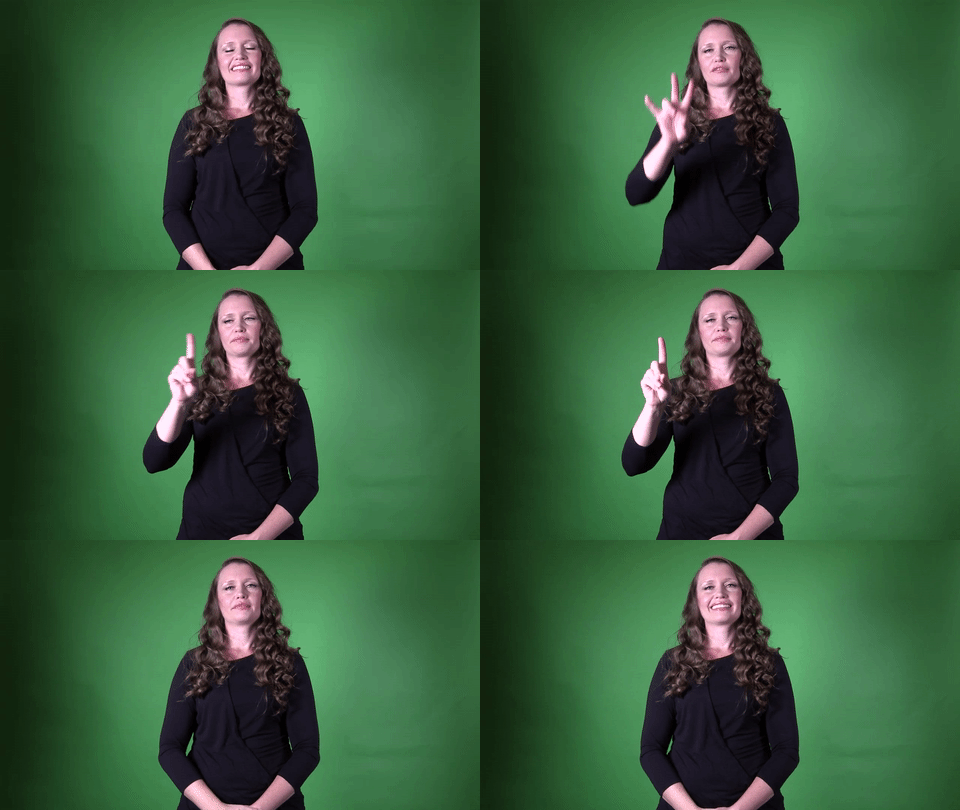
Definition: Refers to the number seventy-one
Sign for THE NUMBER SEVENTY-ONE in ASL

Practice Activities:
Practicing the sign for the number seventy-one in ASL can be done through repetition and contextual use. Start by forming the sign slowly while watching yourself in a mirror. Repeat it multiple times while saying the number aloud to reinforce memory. Try switching between signing seventy and seventy-one to develop fluency with number transitions.
Use fingertip drills to improve accuracy by alternating between the numbers sixty-nine, seventy, seventy-one, and seventy-two. This helps distinguish similar number signs and builds confidence. Another helpful exercise is using flashcards with random numbers and quickly signing what you see without hesitation.
Practice the sign for the number seventy-one in ASL in everyday contexts. Count aloud to seventy-one in ASL, pausing at intervals to reinforce accuracy. Sign numbers while looking at a calendar, speed limit signs, or identifying numbers in books. Play a scavenger hunt where you locate the number seventy-one in your surroundings and sign it when found.
Use example sentences to embed the number seventy-one in real situations. Sign sentences like “My grandfather is seventy-one years old,” or “There are seventy-one people in this building.” Try conversations with a partner where you exchange numerical information such as ages, addresses, or prices.
Engage in storytelling exercises where seventy-one plays a key role. Imagine a character collecting seventy-one coins or traveling seventy-one miles. Make up simple math problems like “What is seventy-one plus ten?” and sign the answer. Play a bingo-style game where numbers are called out randomly and signed correctly.
For interactive learning, practice with a partner by quizzing each other on random numbers between sixty and eighty. Challenge each other to sign numbers as quickly and accurately as possible. Record yourself signing to self-check progress and refine any needed adjustments.
Cultural Context:
American Sign Language has a unique way of expressing numbers, including the number seventy-one. In ASL, numbers are signed using distinct handshapes and movements that make them easily recognizable. The sign for the number seventy-one in ASL follows the standard numeric pattern used in counting and communication.
Numbers are essential in daily conversations, from telling time to sharing addresses and phone numbers. The number seventy-one may come up in discussions about age, prices, years, or even counting in sequences. Learning the sign for the number seventy-one in ASL helps improve fluency and understanding of ASL’s numerical system.
ASL numbers are often signed using a combination of finger positions that convey meaning quickly. The sign for the number seventy-one in ASL follows the same hand expressions as other two-digit numbers. Knowing how to sign numbers properly ensures clear communication with native signers.
Many ASL users sign numbers differently depending on regional variations or personal preferences. The number seventy-one in ASL may have slight variations based on the signer’s background. However, the general format remains consistent, making it easy for most ASL users to understand.
Numbers play a role in conversations about history, finance, and even sports. The number seventy-one might appear in sports scores, dates, or statistics. Being able to sign the number seventy-one in ASL ensures that communication in these areas remains smooth.
ASL students practice recognizing and signing numbers during their learning process. Memorizing the sign for the number seventy-one in ASL, along with other numbers, helps build a strong foundation in ASL. Practicing numbers regularly increases signing confidence and accuracy.
In deaf culture, numbers are just as important as words in storytelling and everyday interactions. Whether discussing birthdays, addresses, or important events, the number seventy-one in ASL helps convey precise information. Understanding ASL numbers enhances communication among signers and supports effective conversations.
ASL numbers are commonly used in educational settings, workplaces, and social gatherings. Knowing the sign for the number seventy-one in ASL allows for better participation in discussions involving measurements, rankings, and data. Mastering these signs is essential for clear and efficient communication.
Many numbers in ASL share similar patterns, making them easier to remember. The sign for the number seventy-one in ASL is part of a sequence that follows a logical flow. Recognizing these patterns makes it easier to learn and recall numbers quickly.
Signing numbers fluently is an important skill for both
Extended Definition:
The sign for the number seventy-one in ASL follows the standard structure for signing two-digit numbers. It combines the sign for seventy with the sign for one, transitioning smoothly between the two handshapes. Learning this sign is essential for expressing numbers clearly in American Sign Language.
In ASL, numbers from seventy to seventy-nine often follow a predictable pattern. The sign for the number seventy-one in ASL starts with the hand forming the number seven and then shifting into the number one. This movement ensures clarity and helps maintain fluid communication between signers.
Handshape and movement are crucial when signing the number seventy-one in ASL. The dominant hand forms the number seven with the thumb and ring finger touching, then transitions into the number one by extending the index finger. Precision in this transition prevents confusion with similar numbers.
Facial expressions and slight variations in movement can add emphasis when signing the number seventy-one in ASL. Keeping the hand steady and moving smoothly between digits improves comprehension. This is particularly important when discussing addresses, prices, or measurements in ASL.
Some regions may slightly modify the way they sign the number seventy-one in ASL, but the standard version remains widely recognized. Beginners should practice each number separately before smoothly connecting them. This builds confidence and ensures accuracy when communicating large numbers.
Numbers play a critical role in everyday conversations, and mastering the sign for the number seventy-one in ASL is useful in many contexts. Whether discussing finances, sports scores, or age, signers frequently rely on clear number signs. Practicing this sign will enhance overall ASL fluency.
For better retention, learners can use repetition and visual memory techniques when practicing the sign for the number seventy-one in ASL. Watching native signers and practicing with others can help improve fluency. Video resources and ASL dictionaries provide excellent visual references for mastering this number.
Finger dexterity is essential when signing numbers in ASL. The transition between seven and one should feel natural and seamless. With regular practice, signers can quickly and accurately produce the sign for the number seventy-one in ASL.
Understanding number signs is important for effective ASL communication. The sign for the number seventy-one in ASL is part of the larger numerical system in American Sign Language. Mastering these foundational signs enhances overall signing skills and improves interactions with other signers.
Synonyms: seventy-one, number seventy-one, number 71, the number 71, the number seventy-one
Educational resources: Find related learning materials in our course bank!
Want more? Check out some of our popular learning activities on the homepage!
Need to look up a sign? Use our highly rated dictionary: https://aslinteractive.com/best-asl-dictionary/
Follow us on tiktok: https://www.tiktok.com/@aslinteractive. More social media links at the bottom of this page!
Long-tail Keywords: what is the sign for the number seventy-one in ASL, how do you sign the number seventy-one in ASL, learn to sign the number seventy-one in American Sign Language
Categories: Numbers – Basics, Numbers 71-80, cardinal numbers
tags: Numbers 71-75, Numbers, Language Learning, Mathematics, Education
Parameters
*Handshape*:
The sign for the number seventy-one in ASL uses a two-digit transformation method. It begins with the number seven handshape, where the thumb and ring finger touch while the other fingers extend. Then, it transitions smoothly to the number one handshape, with the index finger pointing upward and the remaining fingers curled down. This fluid motion conveys the numerical sequence clearly, ensuring accuracy in expressing the sign for the number seventy-one in ASL. ✋
*Palm Orientation*:
The sign for the number seventy-one in ASL uses a palm orientation that begins facing outward. The dominant hand forms the number seven first, with the palm facing forward, then transitions to the number one while maintaining the outward-facing position. This fluid movement ensures clarity when signing the number. The fingers remain relaxed, and the motion between the digits should be smooth to maintain accuracy.
*Location*:
The sign for the number seventy-one in ASL is formed in the neutral space in front of the signer’s body, generally at chest level. The dominant hand transitions from a “7” to a “1” in one fluid motion. This movement is typically relaxed and natural, ensuring clarity for the viewer. Maintaining consistent positioning in this area helps keep the sign legible and easily recognizable.
*Movement*:
To produce the sign for the number seventy-one in ASL, start with the number seven by placing the thumb and ring finger together while extending the other fingers. Then, smoothly transition to the number one by extending the index finger while folding the rest of the fingers down. The movement should be fluid, shifting from seven to one in a single, controlled motion without excessive delay between numbers. ✋➡️☝️
*Non-Manual Signals*:
When signing the sign for the number seventy-one in ASL, maintain a neutral or slightly focused facial expression. Eyebrows may remain in a natural position unless emphasizing the number in conversation. Mouth movements should be minimal, staying relaxed without exaggerated lip movement. If counting or listing numbers, a slight nod or small mouth movement can naturally emphasize clarity. Keep eye contact with your conversation partner to reinforce engagement and understanding.
*Prosody, Dominant/Non-Dominant Hand*:
The sign for the number seventy-one in ASL uses the dominant hand only. Start with the palm facing outward, forming a “7” with the index and middle fingers extended while the thumb sticks out. Then, smoothly transition into a “1” by retracting the middle finger and thumb, leaving just the index finger up. The motion should be fluid and natural, maintaining a steady handshape shift.
Tips for Beginners:
When practicing the sign for the number seventy-one in ASL, focus on fluidity and hand positioning. This number blends two digits into a seamless motion, so ensure your transitions are smooth. Keep your hand relaxed but controlled to maintain accuracy.
A common mistake is forming the numbers too rigidly or making the transition too slowly. The sign for the number seventy-one in ASL should be performed with a comfortable flow, not as two separate numbers. If you struggle, try practicing each digit individually before combining them.
Finger placement is crucial for clarity. Make sure your fingers are properly positioned and the movement is distinct to avoid confusion with similar numbers. Looking in a mirror or recording yourself can help you spot inconsistencies.
Consistency in movement speed and hand shape makes this sign more readable. If you find yourself hesitating, slow down and focus on accuracy first. Gradually increase your speed as your confidence improves.
Watching fluent signers can provide insights into how the sign should look naturally. Observe how they transition between the numbers and mimic their technique. Regular exposure will help reinforce proper form.
Practicing with a partner can give you valuable feedback. Ask a fluent signer or instructor to check your execution of the sign for the number seventy-one in ASL. They can point out subtle errors and help you refine the motion.
Avoid unnecessary movement that could alter the sign’s meaning. Keep your hand steady, and don’t add extra gestures that might make it unclear. Precision is key to effective communication in ASL.
Repetition is essential for mastering number signs. Set aside time each day to practice, ensuring that the number feels natural and second nature. With enough repetition, the sign will become effortless and fluid.
Connections to Other topics:
The sign for the number seventy-one in ASL is part of the broader category of two-digit number signs. In ASL, numbers from 67 to 99 typically incorporate a twisting or sliding movement to transition between digits smoothly. This number follows the same pattern, making it visually distinct from single-digit numbers while also being efficient to sign in natural conversation. Recognizing these patterns helps learners anticipate number signs and apply similar movements when signing related numerical values.
Understanding the sign for the number seventy-one in ASL is useful in discussing dates, prices, and addresses. Numbers are essential when providing information such as birth years or highway route numbers, where accuracy is key. Since numbers appear frequently in signing contexts like sports scores, statistics, and mathematical concepts, mastering these formats improves fluency. By studying the way numbers are structured, signers can better recognize numerical sequences in various real-world scenarios.
This sign relates closely to other two-digit numbers that use similar formatting, such as seventy-two, seventy-three, and beyond. When signing multiple-digit numbers, it’s helpful to practice fluidly transitioning between handshapes to avoid choppy signing. This is especially necessary in rapid conversations where precision and clarity matter. The consistency of these patterns also assists in recognizing other complex numerical expressions, such as years and time indicators.
Number signs also have connections to classifiers, as the way numbers are signed can change depending on context. For instance, ordinal numbers like 71st require an adjusted movement to indicate ranking. Additionally, incorporating number signs into storytelling or explanations often involves combining them with facial expressions for emphasis. Whether listing scores, referencing historical events, or discussing financial figures, numbers play a crucial role in daily ASL communication.
Summary:
The sign for the number seventy-one in ASL follows a systematic pattern used in counting. It incorporates elements from the number seven and the number one. This numerical system aligns with ASL’s visual-spatial structure, making it efficient for communication.
When signing the number seventy-one in ASL, the dominant hand forms the number seven followed by the number one. The transition between the two digits should be smooth and effortless. This sign falls within the standard numeric sequence used across various contexts, including counting, money, and time.
The number seventy-one in ASL is part of a larger linguistic framework where numbers from sixty to ninety follow a predictable format. The pivot from one digit to the next helps reinforce the numerical structure in ASL. This consistency aids both learners and fluent signers in recalling and producing the numbers accurately.
Numbers play an essential role in ASL, providing a foundation for discussing quantities, addresses, and measurements. The sign for seventy-one in ASL exemplifies how numerical concepts are conveyed visually. Understanding these patterns allows for smoother conversations in everyday situations.
ASL numbers reflect the language’s unique grammar and syntax. The number seventy-one in ASL follows patterns that may differ from spoken English but maintain their own internal consistency. This highlights ASL’s distinct linguistic features, separating it from English’s auditory structure.
Numbering conventions in ASL demonstrate its visual efficiency. The sign for the number seventy-one in ASL follows a rationalized structure found throughout the numerical system. This design ensures clarity and quick comprehension when signing numbers.
Counting in ASL requires precision in hand shape, movement, and transitions. The sign for seventy-one in ASL demands an awareness of these elements to be clear and correct. This accuracy is fundamental to prevent misunderstandings.
ASL differentiates between cardinal numbers for counting and ordinal numbers for ranking. The sign for the number seventy-one in ASL represents a cardinal value. If expressing seventy-first in a sequence, a different signing strategy would apply.
The transition between numbers in ASL impacts fluency and clarity. When shifting from seventy to one in the sign for the number seventy-one in ASL, maintaining distinct yet fluid motions is essential. This ensures that the number is understood correctly.
In signed conversations, numerical precision is crucial. The sign for the number seventy-one in ASL follows a structured process that integrates seamlessly into daily exchanges. Recognizing these number patterns facilitates effective signed communication.
Various ASL contexts require numbers, whether discussing age, prices, or dates. The sign for seventy-one in ASL is useful in many real-life scenarios. Knowing ASL’s numerical system enhances linguistic competency.
Numbers in ASL are affected by regional and generational variations. While the sign for the number seventy-one in ASL remains standard, slight differences may appear based on a signer’s background. Exposure to different variations increases overall sign comprehension.
Using numbers in ASL requires mastery of transitions and rhythmic signing. The fluidity in the sign for seventy-one in ASL mirrors how native signers naturally produce numbers. This rhythm allows for seamless integration of numbers into conversation.
Teaching the number seventy-one in ASL emphasizes the systematic approach of ASL numbering. Learning this sign sheds light on broader linguistic structures in ASL. Mastering numbered sequences strengthens overall signing skills.
Numerical literacy in ASL is just as important as in spoken languages. The sign for seventy-one in ASL contributes to a well-rounded understanding of mathematical concepts expressed visually. Being proficient in ASL numbers supports broader communication skills.
Deaf education incorporates numerical learning in both ASL and written English. Recognizing the sign for the number seventy-one in ASL reinforces this bilingual approach. It helps bridge the gap between visual and written numeric comprehension.
Trainers and teachers focus on number fluency when instructing ASL. Mastering the sign for seventy-one in ASL builds confidence in using numbers naturally. Creating strong foundational skills in ASL counting fosters better communication overall.
Numbers are regularly used in daily life, whether shopping, scheduling, or counting objects. The sign for the number seventy-one in ASL provides an essential building block for these tasks. Fluent ASL users easily integrate numbers into their communication.
Repetition and practice enhance fluency in ASL numbers. Consistently signing the number seventy-one in ASL leads to automatic retrieval and production. This muscle memory helps in maintaining accuracy while signing quickly.
ASL numbers align with a broader concept of numerical literacy. The sign for the number seventy-one in ASL contributes to a deeper understanding of counting systems. Mastering ASL numbers supports overall language proficiency and mathematical reasoning.
When learning numbers in ASL, hand shape consistency is crucial. The visual distinction between the number seventy-one in ASL and other numbers helps prevent miscommunication. This precision ensures that numbers are easily recognizable within a conversation.
Deaf culture integrates numbered signs as part of daily discourse.
Want more? Check out some of our popular learning activities!
ASL Interactive Resources
ASLInteractive YouTube Channel
Follow us on tiktok: @aslinteractive.com
Follow us on Instagram: aslinteractive
Facebook page: aslinteractive
Facebook group: aslinteractive
LInkedIn: ASL Interactive LLC
Twitter: @ASL_interactive
*Some information on this page is AI-generated. AI can make mistakes. Please check the information.


Responses