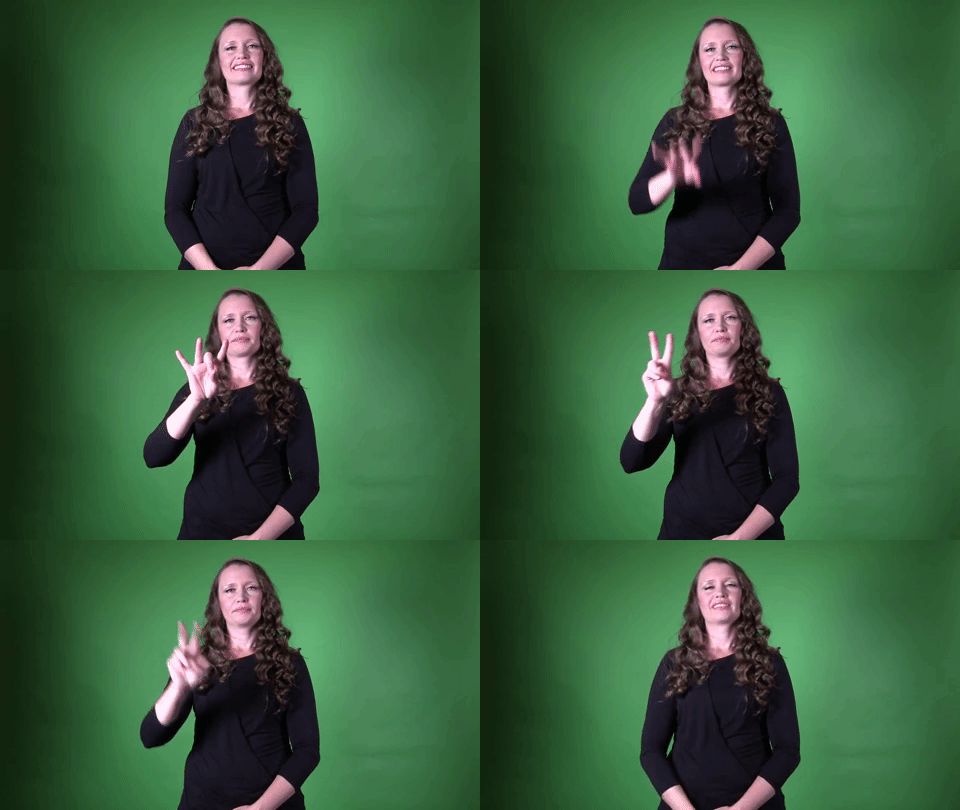
Definition: Refers to the number eighty-two
Sign for THE NUMBER EIGHTY-TWO in ASL

Practice Activities:
To practice the sign for the number eighty-two in ASL, start by repeatedly forming the number with your dominant hand. Transition smoothly from the handshape for eighty to the handshape for two. Try signing it in front of a mirror to ensure accuracy and fluidity.
Next, incorporate the sign for the number eighty-two in ASL into numerical sequences. Count from eighty to eighty-five, pausing each time you get to eighty-two to reinforce muscle memory. Challenge yourself by signing random numbers between eighty and ninety to practice recall speed.
Practice using the sign for the number eighty-two in ASL in real-world contexts. Sign a pretend address, phone number, or a price tag that includes eighty-two. For example, sign “This shirt costs eighty-two dollars” or “My house number is eighty-two.”
Engage in a partner activity where one person signs a number, and the other identifies it. Include the number eighty-two multiple times to reinforce recognition. Take turns listing random numbers to enhance comprehension.
Create a short story that includes the number eighty-two. For example, “I saw eighty-two birds in the park today” or “Eighty-two students attended the school play.” Share your story with a partner or record yourself signing it to check for fluency.
Try signing a countdown from one hundred while emphasizing the number eighty-two when you reach it. This helps build comfort with transitioning between larger numbers. Repeat the countdown several times, focusing on clarity of handshape.
Finally, play a game of “Guess the Number” with a friend. Sign different numbers between eighty and ninety, including the number eighty-two, and have them write down or sign back the correct number. Switch roles to reinforce learning both receptively and expressively.
Cultural Context:
The sign for the number eighty-two in ASL follows a logical pattern based on ASL number conventions. Numbers in American Sign Language rely on a combination of handshapes and movement, making them efficient and expressive. Learning the sign for the number eighty-two in ASL helps improve numerical fluency in conversations.
Numbers play an important role in ASL, from discussing age and money to listing addresses and phone numbers. The sign for the number eighty-two in ASL is essential for communicating precise numerical details in everyday interactions. Whether talking about prices, dates, or statistics, mastering ASL numbers enhances communication skills.
In Deaf culture, numbers are frequently incorporated into storytelling and education. The sign for the number eighty-two in ASL may be used in classrooms, lectures, or casual conversations. Learning numbers in ASL supports better engagement in Deaf spaces and enhances overall language comprehension.
Using the correct handshape for the sign for the number eighty-two in ASL ensures clarity and accuracy. Numbers can sometimes look similar in ASL, making it important to practice each one carefully. Consistently using the right sign prevents misunderstandings in conversations.
ASL numbers follow predictable patterns, allowing for easier learning and recall. Practicing the sign for the number eighty-two in ASL can help build confidence in signing larger numbers. Becoming familiar with ASL numerical structure makes signing feel more natural over time.
Engaging with Deaf culture means understanding how numbers fit into daily conversations. The sign for the number eighty-two in ASL may be used when discussing sports scores, schedules, or historical dates. Developing a strong grasp of ASL numbers allows for seamless communication in a variety of contexts.
Extended Definition:
The sign for the number eighty-two in ASL is a combination of handshapes and movement that represents the numeric value 82. This sign follows the standard numbering system used in American Sign Language and is commonly used in various contexts, including counting, addresses, and dates. Learning how to properly sign the number eighty-two in ASL is important for clear and accurate communication.
To sign the number eighty-two in ASL, begin by forming the handshape for eighty. Typically, this is done by making an “8” handshape and then transitioning smoothly into the “2” handshape. The movement between the two numbers should be fluid to maintain the natural rhythm of ASL number signs.
The sign for the number eighty-two in ASL can be used in a variety of everyday situations. For example, when discussing someone’s age, you may need to sign eighty-two to refer to an elder. It is also useful when sharing addresses, giving phone numbers, or stating monetary values.
Numbers play a crucial role in ASL, making it essential to practice proper finger placement and movement. The sign for the number eighty-two in ASL should be done with clarity to avoid confusion with similar numbers. Watching experienced signers demonstrate the sign can help improve accuracy and fluency.
Understanding the sign for the number eighty-two in ASL is beneficial for both Deaf and hearing individuals learning ASL. Mastering number signs enhances overall communication skills and helps in signing sequences accurately. Repetition and consistent practice will make these numerical signs second nature.
When signing the number eighty-two in ASL, ensure your hand is positioned correctly and transitions smoothly between numbers. Facial expressions and body language add natural emphasis, making the sign more fluid and expressive. Paying attention to detail when forming numbers ensures clear and effective communication.
The sign for the number eighty-two in ASL follows the general numerical structure of ASL counting. Learning number signs sequentially can help build a strong foundation in ASL numbering. Understanding these patterns makes it easier to sign larger numbers with confidence.
By practicing the sign for the number eighty-two in ASL frequently, you will improve speed and accuracy. This is especially useful in real-life situations where numbers must be conveyed quickly and clearly. Consistent exposure to ASL numbers helps reinforce learning and recall.
In educational settings, the sign for the number eighty-two in ASL might be taught as part of an ASL numbering lesson. Teachers may use visual aids, videos, or
Synonyms: eighty-two, number eighty-two, number 82, the number 82, the number eighty-two
Educational resources: Find related learning materials in our course bank!
Want more? Check out some of our popular learning activities on the homepage!
Need to look up a sign? Use our highly rated dictionary: https://aslinteractive.com/best-asl-dictionary/
Follow us on tiktok: https://www.tiktok.com/@aslinteractive. More social media links at the bottom of this page!
Long-tail Keywords: What is the sign for the number eighty-two in ASL, How do you sign the number eighty-two in ASL, ASL sign for the number eighty-two
Categories: Numbers – Basics, Numbers 81-90, cardinal numbers
tags: Numbers, Numbers 81-90, Math, Language Learning, Educational Content
Parameters
*Handshape*:
The sign for the number eighty-two in ASL uses a shifting handshape to represent both digits. Start with the number eight handshape—thumb and middle finger touching, with other fingers extended. Then transition smoothly to the number two handshape, forming a “V” with the index and middle fingers while the rest remain folded. This movement helps clearly convey the sign for the number eighty-two in ASL, making it visually distinct. ✋
*Palm Orientation*:
The palm orientation for the sign for the number eighty-two in ASL begins with the palm facing forward. The number eighty is signed first by forming the hand into an “8” shape and then transitioning to “0.” After that, the number two is signed with the index and middle fingers extended. Throughout the sign for the number eighty-two in ASL, the palm remains facing outward for clarity and visibility. ✋
*Location*:
The sign for the number eighty-two in ASL is produced in the neutral space in front of the signer’s body. The dominant hand forms the number eight first, with the thumb touching the tips of the middle finger. Then, the hand transitions smoothly to form the number two, extending the index and middle fingers while the other fingers remain folded. The movement typically occurs at chest level for clear visibility. ✋
*Movement*:
To perform the sign for the number eighty-two in ASL, start with the number eight handshape, where the thumb touches the middle finger while the other fingers extend. Then, smoothly transition to the number two handshape by extending the index and middle fingers while tucking the rest. The movement should be fluid, with a slight wrist rotation for clarity. This sign for the number eighty-two in ASL should be paced naturally without hesitation.
*Non-Manual Signals*:
Facial expressions remain neutral or mildly affirmative when signing the sign for the number eighty-two in ASL, especially in formal or instructional settings. Eyebrows may raise slightly to indicate a questioning tone if the number is being confirmed or clarified. Head movement can accompany the sign, tilting slightly forward for emphasis or remaining steady for neutrality. Mouth movements may mirror the spoken number silently to reinforce clarity, especially in educational or formal discussions.
*Prosody, Dominant/Non-Dominant Hand*:
The sign for the number eighty-two in ASL is produced using the dominant hand. Start by forming the number eight with the dominant hand, where the thumb and middle finger touch while the other fingers remain extended. Then, smoothly transition into the number two by extending the index and middle fingers while retracting the thumb and remaining fingers. This movement should be fluid to represent the numeric sequence clearly. Keep the palm facing outward for visibility.
Tips for Beginners:
When learning the sign for the number eighty-two in ASL, focus on transitioning smoothly between the two numbers. The number eighty is signed by forming the number eight with your dominant hand and then changing to the number two without breaking the flow. Practice keeping your movements precise and controlled so the numbers don’t blend together in a way that makes them unclear.
A common mistake when signing the number eighty-two in ASL is rushing through the numbers too quickly. This can make it difficult for others to recognize each number separately. Take your time and exaggerate the movement slightly when you’re first learning to ensure clarity before working on speed.
Finger positioning is important when forming the number eight. The tip of your thumb should touch the tip of your middle finger while keeping the other fingers extended. When switching to two, extend only the index and middle fingers while keeping the rest folded down. Transition smoothly from one shape to the next without hesitating.
Pay attention to palm orientation. In ASL, numbers in the tens often face forward, while the second number may also face forward or slightly to the side depending on the context. Watching fluent signers will help you understand the correct orientation for regional variations.
To reinforce memory, practice signing the number eighty-two in ASL along with other numbers in the eighties. This will help develop muscle memory and make you more comfortable with moving between the digits. Try signing numbers in sequences, such as eighty-one to eighty-three, for additional practice.
If you’re ever unsure about clarity, watch your sign in a mirror or record yourself to check accuracy. Practicing with a partner is also a great way to ensure that the sign for the number eighty-two in ASL is easy for others to understand in conversation.
Connections to Other topics:
The sign for the number eighty-two in ASL is part of the number system used to express numerical values clearly and efficiently. ASL has a structured way of forming multi-digit numbers, often incorporating slight movements or handshape changes to differentiate similar numbers. When signing the number eighty-two, it is essential to maintain proper hand configuration and rhythm to ensure clarity, especially in fast-paced conversation or when listing numbers sequentially.
The sign for the number eighty-two in ASL follows the pattern of other two-digit numbers, showing the relationship between the base number eighty and the changing second digit. This system is also used for other numbers like seventy-five and ninety-one. Understanding this number structure helps when signing larger values, phone numbers, addresses, and dates. ASL users often need to transition smoothly between numbers and other signs, making number fluency an integral skill.
Numbers in ASL are frequently used in combination with other signs to convey specific meanings, such as ages, prices, and statistics. For example, the sign for the number eighty-two in ASL could appear in discussions about years, sports scores, or financial figures. In some contexts, certain numbers may carry additional meanings, such as being associated with a historical event or a significant statistic. Recognizing the importance of numerical accuracy ensures clear communication in various fields, including education and business.
Numbers in ASL are also connected to classifiers, which visually represent amounts or sizes of objects. The way the number eighty-two is signed may be adapted when incorporating it into a classifier phrase based on context. This demonstrates how ASL integrates numerical concepts into broader linguistic expressions, reinforcing the visual and spatial nature of the language. Practicing these connections enhances fluency and comprehension, particularly for new learners managing numerical expressions.
Summary:
The sign for the number eighty-two in ASL is formed using the dominant hand. It begins with the number eight handshape, where the thumb touches the middle finger while the other fingers remain extended. The hand then transitions smoothly into the number two handshape, with the index and middle fingers extended while the other fingers are tucked down.
Number signs in ASL follow a logical pattern based on finger configuration and movement. The sign for the number eighty-two in ASL follows this structure, shifting from one numeral to another in a clear and fluid motion. This transition between numbers is crucial for maintaining clarity in numerical expressions.
Numbers are a fundamental part of ASL communication, appearing in dates, addresses, phone numbers, and measurements. The sign for the number eighty-two in ASL is important for expressing quantities and numerical sequences. The ability to sign numbers fluidly contributes to effective communication in various contexts.
ASL numbers are signed differently based on regional and cultural variations. While the standard way to sign the number eighty-two in ASL uses a static transition, some signers may employ slight movement for emphasis. Understanding these subtle differences enhances fluency and appreciation of ASL’s diversity.
ASL uses both one-handed and two-handed number signs, but the sign for the number eighty-two in ASL is exclusively one-handed. This makes it convenient for quick and efficient expression. Using a single dominant hand allows for easy incorporation of numbers into sentences.
Numbers above twenty often require a shift between different handshapes. The sign for the number eighty-two in ASL follows the linguistic structure of ASL number articulation. This visual and kinetic transformation is an example of ASL’s efficient use of space and movement.
Number incorporation in ASL allows for quick communication of values, but clarity is essential. The sign for the number eighty-two in ASL must be executed smoothly to avoid confusion with similar numbers like eighty-three or seventy-two. Precise articulation ensures accurate comprehension.
Historical influences on ASL have shaped its numerical system. The sign for the number eighty-two in ASL stems from the broader tradition of signed languages, evolving over time to represent numerical values clearly. This development highlights ASL’s adaptability and efficiency.
ASL numbers are frequently used in financial contexts, such as pricing and accounting. The sign for the number eighty-two in ASL can appear in discussions of money, business transactions, or statistical data. Understanding numerical signs is vital for professional and personal communication.
In Deaf education, teaching number signs is a key part of numerical literacy. The sign for the number eighty-two in ASL is an example of how students learn to recognize and produce numbers. Mastery of numerical signs supports learning math and other subjects in ASL environments.
Sports scorekeeping often involves rapid number signing. The sign for the number eighty-two in ASL might be used in discussing scores, statistics, or player numbers. Quick and clear number signaling is crucial in competitive settings.
Numbers in ASL follow a grammatical framework that allows for inflection and modification. The sign for the number eighty-two in ASL maintains its distinct form but can be emphasized by adjusting speed or facial expressions. This flexibility allows for nuanced numerical communication.
Some numbers share similar handshapes, requiring context for disambiguation. The sign for the number eighty-two in ASL might be mistaken for other numbers if signed unclearly. Ensuring precise execution prevents misunderstandings in numerical discussions.
Fingerspelling is sometimes used instead of number signs for clarity. While the sign for the number eighty-two in ASL is the most common method, some signers may opt to fingerspell portions of numerical data. This occurs in contexts such as serial numbers or specialized terminology.
Mathematical concepts in ASL involve numbers, operations, and equations. The sign for the number eighty-two in ASL appears in mathematical lessons, especially in problem-solving discussions. ASL users often integrate numerical signs into explanations and calculations.
Technology has influenced ASL, including the way numbers are signed in digital communication. When signing numbers like the sign for the number eighty-two in ASL during video calls, clear hand positioning is essential for visibility. Digital communication encourages consistency in number articulation.
Cultural representations of numbers influence language use. The sign for the number eighty-two in ASL may carry significance in historical dates, anniversaries, or symbolic references within the Deaf community. Recognizing these meanings enriches an understanding of how numbers function in ASL.
Some number signs have variations based on context or regional differences. While the sign for the number eighty-two in ASL is generally standardized, minor deviations in movement or orientation may occur. This highlights the natural linguistic evolution within ASL.
ASL storytelling incorporates numbers for narrative effect. The sign for the number eighty-two in ASL might be used in stories to indicate years, distances, or character ages. Numbers enhance storytelling by providing precise details in signed narratives.
ASL interpreters ensure accuracy when conveying numbers. The sign for the number eighty-two in AS
Want more? Check out some of our popular learning activities!
ASL Interactive Resources
ASLInteractive YouTube Channel
Follow us on tiktok: @aslinteractive.com
Follow us on Instagram: aslinteractive
Facebook page: aslinteractive
Facebook group: aslinteractive
LInkedIn: ASL Interactive LLC
Twitter: @ASL_interactive
*Some information on this page is AI-generated. AI can make mistakes. Please check the information.


Responses