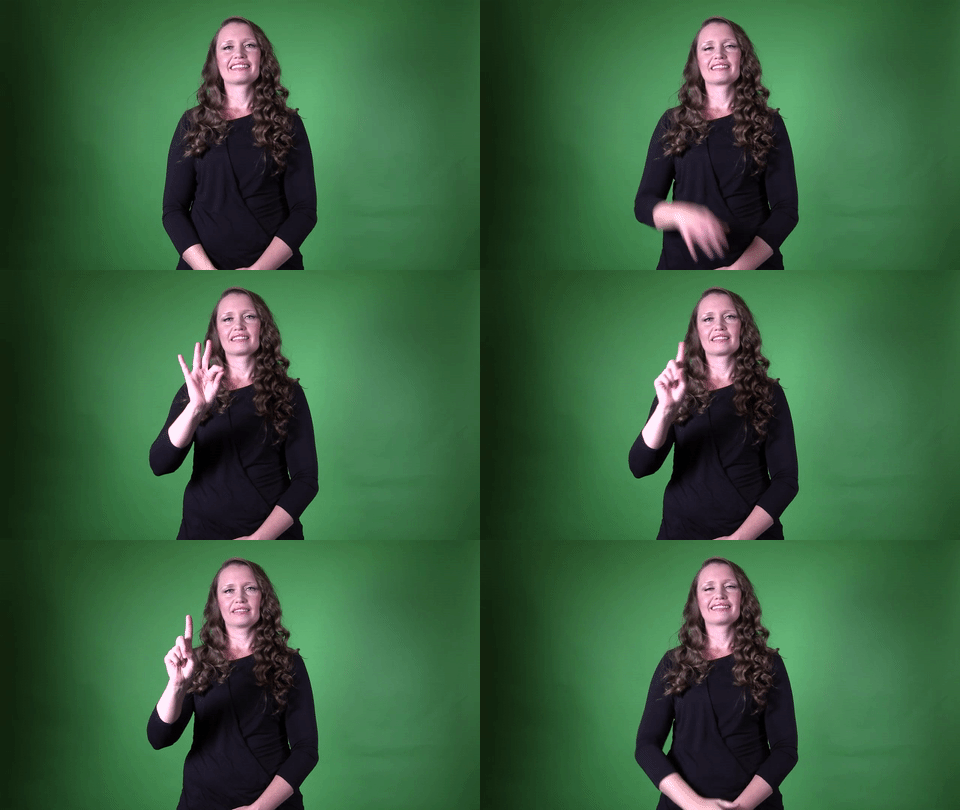
Definition: Refers to the number ninety-one
Sign for THE NUMBER NINETY-ONE in ASL
Practice Activities:
To practice the sign for the number ninety-one in ASL, start by signing it slowly and deliberately. Pay close attention to finger positioning and transitions to ensure accuracy. Use a mirror or record yourself signing to check for consistency.
Next, practice the sign for the number ninety-one in ASL within a number sequence. Count from eighty-five to ninety-five, making sure to produce each number distinctly. Challenge yourself to speed up while maintaining clarity.
Incorporate the sign for the number ninety-one in ASL into real-world contexts. Practice signing addresses or ages that include ninety-one. For example, sign an imaginary birth year, such as “My grandparent was born in 1931 and is now ninety-one years old.”
Try using the number in a math-related context. Finger-spell “math” and then sign ninety-one plus another number, signing the sum as well. This will help reinforce number recall while improving fluency in numerical conversations.
Engage in partner activities by playing a number-guessing game. One person signs a range of numbers, and the other must identify the missing number, making sure to include ninety-one in the practice. Alternate roles for full engagement.
For added challenge, create a short story using the number ninety-one. It could involve a person’s age, an event happening in the year 1991, or even counting ninety-one objects. Sign the story smoothly and naturally.
If working in a group, play a rapid number relay game. Each person signs a number in order, ensuring that no one hesitates. The goal is to maintain a steady rhythm while signing accurately. This enhances number fluency while keeping the practice interactive.
Cultural Context:
Signing for the number ninety-one in ASL is an essential skill for numbers in American Sign Language. Numbers appear in everyday conversations, from giving addresses to sharing phone numbers. Learning the sign for the number ninety-one in ASL helps improve communication fluency.
The sign for the number ninety-one in ASL is part of the counting system used by Deaf and hard-of-hearing individuals. Number signs are important for discussing math, money, and dates. Understanding the sign for the number ninety-one in ASL makes it easier to share numerical information clearly.
Using the sign for the number ninety-one in ASL correctly follows the standard number-signing rules. It is useful in banking, shopping, and giving statistics. Accurate number signs prevent misunderstandings in personal and professional interactions.
Deaf culture values clear communication, and numbers are a major part of conversations. Learning the sign for the number ninety-one in ASL fosters better connections within the Deaf community. Fluency in number signs ensures smooth interactions in everyday situations.
Mastering the sign for the number ninety-one in ASL is helpful for teachers, interpreters, and students. It is commonly used in classrooms, business transactions, and storytelling. Understanding numbers allows for precise and efficient communication in various ASL settings.
The American Sign Language number system follows a logical structure, making it easy to learn. The sign for the number ninety-one in ASL follows a pattern similar to other two-digit numbers. Consistent practice can help in remembering and using signs correctly.
Numbers in ASL are signed using the dominant hand and require proper handshape and movement. Knowing the sign for the number ninety-one in ASL ensures confidence when using numbers during conversations. Practicing number signs daily can improve fluency and signing speed.
Learning the sign for the number ninety-one in ASL is especially important for interpreting numerical data. Whether discussing prices, budgets, or scores, number signs play a key role in communication. Reliable number-signing skills are essential for effective ASL conversations.
In Deaf culture, accurate number signs show respect for proper ASL grammar and usage. The sign for the number ninety-one in ASL is a small yet important part of mastering numbers. Proper number signing contributes to a smooth and professional signing experience.
Engaging with the Deaf community provides opportunities to practice the sign for the number ninety-one in ASL. Conversations with fluent signers can help reinforce learning and correct mistakes. Becoming comfortable with numbers improves overall ASL
Extended Definition:
The sign for the number ninety-one in ASL follows the standard structure for signing two-digit numbers in American Sign Language. It combines the signs for nine and one in a fluid motion to ensure clarity and natural expression. Proper handshape and movement are essential for accurate communication.
To produce the sign for the number ninety-one in ASL, start by forming the number nine with your dominant hand. The number nine is created by touching the tip of the thumb to the tip of the index finger while keeping the rest of the fingers extended. Next, transition smoothly into the number one by extending just the index finger while the other fingers remain closed.
The sign for the number ninety-one in ASL should be executed with a slight bounce or shift between the two numbers. Maintaining a consistent palm orientation and fluidity will help make the sign more natural. Facial expressions and mouth movements are not necessary for this specific number sign unless used for additional emphasis.
In ASL, number signs are essential for counting, identifying quantities, and indicating addresses or phone numbers. The sign for the number ninety-one in ASL is commonly used in daily conversation, when discussing age, or when referring to large numerical values. Practicing smooth transitions between numbers helps improve fluency in signing.
Regional variations in signing numbers can sometimes occur, but the standard method remains widely accepted. Learning the sign for the number ninety-one in ASL accurately helps ensure clear communication with other signers. As with all ASL numbers, consistency in handshape and movement is crucial for understanding.
Mastering numbers in ASL, including the sign for the number ninety-one in ASL, is an important part of becoming proficient in sign language. Watching native signers and using ASL dictionaries can provide valuable guidance. Regular practice will help build confidence in signing numbers accurately.
Numbers are frequently used in ASL conversations, so it is helpful to become comfortable with them. The sign for the number ninety-one in ASL follows the same principles as other two-digit numbers, making it easy to learn once the basics are understood. With repetition and attention to detail, signing numbers becomes second nature.
Using ASL correctly strengthens communication and ensures effective interaction with Deaf and hard-of-hearing individuals. The sign for the number ninety-one in ASL is straightforward when broken down into its component parts. Learning and practicing number signs consistently leads to greater fluency in ASL.
Synonyms: ninety-one, number ninety-one, number 91, the number 91, the number ninety-one
Educational resources: Find related learning materials in our course bank!
Want more? Check out some of our popular learning activities on the homepage!
Need to look up a sign? Use our highly rated dictionary: https://aslinteractive.com/best-asl-dictionary/
Follow us on tiktok: https://www.tiktok.com/@aslinteractive. More social media links at the bottom of this page!
Long-tail Keywords: what is the sign for the number ninety-one in ASL, how do you sign the number ninety-one in ASL, ASL sign for the number ninety-one
Categories: Numbers – Basics, Numbers 91-100, cardinal numbers
tags: Numbers, Numbers 91-100, Math, Language Learning, Educational Content
Parameters
*Handshape*:
The sign for the number ninety-one in ASL combines two distinct handshapes. First, the number nine is formed by touching the tip of the thumb to the tip of the index finger, creating a small circle while the other fingers remain extended. Then, the number one is shown by extending the index finger while the other fingers are curled into the palm. These handshapes transition smoothly to represent the sign for the number ninety-one in ASL.
*Palm Orientation*:
The palm orientation for the sign for the number ninety-one in ASL begins with the palm facing outward while forming the number nine. The fingers are slightly curved, and the thumb and index finger create a circular shape. Then, the hand transitions to the number one with the palm still facing outward, extending the index finger while the other fingers stay curled. Throughout the movement, the palm orientation remains consistent to ensure clarity when signing the number.
*Location*:
The sign for the number ninety-one in ASL takes place in a neutral signing space in front of the body, slightly above waist level. This location allows for clear visibility and ease of movement when transitioning between numbers. Keeping the hand within this area ensures that the sign for the number ninety-one in ASL is easily understood by others in conversation or instructional settings.
*Movement*:
To sign for the number ninety-one in ASL, start with the number 9 handshape, where the thumb and index finger form a circle, and the other fingers extend upward. Then, transition smoothly into the number 1 handshape by extending the index finger up while the other fingers remain in a fist. This movement should be fluid and clear to distinguish both numbers. Keep the palm facing forward and maintain a steady transition.
*Non-Manual Signals*:
When signing the sign for the number ninety-one in ASL, keep a neutral or slightly focused facial expression. Your eyebrows should remain in a natural position unless the context requires emphasis, such as asking a question. The mouth should remain relaxed, without exaggerated movements, unless adding a mouthing component for clarity. Keep your head stable or slightly nodding if emphasizing the number for clarity in a conversation.
*Prosody, Dominant/Non-Dominant Hand*:
For the sign for the number ninety-one in ASL, use the dominant hand to form the number 9, with the index finger and thumb touching while the other fingers remain extended. Then, smoothly transition into the number 1 by extending just the index finger. The movement should be fluid, without a pause between the numbers. Keep the palm facing outward, maintaining a steady handshape shift for clarity.
Tips for Beginners:
When learning the sign for the number ninety-one in ASL, begin by mastering the numbers nine and one separately. The number nine is formed by touching the tip of the thumb to the tip of the index finger while extending the remaining three fingers. The number one is a simple upward-facing index finger with the other fingers folded down. Practice transitioning smoothly between these two signs with controlled hand movements.
A common challenge when signing the number ninety-one is maintaining clear hand shapes. Ensure that the number nine’s circular hand shape is distinct and does not resemble other numerical signs like six or three. Similarly, make sure the number one is clearly presented with the index finger fully extended and not bent. Consistent hand positioning and finger separation will help avoid confusion.
Finger placement is crucial for readability, especially when signing rapidly. Keep your hand in a comfortable, neutral space slightly in front of your shoulder to maintain visibility. Avoid excessive motion between numbers—keep the transition seamless and fluid. Practicing in front of a mirror can help you refine the accuracy of each individual number and the overall transition.
Clarity and confidence enhance comprehension when signing numbers like ninety-one. Try to maintain consistent speed so that the numbers do not blend together. Practicing with a partner or recording yourself can help identify areas where the sign may be unclear. The more you practice, the more natural this number combination will feel.
When using the sign for the number ninety-one in ASL in conversation, stay aware of pacing and hand positioning. If unsure, slow down to ensure precision rather than speed. With time and repetition, this sign will become second nature, making number communication in ASL smooth and accurate.
Connections to Other topics:
The sign for the number ninety-one in ASL connects to the broader category of ASL number signs, specifically two-digit numbers. ASL numbers follow a logical pattern, with the first digit shown followed by the second. Numbers in the 90s series begin with the “9” handshape, followed by the appropriate second digit. Understanding the sign for the number ninety-one in ASL helps with recognizing similar numbers like ninety-two or ninety-nine, reinforcing number fluency.
The sign for the number ninety-one in ASL also builds on knowledge of cardinal numbers, which are essential for counting, giving addresses, discussing years, and stating quantities. Knowing how to incorporate this sign within a conversation improves overall numerical communication in ASL. Using number signs with contextual facial expressions can also help clarify meaning, such as emphasizing a large amount or a specific mathematical concept.
This number also ties into ordinal numbers, time signs, and monetary values. The number ninety-one could be relevant in discussing events, percentages, or statistics in ASL. When paired with classifiers, numbers can depict large sets of things, such as listing items on a chart or explaining a series of events. By practicing, signers can develop smooth transitions between numerical values and general conversation.
Learning the sign for the number ninety-one in ASL also helps when discussing age, prices, and years. For example, saying someone is ninety-one years old would require this specific number sign rather than fingerspelling. Applying these same structural patterns to other numbers strengthens overall competency. Understanding number incorporation in ASL grammar is crucial for effective signing and comprehension.
Summary:
The sign for the number ninety-one in ASL is made by using a combination of number signs. It starts with the handshape for nine, followed by a shift to the handshape for one. Each number is articulated separately but smoothly in a fluid motion.
When forming nine, the dominant hand is held up with the index finger and thumb touching in an “O” shape while the other three fingers remain extended. The palm typically faces outward to maintain standard number orientation. Transitioning to one, the thumb and other fingers close while the index finger remains extended, maintaining proper numerical sequence.
In ASL, numbers above twenty-one often follow a pattern of sequentially presenting each digit. The sign for the number ninety-one in ASL follows this pattern, making it clear and easily understood. Fluent signers ensure that both digits are signed without unnecessary pauses, creating fluidity.
Numbers play an essential role in ASL and have their own structure for clarity and efficiency. The sign for the number ninety-one in ASL is an example of how ASL conveys multi-digit numbers through sequential signing. This system of signing numbers ensures that quantity and numerical values are efficiently communicated.
The number ninety-one may be used in various contexts, such as giving addresses, stating ages, or discussing historical dates. When signing addresses or identification numbers, signers may modify their pace to match the context. A slight pause between ninety and one may be used for emphasis when necessary.
ASL has a rich numerical system that allows for quick and effective communication. The sign for the number ninety-one in ASL follows the principles of contrast and clarity. The movement and transition between numbers ensure that comprehension is maintained without ambiguity.
Numbers in ASL are often accompanied by facial expressions that reinforce their meaning. When using the sign for the number ninety-one in ASL in a declarative sentence, a neutral facial expression is generally used. However, in certain contexts, such as expressing surprise or emphasis, facial expressions may become more pronounced.
ASL numbers demonstrate a blend of linguistic simplicity and complexity. The sign for the number ninety-one in ASL highlights the way ASL makes counting concise and efficient. By utilizing a sequential transition between nine and one, signers avoid confusion.
Number signing in ASL differs from word-based signing as it follows a more rigid structure. The sign for the number ninety-one in ASL represents one of many multi-digit numbers that ASL users must become fluent in. Understanding number sequencing is an essential part of ASL fluency.
Fluent signers ensure that number signs remain distinct yet fluid. The sign for the number ninety-one in ASL requires careful hand movement to maintain clarity. Any deviation in handshape or orientation could potentially alter the numerical meaning.
Numbers are used frequently in daily communication for providing essential information. The sign for the number ninety-one in ASL is part of this system that ensures numbers can be easily conveyed. Mastering number signs is crucial for effective signing in various real-world situations.
Signers should practice transitioning smoothly between different numerical gestures. The sign for the number ninety-one in ASL requires an understanding of number transitions. A steady hand and precise finger movement contribute to articulation clarity.
Beyond their functional use, signed numbers also hold cultural significance in Deaf communities. The sign for the number ninety-one in ASL has contextual importance in identifying times, quantities, and personal information. The efficiency of ASL numbering allows for quick exchange of numerical data.
Numbers in ASL are structured in a way that prioritizes quick comprehension. Because of this, the sign for the number ninety-one in ASL follows a direct and efficient movement pattern. Each number retains its visual identity while merging into a cohesive numerical statement.
Linguistically, number signs illustrate how ASL maintains a systematic approach to structuring meaning. The sign for the number ninety-one in ASL is an example of how visual-spatial elements are used to construct numerical sequences. Understanding this system is vital for effective communication.
ASL numbers have evolved alongside Deaf culture and communication methods. The sign for the number ninety-one in ASL is a testament to how signing methods reflect both linguistic development and community usage. Numbers in ASL are foundational to all areas of conversation, from casual exchanges to formal presentations.
The clarity of signing numbers is essential for preventing misunderstandings. The sign for the number ninety-one in ASL must be performed with precision to be understood correctly. Proper finger positioning and movement direction ensure numerical accuracy.
ASL learners often practice number sequences repeatedly to build fluency. The sign for the number ninety-one in ASL is a useful example to practice smooth transitions between digits. Mastering number sequences enhances overall signing proficiency.
Understanding number signs is crucial for recognizing finer details in signed conversations. The sign for the number ninety-one in ASL contributes to the overall numerical lexicon in signed language. With practice, signers develop confidence in presenting numbers naturally.
Want more? Check out some of our popular learning activities!
ASL Interactive Resources
ASLInteractive YouTube Channel
Follow us on tiktok: @aslinteractive.com
Follow us on Instagram: aslinteractive
Facebook page: aslinteractive
Facebook group: aslinteractive
LInkedIn: ASL Interactive LLC
Twitter: @ASL_interactive
*Some information on this page is AI-generated. AI can make mistakes. Please check the information.


Responses