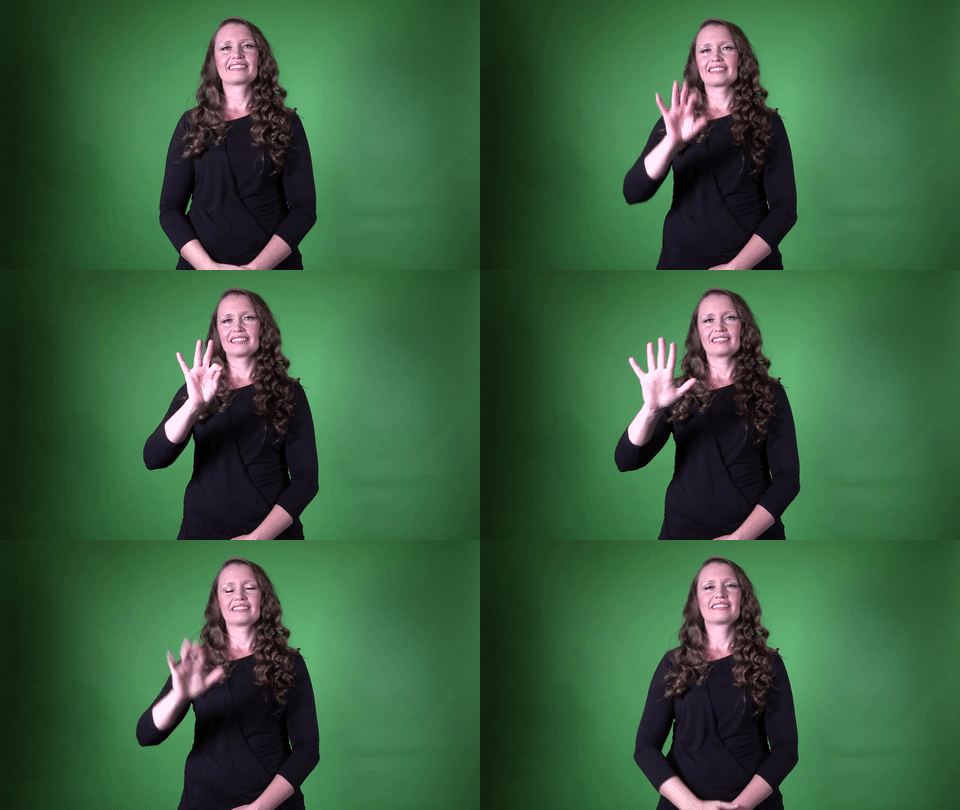
Definition: Refers to the number ninety-five
Sign for THE NUMBER NINETY-FIVE in ASL
Practice Activities:
To build confidence in using the sign for the number ninety-five in ASL, start by practicing it in isolation. Repeatedly sign the number while saying it aloud to reinforce the connection between the handshape and its meaning. Use a mirror or record yourself to check accuracy and hand movement. Try signing it slowly, then gradually increase your speed while maintaining clarity.
Next, incorporate the sign for the number ninety-five in ASL into basic number sequences. Count up from ninety to one hundred, ensuring fluid transitions between numbers. Challenge yourself by counting backward from one hundred to ninety. Mix random numbers with ninety-five, such as signing eighty, ninety-five, and sixty to improve recognition in different contexts.
Use the sign for the number ninety-five in ASL in real-life scenarios. Pretend to give a total when purchasing something or practice sharing a number in an address or phone number. Create a math problem using the number and sign it while solving: “Ninety-five minus thirty equals?” You can also sign years, such as “ninety-five” as part of “1995.”
For a partner activity, take turns signing random numbers while the other person writes them down. Increase difficulty by signing multiple numbers in a row for longer sequences. Another interactive option is to create a guessing game where one person signs a number, and the other must recognize and say it aloud.
To practice storytelling, create a short narrative that involves the number ninety-five. For example, tell a story about someone celebrating their ninety-fifth birthday or a marathon runner completing ninety-five miles. Adding this number naturally into signed conversation will enhance fluency and comfort in using it.
Cultural Context:
ASL is a rich and visual language used by the Deaf community to communicate effectively. Numbers play a crucial role in conversation, from discussing ages and dates to money and measurements. The sign for the number ninety-five in ASL follows a structured pattern that makes it easy to learn and recognize.
The sign for the number ninety-five in ASL is part of the larger numerical system used in everyday communication. It is often used when talking about prices, years, or large quantities. Understanding the numerical system in ASL helps ensure accuracy in conversations.
Numbers in ASL are not just about counting; they also carry cultural significance. The sign for the number ninety-five in ASL may be used in historical references, addresses, or sports statistics. Learning how to sign numbers correctly helps build fluency and confidence in ASL communication.
The Deaf community frequently uses ASL numbers for various social and professional settings. The sign for the number ninety-five in ASL might appear in conversations about anniversaries, events, or ages. When signing numbers in ASL, facial expressions and hand movements play an important role in conveying meaning clearly.
Having a strong grasp of ASL numbers allows for better interaction within the Deaf and Hard-of-Hearing communities. The sign for the number ninety-five in ASL follows a natural flow that makes it easy to remember. Practicing number signs regularly helps improve signing speed and comprehension.
Numbers in ASL are often incorporated into storytelling, education, and workplace discussions. The sign for the number ninety-five in ASL is useful in academic settings, financial discussions, and casual conversations. Being able to sign numbers accurately enhances effective communication.
When learning ASL numbers, it’s important to recognize patterns and handshapes. The sign for the number ninety-five in ASL follows a consistent structure, making it easy to recall. Mastering number signs is an essential step in becoming fluent in ASL.
Using ASL numbers correctly helps prevent miscommunication in important situations. The sign for the number ninety-five in ASL is frequently used in contexts that require precision, such as phone numbers, addresses, and prices. Developing strong ASL number skills can greatly improve overall fluency.
Many people use ASL numbers in professional and educational settings. The sign for the number ninety-five in ASL may come up in classroom discussions, business meetings, or while sharing personal stories. ASL users rely on clear number signs to ensure accuracy in their conversations.
Signing numbers in
Extended Definition:
The sign for the number ninety-five in ASL is a simple yet distinct handshape commonly used in American Sign Language. This sign follows the standard numerical pattern in ASL, making it easy to learn for both beginners and experienced signers. When signing the number ninety-five in ASL, understanding proper hand position and movement ensures clear communication.
To form the sign for the number ninety-five in ASL, start with the number nine handshape, which involves extending the thumb and index finger while curling the remaining fingers toward the palm. Then, transition smoothly into the number five handshape, where all five fingers are extended and spread apart. The movement is fluid and natural, ensuring the number is easily recognized.
Numbers play a crucial role in ASL, and the sign for the number ninety-five in ASL is commonly used in various contexts. Whether you are discussing age, prices, quantities, or statistics, signing numbers correctly is essential for clear conversations. Learning numerical signs helps ASL users communicate more efficiently in everyday interactions.
In ASL, palm orientation is important when signing numbers, including the sign for the number ninety-five in ASL. Typically, the palm faces outward to ensure visibility to the viewer. However, in some casual or regional variations, slight differences in orientation may occur without affecting comprehension.
Practicing the sign for the number ninety-five in ASL helps develop muscle memory and accuracy. Repeating the movement several times will reinforce correct finger positioning and smooth transitions. Watching experienced signers or using ASL video resources can improve fluency.
Like other number signs, the sign for the number ninety-five in ASL may be incorporated into larger numerical expressions. This includes making reference to addresses, sports scores, or mathematical equations. Understanding how to sign numbers fluently enhances overall ASL proficiency.
The sign for the number ninety-five in ASL follows the standard numerical sequence, making it part of a structured system. ASL numbers from one to ninety-nine share consistent patterns, making them logical to learn. Mastering these numbers provides a strong foundation for both basic and complex ASL conversations.
For those new to signing, practicing in front of a mirror or with a partner can help refine handshape accuracy. The sign for the number ninety-five in ASL, like other numbers, becomes easier with regular practice. Watching instructional videos or asking fluent ASL users for feedback can also improve clarity.
Numerical signs in ASL are an essential component of fluent communication.
Synonyms: ninety-five, number ninety-five, number 95, the number 95, the number ninety-five
Educational resources: Find related learning materials in our course bank!
Want more? Check out some of our popular learning activities on the homepage!
Need to look up a sign? Use our highly rated dictionary: https://aslinteractive.com/best-asl-dictionary/
Follow us on tiktok: https://www.tiktok.com/@aslinteractive. More social media links at the bottom of this page!
Long-tail Keywords: What is the sign for the number ninety-five in ASL, How do you sign the number ninety-five in ASL, Learn to sign the number ninety-five in American Sign Language
Categories: Numbers – Basics, Numbers 91-100, cardinal numbers
tags: Numbers, Numbers 91-100, Math, Language Learning, Educational Content
Parameters
*Handshape*:
The sign for the number ninety-five in ASL uses a changing handshape. Start with the “9” handshape, where the thumb and index finger touch to form a circle, while the other fingers remain extended. Transition smoothly to the “5” handshape, where all five fingers spread open. This alternating movement clearly distinguishes the sign for the number ninety-five in ASL and ensures easy recognition when signing numbers accurately. ✋
*Palm Orientation*:
The palm orientation for the sign for the number ninety-five in ASL starts with the palm facing outward. The hand begins in the shape of a “9,” with the thumb and index finger touching to form a small circle, while the other fingers remain extended. Then, the hand transitions smoothly into the “5” shape by spreading all fingers apart. Throughout the motion, the palm continues facing forward to maintain clarity and accuracy.
*Location*:
The sign for the number ninety-five in ASL is made in the neutral space in front of the body, typically at chest level. The movement starts with the number nine handshape, where the thumb and index finger touch while the other fingers extend. It then transitions smoothly into the number five handshape, where all fingers are open and spread apart. This sign is performed with one hand using a quick, fluid motion without additional movement.
*Movement*:
To produce the sign for the number ninety-five in ASL, start with the number nine handshape, where the thumb and index finger form a circular shape while the other fingers remain extended. Flick the hand slightly forward, then transition smoothly into the number five handshape by opening all fingers. The motion should be fluid and natural, ensuring a clear change between the two numbers. Keep the palm facing outward throughout the movement.
*Non-Manual Signals*:
Facial expressions remain neutral or slightly focused when signing the sign for the number ninety-five in ASL. Eyebrows may be slightly raised when clarifying or confirming the number. Eye contact is maintained with the listener to ensure clear communication. If emphasizing or confirming, a subtle head nod or forward movement of the head may accompany the sign. A slight mouthing of “ninety-five” can sometimes be used for additional clarity.
*Prosody, Dominant/Non-Dominant Hand*:
For the sign for the number ninety-five in ASL, use the dominant hand in a neutral space. Start with the number nine handshape (thumb and index finger touching in a circular form, with other fingers extended), then transition smoothly to the number five handshape (open palm, fingers spread). This motion should be fluid and natural, maintaining a relaxed wrist. Ensure clear differentiation between the two number shapes for accurate comprehension.
Tips for Beginners:
Mastering the sign for THE NUMBER NINETY-FIVE in ASL requires fluid motion and precise hand positioning. Begin by forming the number nine with your dominant hand, where the thumb touches the tip of the index finger while the remaining fingers extend. Then transition smoothly into the number five by fully extending all fingers while keeping the palm facing outward. Practice the motion in one continuous movement to maintain clarity and speed.
A common mistake when learning the sign for THE NUMBER NINETY-FIVE in ASL is making the number transition too rigid or slow. To keep the signing natural, avoid pausing between the nine and five handshapes. Instead, let one flow into the next in a controlled but swift motion. Another frequent error is accidentally forming the wrong number handshape due to finger placement confusion—be sure to double-check your finger positions before signing.
Finger flexibility is key to ensuring accuracy when transitioning between numbers. If your fingers feel stiff, try warming up with simple hand exercises, such as stretching or wiggling your fingers. Practicing in front of a mirror can also help you self-correct by ensuring your palm orientation and finger positioning are correct. Signing in front of a fluent ASL user or using video feedback can provide useful adjustments.
Since the sign for THE NUMBER NINETY-FIVE in ASL involves a numerical shift, ensuring the numbers remain visually distinct is crucial. Keep your hand steady and avoid unnecessary movements that might blur the transition. Consistent practice will help you develop fluency, so repeat the motion multiple times until it becomes muscle memory. With time and effort, you’ll be able to sign ninety-five confidently in any ASL conversation.
Connections to Other topics:
The sign for the number ninety-five in ASL connects to the broader category of numerical signs, highlighting patterns within ASL number formation. It follows a pattern similar to other numbers in the nineties, such as ninety-one through ninety-four, where the handshape changes fluidly while maintaining the numerical sequence. Understanding this sign helps reinforce number comprehension in ASL, particularly in counting, pricing, and discussing age or dates.
The sign for the number ninety-five in ASL also relates to number incorporation in ASL, where numerical signs blend into broader concepts. For example, years, addresses, and sports statistics often require quick numerical signs, making fluency in numbers like ninety-five essential. This sign also ties into mathematical and financial contexts, appearing in percentages, monetary values, and measurements, such as “95 dollars” or “95 percent.”
In storytelling and sports contexts, numbers play a role in statistics or scores, with numbers like ninety-five used to indicate achievements, years, or rankings. ASL users frequently use numerical signs in combination with classifiers to express detailed descriptions, such as a sports player’s jersey number or a highway route. The sign for the number ninety-five in ASL may also be relevant in historical discussions, as years and significant events often require numerical precision.
Another connection is how numerical signs incorporate within larger ASL grammar structures. Numbers like ninety-five can be embedded in time-related phrases, such as “95 years old,” showing how ASL numbers integrate with age signs. Additionally, percentages and temperatures often incorporate the sign for ninety-five, such as “95 degrees” when discussing the weather. Proficiency in numerical signs like the sign for the number ninety-five in ASL enhances fluidity when discussing detailed, quantitative information.
Summary:
The sign for the number ninety-five in ASL is performed using the dominant hand. It begins with the number nine handshape, where the thumb and index finger touch to form an “O” shape while the remaining fingers extend outward. The hand then transitions smoothly into the number five handshape, where all fingers are extended and spread apart.
This transition must be fluid to maintain clarity. A slight wrist movement may accompany the change, ensuring the numbers appear distinct but connected. Expressing the number ninety-five correctly requires smooth and controlled transitions between the two handshapes to prevent visual confusion.
Numbers play a crucial role in ASL, as they are frequently incorporated into mathematical concepts, time, money, and everyday counting. The sign for the number ninety-five in ASL follows the number sequencing rules that exist throughout the language. It is part of the larger numerical system, which can be categorized into cardinal, ordinal, and incorporated number forms.
Cardinal numbers such as ninety-five are used for general counting and stating amounts. This differs from ordinal numbers, where movements may be modified to indicate an order or ranking. Understanding the differences in these forms helps ensure numbers are used appropriately in ASL conversations.
ASL uses a distinct structure for expressing large numbers. While English speakers vocalize multi-digit numbers sequentially, ASL combines numerical handshapes compactly. The sign for the number ninety-five in ASL follows this pattern, where each digit within the number is represented systematically.
When signing larger numbers, ASL users must be mindful of speed and clarity. Rapid movements can lead to misinterpretation, while overly slow transitions may disrupt the fluency of a conversation. The visual nature of ASL requires signers to maintain consistent pacing to ensure comprehension.
Numbers in ASL serve more than just a quantifiable purpose. They are often embedded within cultural expressions, age identification, athletic scores, and financial transactions. The sign for the number ninety-five in ASL can appear in a variety of everyday applications, from discussing years to referencing addresses.
Deaf culture includes numerical expressions that are crucial in social settings, such as sports statistics, phone numbers, and dates. Clear and precise number signing is essential in these contexts. The sign for the number ninety-five in ASL reflects the broader importance of numerical literacy within the Deaf community.
The structure of ASL numbers follows linguistic principles that make the language efficient and visually comprehensible. The sign for the number ninety-five in ASL demonstrates components of ASL morphology, where handshape changes convey numerical values. Morphology refers to how signs or parts of signs modify meaning, a crucial feature of ASL grammar.
Number signs also align with syntactic rules within ASL. Placement in a sentence can indicate different meanings, such as a numerical sequence, a quantity, or an age. The sign for the number ninety-five in ASL can be integrated into various sentence structures depending on the content of the conversation.
Cross-linguistic comparisons reveal that signed numbers often follow different conventions than spoken language numbers. ASL’s use of numerical incorporation is unique compared to English’s spoken numerical system. The way signers express the number ninety-five demonstrates ASL’s reliance on clear visual representation instead of auditory sounds.
Different sign languages may have distinct ways of presenting numbers. While ASL follows particular number system rules, other languages such as British Sign Language (BSL) or French Sign Language (LSF) may use different handshapes or sequences. The sign for the number ninety-five in ASL exemplifies the broader diversity found across signed languages.
Numbers in ASL may also be influenced by regional or generational variations. While the basic handshape transitions remain standardized, slight stylistic differences may occur. The sign for the number ninety-five in ASL, like other numerical representations, reflects evolving linguistic practices within the Deaf community.
Advanced ASL users integrate numerical signs efficiently when conveying complex ideas. They may use numerical classifiers, abbreviations, or signing space effectively. Mastering the sign for the number ninety-five in ASL requires practice in fluid signing and contextual adaptation.
Numbers frequently combine with non-manual markers such as facial expressions to enhance meaning. Expressive features can indicate emphasis, approximation, or relevance to the discussion. The sign for the number ninety-five in ASL may sometimes be accompanied by specific facial expressions depending on its conversational use.
Applied linguistics explores how ASL numbers function in educational and professional settings. Teachers often emphasize numerical fluency in Deaf education to support mathematical learning and general communication. The sign for the number ninety-five in ASL is one of many numerical expressions that students must master for everyday use.
Technology has influenced ASL numerical communication through digital learning tools, video-based resources, and mobile applications. Online platforms showcase proper signing techniques to enhance visibility and comprehension. The sign for the number ninety-five in ASL can be accessed through various digital resources to aid language acquisition.
Sign
Want more? Check out some of our popular learning activities!
ASL Interactive Resources
ASLInteractive YouTube Channel
Follow us on tiktok: @aslinteractive.com
Follow us on Instagram: aslinteractive
Facebook page: aslinteractive
Facebook group: aslinteractive
LInkedIn: ASL Interactive LLC
Twitter: @ASL_interactive
*Some information on this page is AI-generated. AI can make mistakes. Please check the information.


Responses