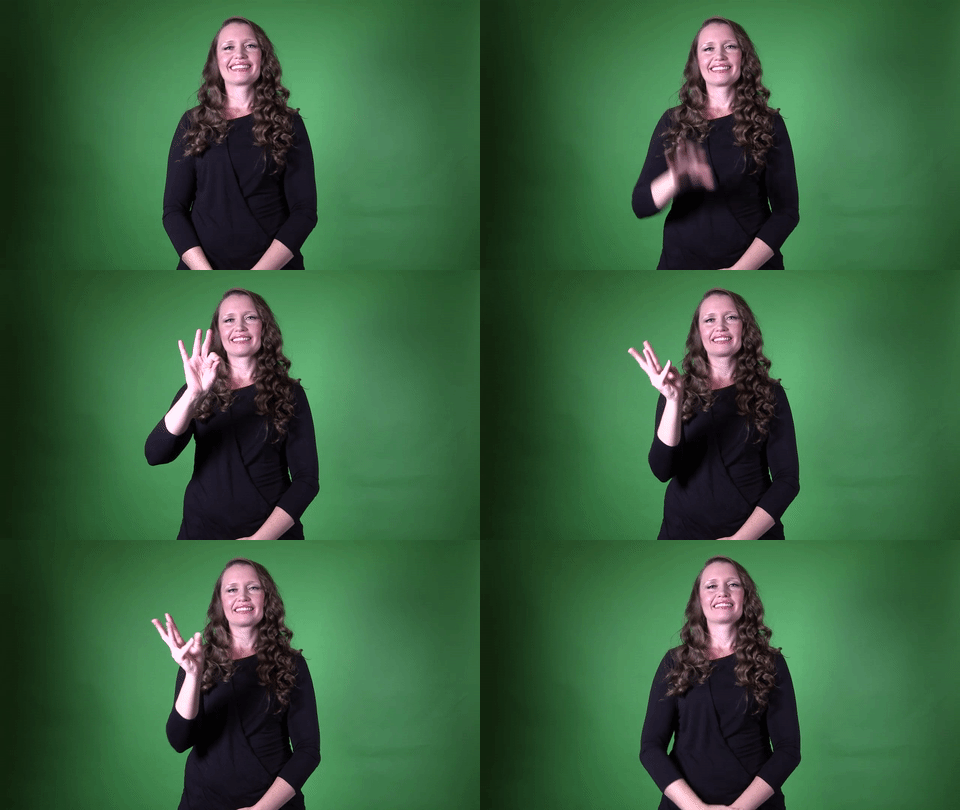
Definition: The number ninety-six
Sign for NINETY-SIX in ASL
Practice Activities:
To practice the sign for ninety-six in ASL, begin by isolating the sign and repeating it multiple times with both hands. Focus on forming the handshape and smoothly transitioning between ninety and six. Try signing it at different speeds to improve fluency and accuracy.
Next, incorporate the sign for ninety-six in ASL into number sequences. Count from ninety to ninety-nine, ensuring smooth transitions between numbers. Practice recognizing and signing numbers shown by a partner or from flashcards. You can also try fingerspelling random numbers that contain ninety-six to reinforce numerical fluency.
Use the sign for ninety-six in ASL in real-life contexts. Imagine telling a friend someone is ninety-six years old or discussing large quantities like “ninety-six apples.” Create simple sentences like “My grandfather is ninety-six” or “There are ninety-six students in the school.” Sign these sentences in front of a mirror or with a partner for accuracy.
Engage in interactive exercises with a partner. One person can sign a number, and the other person says it aloud. This helps with both recognition and production of the sign for ninety-six in ASL. Another activity is speed-signing, where you and a partner take turns signing random numbers as quickly as possible.
For storytelling practice, describe a character who is ninety-six years old, mentioning details about their life, accomplishments, or family. This exercise will help you naturally incorporate the sign into conversation. You can also create a game where you look around for groups of objects and identify those that come close to ninety-six.
Finally, practice incorporating the sign into larger conversations. Discuss years, prices, or historical events that involve ninety-six. The more you use the sign in context, the more comfortable you will become in using it naturally. Keep practicing, and challenge yourself to use the number in daily interactions.
Cultural Context:
The sign for ninety-six in ASL is a combination of the signs for nine and six, created with a slight wrist twist. Numbers in American Sign Language follow specific patterns that make them easy to recognize and remember. The sign for ninety-six in ASL is part of the larger numeric system used in everyday communication.
Numbers like ninety-six are essential for conversations about money, age, addresses, and rankings. The sign for ninety-six in ASL is useful when talking about historical dates, prices, or measurements. Knowing how to sign numbers fluently helps signers keep up with fast-paced conversations.
The structure of numbers in ASL follows a logical flow, making it easier to combine them smoothly. The sign for ninety-six in ASL follows this principle, allowing numbers to be signed quickly. Practicing number signs regularly improves fluency and confidence in signing.
Different ASL dialects may have slight variations in the way numbers are signed. However, the sign for ninety-six in ASL remains consistent across most signers in the United States. Learning standardized number signs helps ensure clear communication across regions.
Numeric signs in ASL can also be used in storytelling to provide dates or statistics. The sign for ninety-six in ASL might appear in discussions about sports scores, historical events, or personal milestones. Numbers help provide important details that support clear and efficient communication.
Many ASL learners find it helpful to practice number sequences in context. The sign for ninety-six in ASL can be practiced by incorporating it into everyday phrases. Using numbers in real conversations helps develop natural signing skills.
Number signs are often emphasized with facial expressions to add meaning. When using the sign for ninety-six in ASL, eyebrow movement or head tilts can add emphasis. Expressiveness in ASL helps convey additional information beyond hand movements.
Technology has made learning ASL numbers even more accessible. Videos demonstrating the sign for ninety-six in ASL are widely available online for learners. Visual practice with native signers supports correct formation and fluency.
In some cases, fingerspelling may be used instead of number signs for clarification. However, the sign for ninety-six in ASL is usually preferred for speed and clarity. Using number signs correctly makes conversations in ASL more efficient and natural.
Mastering numbers in ASL, including the sign for ninety-six in ASL, is crucial for fluency. Proficiency with numbers allows signers to communicate dates, prices, measurements, and statistics with
Extended Definition:
The sign for ninety-six in ASL is an essential part of learning numbers in American Sign Language. It follows the standard structure for signing two-digit numbers in ASL, making it easy to remember for both beginners and fluent signers. Mastering this number helps improve communication in various settings, including education, business, and everyday conversations.
To make the sign for ninety-six in ASL, start by forming the number nine with your dominant hand. Then, smoothly transition into the number six without breaking the motion. This fluid movement ensures clarity and maintains the natural flow of ASL counting.
Numbers play a crucial role in ASL, allowing signers to discuss age, prices, time, and other numerical concepts. Understanding the pattern used for signing numbers like ninety-six helps in quickly grasping larger numerical sequences. Whether signing for personal use or professional settings, accuracy in signing numbers enhances comprehension.
The sign for ninety-six in ASL follows the same rules applied to other two-digit numbers. It involves a distinct handshape and movement that differentiate it from similar numbers. Being able to sign numbers correctly is important for effective communication in both casual and formal sign language interactions.
Practicing the sign for ninety-six in ASL regularly can help in building fluency. Repeating the motion multiple times ensures confidence and precision when signing. Signing numbers consistently helps reinforce memory, making it easier to recall them in conversations.
ASL numbers, including ninety-six, are commonly used in financial discussions, dates, and addresses. Knowing how to sign numbers quickly and correctly makes exchanges smoother and more efficient. It also helps in bridging communication gaps between the Deaf and hearing communities.
When fingerspelling or signing numbers, proper hand positioning and clear execution are key. Failing to form the correct handshape for ninety-six in ASL might lead to confusion, especially for those still learning. Paying attention to details in number signs ensures accuracy and reduces misunderstandings.
Learning numbers in ASL is an important step for anyone studying the language. The sign for ninety-six in ASL fits into a larger system of numerical gestures that connect to everyday use. Whether in classrooms, workplaces, or casual interactions, mastering ASL numbers is a valuable skill.
Familiarity with the sign for ninety-six in ASL helps signers engage in numerical conversations with ease. It promotes better communication when discussing measurements, quantities, or financial transactions. The more comfortable a signer becomes with numbers, the smoother their ASL conversations will be
Synonyms: ninety-six, number ninety-six, number 96, the number 96, the number ninety-six
Educational resources: Find related learning materials in our course bank!
Want more? Check out some of our popular learning activities on the homepage!
Need to look up a sign? Use our highly rated dictionary: https://aslinteractive.com/best-asl-dictionary/
Follow us on tiktok: https://www.tiktok.com/@aslinteractive. More social media links at the bottom of this page!
Long-tail Keywords: what is the sign for Ninety-six in ASL, how do you sign Ninety-six in ASL, learn how to sign Ninety-six in American Sign Language
Categories: Numbers – Basics, Numbers 91-100, cardinal numbers
tags: Numbers, Numbers 91-100, Math, Language Learning, Educational Content, 96 97 98 rocking numbers, rocking numbers
Parameters
*Handshape*:
The sign for ninety-six in ASL uses a changing handshape. It begins with the number 9 handshape, where the thumb and index finger form a circle while the remaining fingers stay extended. The hand then transitions to the number 6 handshape, where the pinky and thumb touch while the other fingers stay up. This movement visually represents the number sequence in the sign for ninety-six in ASL, making it clear and easy to recognize.
*Palm Orientation*:
The palm orientation for the sign for ninety-six in ASL starts with the dominant hand, palm facing outward. The hand forms a nine (an extended index finger and thumb) before smoothly transitioning into a six (touching the pinky to the thumb). The movement should feel natural and fluid, maintaining outward palm orientation throughout the transition. This ensures clarity and accuracy when signing numbers such as the sign for ninety-six in ASL.
*Location*:
The sign for ninety-six in ASL is produced in the neutral space in front of the chest. The dominant hand starts in the “9” handshape, then transitions smoothly into the “6” handshape. This movement happens in one fluid motion, keeping the hand in a relaxed position. The hand remains within a comfortable signing area, ensuring clarity and ease of communication.
*Movement*:
To perform the sign for ninety-six in ASL, begin with the number nine handshape, where the thumb touches the index finger while the other fingers remain extended. Then, smoothly transition into the number six handshape by bringing the thumb to touch the pinky while the remaining fingers extend upward. The movement should be fluid and controlled, maintaining clarity between the two numbers to accurately express ninety-six in ASL.
*Non-Manual Signals*:
Facial expressions remain neutral or slightly focused when signing the sign for ninety-six in ASL, maintaining natural eye contact. The eyebrows should be in a resting position unless context requires emphasis, such as asking a question. A slight head nod or tilt may occur depending on conversational flow, reinforcing the sign’s meaning. Keep the mouth relaxed, avoiding exaggerated movements, as the sign for ninety-six in ASL is primarily conveyed through handshape and motion rather than lip patterns.
*Prosody, Dominant/Non-Dominant Hand*:
The sign for ninety-six in ASL uses the dominant hand. Begin with the number nine handshape ( ) and then smoothly transition into the number six handshape ( ). The movement should be fluid, ensuring a natural shift between the two numbers. Keep the palm facing outward while maintaining a slight bounce or movement between shapes to emphasize the transition. The non-dominant hand remains inactive as the dominant hand expresses the numerical value.
Tips for Beginners:
When learning the sign for ninety-six in ASL, start by mastering the handshape transitions smoothly. The sign uses the “9” and “6” handshapes in sequence, which means your fingers need to shift effortlessly. Keep your fingers curved properly for each number, ensuring they are clearly distinguishable. Practicing slowly at first will help build muscle memory and confidence.
One common mistake is not fully forming the “9” and “6” handshapes, which can cause confusion. Make sure the index finger and thumb touch together for “9” before transitioning to “6,” where the pinky and thumb connect. Another issue is rushing through the motion too quickly, leading to a blurred or unclear transition. Keep your movement controlled to maintain accuracy.
To improve fluency, practice counting from ninety to ninety-nine repeatedly. This will help you get used to the pattern and make the movement second nature. Recording yourself signing can also be useful for self-assessment. Watching your movements in a mirror will help ensure that your handshapes are distinct.
Finger placement is crucial in making the sign for ninety-six in ASL clear and easy to recognize. Keep your palm orientation consistent and ensure your fingers don’t collapse or bend incorrectly. Pay attention to the natural fluidity of the transition between numbers.
A great way to reinforce learning is to practice with a partner or a Deaf signer. Watching how experienced signers do it can help you refine your technique. If you’re unsure, ask for feedback to improve clarity. With consistent practice, the sign for ninety-six in ASL will become effortless and precise.
Connections to Other topics:
The sign for ninety-six in ASL is part of the broader numerical system in American Sign Language, which follows a pattern that makes learning numbers easier. Once learners understand the pattern used for numbers in ASL, it becomes easier to sign other two-digit numbers by modifying handshapes and movements. The sign follows the same numerical structure as other numbers in the nineties, reinforcing the importance of consistency in number formation.
This sign is closely related to the ASL signs for ninety and six, as it combines elements of both in a smooth transition. ASL numbers in the nineties use the same principles as numbers in other decades, such as eighty-six or seventy-six, helping signers see the logical flow of number construction. Understanding how to sign ninety-six correctly also helps with sequencing numbers in larger numerical contexts, such as phone numbers or addresses.
Ordinal numbers are also an important connection to the sign for ninety-six in ASL. While cardinal numbers represent quantity, ordinal numbers such as ninety-sixth add movement or a slight twist to indicate ranking or sequence. Learning both variations helps signers accurately express dates, rankings, and lists.
This numerical sign connects with money concepts when discussing prices, discounts, or large sums. It is also important when telling time in non-standard formats, such as military time that might include 96 as part of a schedule. Sports scores, statistics, and measurements often require the use of this number, making it a fundamental part of numerical literacy in ASL.
The sign for ninety-six in ASL is also useful in educational and professional settings where precise numerical information is necessary. Whether counting attendance, tracking populations, or referencing history, mastering this number contributes to clear communication in math, business, and everyday life.
Summary:
The sign for ninety-six in ASL is formed by combining the numerical signs for nine and six in a fluid motion. It follows the pattern used in ASL number formation, where double-digit numbers are expressed by transitioning between two distinct handshapes. This sign requires precision in handshape, palm orientation, and movement to ensure clarity.
The hand starts with the number nine, represented by extending the index finger and thumb while keeping the other fingers curled inward. Then, a smooth transition shifts the handshape to six, where the pinky and thumb touch while the remaining fingers remain extended. This movement should be controlled and practiced to maintain fluency.
Numbers in ASL follow logical formations based on handshape transformations. The sign for ninety-six in ASL fits within the broader numerical system, where hand movements help differentiate between numbers. Fluidity is crucial because choppy movements can cause confusion or misinterpretation.
ASL numbers carry cultural importance, particularly in contexts like addresses, sports, financial transactions, and mathematics. The sign for ninety-six in ASL may also appear in casual conversations, such as discussing years, temperatures, or statistics. Mastering numerical signs enhances accuracy and speed in communication.
ASL numbers incorporate both lexicalized and dynamic numbering systems. Lower numbers are often more visually distinct, while higher numbers require handshape transitions. The sign for ninety-six in ASL belongs to the latter category, demanding fluent transformations between hand configurations.
The number system in ASL is structured, with some numbers incorporating wrist twists or changes in orientation. While ninety-six lacks a wrist twist, the change in handshape is its defining feature. Maintaining clear hand movement without excessive motion ensures that the sign remains recognizable.
Finger dexterity plays a significant role in numerical signing, especially when transitioning between digits quickly. The sign for ninety-six in ASL requires flexibility in finger movement to shift smoothly from the nine handshape to the six handshape. Consistent practice helps improve fluidity and reduces hesitation.
ASL also incorporates numerical classifiers, which work alongside numbers in contexts such as measurements or rankings. Understanding how to integrate the sign for ninety-six in ASL with classifiers enhances linguistic clarity. This is particularly useful in academic or professional settings where numerical precision matters.
Numbers in ASL can carry symbolic meaning depending on their context. The sign for ninety-six in ASL may reference historical dates, sports jersey numbers, or significant years in someone’s life. It’s important to consider context when using numbers to avoid ambiguity.
Linguistically, signed numbers differ from spoken language counterparts due to their reliance on spatial representation. The sign for ninety-six in ASL visually conveys numerical meaning through movement rather than vocalization. This adds a unique dimension to ASL compared to spoken forms of numerical expression.
Applied linguistics explores how ASL numbers function in education, particularly for Deaf students learning math. The sign for ninety-six in ASL is one of many numerical signs integrated into Deaf education. Number signs help bridge conceptual understanding between visual symbols and arithmetic concepts.
ASL users must maintain proper hand placement for numbers to be legible across distances. The sign for ninety-six in ASL should be kept within the signing space to ensure visibility. Signing too close to the body or too low may interfere with clarity.
Hand dominance is also important in numerical signing. The sign for ninety-six in ASL should consistently use the dominant hand to maintain uniformity. Switching hands may cause confusion, especially in rapid numerical communication.
Signed numbers can be combined with other signs to convey additional meaning. The sign for ninety-six in ASL can be paired with age indicators, percentages, or financial values. This flexibility allows ASL users to express complex numerical ideas efficiently.
ASL number signs have evolved over time, with certain variations influenced by regional dialects. While the standard form of the sign for ninety-six in ASL remains widely recognized, slight modifications may occur in different signing communities. Awareness of these variations ensures accurate communication.
Numbers are a fundamental part of everyday conversation in ASL. The sign for ninety-six in ASL might appear in contexts such as counting, listing, or giving directions. Knowing how to fluently sign numbers strengthens overall ASL proficiency.
In Deaf culture, numbers play a role in storytelling, games, and visual descriptions. The sign for ninety-six in ASL can be integrated into narratives that require numerical details. This cultural aspect highlights the expressive capabilities of ASL.
Sports and competition settings often involve frequent numerical references. The sign for ninety-six in ASL may be used to identify players, scores, or statistics. Quick and accurate numerical signing is essential for effective communication in sports-related discussions.
Understanding number incorporation in ASL enhances communication efficiency. The sign for ninety-six in ASL, like other number signs, helps streamline information exchange. Mastering numerical signs enables smoother interactions in both casual and formal settings.
Deaf individuals may rely on numerical signs when coordinating events, discussing time frames, or giving measurements. The sign for ninety-six in ASL is one
Want more? Check out some of our popular learning activities!
ASL Interactive Resources
ASLInteractive YouTube Channel
Follow us on tiktok: @aslinteractive.com
Follow us on Instagram: aslinteractive
Facebook page: aslinteractive
Facebook group: aslinteractive
LInkedIn: ASL Interactive LLC
Twitter: @ASL_interactive
*Some information on this page is AI-generated. AI can make mistakes. Please check the information.


Responses