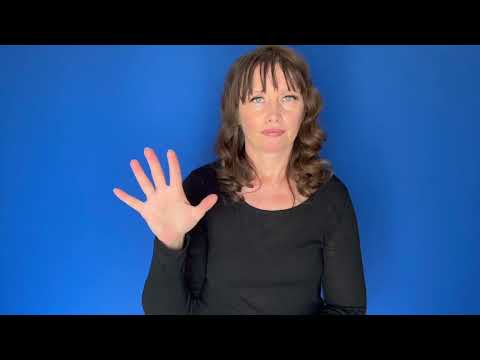
Definition: The years Nineteen Seventy to Nineteen Seventy-Nine
Sign for NINETEEN SEVENTY TO NINETEEN SEVENTY-NINE in ASL
Practice Activities:
To practice the sign for nineteen seventy to nineteen seventy-nine in ASL, start by signing each number separately, ensuring clarity and accuracy. Practice signing nineteen seventy, then progress through each year up to nineteen seventy-nine. Pay attention to number orientation and movement transitions to keep the flow natural.
Try signing the years while saying them aloud to associate the movements with spoken language. Record yourself signing nineteen seventy to nineteen seventy-nine in ASL and compare it to a model signer to check for accuracy. Mirror practice is useful for reinforcing hand orientation and movement consistency.
Engage in conversation practice by discussing historical events from the 1970s. Take turns with a partner asking and answering questions like “What happened in nineteen seventy-four?” or “Were you born in nineteen seventy-eight?” This reinforces both receptive and expressive skills.
Create a timeline of important events from nineteen seventy to nineteen seventy-nine in ASL. Sign the year followed by a brief description of the event. This helps with fluency and comfort in transitioning between numbers and contextual information.
For a storytelling activity, describe a fictional character’s journey through the 1970s. Sign phrases like “In nineteen seventy-two, she visited California” or “He graduated in nineteen seventy-six.” Practice signing dates naturally within a sentence structure.
Play a guessing game with a partner. One person signs a year from nineteen seventy to nineteen seventy-nine in ASL, and the other person tries to guess the correct year. This strengthens receptive number recognition and increases confidence in expressive skills.
For advanced practice, hold a group discussion where each person shares a fact about a specific year. This encourages spontaneous signing and helps solidify number comprehension. Focus on smooth, clear transitions between signs for fluid communication.
Cultural Context:
The sign for nineteen seventy to nineteen seventy-nine in ASL is essential for discussing the cultural, political, and historical events of the 1970s. This decade was marked by significant social change, including the civil rights movement, the rise of Deaf advocacy, and advancements in ASL recognition. Understanding how to sign nineteen seventy to nineteen seventy-nine in ASL allows for smooth communication about events from this time.
During the 1970s, Deaf culture saw an increase in awareness and acceptance of ASL as a legitimate language. Schools for the Deaf began incorporating ASL into education, and the fight for linguistic rights gained momentum. Using the sign for nineteen seventy to nineteen seventy-nine in ASL helps convey this important historical period accurately.
The 1970s also brought the passage of laws that improved accessibility for Deaf individuals. Captioning on television became more widespread, and essential steps toward equal rights were taken. Knowing the sign for nineteen seventy to nineteen seventy-nine in ASL enables discussions about these legal advances and societal changes.
Music, fashion, and pop culture in the 1970s had a lasting impact, influencing styles and trends for decades. From disco to rock, this period saw incredible musical evolution, resonating with both Deaf and hearing communities. The sign for nineteen seventy to nineteen seventy-nine in ASL allows for easy reference to this dynamic era in casual and historical conversations.
Many major world events took place throughout the 1970s, including political shifts and technological advancements. The rise of personal computers and space exploration changed daily life and global perspectives. Using the sign for nineteen seventy to nineteen seventy-nine in ASL helps contextualize these advancements when discussing history.
The Deaf President Now movement, though it took place in the 1980s, was rooted in the advocacy efforts that grew in the 1970s. Many Deaf activists began organizing and pushing for change during this time. Understanding the sign for nineteen seventy to nineteen seventy-nine in ASL is key to discussing the activism that helped shape Deaf history.
Educational resources for ASL expanded during the 1970s, allowing more people to learn and use the language. Increased academic research into ASL linguistics further validated the language and its structure. The ability to use the sign for nineteen seventy to nineteen seventy-nine in ASL supports meaningful discussions about these academic milestones.
The 1970s saw an increase in Deaf representation in media, with more Deaf actors appearing in film and television. This representation
Extended Definition:
The sign for nineteen seventy to nineteen seventy-nine in ASL follows the general structure for signing years in American Sign Language. Typically, years are signed by breaking them into two two-digit numbers. For example, 1970 is signed as “nineteen” followed by “seventy,” and 1979 is signed as “nineteen” followed by “seventy-nine.”
When signing the range for nineteen seventy to nineteen seventy-nine in ASL, you would sign “nineteen seventy” first, then use an appropriate transition to indicate the range, followed by “nineteen seventy-nine.” ASL signers often use a slight pause or a movement shift between signs to clarify the time span. This approach ensures clarity and smooth communication.
The transition between nineteen seventy to nineteen seventy-nine in ASL can be influenced by context. Some signers use a dash-like movement or a sign meaning “through” or “to” in between the numbers. The clarity of the transition depends on the signer’s preference and regional variations in ASL.
Understanding how to sign nineteen seventy to nineteen seventy-nine in ASL is helpful for discussing historical events, personal stories, or important moments from that decade. In ASL conversations, time markers are essential for providing chronological context. This approach makes storytelling in ASL more engaging and precise.
When signing years such as nineteen seventy to nineteen seventy-nine in ASL, it is important to maintain consistent hand shapes and movements. Numbers should be signed smoothly without unnecessary pauses. A fluent signer will make the transition appear natural and effortless.
Using facial expressions and body language can add further context to signing nineteen seventy to nineteen seventy-nine in ASL. Eyebrow movements and slight head tilts can help indicate past events. This enhances comprehension and ensures the message is clear.
ASL has evolved over time, but the structure for signing specific years like nineteen seventy to nineteen seventy-nine in ASL remains consistent. Whether discussing music, politics, or personal experiences, correctly signing a time period ensures effective communication. Mastering number signs can increase fluency and confidence in ASL.
Synonyms: None
Educational resources: Find related learning materials in our course bank!
Want more? Check out some of our popular learning activities on the homepage!
Need to look up a sign? Use our highly rated dictionary: https://aslinteractive.com/best-asl-dictionary/
Follow us on tiktok: https://www.tiktok.com/@aslinteractive. More social media links at the bottom of this page!
Long-tail Keywords: what is the sign for nineteen seventy to nineteen seventy-nine in ASL, how do you sign nineteen seventy to nineteen seventy-nine in American Sign Language, ASL sign for nineteen seventy to nineteen seventy-nine
Categories: Numbers – Basics, years, year numbers
tags: Numbers, Years, Counting, Mathematics, Educational, Language Learning
Parameters
*Handshape*:
The sign for NINETEEN SEVENTY TO NINETEEN SEVENTY-NINE in ASL uses a two-handed number formation. The dominant hand forms “19,” moving from the “1” handshape to the “9” handshape with a quick flick. Then, the numbers for “70” through “79” are signed in sequence using the “7” and “0-9” handshapes. Each number is produced with a slight bounce or movement for clarity. The sign for NINETEEN SEVENTY TO NINETEEN SEVENTY-NINE in ASL follows standard numerical signing conventions. ✋
*Palm Orientation*:
The palm orientation for the sign for NINETEEN SEVENTY TO NINETEEN SEVENTY-NINE in ASL starts with the palm facing outward while forming the number “19.” The hand then transitions smoothly to the number “70,” maintaining a forward-facing position. To indicate the range up to “79,” the palm continues outward as the digits change sequentially. The movement remains fluid, ensuring clarity when signing the sign for NINETEEN SEVENTY TO NINETEEN SEVENTY-NINE in ASL.
*Location*:
The sign for NINETEEN SEVENTY TO NINETEEN SEVENTY-NINE in ASL is formed in the signing space near the upper chest. The numbers are produced with one hand, typically at shoulder level. The movement remains within a neutral space, ensuring clarity when transitioning from one number to another. When signing NINETEEN SEVENTY TO NINETEEN SEVENTY-NINE in ASL, the hand remains steady and visible, maintaining proper positioning for easy comprehension.
*Movement*:
To sign for nineteen seventy to nineteen seventy-nine in ASL, start with the sign for “nineteen” by forming the number 9 handshape and flicking the index finger slightly twice. Next, sign “seventy” by forming the number 7 handshape and shaking it slightly. Then, smoothly transition to “to” by using an index finger from each hand, linking them in a small arc.
For the second part, sign “nineteen” again the same way, followed by “seventy-nine” by displaying the number 7 and transitioning into 9 in a fluid motion. Keep the movement natural and consistent in rhythm. The sign for nineteen seventy to nineteen seventy-nine in ASL should maintain clarity while transitioning between numbers.
*Non-Manual Signals*:
When signing the sign for nineteen seventy to nineteen seventy-nine in ASL, keep a neutral or slightly informative facial expression to indicate the passage of time. Your eyebrows may raise slightly if emphasizing the timeframe or clarifying for the viewer. Maintain steady eye contact with the person you’re signing to, ensuring clarity. A slight head tilt may occur when transitioning between the years to indicate the range naturally.
*Prosody, Dominant/Non-Dominant Hand*:
The sign for NINETEEN SEVENTY TO NINETEEN SEVENTY-NINE in ASL utilizes the dominant hand to indicate the decade. Start by signing “19” with the dominant hand, forming an extended “9” handshape and moving it slightly back and forth. Then, transition into “70” by forming a “7” handshape followed by a “0” handshape. For years within the decade, maintain the “70” and change the second number accordingly (e.g., “71,” “72”).
To convey a range, the sign for “TO” is incorporated, using an index finger of one hand moving toward the index finger of the other. After the connection, continue by signing “NINETEEN SEVENTY-NINE” following the same format. The dominant hand performs all numerical signs, while the non-dominant hand may be passive. Facial expressions and slight head movements help clarify that a range is being specified.
Tips for Beginners:
When signing the sign for nineteen seventy to nineteen seventy-nine in ASL, remember that numbers are typically signed in a fluid, natural motion. Start by signing “nineteen” with the number 19 handshape, then smoothly transition into “seventy” using the 7 and 0 handshapes. To indicate the range, you can use a slight head tilt, a pause, or the sign for “through” (index fingers pointing toward each other, then moving outward). Then, finish with the appropriate number for seventy-one through seventy-nine.
Practice maintaining rhythm and consistency when transitioning between numbers. A common mistake is pausing too long or hesitating between digits, which can make the sign unclear. Another is forming the numbers too rigidly—in ASL, numbers should flow naturally. Work on making each number distinct but also fluid, ensuring the viewer can clearly differentiate the decades and individual years.
Finger dexterity is important since the seven and zero handshapes require controlled motion. Pay close attention to finger positioning, especially when switching between numbers quickly. If you struggle with speed, slow down until your hand movements become more comfortable, and then gradually increase your pace. Watching fluent signers can help you mimic the correct transitions.
For clarity, keep your palm orientation correct for each number. Typically, numbers in this range are signed with the palm facing out or slightly angled. Avoid flipping your palm inward unless the number requires it. Practicing in a mirror or recording yourself can help you catch small errors in hand placement.
If signing for a specific year between nineteen seventy to nineteen seventy-nine, make sure you’re clear on individual number signs. Precision is key, especially in context where years are crucial for historical references or personal experiences. Stay relaxed, practice often, and soon the sign for nineteen seventy to nineteen seventy-nine in ASL will feel natural.
Connections to Other topics:
The sign for NINETEEN SEVENTY TO NINETEEN SEVENTY-NINE in ASL connects to the broader concept of signing years and historical dates. Understanding how to sign numbers in ASL is essential, especially when discussing decades, centuries, and significant events. The structure of signing years follows a consistent pattern, with the first two digits of the year signed first, followed by the last two digits. This makes it easier to apply the same rules when signing other years, such as 1980-1989 or 2000-2009.
This sign also relates to American history and cultural discussions in ASL. When discussing historical events, personal memories, or generational experiences, signing the correct year range is important for clear communication. Knowing how to transition smoothly from one year to another, such as signing “to” or using listing techniques with the non-dominant hand, enhances fluency in signing long year ranges. This method is not only useful for talking about history but also for discussing personal milestones, such as the years someone attended school or worked in a particular job.
The structure of the sign for NINETEEN SEVENTY TO NINETEEN SEVENTY-NINE in ASL also connects to the way decades are signed without specifying each individual year. When referring to “the 1970s,” a common method is signing “1970” followed by a slight shaking movement or a general sign for “decade.” This technique is useful in conversations about trends, music, and historical shifts within a broader span of time. Learning these nuances strengthens communication when discussing periods of time rather than specific years.
Additionally, this sign relates to numbering conventions in ASL, including ordinal and cardinal numbers. Sequential time frames, such as signing “from 1970 to 1979,” involve clear number articulation and transitions between numbers. The connection between numbers and dates in ASL also extends to birthdays, anniversaries, and other personal timelines. Learning how to sign decades and year ranges provides a foundation for discussing time with more precision in ASL storytelling and conversations.
Summary:
The sign for nineteen seventy to nineteen seventy-nine in ASL follows a numerical pattern commonly used to express years in sign language. Numbers in ASL are signed in a fluid motion, often incorporating the base number “19” followed by the second part of the year. This particular range of years requires sequential number representation, which can be done with efficient, clear signing.
To sign nineteen seventy to nineteen seventy-nine in ASL, begin with the number “19” using the ASL numerical system. The number is signed with the extended index and middle fingers forming a 9 shape, then flipping forward into 1. This distinct movement clearly denotes the number nineteen, which is essential for forming years in ASL.
Next, sign the second part of each year, starting with seventy. The number seventy in ASL is signed by forming a “7” with the index and middle finger extended while touching the thumb, followed by a quick transition to a “0” handshape. The transition between digits should be smooth, with a slight bounce to indicate the separation between the numbers.
For the full numerical range from nineteen seventy to nineteen seventy-nine in ASL, continue with each consecutive number. Add seventy-one, seventy-two, and so forth by maintaining the pattern of signing “19” first, then smoothly transitioning into the following two-digit number. Each year is formed similarly, but the decade remains consistent, making it easy to adjust when signing different years within the range.
Numerical signs in ASL follow structured guidelines that enhance clarity and precision. When signing a series of years, ASL users often maintain a steady rhythm to ensure the numbers are understood. The placement of the hand and the movement between digits is crucial for avoiding misinterpretation.
This range of years is historically significant for many cultural, political, and social reasons, making its accurate representation in ASL important. The 1970s saw important milestones in American history, including civil rights movements, technological advancements, and cultural shifts. Using the correct numerical structure allows Deaf signers to engage in historical discussions effectively.
The sign for nineteen seventy to nineteen seventy-nine in ASL also reflects broader ASL grammar rules regarding numerical sequencing. Unlike English, which verbally states the date in a continuous phrase, ASL breaks it down into numerical components. Signers typically provide the decade first, followed by the specific year, ensuring clarity in conversations.
When discussing different time periods in ASL, context plays a huge role in comprehension. Facial expressions may accompany the numerical signs to emphasize specific historic events during the 1970s. This enhances the message and makes communication richer and more expressive.
A comparison with other numerical systems in ASL reveals how numbers are structured efficiently for communication. Numbers 20-29 are signed with a distinct movement compared to the teen numbers, which might confuse new learners. Recognizing the specific motion for seventy through seventy-nine alongside their placement in a year format ensures precision in signing.
For ASL learners, practicing numbers regularly helps achieve fluency in expressing years. The repetition of transitioning from “19” to “70” and beyond improves signing speed and confidence. Consistency in numerical formations also prevents errors in communication, making the message clearer for all involved.
In everyday settings, the sign for nineteen seventy to nineteen seventy-nine in ASL is frequently used when discussing historical events, birth years, or specific cultural references. When someone discusses their birth decade or milestone events from the 1970s, this numerical structure becomes essential. Knowing how to move smoothly between numbers ensures seamless communication.
Beyond personal history, this numerical format is widely used in academic and professional discussions. Teachers, historians, and researchers use these numerical sequences when discussing past events or analyzing trends from the 1970s. Accurate numerical representation helps maintain clarity in educational and scholarly settings.
The efficiency of ASL numerical structures illustrates its linguistic depth. Unlike spoken language, ASL relies entirely on visual clarity, so numerical differentiation must be distinct. Forming each year from nineteen seventy to nineteen seventy-nine in ASL with visible transitions prevents misunderstood numbers or missed details.
A connection between numerical fluency and linguistic confidence exists in ASL. Being comfortable with numbers such as these ensures smoother conversations and builds stronger signing proficiency. Some numbers share similar handshapes, so precise finger positioning is necessary to avoid confusion.
Technology and digital education resources play a role in reinforcing ASL number fluency. Online videos, virtual ASL dictionaries, and interactive tools help learners master signs like nineteen seventy to nineteen seventy-nine in ASL efficiently. Watching signed examples repeatedly allows users to improve their muscle memory and accuracy.
In broader ASL education, numbers are considered fundamental for effective communication. Knowing how to sign years is just as important as learning common phrases and facial expressions. Fluency in numerical signing fosters deeper conversations in professional and casual settings.
The use of numerical sequences in ASL also ties into broader discussions about Deaf culture and accessibility
Want more? Check out some of our popular learning activities!
ASL Interactive Resources
ASLInteractive YouTube Channel
Follow us on tiktok: @aslinteractive.com
Follow us on Instagram: aslinteractive
Facebook page: aslinteractive
Facebook group: aslinteractive
LInkedIn: ASL Interactive LLC
Twitter: @ASL_interactive
*Some information on this page is AI-generated. AI can make mistakes. Please check the information.


Responses