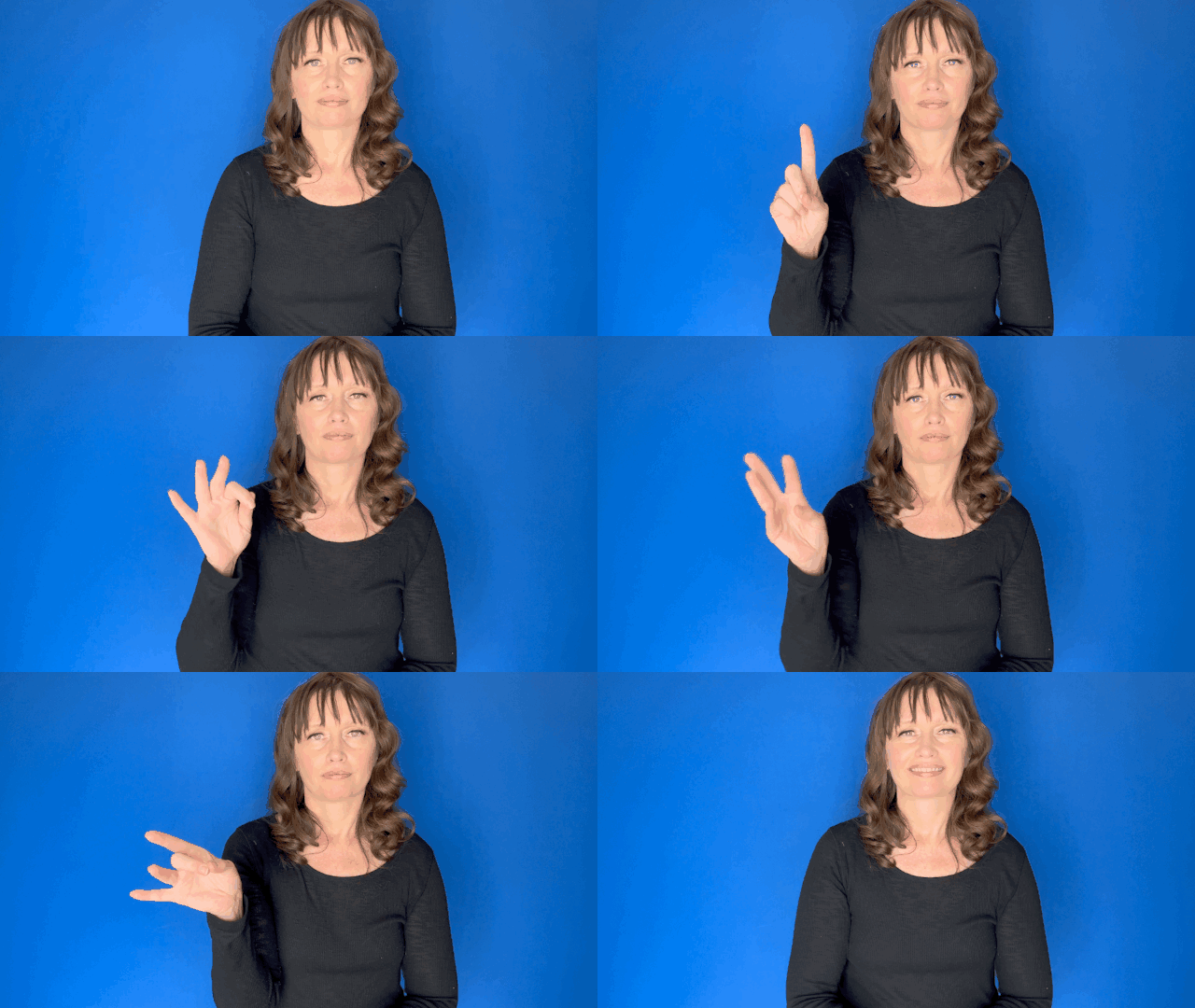
Definition: The years Nineteen Ninety to Nineteen Ninety-Nine
Sign for NINETEEN NINETY TO NINETEEN NINETY-NINE in ASL
Practice Activities:
To practice the sign for nineteen ninety to nineteen ninety-nine in ASL, start by isolating the numbers. Sign nineteen followed by ninety, ensuring fluidity in transition. Then, practice saying different years within this range by shifting the last digit from zero to nine while maintaining steady hand placement and motion.
Once you are comfortable signing the years in isolation, integrate them into historical references. Sign famous events from this period, such as “In nineteen ninety-two, the Summer Olympics were in Barcelona,” or “Nineteen ninety-eight was the year Google was founded.” This helps reinforce the numbers in meaningful contexts.
Engage in partner activities by asking and answering questions about events between nineteen ninety to nineteen ninety-nine. One partner asks, “Which year did you start kindergarten?” and the other replies with the specific year using the correct sign. This interactive practice sharpens comprehension and fluidity when signing years.
Create a timeline of personal or fictional events that occurred from nineteen ninety to nineteen ninety-nine in ASL. Sign statements such as “In nineteen ninety-five, my family moved to a new state,” or “Nineteen ninety-seven was when I got my first pet.” Practice transitioning smoothly between years while keeping a steady flow.
For a storytelling challenge, recount key pop culture moments or personal experiences that happened between nineteen ninety to nineteen ninety-nine. Focus on smooth transitions between different years and maintain accuracy in numerical representation. Record yourself signing and review your performance for clarity and pacing.
Use flashcards with different years between nineteen ninety to nineteen ninety-nine to practice rapid recall. Have a friend show you random years and sign them quickly. This builds confidence in signing years naturally and strengthens recall speed.
Cultural Context:
The sign for nineteen ninety to nineteen ninety-nine in ASL represents the decade that shaped modern culture, technology, and communication. This period was marked by significant advancements in American Sign Language recognition and accessibility. More captioned television programs, videophones, and online ASL resources became available, helping the Deaf community connect more easily.
The 1990s saw the passing of the Americans with Disabilities Act (ADA), which strengthened legal protections for Deaf individuals. This law improved access to interpreting services, workplace accommodations, and public resources. The sign for nineteen ninety to nineteen ninety-nine in ASL can also symbolize a time of increased advocacy for Deaf rights.
This decade was culturally rich, with Deaf performers gaining recognition in film, television, and theater. ASL began to appear more frequently in mainstream media, making it more visible to the hearing world. Learning the sign for nineteen ninety to nineteen ninety-nine in ASL can help students of ASL understand the historical significance of this era.
The rise of the internet in the 1990s expanded opportunities for Deaf individuals to communicate worldwide. Video relay services and early online forums allowed ASL users to engage with a global audience. The sign for nineteen ninety to nineteen ninety-nine in ASL reflects a time when digital accessibility began to emerge.
Educational opportunities for Deaf students also advanced during this period, with an emphasis on bilingual education and ASL-English programs. More universities and colleges started recognizing ASL as a legitimate language credit. The sign for nineteen ninety to nineteen ninety-nine in ASL connects to a decade of progress in education and linguistic recognition.
The 1990s also saw iconic ASL moments in pop culture, including music performances with sign language interpretation. Popular TV shows and events featured ASL, increasing exposure and awareness. Knowing the sign for nineteen ninety to nineteen ninety-nine in ASL connects learners to this influential time in history.
Technological advancements like TTY devices and the early development of video phones improved accessibility for Deaf individuals. These changes helped bridge communication gaps and laid the groundwork for today’s ASL-friendly technology. The sign for nineteen ninety to nineteen ninety-nine in ASL represents a decade of technological transformation.
Many ASL students learn about Deaf culture from the 1990s to understand how advocacy and technology shaped modern communication. The sign for nineteen ninety to nineteen ninety-nine in ASL reminds learners of the progress made in media representation and equal access. Understanding this sign enhances cultural awareness and appreciation.
ASL
Extended Definition:
The sign for nineteen ninety to nineteen ninety-nine in ASL follows a numerical pattern commonly used in American Sign Language. Numbers in ASL are signed using specific handshapes and movements, making it easy to communicate years. The numbers nineteen and ninety each have distinct signs, and they are combined smoothly to form the years within this range.
When signing nineteen ninety to nineteen ninety-nine in ASL, the signer uses the number nineteen first, followed by ninety. This structure stays consistent for each year within the decade, changing only the final number. For example, nineteen ninety-one is signed by adding one at the end, nineteen ninety-two by adding two, and so on.
Facial expressions and signing speed can help clarify the meaning, especially in conversations. Some signers prefer to abbreviate the years by signing the last two digits to keep communication quick. This is common in casual ASL conversations, especially when the context is clear.
The sign for nineteen ninety to nineteen ninety-nine in ASL is useful when discussing history, personal milestones, or events from this decade. Knowing how to sign these years accurately helps maintain clear and effective communication. It also ensures fluency in ASL when discussing important topics related to the 1990s.
Learning ASL numbers improves overall signing skills and comprehension. Watching native signers and practicing regularly helps reinforce how to sign nineteen ninety to nineteen ninety-nine correctly. Understanding the smooth transitions between numbers makes signing years much more natural.
ASL follows a logical structure when signing years, making it easy for learners to grasp patterns. Since numbers are essential in daily communication, practicing them increases confidence. Mastering the sign for nineteen ninety to nineteen ninety-nine in ASL is just one step toward greater fluency.
Synonyms: None
Educational resources: Find related learning materials in our course bank!
Want more? Check out some of our popular learning activities on the homepage!
Need to look up a sign? Use our highly rated dictionary: https://aslinteractive.com/best-asl-dictionary/
Follow us on tiktok: https://www.tiktok.com/@aslinteractive. More social media links at the bottom of this page!
Long-tail Keywords: What is the sign for Nineteen Ninety to Nineteen Ninety-Nine in ASL, How do you sign Nineteen Ninety to Nineteen Ninety-Nine in ASL, Nineteen Ninety to Nineteen Ninety-Nine in ASL translation
Categories: Numbers – Basics, years, year numbers
tags: Numbers, Years, Counting, Mathematics, Educational, Language Learning
Parameters
*Handshape*:
The sign for nineteen ninety to nineteen ninety-nine in ASL uses the number signs for “19” followed by “90” through “99,” depending on the specific year. The “19” is formed by making an “L” handshape and flicking the index finger twice. “90” through “99” are made using the “9” handshape, with the number following “9” shown in a fluid transition.
To sign the range, show “19,” then “90”, and smoothly continue through each number as needed. Each number should be articulated clearly so the viewer understands the specific years referenced. The sign for nineteen ninety to nineteen ninety-nine in ASL is useful when discussing events or historical dates from that decade.
*Palm Orientation*:
The palm orientation for the sign for nineteen ninety to nineteen ninety-nine in ASL is crucial for clarity. The dominant hand forms the number signs smoothly, with the palm facing outward for “nineteen” and then transitioning to “ninety” with a similar orientation. When moving through the years, the palm maintains its outward position, ensuring each number is clearly visible. Consistent palm orientation helps maintain fluidity and accuracy in signing the sign for nineteen ninety to nineteen ninety-nine in ASL.
*Location*:
The sign for nineteen ninety to nineteen ninety-nine in ASL is formed by signing the individual numbers. It starts with the number sign for nineteen, made by forming the number nine with the palm facing outward and flicking the index finger slightly. Then, ninety is signed by forming a nine and then closing it into a zero. To indicate a range, you can sign the word “to” using a small arc movement between the numbers.
For signing all years from nineteen ninety to nineteen ninety-nine in ASL, follow the same process while changing only the last digit to match the specific year. For example, nineteen ninety-one would use the number sequence nineteen and ninety-one, following the same flicking movement. Keep the numbers clear, and ensure your palm orientation remains consistent for readability.
*Movement*:
To produce the sign for nineteen ninety to nineteen ninety-nine in ASL, start by signing “19” with the dominant hand, forming the number with the index finger and thumb, then twisting the wrist slightly. Follow by signing “90” with the dominant hand, shaping it into an “9” and then transitioning to a “0.” Repeat this motion to indicate a range, then sign “99” by forming a “9” and repeating it. This movement clearly conveys nineteen ninety to nineteen ninety-nine in ASL.
*Non-Manual Signals*:
When signing the sign for nineteen ninety to nineteen ninety-nine in ASL, the eyebrows may remain neutral or slightly raised depending on the context. The mouth may stay relaxed or subtly mouth the numbers to reinforce clarity. Head movement can shift slightly forward when transitioning from “nineteen ninety” to “nineteen ninety-nine,” showing the passage of years. Eye contact should be maintained with the listener to ensure engagement and comprehension.
*Prosody, Dominant/Non-Dominant Hand*:
The sign for NINETEEN NINETY TO NINETEEN NINETY-NINE in ASL uses both hands sequentially to represent the years. The dominant hand forms the number “19,” flicking the index and thumb twice, followed by the number “90,” where the “9” transitions smoothly into “0.” For the range, a slight pause and re-signing “1990” allows for numerically adjusting up to “1999” by sequentially changing the last digit.
This method ensures clarity when signing a decade span. The motion remains fluid, emphasizing the smooth numerical transition. When signing in ASL, keeping the numbers consistent in handshape and pace aids visual comprehension.
Tips for Beginners:
When learning the sign for nineteen ninety to nineteen ninety-nine in ASL, focus on fluency. Each year from 1990 to 1999 follows a numerical pattern using the signs for 19 and the second digit. For example, 1992 would be signed using the number 19 followed by 92. It’s crucial to transition smoothly between the numbers to maintain clarity.
One common mistake is hesitating between the two parts of the year. Practice signing 19 and instantly shifting to the second number without pausing. Keep your hand positioning consistent, and make sure your numbers are distinct to avoid confusion. Another challenge is finger placement on two-digit numbers—some numbers, like 96 or 99, require different hand movements than others.
When signing the sign for nineteen ninety to nineteen ninety-nine in ASL, remember that ASL follows a distinct numbering system. The numbers should be palm-forward, and each digit needs to be clear. If you struggle with two-digit numbers, isolate them and practice before combining them with 19. Repetition will help with muscle memory, making your signs more fluid.
For real-world usage, make sure your speed matches natural conversation. Native signers do not sign years slowly unless necessary, so aim for a steady yet clear pace. Watching ASL videos can help in mastering the rhythm. If you’re unsure about your accuracy, use a mirror or record yourself to spot any inconsistencies.
Signing years in ASL correctly is essential for casual and formal conversations. Whether discussing history or personal experiences, being able to sign the sign for nineteen ninety to nineteen ninety-nine in ASL smoothly will help you communicate confidently. Keep practicing, and soon, transitioning between these years will feel effortless.
Connections to Other topics:
The sign for NINETEEN NINETY TO NINETEEN NINETY-NINE in ASL follows the general pattern for signing years in American Sign Language, which often involves shortening or modifying numbers for efficiency. This makes it part of a larger system of number signs that streamline how time periods are expressed. The years from 1990 to 1999 typically use a two-part structure where “19” is signed first, followed by “90” through “99” as needed. This approach is consistent with other decade-based signs, connecting it to how other centuries and time frames are conveyed in ASL.
This sign connects to the broader concept of time-specific signs, which includes the signs for centuries, decades, and individual years. Understanding the sign for NINETEEN NINETY TO NINETEEN NINETY-NINE in ASL helps in forming phrases related to historical events, personal experiences, or age references. It also parallels how other years are signed, such as “20” plus another number for 2000s dates. The efficiency of number-based signs in ASL makes them an essential tool in discussions about dates, trends, and generational references.
The way the sign for NINETEEN NINETY TO NINETEEN NINETY-NINE in ASL is structured also connects to number incorporation in signs like age, money, and rankings. This means learning this structure can make it easier for ASL users to sign sequences like addresses, telephone numbers, and mathematical concepts. The pattern used in years also appears in clock times, reinforcing the connection between various time-related concepts. Mastering number sequences in one category strengthens overall fluency in ASL, making it easier to communicate clearly about multiple numerical contexts.
Summary:
The sign for nineteen ninety to nineteen ninety-nine in ASL follows a number sign formation involving sequences of numerical handshapes. To express these years, the signer uses a combination of the numbers 19 and the next two numerals that correspond to the last part of the year. This is a common way numbers in this range are signed, keeping consistency in decade-related year signs.
To sign nineteen ninety, the signer forms the number 19 with their dominant hand. The number 19 is produced by creating a fist with the index finger and thumb extended, twisting the wrist slightly back and forth. Immediately after signing 19, the signer transitions into the sign for 90 by forming a 9 handshape and then smoothly shifting into a 0 handshape.
For nineteen ninety-one through nineteen ninety-nine, the sign is structured using a flowing transition from 19 to the last two digits of the year. For example, nineteen ninety-one consists of signing 19 and then transitioning directly into 91. The number 91 is formed by holding up the index finger and thumb in an L-shape for 9, then shifting into the 1 handshape. The same pattern is applied for each subsequent year up to ninety-nine.
This numerical pattern helps maintain clarity and efficiency in signing years within this decade. It follows ASL’s tendency to favor numerical continuity and structured sequences. Instead of signing “nineteen hundred ninety,” ASL simplifies this by using its own numerical grammar to move fluidly through the year sequences.
When signing nineteen ninety to nineteen ninety-nine in ASL, hand transitions must be smooth and fluid. Rapid but clear movements ensure comprehension, as ASL numbers follow a logical sequence that’s intuitive to native signers. The transitions from the 19 handshape to the final two digits should be practiced to maintain accuracy and readability.
Context is essential when using the sign for nineteen ninety to nineteen ninety-nine in ASL. If discussing historical events, the topic should be established first to frame the timeframe correctly. ASL’s visual structure benefits from clear contextualization, ensuring the audience understands whether the signer is referring to dates, ages, or numerical quantities.
In conversations, decade-based year signs are commonly accompanied by facial expressions to reinforce meaning. For example, if a signer is nostalgically referring to the 1990s, they might emphasize the signs with raised eyebrows or nods. ASL incorporates facial grammar to enhance the meaning conveyed by numerical information.
The sign for nineteen ninety to nineteen ninety-nine in ASL follows a standard convention applied to all years within the twentieth century. The first two digits are generally signed together as one unit while the last two digits proceed sequentially without additional markers. This structure helps ensure a streamlined communication process across different year ranges.
Numbers in ASL have evolved over time, influenced by efficiency and ease of use. The method of signing years reflects ASL’s broader principles of linguistic economy, reducing redundant elements while maintaining complete comprehension. Numerical signs rely on positioning and rhythm to convey precise temporal references.
The sign for nineteen ninety to nineteen ninety-nine in ASL highlights ASL’s numerical structure. Unlike some spoken languages that might require additional words for years, ASL prefers a direct numeric approach. This reflects ASL’s tendency to prioritize clarity through well-established visual conventions.
Comparatively, other languages may have different rules for saying and writing years. ASL maintains a consistent approach by treating year numbers similarly regardless of decade. This consistency makes it easier for signers to learn and internalize standard numerical patterns.
The 1990s played a significant cultural role, defined by technological growth, pop culture, and social change. When signing years from this decade, signers often reference well-known moments from the era. This decade includes events such as the rise of the internet, major political shifts, and evolving entertainment trends.
The sign for nineteen ninety to nineteen ninety-nine in ASL is crucial for discussions involving history, media, or personal recollections. Many stories reference the 1990s, making this sign highly relevant in conversations. The ease of expressing these years ensures fluent discourse among ASL users.
Recognizing how ASL structures numerical language enhances comprehension of larger linguistic patterns. The number-based grammatical rules extend beyond years to areas such as time, measurements, and mathematical expressions. Understanding these principles reinforces fluency in the way ASL handles numerical references.
Practicing the transition between numbers improves signing fluidity. Ensuring each number maintains clarity without unnecessary pauses helps maintain effective communication. This applies to both casual and formal ASL use, as precise number production remains essential.
Repetition and consistency reinforce learning the sign for nineteen ninety to nineteen ninety-nine in ASL. Frequent use in discussions about historical references or personal past experiences solidifies mastery. Numbers require memorization but become second nature through regular use in daily conversations.
ASL learners benefit from watching native signers use numerical patterns in real-life
Want more? Check out some of our popular learning activities!
ASL Interactive Resources
ASLInteractive YouTube Channel
Follow us on tiktok: @aslinteractive.com
Follow us on Instagram: aslinteractive
Facebook page: aslinteractive
Facebook group: aslinteractive
LInkedIn: ASL Interactive LLC
Twitter: @ASL_interactive
*Some information on this page is AI-generated. AI can make mistakes. Please check the information.


Responses