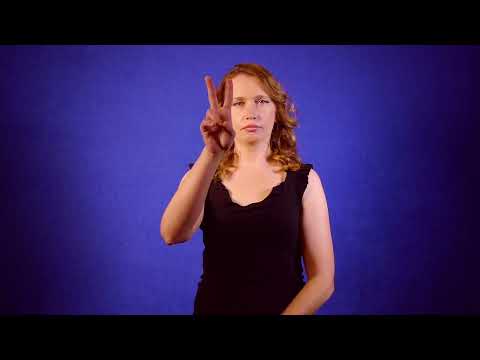
Sign for TWO THOUSAND in ASL | o ASL Dictionary

Definition: The number two thousand

Sign for TWO THOUSAND in ASL 

YouTube player

Practice Activities:

Start by practicing the sign for two thousand in ASL in isolation. Focus on forming the handshape correctly and making the movement smooth and natural. Repeat the sign multiple times while saying “two thousand” silently to yourself to reinforce muscle memory.

Use a mirror to check your handshape and movement. Record yourself signing and compare it to a model video. Try signing two thousand in ASL at different speeds to ensure fluency.

Practice signing important years that contain “two thousand,” such as 2000, 2005, 2010, and 2023. Say the full year numbers aloud while signing to strengthen recognition. Challenge yourself to sign a list of years as quickly and accurately as possible.

Create a timeline of major historical events related to the 2000s. Sign each year before describing the event in ASL. For example, you might sign two thousand in ASL and then describe the Y2K event or the launch of Facebook in 2004.

Pair with a partner and take turns asking each other when significant life events happened. For example, ask when someone was born, graduated, or moved to a new city. Respond using correct ASL number structure, incorporating the sign for two thousand in ASL.

Tell a short story that involves the year 2000 or any year within that decade. Include details about what happened and incorporate other time-related signs, such as “before,” “after,” and “next.” Keep the story simple and focus on fluency.

Engage in a speed drill where you sign different years randomly within the 2000s. Try to recognize and produce the numbers quickly. This helps build confidence using the sign for two thousand in ASL in everyday conversations.

Cultural Context:

American Sign Language has unique ways of expressing numbers, including large values like two thousand. The sign for two thousand in ASL combines numerical precision with fluid movement, reflecting the visual grammar of ASL. Understanding number signs is essential for clear communication, whether discussing years, amounts, or statistics.

In ASL, number signs are influenced by context and handshape. The sign for two thousand in ASL follows a pattern similar to other large numbers, using a combination of specific hand movements. Mastering this sign allows for smooth conversations about history, money, dates, and other numerical concepts.

Deaf culture places importance on clarity and efficiency in signed communication. Learning the sign for two thousand in ASL helps signers discuss events from the year 2000, financial figures, or large quantities with accuracy. Number signs are commonly used in everyday conversations, classrooms, and business settings.

Signing large numbers like two thousand correctly ensures mutual understanding. ASL relies on visual-spatial elements to express numerical values clearly. Practicing the sign for two thousand in ASL enhances fluency and strengthens communication skills for both Deaf and hearing ASL users.

Numbers play a key role in Deaf education and financial literacy. Being able to sign two thousand fluently helps individuals navigate discussions about historical dates, expenses, and statistics. By mastering these signs, ASL users can improve their confidence in numerical conversations.

ASL dictionaries and learning resources emphasize number signs for everyday use. The sign for two thousand in ASL is an essential part of signing larger numbers accurately. Expanding number sign vocabulary improves comprehension and fosters clearer communication in ASL conversations.

Consistently using accurate ASL number signs helps maintain language integrity. The sign for two thousand in ASL is a fundamental part of discussing large amounts with precision. Practicing number signs supports stronger connections within the Deaf community and among ASL learners.

Signing numbers correctly is important in professional and educational environments. Knowing the sign for two thousand in ASL allows signers to engage in discussions where numbers matter, from historical dates to business transactions. Incorporating ASL number signs into daily communication benefits both native signers and learners.

Fluency in ASL includes understanding number structures. The sign for two thousand in ASL is commonly used when referencing years, amounts, and measurements. Mastering number signs strengthens conversational flow and overall ASL proficiency.

Engaging with sign language resources improves understanding of ASL number conventions. Practicing the sign for two

Extended Definition:

The sign for two thousand in ASL is straightforward and follows the pattern used for other four-digit numbers. It combines the handshape for “two” with a gesture that represents “thousand,” making it easy to learn and remember. This sign is commonly used in conversations about years, quantities, and large numbers.

To form the sign for two thousand in ASL, start by signing the number “two” with your index and middle fingers extended. Then, transition into the sign for “thousand,” which involves tapping the fingertips of a bent hand against the opposite palm. The motion mimics a common structure used for large numerical values in American sign language.

This ASL sign is useful when discussing historical dates, financial figures, or measurements. In everyday conversations, signing two thousand correctly ensures clear communication about prices, statistics, and milestones. Fluent signers use this gesture naturally when discussing years like 2000, 2001, or 2020.

Learning the sign for two thousand in ASL helps when communicating numbers efficiently in both casual and formal settings. It is an essential part of understanding larger numerical concepts in sign language. Whether discussing business transactions or important events, knowing this sign can improve fluency.

Context plays a crucial role in how two thousand is used in ASL. When referring to the year 2000, some signers may use a modified version of the number sign. Other contexts, such as counting a large sum of money, often require additional clarification with finger spelling or numerical emphasis.

American sign language relies on consistency when signing numbers, including two thousand. Practicing this sign alongside other numerical signs builds confidence in using numbers accurately. Repetition and exposure to native signers can help reinforce how this sign is incorporated into conversations.

People learning ASL often start with basic numbers before advancing to larger numbers like two thousand. Watching videos, engaging with the Deaf community, and practicing with a tutor can all enhance number-signing skills. Understanding this sign also lays the groundwork for signing higher numerical values in ASL.

The structure of the sign for two thousand in ASL aligns with how other multi-digit numbers are signed. Recognizing patterns in numerical signs can make learning American sign language more intuitive. Mastering this sign is a step toward confidently communicating dates, amounts, and math-related information.

ASL users frequently sign two thousand when discussing historical events, such as the turn of the millennium or notable milestones. Businesses and financial professionals also use this

Synonyms: two thousand, 2k, 2,000, twenty-first century, millennium marker, 21st century

Educational resources: Find related learning materials in our course bank!

Want more? Check out some of our popular learning activities on the homepage!

Need to look up a sign? Use our highly rated dictionary: https://aslinteractive.com/best-asl-dictionary/

Follow us on tiktok: https://www.tiktok.com/@aslinteractive. More social media links at the bottom of this page!

Long-tail Keywords: what is the sign for two thousand in ASL, how do you sign two thousand in ASL, ASL sign for two thousand

Categories: Numbers – Basics, thousands, cardinal numbers

tags: Numbers, Years, Counting, Mathematics, Educational, Language Learning

Parameters

*Handshape*:

The sign for TWO THOUSAND in ASL uses the number “2” handshape and an open “5” handshape. Start with the number “2” handshape, palm facing forward. Then, transition to an open “5” handshape while slightly bending the fingers to mimic the motion of the number breaking apart. This fluid movement represents the concept of “thousand.” The sign for TWO THOUSAND in ASL is clear and iconic, reflecting the numerical breakdown visually. ✌️➡️ ️

*Palm Orientation*:

The palm orientation for the sign for TWO THOUSAND in ASL starts with the dominant hand in the number “2” handshape, palm facing forward. As the motion begins, the fingertips of the number “2” handshape make contact with the stationary non-dominant palm, which faces inward. To complete the sign for TWO THOUSAND in ASL, the dominant hand pulls back slightly before repeating the contact, emphasizing the sequential nature of the number.

*Location*:

The sign for two thousand in ASL takes place in the neutral space in front of the signer’s chest. The movement is fluid and natural, allowing for clear visibility and easy recognition. Hand placement ensures that both the number two and the gesture representing thousand are easily distinguishable. Since numbers are visually important in ASL, the position allows for clarity when communicating quantities or years.

*Movement*:

Hold up the number 2 handshape, palm facing out. Bring the fingertips slightly downward, then make a small forward motion as if tapping the air. Next, form a loose “C” handshape with the dominant hand and move it slightly forward. This movement represents breaking the number into “two” and “thousand.” The sign for TWO THOUSAND in ASL effectively conveys the concept using a smooth, distinct motion.

*Non-Manual Signals*:

When signing the sign for TWO THOUSAND in ASL, maintain a neutral or slightly serious expression to ensure clarity. If emphasizing the year, slightly raise your eyebrows to indicate specificity. A slight head nod can help reinforce understanding, especially in numerical contexts. Keep eye contact with your conversation partner to maintain engagement. If listing years, maintain a consistent rhythm in your signing.

*Prosody, Dominant/Non-Dominant Hand*:

The sign for TWO THOUSAND in ASL uses the dominant hand in the “2” handshape. It starts with the fingertips touching the palm of the non-dominant hand, which is open and stationary. The dominant hand arches forward and then back to touch the palm again, mimicking the movement of counting in thousands. This motion visually represents the concept of a numerical milestone, making it clear and distinct in ASL.

Tips for Beginners:

When learning the sign for TWO THOUSAND in ASL, focus on making a smooth and controlled movement. The sign is produced by forming the number “2” with your dominant hand, then transitioning to a curved “C” shape, tapping forward slightly to show the break between the two numbers. Keep the movement fluid but distinct so that it is clear you are signing the full number correctly.

One common mistake beginners make with the sign for TWO THOUSAND in ASL is rushing the transition between the number “2” and the movement that represents “THOUSAND.” Be deliberate with your handshape and motion, pausing slightly at the appropriate moment to emphasize the separation. If the movement is too jerky or too fast, it might be misunderstood or look like a different number altogether.

Another important aspect is hand positioning and palm orientation. Make sure your palm is facing outward when forming the “2” to ensure maximum clarity. When moving into the “THOUSAND” part of the sign, your hand should smoothly curve and move forward while maintaining a relaxed but purposeful motion. Keeping your fingers properly aligned will make the sign more visually readable.

Practice in front of a mirror or record yourself signing to check your accuracy. Watching yourself can help you catch small mistakes in movement or shape. It may also be helpful to sign slowly at first and then gradually build up speed without losing clarity. Repetition is key, so continue practicing until the sign for TWO THOUSAND in ASL feels natural and effortless.

For real-world application, use the sign in context by signing various years and large numerical values. This helps reinforce your memory and ensures you’re comfortable using the sign fluently. Engaging with Deaf signers can also provide valuable feedback on your accuracy and fluency.

Connections to Other topics:

The sign for two thousand in ASL connects to other numerical signs and broader discussions of number incorporation in ASL. The use of numbers in ASL follows specific rules and patterns, such as how certain numbers are incorporated into signs for time, money, or dates. For example, the signs for years often involve a similar movement pattern when expressing years like 1999, 2021, or 3000, reinforcing consistency in numerical sign production.

Understanding the sign for two thousand in ASL also enhances comprehension of large numbers, counting sequences, and mathematical terminology in ASL. The distinction between signing singular numbers versus grouped numbers plays a significant role in clarity, helping users distinguish between different numerical expressions such as “two thousand and one” versus “twenty-one hundred.” Many advanced arithmetic and financial terms, such as discussing salaries or population counts, rely on this structured numerical system.

The concept of signing two thousand is also relevant to historical dates, which is important for discussing events, anniversaries, or future projections. When signing about specific years, ASL often breaks down numbers into manageable segments, such as “2020” being signed as “20-20.” Understanding this pattern helps users grasp other large numbers easily, such as signing birth years, deadlines, or milestones.

Another key connection is how number signs transition into ordinal forms or monetary references. For example, “two thousand dollars” would incorporate the same numerical structure with a sign for “dollars” following. Similarly, large numbers are common in statistics, storytelling, and time expressions, such as “two thousand minutes” or “two thousand miles.” Mastering this numerical system allows for accurate and efficient communication in both everyday and academic contexts.

Summary:

The sign for two thousand in ASL follows a natural numerical system within American Sign Language. It is a combination of the number two followed by a gesture representing “thousand.” ASL numbers incorporate unique movements that help distinguish large values from smaller ones.

To sign two thousand, begin with the number two. Extend the index and middle fingers while keeping the other fingers closed. The palm should face forward, demonstrating the numeral clearly.

Next, transition into the sign for “thousand,” which utilizes a subtle movement. Bring the dominant hand into a flat “B” shape and touch the fingertips to the opposite palm. This contact represents numerical grouping, a common approach for large numbers.

The combination of two and thousand creates a smooth and efficient flow. Signers must execute the transition naturally to maintain clarity. Proper hand positioning ensures comprehension among fluent ASL users.

Numbers in ASL follow a logical structure that differs from spoken English. Rather than saying “two thousand” as a continuous phrase, signers visually break the number into meaningful components. This provides clarity and reinforces ASL’s spatial grammar.

The sign for two thousand in ASL reflects an intuitive linguistic principle. By visually representing large numbers piece by piece, signers avoid ambiguity. This system aligns with ASL’s strong reliance on concise, spatially oriented expressions.

ASL numbers are deeply rooted in cultural and linguistic practices. They have evolved over time to ensure ease of understanding. Unlike English pronunciation patterns, ASL numbers rely on handshape, movement, and palm orientation.

In mathematical and financial contexts, the sign for two thousand in ASL is essential. It is frequently used in discussing years, prices, and large quantities. The clear distinction between two and thousand prevents misinterpretation.

When signing monetary values, the placement of two thousand varies. If referring to dollars, the dollar sign might follow the number. The context in which numbers appear dictates additional signs or modifications.

Number signs in ASL are influenced by regional and generational variations. Some older signers may adjust movements slightly compared to younger signers. However, the core structure of two thousand remains unchanged across dialects.

Compared to spoken languages, ASL numbers are far more visual. Signers take advantage of handshape and spatial elements to convey quantities efficiently. This makes numerical communication clear even in noisy environments.

The ease of learning two thousand in ASL depends on familiarity with ASL number systems. Those accustomed to signing numbers will find it simple to incorporate thousand. Mastering the sign requires smooth transitions between numerical elements.

Grammatically, the sign for two thousand in ASL functions similarly to how numbers are structured in English. However, ASL incorporates number signs sequentially rather than forming lengthy phrases. This reinforces the economy of movement in sign language.

Historical context influences the way ASL represents large numbers. As numerical systems evolved in the Deaf community, certain conventions became standardized. The representation of large numbers remains consistent due to widespread use in education and daily life.

The sign for two thousand in ASL appears often in chronological contexts. Years that include two thousand, such as 2001 or 2010, follow the same numerical pattern. The structure ensures clear communication of historical and future dates.

ASL linguists study the adaptations of numerical signs in different Deaf communities. The number system’s clarity demonstrates the effectiveness of ASL grammar. Research into number gestures highlights ASL’s visual nature.

The concept of numeral incorporation in ASL is crucial when discussing numbers like two thousand. Signers must maintain spacing and precision to avoid confusion. Similar number signs can be distinguished by minor handshape or movement variations.

When signing two thousand, facial expressions may be neutral or slightly reinforced based on context. If emphasizing an amount, slight head movement or eyebrow raising can be added. These non-manual markers provide additional meaning.

Comparing ASL to other signed languages shows that different languages may have unique ways to express two thousand. Some rely on similar number sequences, while others incorporate distinct gestures. This highlights diverse linguistic frameworks within sign language communities.

Technology plays a role in how numbers are transmitted in ASL. Video calls, captions, and digital resources have helped standardize and spread accurate number signs. This contributes to better accessibility for all ASL users.

Teaching the sign for two thousand in ASL to new learners requires patience and practice. Breaking down the number into two and thousand helps with memorization. Clear instruction ensures students develop accurate signing habits.

Cultural aspects influence the importance of numerical signs. The ability to express large numbers is foundational in education, finance, and history discussions. ASL’s numerical system ensures smooth communication for Deaf and hard-of-hearing individuals.

The consistency of two thousand in ASL across various settings demonstrates its importance. Whether used in academics, business, or casual conversations, its clarity is essential. Mastering the sign supports broader fluency in ASL numerical expressions.

Want more? Check out some of our popular learning activities!

ASL Interactive Resources

ASLInteractive YouTube Channel

Follow us on tiktok: @aslinteractive.com

Follow us on Instagram: aslinteractive

Facebook page: aslinteractive

Facebook group: aslinteractive

LInkedIn: ASL Interactive LLC

Twitter: @ASL_interactive

*Some information on this page is AI-generated. AI can make mistakes. Please check the information.

Sign for THE YEARS 2000-2010 in ASL, Sign for TWO THOUSAND TO TWO THOUSAND TEN in ASL, Sign for TWO THOUSAND TO TWO THOUSAND TEN in ASL, Sign for TWO THOUSAND in ASL  

Responses