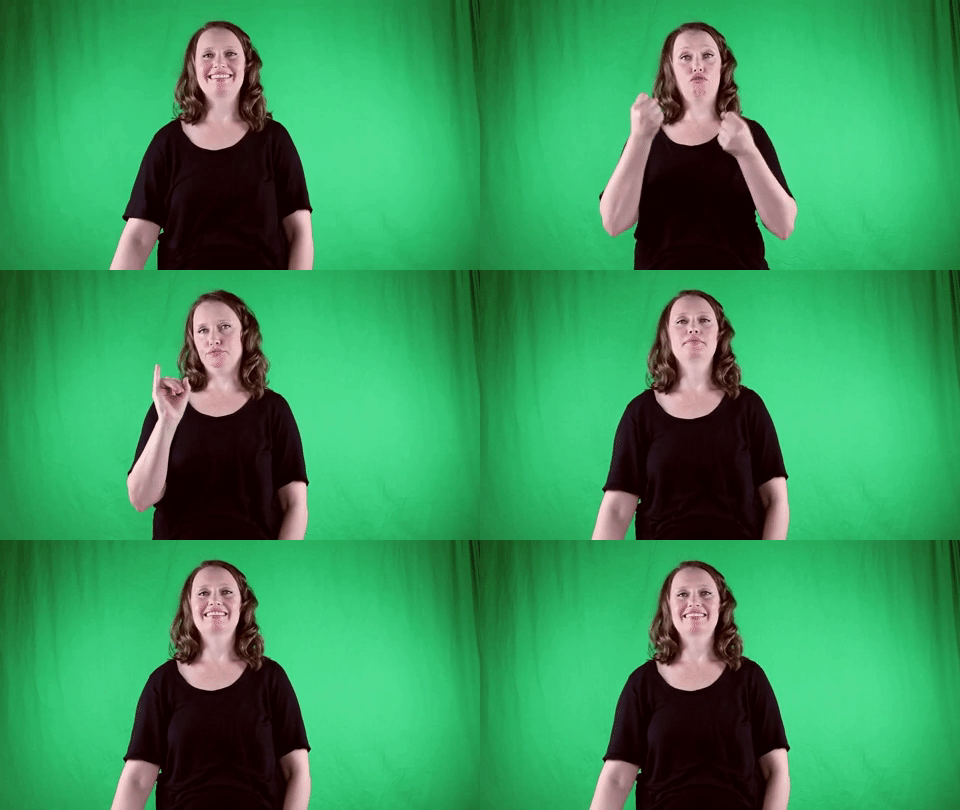
Sign for CAR INSURANCE in ASL | 🚘 ASL Dictionary

Definition: Insurance for a car.

Sign for CAR INSURANCE in ASL

YouTube player

Practice Activities:

Practice the sign for CAR INSURANCE in ASL by first using the individual signs for CAR and INSURANCE. Start by mastering each sign separately in front of a mirror. Repeat the sign for CAR, then pause and practice INSURANCE. Once comfortable, combine them smoothly to express the full concept.

Sign the phrase in response to picture prompts that include a car accident, a car at an insurance office, or someone reviewing documents. This helps associate the sign with real-world experiences. You can also find short video clips without audio and describe what’s happening using the sign for CAR INSURANCE in ASL.

Create practice sentences to say things like “I need car insurance,” “She is buying car insurance,” or “My car insurance is expensive.” Say them in ASL, then voice them in English to self-check your understanding. Try forming your own sentences with the sign for CAR INSURANCE in ASL to describe past events or future plans.

Use storytelling to describe a scenario where someone gets into a crash, then goes to their insurance company. Insert the sign for CAR INSURANCE in ASL naturally throughout the story. This encourages fluency and natural placement in conversations.

Pair with a partner to quiz each other. One person signs a sentence using CAR INSURANCE, and the other translates. Then switch roles. You could also play a roleplay game where one person is an insurance agent and the other is a customer, using the sign for CAR INSURANCE in ASL multiple times in context.

Record yourself signing a short PSA about why car insurance is important. Re-watch it to check clarity, fluidity, and correct usage of the sign. Doing this often builds confidence and improves your expressive skills.

Cultural Context:

In the Deaf community, navigating financial responsibilities often involves understanding specific vocabulary in American Sign Language. The sign for car insurance in ASL is an essential concept that blends both legal and everyday use. Car insurance represents more than just a policy—it’s a component of independence, responsibility, and social participation, especially for Deaf drivers.

Because driving is a key part of modern mobility, knowing how to communicate the sign for car insurance in ASL ensures clearer communication with friends, family, and professionals. When Deaf individuals visit car dealerships, attend driving school, or speak with insurance agents, understanding and using the correct sign reduces confusion and promotes autonomy.

Culturally, the topic of car insurance ties into broader discussions about access to information and services in a visual language. Often, insurance policies and driver safety classes are delivered in spoken English, so having an accurate sign for car insurance in ASL supports accessibility and equity. It helps bridge a gap that frequently leaves Deaf individuals seeking clarification in a communication system not built for them.

During ASL classes or Deaf awareness events, the sign for car insurance in ASL is commonly taught alongside other driving-related signs like driver’s license, ticket, accident, and vehicle registration. These signs together create a network of useful knowledge for traveling safely and legally. Using proper ASL vocabulary in these contexts shows respect and cultural fluency within the Deaf community.

For Deaf parents teaching their teens to drive, the concept of car insurance becomes a part of important life skills education. The sign for car insurance in ASL makes these conversations more straightforward and empowers Deaf families to prepare their young drivers. It also encourages Deaf teens to become confident, independent adults who can navigate life’s practical needs.

In public interpreting roles or within social services, interpreters often encounter the sign for car insurance in ASL during intake interviews or legal consultations. This sign helps convey complex information more accurately, preserving the client’s ability to make informed decisions without language barriers. It’s another example of how ASL adapts to modern life to maintain inclusivity.

Conversations in ASL about budgeting, financial planning, and owning a car often include the sign for car insurance in ASL. It’s a key topic in financial literacy workshops offered by community centers that serve the Deaf and hard-of-hearing. Incorporating it into everyday discussions helps normalize financial awareness in visual language contexts.

Whether at the DMV, in classrooms, or at car rental counters, the sign for car insurance in ASL appears as part of daily interaction. It is essential

Extended Definition:

The sign for car insurance in ASL is a conceptual phrase that combines the ideas of both “car” and “insurance” into a single signed expression. To express this clearly in American Sign Language, the signer typically uses the sign for “car” followed by the sign for “insurance” or a gesture related to coverage or protection.

In ASL, the sign for “car” is usually made by mimicking the action of gripping a steering wheel and moving it slightly to show the idea of driving. This instantly gives context to the object being discussed — a vehicle. Once that part is communicated, the sign for “insurance” follows, which often involves a small circular hand motion indicating an abstract concept like coverage or support.

It’s important to understand that when combining signs like in the phrase sign for car insurance in ASL, grammar and context matter. ASL tends to use topic-comment structure, so the signer might indicate “car” as the topic and then sign “insurance” as the comment or descriptor. This matches how native ASL users express complex ideas in a fluid, visual format.

Because the sign for insurance is somewhat abstract, it can differ slightly based on region or personal signing style. Some people sign “car insurance” by showing the sign for “car” and then using the general insurance sign. Others might incorporate a visual gesture that implies financial coverage or protection for a vehicle, depending on who you’re communicating with and in what context.

When interpreting or learning the sign for car insurance in ASL, it’s useful to remember that ASL is not a word-for-word translation of English. The signs are based on concepts, so you’re expressing the idea of car insurance, not spelling out each English word. That’s why it’s beneficial to learn the phrase from a fluent signer or video resource to understand the motion and facial expressions that accompany these signs.

Facial expressions also play an important role in expressing this phrase. They add clarity to whether you’re talking about buying car insurance, needing coverage, or discussing policy details. Since the same set of signs could imply different meanings depending on the situation, context and expression are key in accurately signing the phrase.

The sign for car insurance in ASL is especially useful in conversations related to driving, traffic issues, or financial topics. Whether you’re talking to a car dealer, explaining a policy, or discussing coverage with a Deaf client, being able to sign this phrase clearly is important. It makes communication more inclusive and efficient in real-life situations.

As

Synonyms: auto insurance, vehicle insurance, automobile coverage, car coverage, motor insurance

Educational resources: Find related learning materials in our course bank!

Want more? Check out some of our popular learning activities on the homepage!

Need to look up a sign? Use our highly rated dictionary: https://aslinteractive.com/best-asl-dictionary/

Follow us on tiktok: https://www.tiktok.com/@aslinteractive. More social media links at the bottom of this page!

Long-tail Keywords: what is the sign for car insurance in ASL, how do you sign car insurance in ASL, ASL sign for car insurance

Categories:

tags: Transportation, Car Descriptions, Driving Rules, Insurance, Everyday Activities

Parameters

*Handshape*:

The handshape for the sign for CAR INSURANCE in ASL typically involves using two handshapes in sequence. First, the C hands are used to represent the concept of “car,” mimicking the gripping of a steering wheel. Then, the dominant hand takes on an A or S handshape, simulating the motion of striking along the palm or back of the non-dominant hand to express “insurance.”

In the sign for CAR INSURANCE in ASL, the transition between the vehicle concept and the protection element is key. The handshape clearly shifts from a classifier for the car to a firm shape representing assurance or coverage . This helps convey the combined meaning effectively.

*Palm Orientation*:

In the sign for CAR INSURANCE in ASL, the palm orientation begins with both hands forming the “C” handshape facing each other diagonally, palms slightly inward to represent “car.” As the sign transitions to “insurance,” the dominant hand changes to an “I” handshape with the palm typically facing downward or outward, depending on the regional variation.

This careful change in palm orientation helps visually differentiate between the concepts of vehicle and coverage within the sign for CAR INSURANCE in ASL ️.

*Location*:

The sign for CAR INSURANCE in ASL is typically produced in two parts. The sign for “car” is made in the neutral space in front of the body, around chest level, with hands mimicking the motion of steering a wheel. The location for “insurance” often places the dominant hand in front of the body, near the midsection or chest, with a flicking or twisting movement.

Both components of the sign for CAR INSURANCE in ASL occur in front of the torso. The hands remain within a comfortable signing space, relying on clear motion and palm orientation to differentiate each concept. The combined location creates a visual context for connecting each concept naturally, using space effectively.

*Movement*:

The sign for CAR INSURANCE in ASL combines two separate signs. First, sign “CAR” by mimicking hands on an imaginary steering wheel, rotating both fists slightly forward and back as if driving. Then follow with the sign for “INSURANCE.” This is made by forming an “I” handshape and moving it in a small circular motion outward from the chest, suggesting coverage or protection.

To emphasize the sign for CAR INSURANCE in ASL, make sure the transition from CAR to INSURANCE is smooth and continuous. By using directional and fluid movement, the sign suggests coverage specific to a vehicle. Repeating the sign slowly can help clarify the meaning, especially in context. ️

*Non-Manual Signals*:

When signing the sign for CAR INSURANCE in ASL, maintain a neutral but serious facial expression to reflect the formal nature of the topic. Slight eyebrow furrowing can show focus or concern, depending on context. Avoid exaggerated emotions unless clarifying sensitivity to a specific situation involving car insurance.

Small head nods can add affirmation if you’re explaining or confirming the details of the sign for CAR INSURANCE in ASL. Keep eye gaze forward and attentive to show clear communication. This helps convey that the subject is practical and important.

*Prosody, Dominant/Non-Dominant Hand*:

The sign for CAR INSURANCE in ASL uses both hands for clarity and meaning. The dominant hand typically forms the sign for “CAR” by mimicking hands on a steering wheel, while the non-dominant hand mirrors this movement. To transition to “INSURANCE,” the dominant hand forms the letter “I” and makes a small twisting motion outward near the palm of the non-dominant flat hand.

When producing the sign for CAR INSURANCE in ASL, prosody is guided by the natural transition between concepts. The shift from the motion of driving to the sign for protection emphasizes the combined meaning. Make sure to use facial expressions that reflect seriousness or responsibility, reinforcing the concept of coverage or protection.

Tips for Beginners:

When learning the sign for CAR INSURANCE in ASL, it’s important to break it into two parts: the sign for “car” and the sign for “insurance.” For “car,” mimic holding a steering wheel and turning it slightly, using both hands like you’re driving. Then move into the sign for “insurance,” which typically involves making an “I” handshape and moving it in a small circular motion near the side of your upper arm or shoulder.

A common beginner mistake is rushing through the combination of the two signs. Take your time and pause slightly between the two components so that your message is clear. The sign for CAR INSURANCE in ASL conveys a compound idea, and clean transitions between signs improve understanding. Watch fluent signers or consult video dictionaries to reinforce clarity.

Avoid making the “car” sign too large or stiff. Overexaggerating movements can be distracting or even change the meaning. Keep your hands relaxed and the motion smooth. For “insurance,” keep the motion controlled and don’t overly twist your wrist. Practicing in front of a mirror can help you refine both accuracy and rhythm.

Facial expression matters more than many realize. For the sign for CAR INSURANCE in ASL, use a neutral or inquisitive expression depending on context—like asking if someone has coverage. Being expressive while still focusing on correct handshape creates a more natural flow and helps with comprehension.

Repetition is key. Practice regularly by signing small phrases involving car insurance, like “Do you have car insurance?” or “I need car insurance.” This reinforcing context will help cement the vocabulary. The sign for CAR INSURANCE in ASL becomes second nature with repetition and conscious attention to detail. Keep sessions short but frequent for best results .

Connections to Other topics:

The sign for CAR INSURANCE in ASL draws from the compound nature of ASL vocabulary, combining the concepts of “car” and “insurance.” The individual sign for “car” typically mimics holding a steering wheel, symbolizing driving. When paired with the sign for “insurance,” which uses a modified “X” handshape moving in a small forward circular motion, the full phrase conceptually links the object and the service being provided.

This compound form is similar to other ASL phrases where nouns and abstract concepts are paired, such as HEALTH INSURANCE or HOME INSURANCE. All these compound signs often follow a similar pattern: the noun being insured followed by the abstract concept of insurance. It teaches signers how ASL expresses complex conceptual pairings as fluid, meaningful sequences rather than standalone signs.

Understanding the sign for CAR INSURANCE in ASL also deepens comprehension of broader financial and legal vocabulary in ASL. Related topics include signs like ACCIDENT, RESPONSIBILITY, and POLICY (FS), which may follow when discussing real-world scenarios involving car insurance claims. These signs are often used in interpreting conversations with agencies, during courtroom settings, or in educational videos about safety.

Learners will benefit from observing how contextual signs like PAYMENT, CLAIM, and AGENT (FS) frequently accompany the sign for CAR INSURANCE in ASL. This sign can also lead into instructional conversations about driving laws, safe driving habits, and how to file insurance claims, enriching one’s ability to navigate real-life situations.

The sign also connects to broader categories like transportation, risk management, and protection. When practiced with other car-related vocabulary such as DRIVER, ACCIDENT, or LICENSE (FS), it becomes clear that ASL expresses logistical and civic topics with visual clarity and cultural nuances. This layered use of signs helps build a richer expressive ability in both everyday and professional contexts.

Summary:

The sign for CAR INSURANCE in ASL is typically formed using a compound of two separate concepts: CAR and INSURANCE. These are shown as individual signs but placed sequentially within an ASL sentence to express the complete idea. CAR is usually signed using a motion that mimics holding and turning a steering wheel.

The sign for INSURANCE often involves a dominant hand in the “I” handshape pushing or rotating over the back of the non-dominant fist. This movement can suggest the abstract concept of coverage and protection. When combined with CAR, the full meaning of automobile protection is conveyed.

In ASL, the order of signs is key. Grammar does not follow English structure but instead relies on contextual placement. For the sign for CAR INSURANCE in ASL, the lexicon and grammar sync to communicate efficiently in a visual modality.

The sign for CAR may vary slightly depending on the region or context, but the idea of grasping a wheel remains consistent. It symbolizes familiarity and is frequently used in broader transportation conversations. This offers a high degree of mutual understanding in the Deaf community.

INSURANCE as a concept is more abstract and may be expressed differently depending on the context. It can involve nuanced facial expressions to show seriousness or emphasis. This facial grammar is crucial and allows the signer to inflect mood or intent effectively.

The compound structure of the sign for CAR INSURANCE in ASL enriches the visual clarity. When used in medical, conversational, or workplace discussions, it communicates not just function but also responsibility. This reflects broader cultural interpretations of safety and mobility.

ASL often employs classifiers, and in extended conversations around car insurance, classifiers indicating vehicles or accidents may be used. This allows more detailed storytelling or information exchange. The sign for CAR INSURANCE in ASL fits naturally with these expansions.

Insurance is not a standalone topic; it often links to finance, law, and identity. When signing about automobile insurance, ASL users navigate multiple contexts, from discussing policy details to describing claims. This extended use lends itself well to linguistic study.

Culturally, the Deaf community has unique perspectives on access and protection. CAR INSURANCE isn’t just about vehicles—it can indicate inclusion in society’s broader protection systems. Signing this conveys more than just the service; it conveys institutional accessibility.

The sign for CAR INSURANCE in ASL intersects with discussions about safety and privilege. Having access to insurance indicates socioeconomic stability and planning. Thus, the signing of this concept can carry subtle implications in certain conversations.

As American Sign Language is visual and spatial, the sign for CAR INSURANCE in ASL can be modified based on urgency, context, or tone. For example, if discussing a recent auto accident, a signer may show the sign for ACCIDENT before or after using the insurance sign. This enhances narrative cohesion.

Facial expressions in ASL serve as essential grammatical markers. When signing about insurance, a raised brow may indicate a question about costs or policy terms. These additions provide visual clarity that spoken language achieves through intonation.

The fluid use of compound signs like CAR INSURANCE in ASL enhances communication efficiency. This is particularly used in settings such as interpreting, employee training, or client consultations. It showcases the adaptability of ASL in diverse spheres.

From an applied linguistics perspective, signs like CAR INSURANCE illustrate the way ASL concretes abstract topics. The lexicon undergoes cultural pruning—only signs that convey both relevance and frequency remain widely used. This developmental phenomenon occurs naturally in sign languages.

In interpreting fields, accuracy in signing CAR INSURANCE is critical. Misrepresenting a sign can alter legal or financial meanings. Hence, education and training in these nuanced signs are crucial for Deaf professionals and interpreters alike.

ASL learners come across compound signs like this early in professional- or business-oriented modules. Understanding how concepts come together facilitates more fluent communication. It also encourages greater immersion into the structure of the language.

Many users pair the sign for CAR INSURANCE in ASL with other signs like PAYMENT, POLICY, or COVERAGE. This sign adjacency increases the communicative richness. These combinations allow for full signed explanations of complex insurance discussions.

In Deaf advocacy movements, the concept of CAR INSURANCE is also symbolic. It reflects a push for accessible services in transportation and legal protection. Signing this word can transform it from routine vocabulary to empowerment expression.

Sociolinguistically, this sign is relevant to conversations about autonomy. Owning a car and having insurance is a milestone for independence. The sign for CAR INSURANCE in ASL thus may appear in narratives of growing up, mobility stories, or freedom discussions.

Seemingly simple, this compound sign can be elaborated upon using indexing, space, and role-shifting. For instance, someone discussing an overheard insurance issue may point to referents in 3D space. This spatial storytelling dimension is unique to sign languages.

Technology has also shaped the way such signs circulate. ASL dictionaries, apps, and Deaf YouTubers

Want more? Check out some of our popular learning activities!

ASL Interactive Resources

ASLInteractive YouTube Channel

Follow us on tiktok: @aslinteractive.com

Follow us on Instagram: aslinteractive

Facebook page: aslinteractive

Facebook group: aslinteractive

LInkedIn: ASL Interactive LLC

Twitter: @ASL_interactive

*Some information on this page is AI-generated. AI can make mistakes. Please check the information.

Sign for CAR INSURANCE in ASL

Responses