Definition: Having a round body.
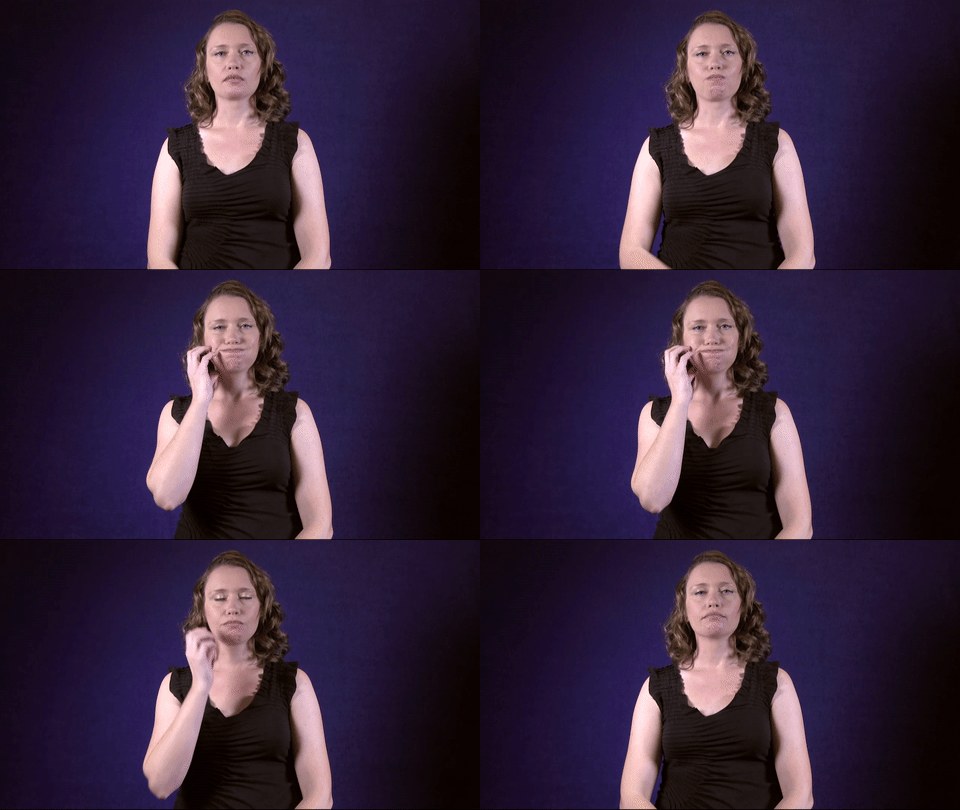
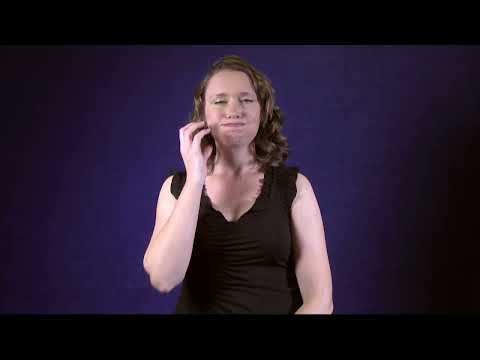
Sign for CHUBBY in ASL

Practice Activities:
To practice the sign for CHUBBY in ASL, begin by isolating the motion and shape. Use a mirror or video recording to check that your puffed cheeks and hand movement near the face are accurate. Repeat the sign slowly and then at a conversational pace, ensuring your facial expression reflects the meaning of the sign clearly.
Create short phrases or sentences that use the sign for CHUBBY in ASL. Examples include: “The baby is chubby,” or “My dog is chubby after winter.” Sign each sentence slowly, emphasizing clarity of movement and expression, and then increase in speed as you gain confidence. Try signing the same sentence using different pronouns or nouns to help reinforce sentence structure.
Storytelling is a fun and effective way to internalize the sign for CHUBBY in ASL. Create a short story about a pet, a stuffed animal, or a fictional character who is described as chubby. Use other descriptive signs like “cute,” “small,” or “funny” to build a rich narrative. Record yourself signing and then watch to evaluate how well you incorporated the sign naturally in context.
For partner activities, practice describing characters using the sign for CHUBBY in ASL. One person signs a description including this sign, and the other guesses who or what is being described. Switch roles after each turn to promote interaction and reinforce receptive skills.
Use flashcards or picture prompts showing chubby animals, people, or cartoon characters. Show the picture and immediately sign what you see, incorporating the sign for CHUBBY in ASL. This will train you to recognize physical traits and describe them expressively.
End your session by reviewing your usage of the word in context, checking for natural flow, accurate handshape, and culturally appropriate expression.
Cultural Context:
In the Deaf community, body image and descriptors like chubby carry their own cultural nuance. When expressing physical characteristics in American Sign Language, the sign for chubby in ASL focuses on visual features rather than judgment or commentary. The visual nature of ASL allows for a description that is more observational and less emotionally charged compared to spoken English.
The sign for chubby in ASL often involves a gesture that highlights the roundness of the cheeks or body. This sign can vary slightly depending on regional differences or personal style, but it maintains a clear and respectful tone. The use of facial expressions alongside the sign also helps convey meaning appropriately within context.
Using the sign for chubby in ASL isn’t inherently negative. In Deaf culture, descriptors like this are used honestly and openly without the stigma that can sometimes accompany such words in hearing-centric communication. Describing someone as chubby is just one way to add detail or clarity in describing people respectfully and accurately.
Context is especially important when using the sign for chubby in ASL. A signer must consider their tone, facial expression, and intent. Since ASL is a highly expressive language, body language plays an essential role in how messages are received. A friendly or affectionate tone can change the impact of the sign entirely.
Within the Deaf community, affirming body diversity is a natural part of communication. The sign for chubby in ASL can be used informally among friends and family when describing someone’s build or when telling a story. It’s yet another example of ASL’s capability to reflect subtle social and emotional dynamics.
Children learning ASL might encounter the sign for chubby when describing characters in books or family members. As they grow within the language, understanding the sensitivity and appropriateness of such signs becomes an important part of their cultural learning. Parents and teachers often use the sign carefully to ensure respectful communication is maintained.
In storytelling and humor, chubby characters are often portrayed with warmth and affection in ASL-centered media. The sign for chubby in ASL brings those characters to life in ways that add charm and personality. Signers use expressive features and movement to convey joy or humor without reinforcing stereotypes.
Signing about body size in ASL requires a balance between accuracy and respect. In Deaf etiquette, the sign for chubby in ASL falls under this principle. It should never be used to insult or criticize but rather to describe in an honest and culturally aware manner.
When learning about identity and self-expression in the Deaf community, the
Extended Definition:
The sign for chubby in ASL can express the idea of someone who is pleasantly plump or has a fuller body shape. It’s a descriptive term often used in a light-hearted or affectionate context. When learning how to sign this word, it’s important to consider facial expressions and tone, as they help convey the intent behind the sign.
To make the sign for chubby in ASL, form your hands into a loose “C” shape and place each hand on either side of your cheeks. Then gently puff out your cheeks while moving the “C” hands slightly outward. This mimics the look of a round or fuller face, helping illustrate the meaning visually.
Like many signs in American Sign Language, the sign for chubby can change slightly depending on the context. For instance, using a more exaggerated motion and puffed cheeks adds emphasis, making it clear that someone is noticeably fuller. You can adjust the intensity of the movement to match the meaning or sentiment you want to express.
The sign for chubby in ASL is often seen in conversations describing babies , pets , or even characters in stories. It can be used affectionately, highlighting cuteness rather than being critical. This emotional tone makes it essential to combine the sign with appropriate facial expressions for full communication.
Children learning ASL often enjoy using these types of descriptive signs because they are visual and expressive. Signing chubby is easy to remember and fun to perform. It’s also a great vocabulary word for beginner ASL learners to expand descriptive capacity.
Deaf and hard-of-hearing communities use signs like chubby in daily conversations, just like hearing people use adjectives. The use of visual cues, such as cheek puffing and hand shapes, replaces the need for vocal inflections. Mastering these subtle visual details helps create a more natural signing experience.
If you are describing an object or food as chubby, such as a thick pencil or a plump piece of fruit, the sign can still be applied with a contextual twist. You might need to pair it with other signs to clarify you’re not talking about a person. As always, ASL relies on surrounding vocabulary and expression to give clear meaning.
The sign for chubby in ASL is not considered offensive when used appropriately. Intent matters in all languages, and ASL is no exception. Using it with a friendly or affectionate tone makes all the difference in how it’s received.
When adding new vocabulary like the sign for chubby in AS
Synonyms: plump, pudgy, rotund, chunky, stout
Educational resources: Find related learning materials in our course bank!
Want more? Check out some of our popular learning activities on the homepage!
Need to look up a sign? Use our highly rated dictionary: https://aslinteractive.com/best-asl-dictionary/
Follow us on tiktok: https://www.tiktok.com/@aslinteractive. More social media links at the bottom of this page!
Long-tail Keywords: what is the sign for chubby in ASL, how do you sign chubby in ASL, ASL sign for chubby
Categories:
tags: Appearance, Describing Body, Adjectives, Telling How One Is, Language Learning
Parameters
*Handshape*:
The handshape used in the sign for CHUBBY in ASL typically involves both hands in curved or bent “5” shapes, resembling claw hands. The fingers are spread apart slightly and curved, suggesting roundness or fullness, which helps convey the concept of being chubby.
For the sign for CHUBBY in ASL, the curved handshapes are usually placed near the cheeks or lower face area, then moved outward slightly to mimic plumpness. This expressive handshape supports the visual meaning of the sign, helping to emphasize the fuller, rounder appearance connected with the word.
*Palm Orientation*:
The palm orientation for the sign for CHUBBY in ASL involves both hands with palms facing upward or slightly inward, depending on regional variation. The fingertips are bent slightly to create a “grabbing” shape around the cheeks, mimicking the fullness typically associated with chubby cheeks.
In performing the sign for CHUBBY in ASL, the hands may move outward slightly, as if to emphasize roundness or fatness. This orientation helps convey the descriptive quality of the sign.
*Location*:
The sign for chubby in ASL is produced at the lower face area, specifically around the cheeks. Both hands are typically used, forming bent “5” handshapes that lightly touch or puff out the cheeks to indicate fullness. This location represents the fullness of the face or body in a descriptive and visual manner.
Using facial expressions at this location helps convey the meaning of the sign for chubby in ASL more clearly. The cheeks are a natural area to visually suggest roundness, which enhances the overall meaning when using this sign.
*Movement*:
The sign for chubby in ASL involves placing both hands in a curved 5-handshape near the cheeks. The fingertips and thumbs pinch inward slightly as if grasping the fullness of the cheeks.
This motion is repeated once or twice in a subtle bouncing manner to emphasize roundness or fullness. The sign for chubby in ASL visually illustrates plump cheeks, often used to describe someone with a round face or body.
*Non-Manual Signals*:
When using the sign for CHUBBY in ASL, puff out your cheeks slightly and raise your eyebrows to indicate a descriptive or nonjudgmental tone. A slight smile can help express a friendly or affectionate meaning, especially if referring to a child or pet .
The non-manual signals often carry the emotional tone of the sign for CHUBBY in ASL, so use relaxed eye contact and neutral body posture unless describing someone with emphasis. Avoid frowning or tight facial expressions, which might change the intended connotation.
*Prosody, Dominant/Non-Dominant Hand*:
For the sign for CHUBBY in ASL, the dominant hand forms a loose grasping shape, like a slightly curved claw. Both hands move toward the cheeks and tap or puff slightly, as if emphasizing round, full cheeks. The non-dominant hand mirrors the dominant hand and is equally active in the sign.
This symmetrical movement highlights fullness in the face, matching the meaning of the sign for CHUBBY in ASL. Facial expression plays an important role, usually including puffed cheeks or a slight smile to convey the idea of chubbiness.
Tips for Beginners:
When practicing the sign for CHUBBY in ASL, it’s essential to pay attention to facial expressions and hand placement. This sign often involves puffing your cheeks slightly while using both hands to simulate roundness near the sides of the face or around the waist, depending on context. Your non-manual markers, such as a relaxed or playful facial expression, help convey the correct tone.
Beginners should focus on controlled and deliberate movements. It’s a common mistake to make the hand motion too large or misplace it too low or high on the body. When learning the sign for CHUBBY in ASL, keep your movements symmetrical and make sure both hands perform the same action for clarity.
Another helpful tip is to familiarize yourself with related signs to avoid confusion. There are signs like “FAT” or “BIG” which may seem similar but have different intent or connotation. Using the wrong facial expression or movement can change the meaning, so practice in front of a mirror or with a fluent signer to ensure accuracy.
Practice in context is key . Use the sign for CHUBBY in ASL during everyday conversation scenarios like describing pets, babies, or even yourself, with the appropriate tone. This builds not only signing skill but also confidence in real-time usage.
Be patient with your progress. It’s normal to need repetition before the sign feels natural. Keep your eyes slightly relaxed and avoid tensing up, as stiffness can make your sign look forced or unclear.
Using resources like video examples and attending Deaf events can give you real-time feedback and exposure to natural signing. This boosts understanding and helps reinforce how and when to correctly use the sign for CHUBBY in ASL.
sign for CHUBBY in ASL, American Sign Language CHUBBY, how to sign CHUBBY in ASL, ASL sign CHUBBY, CHUBBY sign language meaning, describing chubby in ASL, visual vocabulary CHUBBY ASL
Connections to Other topics:
The sign for CHUBBY in ASL connects closely with the visual and descriptive nature of many body-related signs. It often resembles a puffing motion of the cheeks using fingertips or curved hands to show added volume, using iconic representation typical of describing body shapes, especially roundness or fullness. This parallels signs like FAT or PLUMP, which also emphasize size through visual cues. These similarities help learners understand how ASL often draws from physical features to create intuitive vocabulary.
In terms of linguistic relationships, the sign for CHUBBY in ASL can help introduce concepts in ASL morphology such as classifiers, which depict body size or shape in more nuanced ways. For example, body classifiers that show roundness or largeness can be used with facial expressions to further emphasize a chubby appearance. Such compound constructions allow for a rich and expressive storytelling style, especially in narratives involving physical descriptions.
The sign also relates to subjective versus objective descriptions in ASL. While CHUBBY might visually suggest a friendly or neutral appearance, signs like FAT can be more clinical or potentially pejorative, depending on facial expression and context. This highlights the importance of facial grammar and non-manual signals, which modify or intensify the sign’s meaning. The affective layer built into signs like CHUBBY gives more depth than in spoken English equivalents.
Additionally, CHUBBY can be combined with signs like BABY or CHILD to specify a chubby baby, using directional or positing techniques. It might also connect in phrases such as CHUBBY-FACE or CHUBBY-CHEEK using compound expression or role-shift features. Learning the sign for CHUBBY in ASL opens the door to understanding how ASL communicates body descriptions with expressiveness and cultural sensitivity .
Summary:
The sign for CHUBBY in ASL involves a descriptive, visually iconic gesture. You puff your cheeks with air and use your open bent hands to emphasize roundness by tapping them slightly on the cheeks. This conveys a sense of plumpness or fullness.
This sign is rooted in the use of classifiers and iconic representations, making it highly visual and easy to relate to. The rounding of cheeks mimics the facial expression associated with chubbiness, which is universally recognized.
In terms of grammar, the sign for CHUBBY in ASL functions primarily as an adjective. It’s placed according to standard ASL syntax, usually following the noun it describes. You might sign CHILD CHUBBY, rather than the English equivalent “chubby child.”
The cultural context of using the sign for CHUBBY in ASL is significant. The sign can describe children, pets, or even adults, but care should be taken in tone and expression to avoid offense. Facial expressions heavily influence how the sign is interpreted—whether it’s affectionate, teasing, or potentially hurtful.
In Deaf culture, describing physical characteristics is more common and accepted than in some hearing cultures. While hearing individuals might hesitate over terms like chubby, Deaf people often use such descriptors as neutral or informative. However, it is still essential to use them sensitively.
There are related signs that overlap in meaning, such as FAT, PLUMP, or BIG. FAT typically uses the thumb and fingers to indicate more extreme body size and can carry different connotations. PLUMP is softer in visual tone and again uses movement that circles outward from the body.
The sign for CHUBBY in ASL is often viewed as more endearing than the sign for FAT. It symbolizes rounded features rather than outright mass, highlighting cuteness over scale. This phonological difference contributes to the semantic distinction between signs.
Applied linguistics explores how visual language like ASL uses space and movement to express adjectives. Iconicity plays a central role here, with CHUBBY demonstrating how physical resemblance enhances communication. In this way, it ties directly into the broader patterns of iconic representation in ASL.
There’s a mirror of this in broader ASL lexicon. Many descriptors for body types or personal characteristics are closely tied to their visual representation. CHUBBY lends itself well to this style of communication, where what you see in the gesture matches its meaning.
Linguistically, CHUBBY as a concept fits into the morphological structure of ASL focused on root signs rather than inflections. Adjectives like CHUBBY can be modified or intensified with facial expressions and movements, even though the root handshape stays consistent.
The movement and location of the sign also reflect ASL’s use of spatial morphology. Signed directly near the cheeks, the location is meaningful and helps viewers interpret it rapidly as describing the face or figure. This enhances clarity and communicative speed.
Facial expressions are essential when signing CHUBBY. Puffing out your own cheeks slightly while signing adds depth and confirmation to the message. Such non-manual signals enrich the language and can completely change tone or meaning.
Depending on context, the sign for CHUBBY in ASL can be used either positively or negatively. When describing a baby, it may convey cuteness and health. Used toward adults, much depends on facial expressions and contextual cues to determine tone.
ASL classifiers can be used adjunctly with signs like CHUBBY. For instance, a classifier might show body shape or movement to further describe the individual. This form of classifier incorporation is an advanced skill in narrative ASL.
In children’s stories or playful interactions, CHUBBY is often used in fun, engaging ways. It appears in signed storytelling to illustrate cute animal characters or characters with plump features. The aesthetics of ASL support storytelling with vivid, engaging visuals.
In ASL poetry, signs like CHUBBY bring dimensionality to expressive performance. The round motion, cheek location, and facial expressions contribute to the rhythm and visual texture of signed verse. It becomes both linguistic and performative.
From a sociolinguistic angle, the sign for CHUBBY in ASL can reflect cultural constructions of body image. Like in spoken languages, how body size is discussed reflects deeper social values and norms. The visual nature of ASL makes these concepts explicit.
Emotional coding is strong with this sign. How you sign CHUBBY—your speed, expression, and body language—can load it with affection, humor, or critique. Emotionally neutral signs become rich with meaning through signing style.
Signed language acquisition research shows that visual analogies like CHUBBY provide anchor points in memory. Children learning ASL often pick up descriptive, iconic signs early because they match real-world visuals. CHUBBY is engaging and mimetic, ideal for early learners.
ASL teachers often use the sign for CHUBBY in food or animal-related vocabulary exercises. It’s helpful for reinforcing sign formation rules and enhancing classifiers practice
Want more? Check out some of our popular learning activities!
ASL Interactive Resources
ASLInteractive YouTube Channel
Follow us on tiktok: @aslinteractive.com
Follow us on Instagram: aslinteractive
Facebook page: aslinteractive
Facebook group: aslinteractive
LInkedIn: ASL Interactive LLC
Twitter: @ASL_interactive
*Some information on this page is AI-generated. AI can make mistakes. Please check the information.


Responses