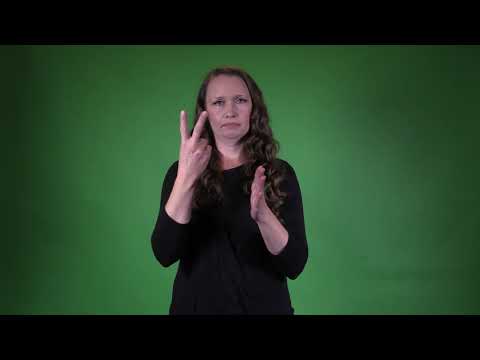
Sign for DOUBLE in ASL | ASL Dictionary

Definition: Twice as much.

Sign for DOUBLE in ASL

YouTube player

Practice Activities:

Begin practicing the sign for DOUBLE in ASL by using it in isolation. Stand in front of a mirror and sign it repeatedly while watching your handshapes and movement. Focus on smooth, consistent transitions and proper facial expressions depending on the context of the sentence.

Next, incorporate the sign for DOUBLE in ASL into basic phrases. Examples include “double check,” “double portion,” and “double meaning.” Practice signing full sentences such as “I ordered a double scoop of ice cream” or “He made a double mistake.” Think about how facial expression can show emphasis when conveying that something is doubled in size or amount.

Create a short story using the concept of “double,” such as identical twins switching places or someone receiving double the expected reward. Practice signing this story from beginning to end, focusing on clarity and storytelling pace. You can record yourself and review to identify areas for improvement.

If working with a partner, take turns describing everyday objects or situations where the sign for DOUBLE in ASL would be appropriate. For example, “In the restaurant, I asked for a double burger,” or “My schedule has double the work today.” Have your partner guess the meaning or context of your sentence to build comprehension.

Use flashcards to mix signs like single, double, triple, and none. Use them in interactive games where you or a partner signs one, and the other must respond with a sentence using that sign. This helps reinforce distinctions and practical application.

Challenge yourself by watching ASL storytelling videos or vlogs where quantity or duplication is mentioned. Try identifying where the sign for DOUBLE in ASL is used and copy those moments to improve recognition and production. This builds fluency and sharpens your receptive skills.

Cultural Context:

In Deaf culture, the sign for double in ASL is more than a basic vocabulary word—it reflects how American Sign Language conveys nuance and quantity with precision and clarity. ASL doesn’t rely on spoken or written modifiers; instead, changes in hand movement, repetition, and facial expression are key. The sign for double in ASL demonstrates this beautifully, using visual language to express the idea of twofold or duplicated amounts.

When someone uses the sign for double in ASL, context is essential. Whether it’s ordering food, talking about twins, or discussing numbers, understanding the situation helps the signer choose the correct variation. For example, the sign for double in ASL might differ slightly if the speaker is emphasizing pairing versus duplication. This visual distinction helps preserve meaning in a culture that values clarity and direct expression.

ASL is often described as a rich and evolving language, and the sign for double in ASL shows how flexible that language can be. In Deaf culture, it’s important to maintain precise signs in both formal and casual conversation. For learners of ASL, capturing the small movement shifts in the sign for double in ASL is part of mastering the language and understanding how facial expression enhances meaning.

The Deaf community values communication that is visual and spatial, and the sign for double in ASL fits naturally in this structure. Rather than adding extra spoken words, the sign itself accomplishes emphasis. That makes the sign for double in ASL incredibly efficient and expressive, which is essential in fast-paced conversations or storytelling.

In storytelling, jokes, and everyday humor, signs like the sign for double in ASL often appear with playful exaggeration. Cultural aspects of Deaf humor often involve puns and manipulations of signs, and the sign for double in ASL can be adapted to match the tone. Cultural fluency in ASL includes knowing when it’s appropriate to adjust a sign for dramatic or comedic effect.

In educational settings or family discussions, Deaf children acquire signs like the sign for double in ASL naturally from their environment. These early signs are essential in math concepts, measuring portions, or even classroom rules. The idea that something has doubled is universal, and ASL provides a direct and clear way to express it visually.

For native ASL users, facial grammar is just as important as hand shape. The sign for double in ASL may involve raised brows or an extended motion to match the intended meaning. This layering makes ASL rich and complex, and understanding these cultural layers helps learners appreciate the language

Extended Definition:

The sign for double in ASL is commonly used to express the concept of something being multiplied by two or happening twice. This sign is often seen in everyday conversations when referring to measurements, portions, or experiences that occur twice. Being able to use the correct sign for double in ASL helps learners and fluent users communicate more accurately.

To produce the sign for double in ASL, you typically use both hands, depending on the context and the type of word being doubled. Some forms of this sign are created by repeating a base sign in a modified way, such as signing a letter or a numeral two times in different positions. For example, to show something like “double A” as in a name or title, you might sign the letter A and move slightly to the side to repeat it. The movement and palm orientation can vary slightly depending on the specific context of the word being doubled.

Context plays a major role in how the sign for double in ASL is expressed. You might see different versions used when referring to double digits, double scoop, double check, or even double the effort. In each case, ASL relies on visual-gestural patterns and linguistic structure to convey the idea of “double.” This makes it essential to consider what exactly is being doubled to sign it correctly.

When referring to numbers or time, such as “double zero” or “double two,” the sign might incorporate number signs repeated with a shift in space. For words involving objects or amounts, classifiers are often used in combination with repeated movement to show duplication. ASL users with more experience often rely on facial expressions and body shifts alongside hand signs to add emphasis and clarity to the meaning of double.

In ASL grammar, redundancy is often minimized, so instead of saying “double” before a noun as in English, a signer can visually represent duplication directly through the motion of the hands. This efficient use of space and movement in the sign for double helps make ASL a dynamic language that communicates ideas without unnecessary repetition.

If you’re learning the sign for double in ASL, it helps to watch native signers and review video examples of varied uses. Seeing the difference between signing something like “double scoop” versus a “double letter” will help develop your understanding of how the sign adapts in context. Remember that regional dialects and variations in ASL can also influence how this sign is used.

The sign for double in ASL is flexible and powerful. It allows for creative and precise communication, showing

Synonyms: duplicate, twofold, twin, couple, dual

Educational resources: Find related learning materials in our course bank!

Want more? Check out some of our popular learning activities on the homepage!

Need to look up a sign? Use our highly rated dictionary: https://aslinteractive.com/best-asl-dictionary/

Follow us on tiktok: https://www.tiktok.com/@aslinteractive. More social media links at the bottom of this page!

Long-tail Keywords: What is the sign for Double in ASL?, How do you sign Double in ASL?, Learn how to sign Double in American Sign Language

Categories:

tags: Numbers, Math, Language Learning, Everyday Activities, Education

Tips for Beginners:

When learning the sign for DOUBLE in ASL, it’s important to start by understanding the context in which the sign will be used. ASL often conveys meaning through movement and repetition, so depending on the setting, the sign may vary slightly. This sign commonly involves gesturing the word TWICE in quick succession, indicating duplication or pairing. It may also rely on classifier use or even fingerspelling when referring to specific items that can’t be shown symbolically.

A helpful tip is to maintain consistent facial expressions when signing. Facial grammar plays a vital role in how your message is received, especially with a concept like double, which can imply emphasis or quantity. Beginners often focus only on their hands, but your face should express amplification or emphasis to reinforce the sign. Practice in a mirror to coordinate both hand movement and facial cues.

Pay close attention to hand direction and movement if you’re using a classifier or a directional sign to express doubling. For example, replicating a movement twice to the right or showing two instances of an object with a shifting hand can be very effective. Sign too quickly or without intention, and it might look like you’re signing something entirely different. Control is better than speed. ✋

Another common issue is forgetting that the sign for DOUBLE in ASL can change depending on the noun it modifies. You may need to reframe it using fingerspelling or modify a noun classifier with duplication. Becoming comfortable with these adjustments improves clarity and natural flow.

Regular practice with native signers can help you see how the sign for DOUBLE in ASL is used across different contexts. Record yourself and ask for feedback to fine-tune your accuracy. Learning to differentiate when to fingerspell vs sign symbolically can make a notable difference. Keep practicing and don’t get discouraged—fluency takes time!

sign for double in asl, double meaning in asl, how to sign double in american sign language, asl sign for two of something, sign language double movement

Connections to Other topics:

The sign for DOUBLE in ASL connects to several other numerical and descriptive concepts such as TWICE, REPEAT, and AGAIN. While the sign for DOUBLE may vary by context—such as doubling a quantity or referring to a dual feature—the core idea remains expansion or multiplication. This makes it conceptually linked to other modifier signs in ASL used to intensify or increase quantity, such as MANY, INCREASE, or MULTIPLY.

The sign for DOUBLE in ASL often overlaps with idiomatic or compound uses like DOUBLE-CHECK or DOUBLE-DUTY. In these cases, the sign may be integrated with CHECK or WORK, forming compound signs. This illustrates how ASL expands upon base signs to form new meanings, similar to how English uses prefixes or compound phrases.

Context plays a big role in how the sign for DOUBLE in ASL is produced and understood. For example, if you’re doubling ingredients in a recipe, the sign may look like an exaggeration of the sign for MORE, while doubling in a math-related situation might lend itself to number classifier use or repetition. The adaptability of ASL means that one concept like “double” can emerge through various sign blends based on the surrounding message.

Learners can benefit from exploring other concepts like HALF, TWICE, or COPY, which also convey duplicative or comparative values. The sign for DOUBLE in ASL shares classifier roles and spatial reference tendencies with these signs, especially in terms of showing contrast or size change. Understanding these parallels will deepen one’s fluency and contextual responsiveness.

In storytelling or educational contexts, knowing how to adapt the sign for DOUBLE in ASL helps with clarity. For instance, using it to describe characters or objects with dual roles or symmetrical features clarifies the narrative. This versatility highlights ASL’s dynamic structure and visual logic.

Summary:

The sign for DOUBLE in ASL can vary slightly depending on the context and the subject. It is typically conveyed by repeating a movement or emphasizing the duplication of an object or concept. Handshape, movement, and non-manual signals work together to convey the idea of duplication or a pair.

This concept is commonly signed using a dominant hand in the “V” handshape, starting in one location and shifting slightly to a parallel location. The hand might bounce or repeat the movement with a slight pause in between. This shift communicates that something exists twice or occurs again.

The sign can also involve using two hands with the same handshape to show something appears side by side or comes in pairs, like two chairs or two people. In this version, spatial referencing helps to place the duplicated item or individual in ASL space. The repeat movement can show two similar items or actions.

The facial expression often adds meaning, showing emphasis, surprise, or emphasis on quantity. Non-manual markers may include raised eyebrows or slight head movements. These features help mark distinctions between literal and figurative meanings.

The sign for DOUBLE in ASL can be modified in storytelling contexts to express something happening twice or in tandem. For example, when describing a scene involving two identical actions or mirrored events, signers use this motion for vivid effect. It makes narratives dynamic and clear.

Grammatically, the sign for DOUBLE in ASL functions as an adjective or adverb, modifying nouns or actions. It can appear before the noun or after the verb, depending on what element is being modified in the sentence. Its placement is flexible, adjusted to clarify meaning.

In applied linguistics, the concept of doubling reveals how ASL handles redundancy and plurality without relying on spoken language markers like “twice” or “double.” ASL grammar uses space, movement, and repetition to articulate these ideas. Instead of dedicated inflected forms, ASL modifies signs in real time.

Related signs include TWICE, AGAIN, BOTH, and PAIR. Each has unique nuances but shares spatial or motion overlap with the sign for DOUBLE in ASL. These signs can occasionally be used interchangeably in casual conversation, depending on the context and clarity required.

TWICE in ASL, for example, involves a motion that repeats once more than the sign for ONCE. It looks visually similar but uses distinct repetition patterns. The difference reveals how ASL tracks quantity and frequency through changes in movement and rhythm.

The sign PAIR might be used similarly to DOUBLE when referring to physical objects, like shoes or socks. However, PAIR leans more toward items that naturally come in twos. DOUBLE captures the idea of repetition or multiplication beyond naturally paired items.

The concept behind the sign for DOUBLE in ASL also connects with broader math and science terminology. In educational contexts, this sign plays an essential role in visual instruction when teaching multiplication or data modeling. Teachers often rely on this visual representation to aid understanding.

Culturally, ASL users frequently draw upon this sign to express reactions in social contexts. For instance, someone might say they saw it happen “double” to emphasize disbelief or irony. That dramatization becomes clearer and more potently delivered through ASL’s visual richness.

For Deaf storytellers, the sign for DOUBLE in ASL serves as a performative tool. When telling fables or comedic stories, doubling characters or actions can heighten the punchline or dramatically shift a plot. The visual dimension of ASL lends itself perfectly to this type of narrative play.

The sign is also fundamental when referring to time-based repetitions. If something happened twice in a week or if a price doubled overnight, this sign conveys both frequency and multiplicative change. It serves as a versatile marker of quantity shift.

When comparing concepts like SINGULAR and DOUBLE, ASL assigns distinct spatial and movement patterns to isolate the ideas. This maximizes semantic clarity in visual space. It shows how comparative grammar functions within ASL differently than in spoken English.

The learning process around the sign for DOUBLE in ASL often includes lessons on reduplication and rhythm. Learners are taught to feel the tempo between occurrences to signal exactly two instances. Differentiating it from general plural forms requires targeted practice.

In Deaf education, the ability to discuss duplication or doubling is key in mathematical literacy. When students grasp how ASL handles those concepts, they can better access core academic content. This improves outcomes in both science and arithmetic learning environments.

The morphology of the sign for DOUBLE in ASL highlights how ASL users manipulate size, speed, and spatial awareness to convey meaning. If something doubled quickly, the movement might be sharp. If it happened over time, the sign may stretch or delay between repetitions.

Non-native signers often struggle to match the rhythm of doubling signs. They may repeat too quickly or without emphasis, leading to communication confusion. Structured training in timing precision is crucial for mastering this aspect.

From a linguistic perspective, this sign exemplifies simultaneity. AS

Want more? Check out some of our popular learning activities!

ASL Interactive Resources

ASLInteractive YouTube Channel

Follow us on tiktok: @aslinteractive.com

Follow us on Instagram: aslinteractive

Facebook page: aslinteractive

Facebook group: aslinteractive

LInkedIn: ASL Interactive LLC

Twitter: @ASL_interactive

*Some information on this page is AI-generated. AI can make mistakes. Please check the information.


Responses